How to Grow Cilantro
As an Amazon Associate we earn from qualifying purchases.
Knowing how to grow cilantro comes down to timing more than technique. Cilantro is a cool-season herb, and the sources we opened link its flowering to heat or long days. Sow it in the right season, keep the soil moist while seedlings establish, and sow again every few weeks. This guide follows those steps in order, from choosing a sowing window to harvesting leaves and seed.
The four pages behind this guide are university extension publications from Oregon, Florida, Utah and Texas. Where they agree we say so. Where they give different numbers, we show both and name the page.
Quick answer
- Sow seed directly, about half an inch deep, in sunny, fertile, well-drained soil. The right month depends on your region, so check the window table below.
- Thin the seedlings, and sow small batches every few weeks so the leaves keep coming. Texas A&M suggests weekly sowings for a continuous crop.
- Water while the seedlings establish, then ease off. Damp soil and heavy nitrogen both weaken the flavor.
- Pick outer leaves once they reach about 4 to 6 inches long. Let a few plants flower if you want coriander seed.
Choose a sowing window that fits your climate
Timing matters more than any other single step, because the plant goes to seed quickly in warm weather. The four pages give different sowing windows, and the differences follow climate. Oregon State University advises sowing from early spring through early summer and again in early autumn. The Florida guide says fall and winter are the best seasons there, since cilantro flowers quickly once days get long and warm. Texas A&M’s windows are February, for an April harvest, and September, for a November harvest. Utah State recommends early spring for cooler areas, and fall sowing in warmer spots for a spring harvest.
| Source | Region | Sowing window it gives |
|---|---|---|
| Oregon State University Extension | General advice | Early spring through early summer, then early autumn |
| UF/IFAS Extension | Florida | Fall and winter |
| Texas A&M AgriLife Extension | Texas | February sowing for an April harvest; September sowing for November |
| Utah State University Extension | Utah | Early spring in cooler areas; fall in warmer areas for a spring harvest |
No single date works everywhere. The Florida guide sends readers to their county Extension office for local advice, and that is the most direct way to turn these windows into a date for your own yard.
Heat decides whether a window works. Texas A&M says the plant does best between 50 and 85 degrees Fahrenheit, tolerates temperatures as low as 10 degrees, and starts to bolt when temperatures go above 85 degrees. Oregon State says a midsummer sowing can flower and set seed within four to six weeks. A sowing that lands in a hot stretch is likely to flower before it makes many leaves.
Sow seed directly and space it for the harvest you want
Direct seeding is the first choice for cilantro. Oregon State University says direct seeding gives the best results, though starts also work, and its long taproot makes transplanting difficult. Sow the seed about one half inch deep. Texas A&M gives a range of one quarter to one half inch for both leaf and seed crops. Oregon State advises 10 to 15 seeds per foot of row and notes that seeds germinate at soil temperatures of 55 to 68 degrees Fahrenheit. Utah State says seeds germinate in about 21 days.
Spacing depends on what you plan to harvest, and the pages disagree. Utah State and Texas A&M both thin plants to about two inches apart for leaves and about eight inches apart for seed. Oregon State and the Florida guide describe eight inches as general spacing, and Oregon adds rows 18 to 24 inches apart. Utah State gives 15 inches as the minimum distance between rows.
Texas A&M puts the count at roughly 2,000 seeds to the ounce. That count helps when you estimate how much seed to buy for a season of small sowings.
Give transplants and indoor starts special care
Transplanting works, but the sources treat it with caution. Oregon State points to the taproot as the reason. Utah State says cilantro can be started indoors four to six weeks before transplanting, and it advises minimizing root disturbance when moving seedlings. Its frequently asked questions add practical conditions for indoor growing: use a container deep enough for the roots, put it where it gets enough sun, and keep the soil temperature below 75 degrees Fahrenheit, especially near a heat source or a warm window.
If you start seed indoors, Utah State’s advice matches its bolting answer. Start seedlings indoors and move them into the garden once frost has passed.
Prepare the bed and feed lightly
The four pages describe a similar bed, though each uses different words. Utah State recommends mixing in two to four inches of fully composted material for every 25 square feet, worked into the top four to six inches of soil so the seedbed stays loose and the seeds can come up easily. Texas A&M describes soil that is soft, well-tilled and composted. Oregon State recommends a sunny, fertile bed. The Florida guide asks for rich, well-drained soil in full sun to part shade.
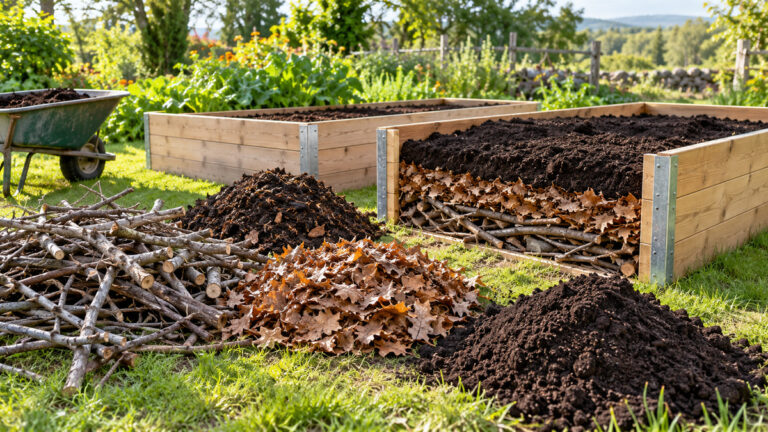
If you are filling a new raised bed, our guide to filling raised beds covers the soil side in more detail. If the bed will hold other crops too, our list of vegetables to plant in raised beds shows what else shares the space.
Feeding should be light. Texas A&M suggests fertilizing twice, with about half a teaspoon of ammonium nitrate or urea per square foot. Utah State gives a measure in cups, about a quarter cup of nitrogen fertilizer per 25 square feet, applied once or twice in a season. It also recommends side-dressing with nitrogen in early summer. Utah State adds a warning: too much nitrogen makes the plant less flavorful.
Water while seedlings establish, then ease off
Water matters most early. Texas A&M says the plant’s greatest need for water comes during germination and establishment, and that after establishment it needs little. Utah State puts it the same way: water regularly while the plants establish, then only as needed.
Damp soil is the bigger risk later. Utah State warns that the herb suffers in wet, muggy conditions, and it says too much dampness weakens the flavor. Mulch helps keep the soil cool and the weeds down. Utah State recommends mulching around seedlings as soon as they emerge, and tilling shallowly so the roots are not damaged.
Keep leaves coming with small, repeated sowings
One sowing gives one flush of leaves, so all four pages recommend sowing again. Oregon State suggests small batches every few weeks, and it advises avoiding the hottest part of summer. Texas A&M goes further and recommends weekly plantings for a continuous crop. The Florida guide suggests a handful of seeds at a time, repeated every few weeks, and Utah State recommends reseeding on the same schedule. Utah State also suggests overseeding in mid-season to extend the leaf harvest.
The frequency differs, and the sources do not explain why. Texas A&M says weekly, while the other three say every few weeks.
Why cilantro bolts, and how to slow it
Bolting is the switch from leaves to flower stalks, and it is the main reason cilantro disappoints gardeners. Oregon State says warm weather speeds up the life cycle, and that a sowing made in late June or early July will flower during long, hot summer days. Its remedy is to plant in a cooler part of the garden, a suggestion from a retired Oregon State horticulturist, and to sow in early spring and once more in late summer, while temperatures are dropping.
Utah State’s frequently asked question on bolting gives a short list: plant early, when conditions are cool; start seedlings indoors and move them out after frost; mulch to keep the soil cool; keep the plants well watered; and grow them close together. The last item sits oddly beside the same page’s spacing advice, which we come back to in the section on what the sources do not say.
Heat thresholds appear in two forms. Texas A&M gives 85 degrees as the temperature above which bolting starts. Utah State gives a soil temperature of 75 degrees as the level to keep under. Those are different measures, so they do not contradict each other, but a gardener cannot treat either one as a rule for every climate.
Harvest leaves and roots, then save seed
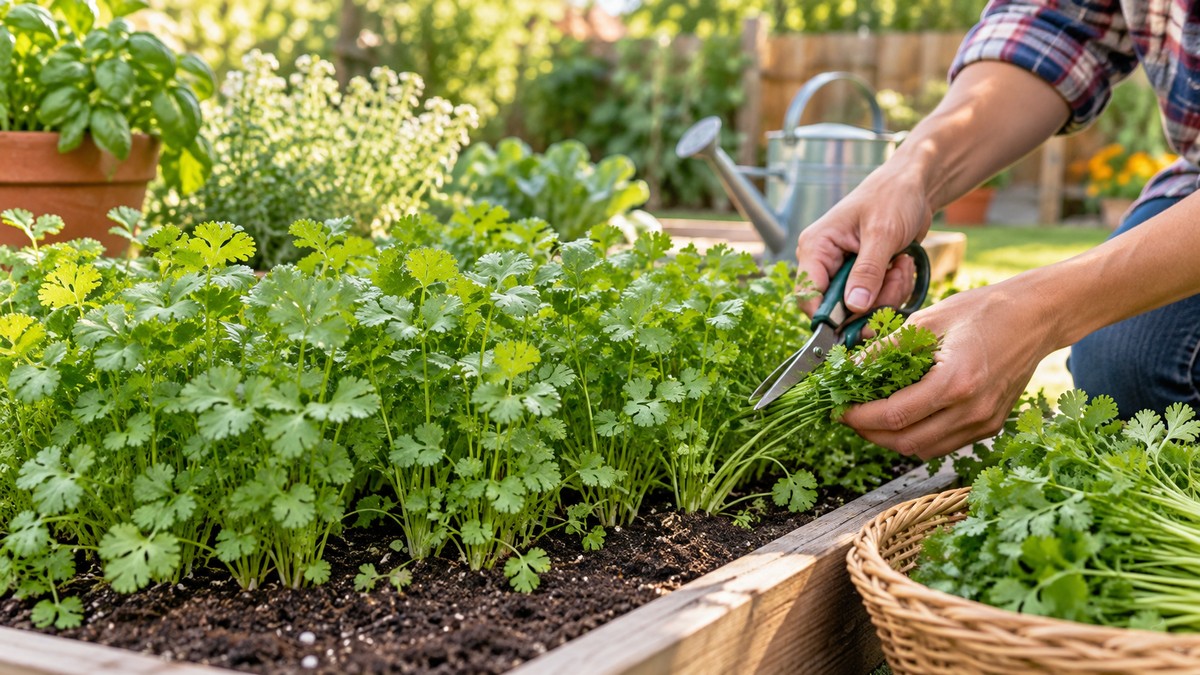
Start picking leaves when the plants are about six inches tall, as the Florida guide advises. Texas A&M says leaves are ready 45 to 70 days after seeding. It suggests cutting exterior leaves once they reach four to six inches long, or cutting the whole plant one to two inches above the soil to take both small and large leaves.
Oregon State says leaves are most flavorful when young and tender, and that every part of the plant can be eaten. The roots are valued in Thai and Vietnamese cooking, and the page says they are best dug in autumn.
Utah State describes two ways to keep leaves beyond a single meal. You can freeze them in a resealable bag, or dry them by hanging the bunch upside down in a warm place.
Let some plants flower for coriander seed
Coriander is the seed of the same plant, so the real choice is which plants you leave alone. Oregon State says the flowers turn into seed that you can gather, dry and grind. The Florida guide says seed appears about three months after planting. It advises removing the brown fruiting structures once they dry, separating the seed from the plant material, and storing it in a dry, tight container.
Utah State recommends cutting the seed heads when the plant turns brown, putting them in a paper bag, and hanging them until the seeds fall to the bottom. Texas A&M gives a spacing for seed plants of eight inches apart in rows about 15 inches apart.
Common mistakes the sources warn about
- Sowing into midsummer heat. Oregon State advises against it because plants bolt before they produce many leaves.
- Letting the soil stay wet. Utah State says the herb struggles in wet, muggy conditions, and too much dampness weakens flavor.
- Adding too much nitrogen. Utah State says this makes the plant less flavorful, and the same page gives a light rate to follow.
- Disturbing the roots. Utah State advises minimizing root disturbance, and Oregon State notes the taproot makes transplanting hard.
- Using one date for every yard. The four pages give four different sowing windows, so start with your county Extension office.
How we chose
We limited this guide to university extension publications and kept only claims that appear on those pages. Each page was fetched with curl on 2026-10-22 and returned HTTP 200 before we relied on it. The four sources come from Oregon State University, the University of Florida (UF/IFAS), Utah State University and Texas A&M AgriLife Extension. The Oregon page was published in April 2023 and reviewed in 2025, and the Utah page was published in August 2018.
We did not use commercial seed and nursery pages, and search-result summaries were not treated as evidence. A Delaware extension PDF was also left out because its text layer could not be read reliably. Where two pages gave different figures, both are shown.
What we could not verify
The gaps below are the points where the sources are silent or disagree.
What the sources do not say
The pages do not give a sowing date for any particular town, so the windows above are examples from four states, not a calendar for your garden.
The sources do not agree on leaf spacing. Two pages suggest about two inches for leaves, while the Oregon and Florida pages describe about eight inches as their general spacing. None of the pages explains which spacing gives the most leaves.
The bolting numbers also differ. Texas A&M gives 85 degrees as the threshold, Utah State gives a soil temperature of 75 degrees, and the Oregon page gives no bolting temperature in its text.
None of the pages gives the storage life of fresh leaves in a refrigerator, and none gives a shelf life for stored seed.
The pages name several cultivars, including slow-bolting types, but none reports trial results that would let a reader compare them. Pest and disease control is outside the scope of this guide.
Frequently asked questions
When is the best time to plant cilantro?
There is no single date. Oregon State suggests early spring through early summer, with a second sowing in early autumn. The Florida guide points to fall and winter. Texas A&M gives February and September for its state, and Utah State suggests early spring in cooler areas and fall in warmer ones.
Why does cilantro flower so quickly?
Heat and long days are the usual cause. Oregon State says warm weather speeds the life cycle, and Texas A&M says the plant starts to bolt when temperatures go above 85 degrees. Oregon State advises against planting during peak summer heat, and a cooler part of the garden can delay bolting.
Is it possible to grow cilantro indoors?
Utah State says yes, with conditions. Use a container deep enough for the roots, give it enough sun, and keep the soil temperature below 75 degrees, especially near a heat source or a warm window.
Why does cilantro taste weak, or soapy?
Two causes appear in these sources. Utah State says overwatering dilutes the flavor and that too much nitrogen makes the plant less flavorful. The Florida guide notes that some people describe the flavor as soapy, and it cites recent studies that point to compounds called fatty aldehydes.
Can the roots and seeds be eaten?
Yes. Oregon State says every part of the plant can be eaten: the leaves while they are young and tender, the seeds once they are harvested and ground as coriander, and the roots, which are valued in Thai and Vietnamese cooking and are best dug in autumn.
Sources
- https://extension.oregonstate.edu/gardening/node/590 (opened 2026-10-22)
- https://gardeningsolutions.ifas.ufl.edu/plants/edibles/vegetables/cilantro/ (opened 2026-10-22)
- https://extension.usu.edu/yardandgarden/research/cilantro-coriander-in-the-garden.php (opened 2026-10-22)
- https://aggie-horticulture.tamu.edu/vegetable/wp-content/uploads/sites/10/2010/10/E-277_cilantro.pdf (opened 2026-10-22)