Best Way to Fill Raised Beds: Options Compared
As an Amazon Associate we earn from qualifying purchases. Details
Filling a raised bed starts with the volume you need. Multiply the inside length, width and depth in feet to get cubic feet, then work out how to fill that space: bagged soil, a bulk delivery, or a layered fill with cheaper material at the bottom and better soil on top. Bagged soil is the easiest route for a small bed, while a large bed usually costs less with bulk soil or a mix of compost and topsoil.
The six bagged soils below come from Amazon listings, and for most of them the title is the only source of detail. That means soil type, size, bag count and an organic claim are known for some products, while ingredients, nutrient content and drainage are missing for most. Where a detail is missing, it is shown as a dash or left out, and the current product page is the place to check it. Each measurement belongs to the product that lists it, so do not carry one product’s figures over to another.
At a glance: the six soils compared
| Product | Type (per title) | Volume / count | Organic claim |
|---|---|---|---|
| Wiggle Worm Organic Raised Bed Mix | Raised bed mix | 40 lb (no cu ft given) | Yes |
| Potting and Propagation Mix | Potting/propagation, well-draining | 1.5 cu ft | Not stated |
| Espoma Vegetable & Flower Garden Soil | In-ground planting mix | Not stated | Natural and organic |
| FoxFarm Happy Frog Potting Soil | Potting soil | 2 cu ft (largest single volume of the six) | Not stated |
| Miracle-Gro Planting Mix | Planting mix | .33 cu ft x 2-pack (unclear if per bag or per pack) | Not stated |
| FoxFarm Ocean Forest Potting Soil | Potting soil | 12 dry qt (13.2 L) x 4 bags (unclear if per bag or total) | Not stated |
Figures come only from each product’s title, as the sections below explain — for most of these six, the title is the only detail available, and ingredients, drainage, and nutrient content are missing. Confirm volume, unit basis (per bag vs. total), and raised-bed suitability on the current product page before ordering, since “potting mix,” “planting mix,” and “garden soil” are not interchangeable for a raised bed.
Quick answer
For the best way to fill raised beds with bagged soil, start with Wiggle Worm if you want a product named for raised beds: its title calls it an organic raised bed mix. If you are filling containers as well as beds and want a mix described as well-draining, the Potting and Propagation Mix is the one whose title says so. Espoma is the organic vegetable and flower garden soil, but its title calls it an in ground planting mix. The three FoxFarm and Miracle-Gro products are potting soils or planting mix with sizes that suit small jobs or containers. Potting soil, planting mix and in-ground garden soil are not interchangeable, so compare the product page with the volume of your own bed before you order. Related guides cover Best Way to Fill Raised Garden Bed, Best Preparing Raised Beds for Winter, and Best Low Maintenance Plants for Raised Beds.
What matters when choosing soil for a raised bed
Soil type on the label
Bagged soils are sold under several names, and the name tells you what the bag is for. A potting mix is a light, loose blend made for containers, where roots have nowhere else to go. Garden soil is heavier and meant to be worked into the ground. A raised bed mix sits in between and is made for beds that are filled from above. The titles here name different types: Wiggle Worm is an organic raised bed mix. Espoma is an organic vegetable and flower garden soil, described as an in ground planting mix. FoxFarm Happy Frog and FoxFarm Ocean Forest are potting soils. The Potting and Propagation Mix is titled for containerized plants and gardens, and Miracle-Gro is a planting mix. Whether a given product suits a raised bed beyond what its title says is something to confirm on the product page.
Organic versus conventional
Wiggle Worm’s title says organic, and Espoma’s title says natural and organic. The other four titles make no organic claim. Organic soils generally rely on materials such as compost and plant matter rather than synthetic fertilizer, but the only way to know what is in a specific bag is the ingredient list on the listing or the bag. If you grow food, read that list before you buy, and do not assume one product shares another’s contents.
Package volume and units
Volume decides how much you buy, and the units differ from product to product. Wiggle Worm is listed as 40lb, which is a weight, and a weight cannot be turned into cubic feet without knowing the density of the mix. The Potting and Propagation Mix is 1.5 cu ft, Happy Frog is 2 cu ft, and Miracle-Gro is .33 cu. ft. Ocean Forest is listed as 12 dry quarts (13.2 L). Espoma’s title gives no size at all.
Drainage
Only the Potting and Propagation Mix title says well-draining. For the other five the title is silent, so do not read drainage into the soil type. Raised beds drain better than most ground-level plots, which is one reason a heavy garden soil on its own can pack down in a deep bed and a lighter mix is often blended in.
Bag count
Miracle-Gro is titled as a 2-pack and Ocean Forest as 4 bags. Happy Frog comes with 2 plant tags. Counts for Wiggle Worm, the Potting and Propagation Mix and Espoma are not given. For the multi-bag titles, it is unclear whether the listed volume applies per bag or to the whole pack, so check the product page before you total the volume.
Six soils and their best uses
Wiggle Worm organic raised bed mix, 40lb
Wiggle Worm is the one product here whose title names raised beds directly. It is listed as an organic raised bed mix in a 40lb package, and its cubic foot volume and bag count are missing from the title.
Use the 40lb figure only as a weight. The practical limit is that you cannot work out how many bags fill your bed from the title alone, so find the volume on the product page first. Skip it if you must match a bed measurement in cubic feet and the page does not give one.
Potting and propagation mix, 1.5 cu ft
This is a potting and propagation mix of 1.5 cu ft. Its title says it is ideal for containerized plants and gardens and well-draining. The brand and ingredients are not in the title.
A well-draining mix suits containers, and the title does not name raised beds, so confirm the use on the product page. Skip it if you want a soil titled for in-ground or raised bed use.
Espoma organic vegetable and flower garden soil
Espoma Organic Vegetable and Flower Garden Soil is called natural and organic in its title and is described as an in ground planting mix. The title gives no package size.
Because the title says in ground, check that it is meant for a raised bed before you buy, and look up the bag size so you can calculate how many you need. Skip it if you cannot confirm the size or the raised bed use.
FoxFarm Happy Frog potting soil, 2 cu ft
FoxFarm Happy Frog Potting Soil is 2 cu ft and is listed with 2 plant tags. The title does not mention ingredients or drainage.
At 2 cu ft it is the largest single volume given in cubic feet among these six, so it needs fewer bags than the 1.5 cu ft Potting and Propagation Mix for the same bed. Skip it if you want a soil titled for raised beds.
Miracle-Gro planting mix, .33 cu. ft., 2-Pack
Miracle-Gro Planting Mix is listed as .33 cu. ft. in a 2-pack. Ingredients, drainage and the intended bed type are not in the title.
The title does not say whether .33 cu. ft. is per bag or for the pack, so confirm that before you work out how much you need. Either way it is a small amount, so it fits topping up or filling a few pots better than filling a bed. Skip it if you need a large volume from few bags.
FoxFarm Ocean Forest potting soil, 4 bags
FoxFarm Ocean Forest Potting Soil is listed as 12 dry quarts (13.2 L) and 4 bags. Ingredients and drainage are not in the title.
The title does not say whether 12 dry quarts is per bag or for all four, so confirm that before you total the volume. Skip it if you need the volume in cubic feet and cannot verify the unit conversion.
1. Wiggle Worm Organic Raised Bed Mix, 40lb (Named for raised beds)
Details from the title:
- Type: Organic raised bed mix
- Package weight: 40lb
- Volume and bag count: —
Pros
- The title names it as an organic raised bed mix.
Cons
- No volume in cubic feet is given, so 40lb cannot be converted to bed volume.
Best for: Filling a raised bed when you want a mix sold for that purpose.
Skip if: You need a stated volume in cubic feet to match your bed.
View on Amazon (affiliate link)
2. Potting and Propagation Mix, 1.5cu ft – Ideal for Containerized Plants/Gardens, Well-Draining (Best for containers)
Details from the title:
- Type: Potting and propagation mix
- Volume: 1.5 cu ft
- Drainage: Well-draining, per the title
Pros
- The title gives 1.5 cu ft and says well-draining.
Cons
- The title names containerized plants and gardens, not raised beds, and gives no brand.
Best for: Containers and pots, or a bed that shares space with them, when you want a stated volume.
Skip if: You want a soil titled for in-ground or raised bed use.
View on Amazon (affiliate link)
3. Espoma Organic Vegetable & Flower Garden Soil Natural and Organic in Ground Planting Mix (Best organic garden soil)
Details from the title:
- Type: Vegetable and flower garden soil, in ground planting mix
- Claim: Natural and organic
- Volume and bag count: —
Pros
- The title says natural and organic and names vegetable and flower use.
Cons
- No package size is given, and the title says in ground rather than raised bed.
Best for: Growing vegetables and flowers in an organic soil when you can confirm the size.
Skip if: You cannot confirm the volume or the raised bed use.
View on Amazon (affiliate link)
4. FoxFarm Happy Frog Potting Soil with 2 Plant Tags, 2 cu ft (Largest listed volume)
Details from the title:
- Type: Potting soil
- Volume: 2 cu ft
- Included: 2 plant tags
Pros
- At 2 cu ft, it is the largest single volume given in cubic feet among these six.
Cons
- Ingredients, drainage and bag count are not in the title.
Best for: Filling large containers or part of a bed when you want to calculate from a cubic foot volume.
Skip if: You want a soil titled for raised beds.
View on Amazon (affiliate link)
5. Miracle-Gro Planting Mix, .33 cu. ft., 2-Pack (Two-bag pack)
Details from the title:
- Type: Planting mix
- Volume: .33 cu. ft.
- Count: 2-Pack
Pros
- The title gives both a volume and a pack count.
Cons
- The title does not say whether .33 cu. ft. is per bag or for the pack, and gives no ingredients.
Best for: Small jobs that need a modest amount of planting mix.
Skip if: You need a large volume from few bags.
View on Amazon (affiliate link)
6. FoxFarm Ocean Forest Potting Soil, 12 Dry Quarts (13.2 L), 4 Bags (Four-bag pack)
Details from the title:
- Type: Potting soil
- Volume: 12 dry quarts (13.2 L)
- Count: 4 bags
Pros
- The title gives the volume in both dry quarts and liters, along with a bag count.
Cons
- The title does not say whether 12 dry quarts is per bag or for all 4 bags, and gives no ingredients.
Best for: Several bags of potting soil for containers, once you have confirmed the volume.
Skip if: You need the volume in cubic feet and cannot verify the conversion.
View on Amazon (affiliate link)
How to compare soils without mixing up the numbers
Make a short list with one row per product and a column for each thing that can rule it out. Start with soil type, then drainage and the organic claim, then package volume and bag count. Copy into each row only what that product’s own listing says. This stops a prominent figure from one product, such as the 40lb on Wiggle Worm, from quietly migrating to another.
Mark each cell as a match, a conflict, or still unknown. A conflict, such as a potting soil when you need a bed mix, takes the product off the list. An unknown means you check the current page before you buy, and it should not count as a plus. For a different crop, the guide to Best Soil for Strawberries in Raised Beds keeps that comparison separate.
Working out how much soil to buy
Volume separates these soils, and only some titles give it. The Potting and Propagation Mix is 1.5 cu ft, Happy Frog is 2 cu ft, Miracle-Gro is .33 cu. ft. in a 2-pack, and Ocean Forest is 12 dry quarts (13.2 L) in 4 bags. Wiggle Worm is 40lb, and Espoma gives no size in its title.
To size a bed, multiply the inside length, width and fill depth in feet. For a bed 4 ft long, 2 ft wide and 1 ft deep, that is 4 x 2 x 1 = 8 cubic feet. It takes 8 / 2 = 4 bags of the 2 cu ft Happy Frog, or 8 / 1.5 = 5.33, so 6 bags, of the 1.5 cu ft Potting and Propagation Mix. A bed 8 ft by 4 ft and 1 ft deep is 32 cubic feet, which is 16 bags of 2 cu ft, and at that scale a bulk delivery is worth pricing. Round up, since soil settles after the first watering. The 40lb Wiggle Worm and the Espoma listing cannot be converted from their titles.
Keep each figure with the product that lists it, and convert only when the units allow it. Do not average weights, cubic feet and dry quarts into one number, and do not compare a 2-pack against a single bag without checking what the volume refers to.
Five mistakes when buying soil for a raised bed
Buying potting soil to fill a whole bed
Potting soil is made for containers and is usually sold in small bags, so filling a large bed with it gets expensive quickly. It also behaves differently from garden soil, so it is better as part of a blend or for pots than as the only fill for a deep bed.
Treating weight and volume as the same thing
A 40lb bag and a 1.5 cu ft bag cannot be compared directly. Wet soil weighs more than dry soil, and different mixes have different densities. Look for cubic feet or liters before you calculate bag counts.
Assuming a missing detail is a feature
If a title does not mention drainage, ingredients or an organic claim, treat that as unknown rather than good. Check the listing, or the bag, when the missing detail matters for what you are growing.
Ignoring the pack count
A 2-pack or a 4-bag listing changes your total, but only if you know whether the stated volume covers one bag or all of them. Settle that on the product page before you compare the price per cubic foot.
Forgetting that soil settles
Fresh soil sinks as it is watered and as organic material breaks down. Buy somewhat more than the calculated volume and plan to top the bed up each season.
Filling and maintaining a raised bed
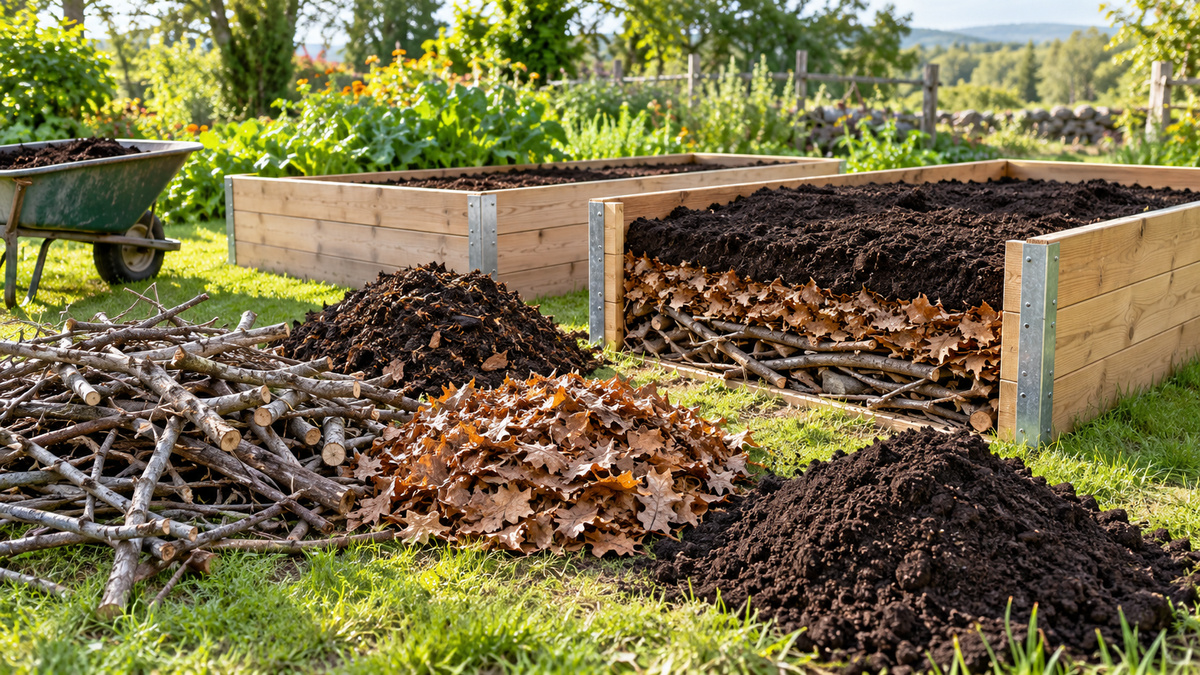
The EPA identifies food scraps, dry leaves, and woody yard material as inputs that can be composted at home. It also says compost helps soil absorb and hold water. These points support adding finished compost to a bed as a soil amendment, but they do not set the volume or recipe for a particular bed. Match the fill to the bed’s measured volume, and keep material that has not yet decomposed out of your volume calculation unless you allow for it shrinking as it breaks down.
FAQ
What is the difference between potting mix and garden soil?
Potting mix is a light blend made for containers, while garden soil is heavier and meant for the ground. A raised bed mix is sold for beds that are filled from above. Read the product title for the soil type, and do not treat the three as interchangeable.
How much soil do I need for a raised bed?
Multiply the inside length, width and depth in feet to get cubic feet, then divide by the cubic feet in one bag. A 4 ft by 2 ft by 1 ft bed is 8 cubic feet, which is 4 bags of 2 cu ft. Round up, because soil settles.
Can I convert a bag listed in pounds to cubic feet?
Not from the title alone. A weight needs the density of the mix to become a volume, and density varies with moisture and ingredients. Check the product page for a volume in cubic feet or liters.
Is organic soil better for vegetables?
An organic claim tells you how the product is positioned, not what is in the bag. Wiggle Worm and Espoma carry organic wording in their titles. If you grow food, read the ingredient list on the listing before you buy.
Should I buy the largest pack?
Only after you know what the number refers to. A 4-bag listing is more soil only if the stated volume is per bag, and a 2-pack of .33 cu. ft. may still be a small amount. Compare cubic feet against the volume your bed needs.
What if the listing leaves out drainage or ingredients?
Treat the detail as unknown. Check the current listing or the bag rather than borrowing a detail from a different product.
Bottom line
Measure the bed first and work out the cubic feet you need. Choose Wiggle Worm if you want a mix named for raised beds and can find its volume, the Potting and Propagation Mix for well-draining container use, and Espoma if you want an organic vegetable and flower soil and can confirm the size and the raised bed use. Treat the FoxFarm and Miracle-Gro products as potting soil and planting mix for smaller jobs. Whatever you choose, confirm volume and ingredients on the current page before you order.
Sources
- EPA composting at home: supports the general context or maintenance statement used in the body