How to Grow Zucchini in Containers
As an Amazon Associate we earn from qualifying purchases.
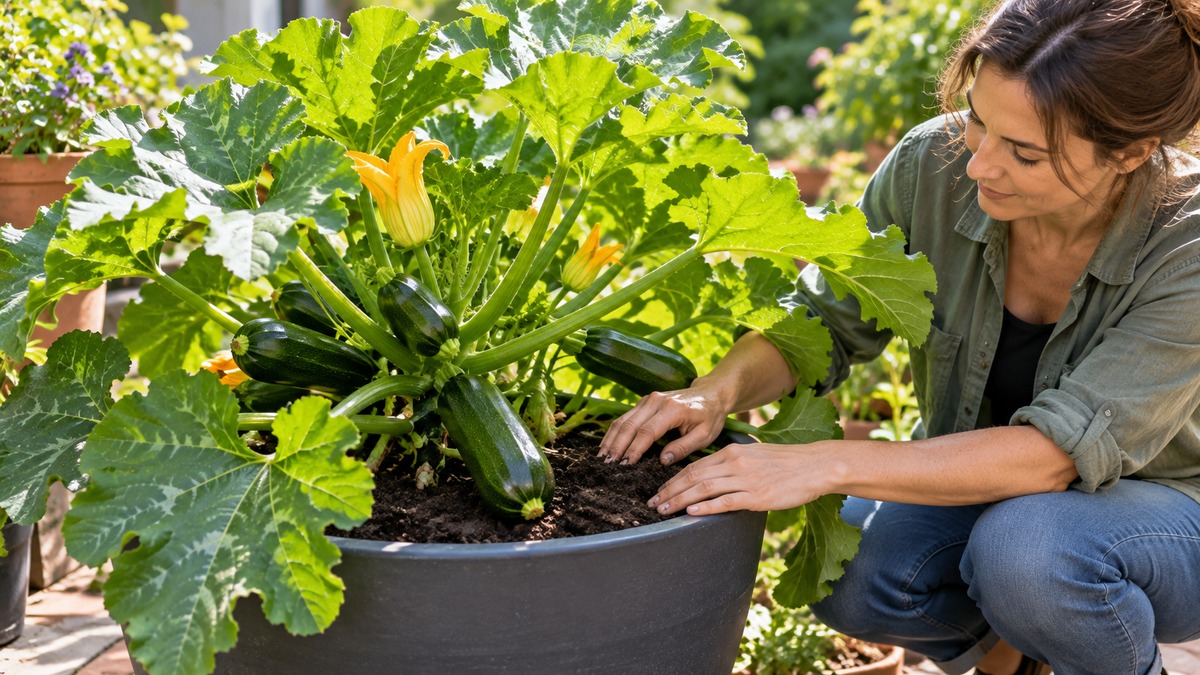
How to grow zucchini in containers depends first on the pot. The extension guides we opened give container figures that run from about 3 gallons to 15 gallons, and they agree on the rest: a bush-type plant, drainage holes, a potting mix, and at least six hours of sun. Wisconsin Extension counts squash among larger plants, and the guides treat the pot as the main limit on the room the roots and leaves get. This article sets out the figures side by side, because the guides do not agree on the size.
Quick answer
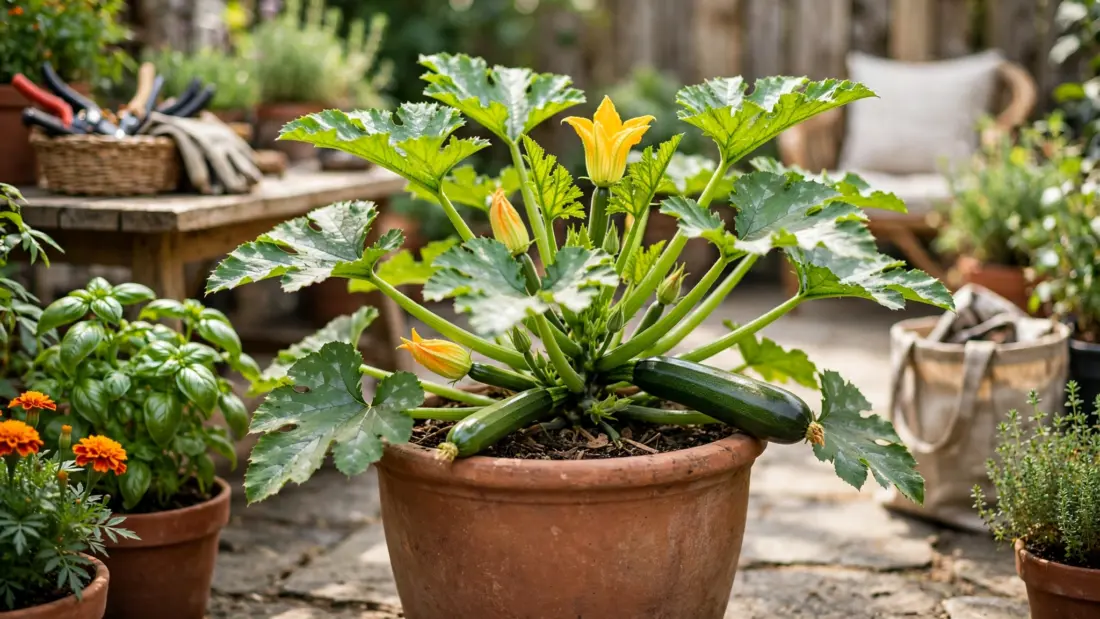
- Choose a bush variety rather than a vining type. Two Oregon State guides and NC State Extension all point that way.
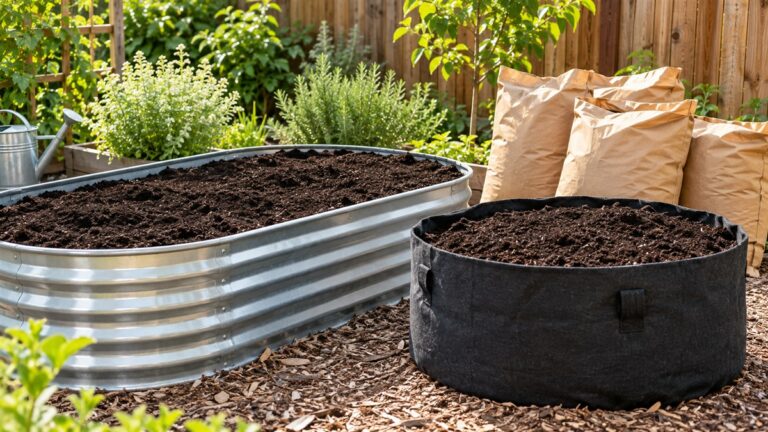
- Use a container with drainage holes, filled completely with potting mix.
- Wisconsin Extension sets a 5-gallon minimum for squash, and Maryland Extension prefers 15 gallons for a single plant.
- Water daily once the plant starts to set fruit, and pick the fruit often.
Choose a pot that holds the plant comfortably
The guides set different size floors, and the difference matters for a plant this large. The Maryland Extension answer on Ask Extension, from the Home and Garden Information Center, says that “The absolute minimum size is probably a little bit smaller, but a 15-gallon container would be better, yes.” The same answer adds that “One plant is all we would recommend growing in that size, since more would be too crowded in terms of competition between roots.”
NC State Extension sets a lower floor for its Onslow County guide. It says “Direct seed or set out transplants in containers that are at least 3 gallons in size.” It also says “You can plant 3 plants or a hill in 15 gallon containers or larger.” The same page groups zucchini with cucumbers and yellow squash, and gives the 3-gallon figure for that group.
Wisconsin Extension gives the most specific figure for squash. Its guide says “Larger plants like tomatoes, peppers, broccoli, eggplants, squash, cucumbers and bush beans require a container with a minimum volume of five gallons and a depth of 12 to 18 inches.” That sets a clear floor for depth as well as volume, which the other guides do not give for squash.
The Oregon State container guide takes a general approach. It says “Most vegetables will do best in containers that hold 2 to 5 gallons of soil and are at least 12 inches deep.” Read as a target for zucchini, that general figure is smaller than the squash-specific figures from Wisconsin and Maryland. The table below shows each figure as the guide states it.
| Source | Container figure stated for squash or zucchini | Plants per container, as stated |
| Maryland Extension (Ask Extension answer) | A 15-gallon container is described as better than the absolute minimum | One plant; limit to two if more are grown |
| NC State Extension, Onslow County | At least 3 gallons for direct-seeded or transplanted squash | 3 plants or a hill in 15 gallons or larger |
| Wisconsin Extension | Minimum of 5 gallons and a depth of 12 to 18 inches | Not stated |
| Oregon State Extension, container guide | 2 to 5 gallons of soil and at least 12 inches deep, for most vegetables | Not stated |
| Oregon State Extension, squash guide | Not stated as a volume | Two to three plants, for pollination |
Pick a bush variety, and plan for support if you grow a vine
Oregon State’s squash guide makes the variety point most clearly. It says “Many varieties of summer squash require a lot of space, but some bush varieties can be grown in large containers.” The guide points to a separate list of recommended varieties, which this article does not reproduce. NC State gives the same direction: “Choose bush varieties rather than vining when possible.”
A vining type changes the job. Wisconsin Extension says “Vining plants like cucumber, peas, melons and squash can be grown in containers with proper supports (e.g., trellises).” The Oregon State container guide makes a similar point about the pot itself: “A pole or trellis in the pot will help support the plant and allow air to flow around the leaves.” If you are growing a vine in a pot, plan the support before you plant, not after.
Drainage and potting mix
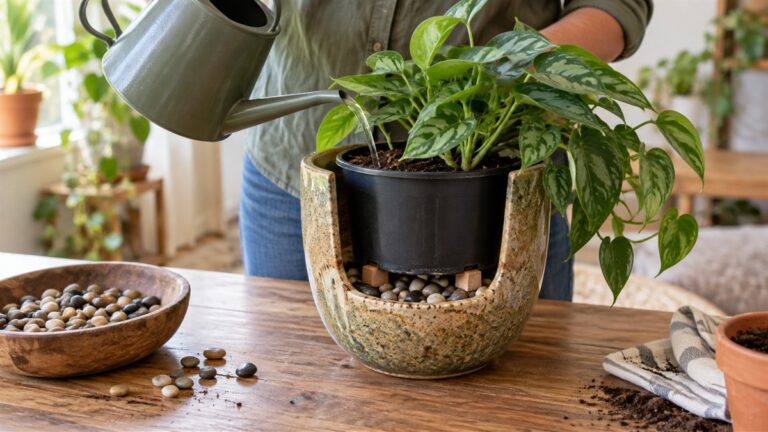
Drainage comes first. Oregon State’s squash guide says “Make sure your container has small holes near the bottom to allow water to drain from the soil.” It adds “Otherwise, roots may become waterlogged.” The container guide says “Choose a container with holes at the bottom so extra water can drain away.” Those two lines describe the same requirement from two sides.
Use a mix made for containers. The Oregon State container guide says “Use a commercial potting soil rather than soil dug from the ground.” Wisconsin Extension adds “Fill your container completely with planting mix for optimal drainage.” The guide also warns against layering: “Research shows layering materials in a container impedes drainage; water moves best through a continuous column of soil mix.”
For a wider look at what soil volume a bed holds, see how much soil a raised bed garden needs. For soil made for pots in particular, see using raised bed soil in pots.
Sun, water and fruiting
Light is simple to state. Wisconsin Extension says “Place your containerized plants in full sun (i.e., a minimum of six hours per day) with easy access to water.” That is the minimum it gives, and a shaded spot may not meet it, so check the light before you place the pot.
Watering changes as the plant grows. Wisconsin Extension says “Initially, when plants are small, you will not need to water much.” Then the plant begins to set fruit, and the same guide says “However, as plants increase in size, the temperature increases, and the plants start to produce fruit (e.g., tomatoes, peppers, eggplants, zucchinis, cucumbers), you will need to water daily.” Plan for that change once the plant begins to set fruit, since the guide ties the need for daily water to rising temperatures and larger plants.
Oregon State’s squash guide gives a spacing figure for bush types, saying bush varieties need about 12 inches of room around them. That figure is for planting space, and it helps you judge whether a pot is wide enough for a bush plant to spread.
How many plants per pot
The guides disagree on this point, and the disagreement is useful. Oregon State suggests more than one plant for pollination: “To ensure you have enough blossoms open for pollination, you may choose to grow 2 to 3 plants.” Maryland takes a stricter line: one plant is the recommendation, and “If you must grow more than one zucchini plant in that pot, try to limit it to two.” NC State allows three plants in a 15-gallon container or larger.
Read together, the guides support one plant in most containers, and two or three only in a large one. They do not give a rule that works across every pot size, so the number is a decision you make against the container you have.
Timing and planting
NC State gives a calendar for its own region: “Plant out after last frost, mid to late April.” That date belongs to the Onslow County area in North Carolina, so it does not carry to other regions. Oregon State publishes its own planting calendar for squash in Oregon, which is a separate table from the North Carolina one. Find the date that matches your last frost before you plant.
Both direct seed and transplants are options in the NC State guide, since it says “Direct seed or set out transplants in containers that are at least 3 gallons in size.” The guide does not say which method gives the bigger harvest.
Harvest often and remove the big fruit
Oregon State says “Harvest often to encourage the plant to produce more squash.” It adds “If you missed picking a squash and it grows large, remove it.” The reason it gives is that “This helps the plant put its energy into growing new squash.” Regular picking keeps the plant from putting energy into one oversized fruit.
For technique, the same guide says “Gently but firmly grab the squash near the end away from the plant.” It then says “Lift up and twist to remove.” Those are the picking steps the guide gives, and they apply to fruit still on the plant.
Mistakes to avoid
- Choosing a pot smaller than the squash figure from Wisconsin, which is 5 gallons at minimum.
- Planting a vining type with no support. Wisconsin Extension and the Oregon State container guide both call for a trellis or pole.
- Skipping the drainage holes. Oregon State says roots may become waterlogged without them.
- Missing daily watering once fruit starts. Wisconsin says the plant needs water daily at that stage.
- Leaving a large fruit on the vine. Oregon State says to remove it so the plant keeps producing.
How we chose
This article draws on five extension pages, each opened with curl on 2026-10-22 and each returning HTTP 200. They are Maryland’s Ask Extension answer, the Wisconsin Extension container guide, two Oregon State University Extension pages (the squash guide and the container guide) and the NC State Extension Onslow County page. We left out gardening blogs and retailer guides, even where search results put them first, because their container figures do not give a traceable origin. Where the guides disagree on pot size, the table above shows each figure rather than choosing one.
What we could not verify
The largest gap is pot size. Maryland’s figure is a preference, NC State’s is a floor, Wisconsin’s is a squash-specific minimum, and Oregon State’s general figure covers a 2 to 5 gallon range for most vegetables. No guide tells you which figure to follow for a particular variety, which is why the table is the most useful part of this article.
What the sources do not say
None of the five pages gives a yield figure for a container zucchini plant. They do not say how many fruit a pot produces, how long a plant keeps producing in a pot, or how a pot compares with a bed at the same size. Wisconsin Extension gives no dose for squash; it says to “use a fertilizer designed for growing vegetables, and follow the instructions on the label to determine how much and how frequently to apply.” They also do not cover pests or diseases in containers, and this article does not offer treatment advice. The NC State dates are for Onslow County in North Carolina and the guide does not say how they shift elsewhere.
Frequently asked questions
How big a container does zucchini need?
The guides do not agree on one number. Maryland says a 15-gallon container would be better than the absolute minimum. NC State says at least 3 gallons for direct-seeded or transplanted squash, and Wisconsin says at least 5 gallons with a depth of 12 to 18 inches. Maryland’s answer also points to crowding between roots as the reason to limit plants.
Can you grow zucchini on a balcony?
Wisconsin Extension says containers “can be placed on a windowsill, patio, deck or balcony.” The guide also asks for at least six hours of full sun. The sources do not say how much balcony sun is enough beyond that minimum, so check the light on your balcony before you plant.
Should you pick a bush variety?
In a pot, the guides lean that way. Oregon State says some bush varieties can be grown in large containers, and NC State says to choose bush varieties rather than vining when possible. Wisconsin Extension says vining squash needs proper supports such as trellises, which a bush type can often avoid.
How often should you water a zucchini in a pot?
Wisconsin Extension says a young plant needs little water, but once it starts to produce fruit, “you will need to water daily.” Oregon State adds that drainage holes keep roots from becoming waterlogged. The guides do not give a volume per watering, so check the soil before each watering.
How many zucchini plants fit in one pot?
It depends on the pot. Maryland says limit a large pot to two plants if you must grow more than one. NC State says three plants fit a 15-gallon container or larger. Oregon State suggests two or three plants to make sure enough blossoms open for pollination. Pick the number that fits the container you have.
Sources
- https://ask.extension.org/kb/faq.php?id=783343 (opened 2026-10-22)
- https://hort.extension.wisc.edu/articles/growing-vegetables-containers/ (opened 2026-10-22)
- https://extension.oregonstate.edu/es/node/236256 (opened 2026-10-22)
- https://extension.oregonstate.edu/es/node/236221 (opened 2026-10-22)
- https://onslow.ces.ncsu.edu/2025/03/easy-container-vegetables-and-how-to-grow-them (opened 2026-10-22)