How to Grow Coneflowers
As an Amazon Associate we earn from qualifying purchases.
Learning how to grow coneflowers starts with drainage, not fertilizer. The plants bloom best in full sun or partial shade, and the Mississippi State extension publication calls crown rot a major problem when the soil stays too wet. Once established they are drought tolerant. This guide covers site, planting, feeding, dividing and seed, using three university extension pages from Mississippi, Florida and Pennsylvania.
All three pages were opened on 2026-10-22. Where they describe the same plant differently, we say so instead of choosing one version.
Quick answer
- Plant in full sun to partial shade, in well-drained soil that has compost or organic matter worked in.
- Keep the crown at or above the surrounding soil. Burying it can lead to crown rot.
- Feed lightly each spring, pull mulch away from the crown, and deadhead for more bloom.
- Divide clumps every few years in spring, or sow seed in small pots in fall and leave them outdoors over winter.
Pick a site that drains well
Sun and drainage come first. The Mississippi publication says site selection matters, and that full sun to partial shade gives the best flowering. The Florida publication describes the plant as suited to part shade or part sun, and it says the plant handles a wide range of soils, from acidic to slightly alkaline, including loam and clay, and can cope with occasional wetness.
Hardiness ranges differ between the pages. Penn State Extension lists zones 3 to 9, and UF/IFAS gives USDA zones 4 through 10. The two ranges overlap but are not the same, so check the zone for your own yard before you buy plants.
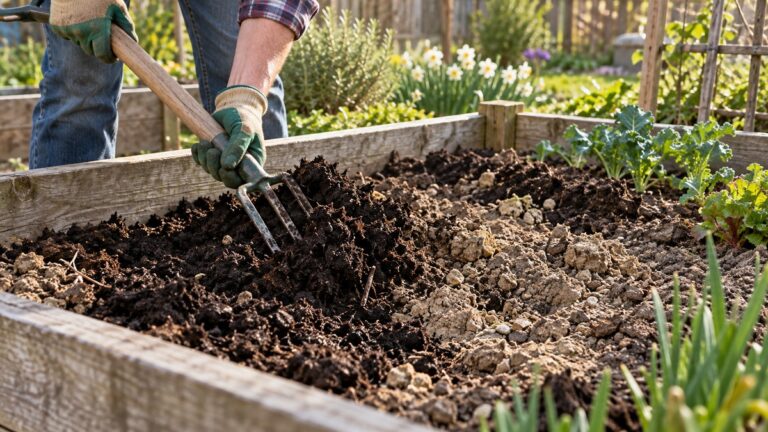
Drainage is where the sources push hardest. Mississippi State recommends a well-drained soil enriched with good compost or organic matter. It also advises planting in berms or raised beds, which move water away from the crown. If you are building a raised bed for them, our guide to how much soil a raised bed needs covers the depth question, and our guide to filling raised beds covers the fill.
Penn State’s listing gives clay or rocky soil that ranges from moist to dry as the site conditions. The same page gives a moderate salt tolerance rating, which is worth knowing for a bed near a road.
Set the crown at the right height
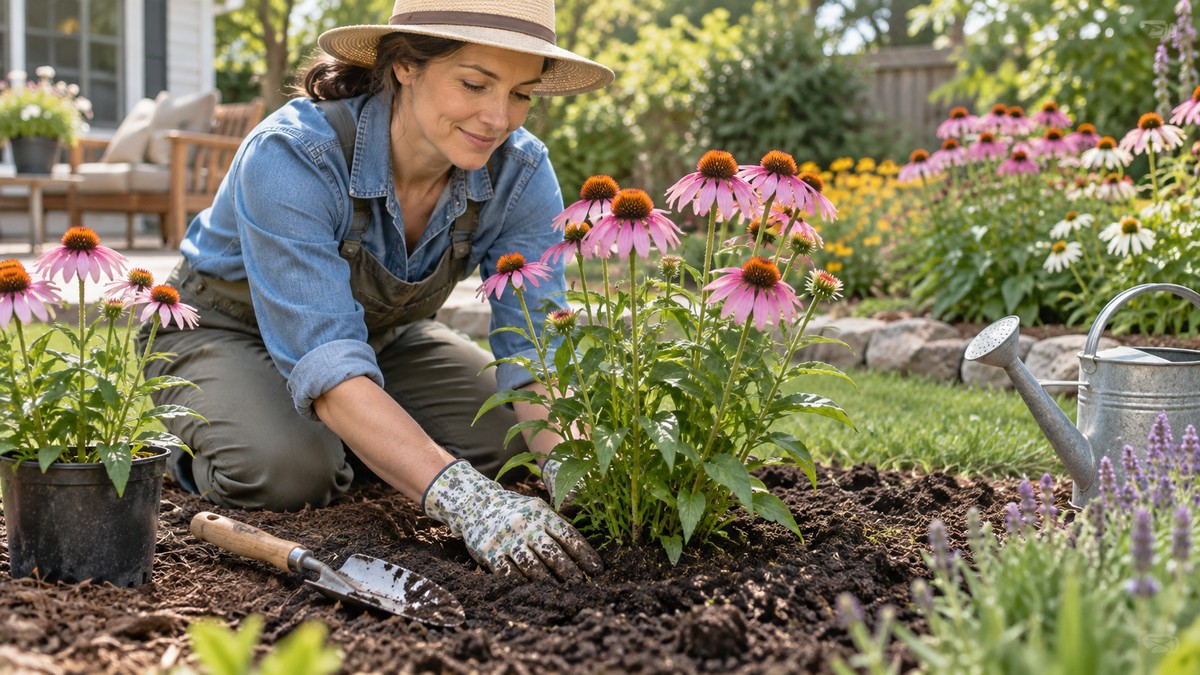
The Mississippi page singles out the crown for special attention. It says not to bury the crown below the grade of the surrounding soil, because that can lead to crown rot.
Containers are another option. The Mississippi page calls large containers a strong way to improve drainage, and it advises commercial potting media rather than garden soil. A container also suits gardeners who forget to water, because the Mississippi page says the plants are drought tolerant once established.
The Florida publication gives plant spacing of 18 to 24 inches. Use that range as a starting point for a bed, and remember that the plants spread over time.
Height and bloom timing vary by page. The Florida page describes the plant as 1 to 3 feet tall, with flower stalks standing 2 to 4 feet, and it notes that blooms come in spring and summer in central Florida, but only in summer across the rest of the eastern United States. Penn State gives 24 to 36 inches and a July to August bloom. The Mississippi page describes species that reach up to 4 feet.
Water and feed with care
Once established, the sources describe the plant as drought tolerant. The Florida page says it tolerates drought well in partial shade and less well in full sun, which is useful when you choose between a shaded spot and an open bed.
Feeding should be light. Mississippi State suggests a sprinkling of balanced, controlled-release fertilizer or high-quality compost each spring. It says either one builds the soil and feeds the plant. The page does not give a fertilizer rate, so follow the product label for amounts.
Mulch needs care. The Mississippi page warns that too much mulch can hold moisture against the crown, so keep it pulled back from the crown after each application. Keeping mulch off the crown addresses the moisture problem the page describes.
Put the routine on a calendar
The steps above fit into one year. The table gathers the timing each page gives, so you can see which job falls in which season.
| Season | What the sources say | Where the advice comes from |
|---|---|---|
| Spring | Cut the plant back completely before new growth begins; feed lightly with a balanced controlled-release fertilizer or compost; divide clumps as new growth emerges | Penn State; Mississippi State |
| Summer | Bloom period in July and August; deadhead for reblooming; keep mulch pulled back from the crown | Penn State; Mississippi State |
| Fall | Sow seed in small pots and leave them outdoors; leave seed heads standing for birds and possible reseeding | Mississippi State |
| Winter | Seed sown in fall gets the cool, moist period it needs, about 30 to 90 days; standing seed heads feed birds | Mississippi State; Penn State |
Planting is not in the table, because the sources give different planting windows. UF/IFAS lists planting months as year round for zones 7 through 11, and the other two pages do not give a planting month. Your county extension calendar is the better guide for the timing of planting in your area.
Deadhead for more flowers, or leave seed heads for birds
Deadheading encourages reblooming into fall and keeps the planting tidy, according to Mississippi State. Penn State lists the bloom time as July to August for the species on its page, and the Mississippi page says the plants keep flowering for as long as 12 weeks or more through summer heat and humidity.
Leaving seed heads standing through the close of the season has two benefits. Mississippi State says the seed heads provide winter food for birds, and that some plants reseed the next year. Penn State says the seed heads feed goldfinches, and that the flowers give butterflies, bees and other pollinators nectar.
In spring, Penn State says to cut the plant back completely before new growth begins. That step fits the spring routine described above.
Divide clumps every few years
Dividing is how most gardeners keep a clump healthy. Mississippi State says clumps can be divided every three to four years, in spring as new growth emerges, and that every piece needs both a shoot and roots. The Florida page recommends dividing clumps on a few-year cycle so the plants keep flowering, and notes that growers also propagate by root cuttings.
The Mississippi page times division for when new growth is emerging, and it wants a shoot and roots on each piece. Replant each division with its crown not below the surrounding soil, as the page advises for any planting.
Grow from seed in fall
Mississippi State says purple coneflowers grow readily from seed. A cool, moist period of about 30 to 90 days helps the seed germinate evenly, which the page calls stratification. Its simplest method is to sow seed in small pots in fall and leave the pots outside over winter, which the page calls an easy way to stratify.
Move the seedlings to their planting spot the next spring, once they show two or three sets of leaves. The pages do not say how long a seedling takes to flower.
Choose a species, and know where it grows
The Mississippi publication counts nine coneflower species as native to North America, and the table below gives the details it provides for each one. The table is a guide to choosing the plant that fits your region, not a list of products.
| Species | Height, up to | Bloom period | Native range, as listed |
|---|---|---|---|
| Narrow-leaf purple coneflower | 2 feet | June to July | Prairies from Texas to the Canadian border |
| Topeka purple coneflower | 3 feet | April to June | Small, localized areas in Oklahoma and Kansas |
| Smooth purple coneflower | 4 feet | May to June | Local regions in Virginia, North Carolina, South Carolina and Georgia; federally listed as endangered |
| Pale purple coneflower | 3 feet | May to July | Wide areas of the eastern United States |
| Yellow purple coneflower | 3.5 feet | June to July | Texas, Oklahoma and Arkansas |
| Eastern purple coneflower | 3 feet, some taller | June through August | Wide areas of the eastern United States; rare in Mississippi |
| Sanguin purple coneflower | 3 feet | May to June | Coastal plains to the western Gulf of Mexico |
| Wavy-leaved purple coneflower | 3 feet | June to July | Illinois, Missouri, Kentucky, Tennessee, North Carolina, Alabama and Georgia; federally listed as threatened |
| Tennessee purple coneflower | 2 feet | June to August | Three-county area around Nashville, Tennessee; federally listed as endangered |
The Mississippi page explains that many species evolved in Midwestern prairies and are adapted to heat and frequent drought, while others evolved in moist woodlands east of the Mississippi River. It does not link those origins to specific planting spots, so match the species to your own site. The eastern purple coneflower is the species most often sold, according to the Mississippi page. Three of the nine species are federally listed, so check listing status before you choose a species for a wild or naturalized planting.
Plan for a short-lived plant and a changing bed
Mississippi State describes purple coneflowers in the state as short-lived flowering perennials. It says cool, damp winters can cause crown rot, and that raised beds, slopes or containers can help, though none of them guarantees survival. Plan to replace plants now and then, which the page presents as normal.
The bed may also change on its own. UF/IFAS calls the plant aggressive and spreading, and Penn State lists it as self-seeding. A bed with coneflowers can therefore look different from one year to the next, especially if you leave seed heads standing.
Landscape uses that suit the plant
The Mississippi page lists three main uses. The first is a naturalized wildflower garden, since the species are native wildflowers in the state. The second is a more formal perennial border. The third is a large container for a gardener who sometimes forgets to water, because the plant is drought tolerant. The page names ornamental grasses, sedum, rudbeckias, Mexican bush sage, dusty miller and lamb’s ear as companion plants.
The Florida page says the stiff look of the plant contrasts well with softer perennials and suits a mixed border. It adds that the plant is especially useful in light summer shade, where protection from afternoon sun helps the flowers and foliage keep their color. It also says the plant attracts butterflies.
How we chose
We limited this guide to university extension publications. Three pages met that test and were fetched with curl on 2026-10-22, each returning HTTP 200. They come from Mississippi State University Extension, UF/IFAS Extension in Florida and Penn State Extension. The Mississippi publication carries the code POD-03-24. The Florida publication was first issued in October 1999 and revised in October 2023. The Penn State page shows an update date of June 25, 2026.
We did not use a Clemson factsheet, because the fetch returned HTTP 403, and we did not use commercial nursery or seed pages. The Mississippi publication lists named cultivars from nursery introductions, and we left those names out. Search-result summaries were not treated as evidence.
What we could not verify
This section lists where the sources are silent or disagree.
What the sources do not say
The pages do not give a time from seed to first flower, and they do not give a germination rate for the seed.
Hardiness differs by page, with zones 3 to 9 on the Penn State page and zones 4 to 10 on the Florida page. The pages do not explain the difference.
The native range is described differently. The Florida page lists the plant as native to Florida, while the Mississippi page describes wide areas of the eastern United States. The pages do not reconcile the two statements.
Only the Florida page gives a spacing figure, so the 18 to 24 inch range cannot be checked against a second source.
This guide does not cover pest or disease control. The Mississippi page also discusses herbal uses and advises anyone considering them to consult a healthcare professional. This guide makes no health claims.
Frequently asked questions
Can coneflowers grow in part shade?
Yes. The Mississippi page says full sun to partial shade gives the best flowering, and the Florida page says the plant grows in part shade or part sun. The Florida page also notes that light shade in summer helps protect the flowers and foliage from afternoon sun.
Why did my coneflower fail over winter?
Mississippi State says cool, damp winters can cause crown rot, and it describes the plants as short-lived in that state. Keeping the crown from sitting below the surrounding soil and improving drainage are the two steps the page emphasizes.
How long does a coneflower grown from seed take to bloom?
The pages do not give a time from seed to first flower. The Mississippi method is to sow seed in small pots in fall, leave them outdoors, and transplant the seedlings the following spring once they have two or three sets of leaves.
When should coneflowers be cut back?
Penn State recommends cutting the plant back completely in spring, before new growth starts. Mississippi State suggests leaving seed heads through the end of the season, because they feed birds in winter.
How often should coneflowers be divided?
Mississippi State says every three to four years, in spring as new growth emerges. The Florida page says every few years. Divide only when each piece has a shoot and roots attached.
Sources
- https://extension.msstate.edu/publications/purple-coneflowers-for-the-mississippi-gardener (opened 2026-10-22)
- https://edis.ifas.ufl.edu/publication/FP192/pdf (opened 2026-10-22)
- https://extension.psu.edu/rain-garden-plants-purple-coneflower (opened 2026-10-22)