How to Start a Vegetable Garden
As an Amazon Associate we earn from qualifying purchases.
Learning how to start a vegetable garden is mostly planning. Extension guides from the University of Maryland, the University of Nevada, Reno and Purdue University all begin the same way: choose a sunny, level site, check the soil, and plan the layout before you buy seed or plants. They also agree that a small first plot is the safer start.
Their figures differ, because each guide was written for its own climate. The Reno sheet covers northern Nevada, and the Purdue table is for Indiana. This article uses each figure only with its source, and it names the points the pages leave open.
Quick answer
- Pick a level spot with full sun. The Maryland and Purdue guides give six hours as the minimum, and the Reno sheet asks for six to eight.
- Test the soil before planting, and add organic matter to improve it.
- Plan the layout on paper, and start small, with a first plot of about 50 to 75 square feet.
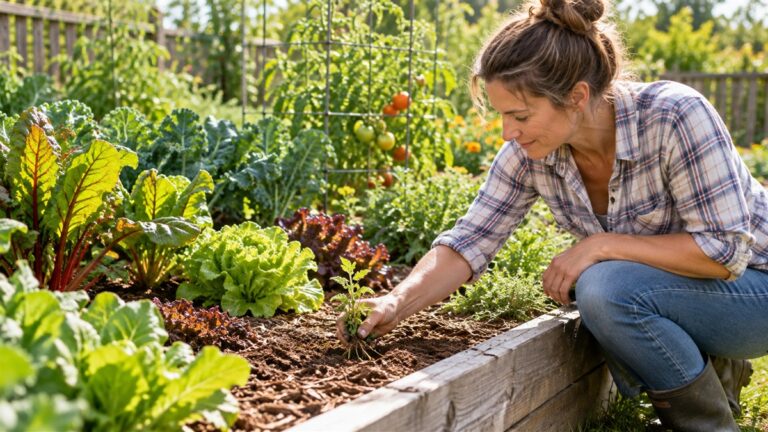
- Buy healthy transplants for crops that are hard to start from seed, and keep the bed evenly watered.
Choose a sunny, level site
Sun comes first. The University of Maryland guide says: “Your garden should be on level ground in a spot that gets at least 6 hours of full sun a day (preferably more).” Purdue says “Most vegetables require a minimum of 6 hours of direct sunlight daily.” The Reno sheet asks for more: “Generally, choose a site that gets full sun for at least six to eight hours per day.” The pages differ on the number, so count the hours in your own yard on a sunny day.
Shade from trees and buildings matters too. Maryland says to “Avoid the shade from trees, shrubs, and buildings where possible.” Purdue says “Avoid planting vegetables near trees and shrubs.” Purdue also warns about walnut trees, which produce a substance called “juglone”, and recommends “a minimum distance of 50 feet” between walnut trees and sensitive plants.
Water access is the other site test. Reno says “Vegetable plants need a consistent supply of water to support their growth”, so the site needs to reach a hose or an irrigation line. Purdue adds that “Vegetables grow best in an open, level area where the soil is loose, rich, and well drained.”
Test the soil and add organic matter
Maryland recommends a soil test before planting: “Have your soil tested to determine nutrient levels and acidity level (pH), and to be sure it is safe to plant in (measures less than 400 ppm of lead).” The page gives that lead threshold but does not say how to test for lead or what to do with a high result.
If the soil is poor, Purdue advises adding organic matter: “If the quality of the soil is poor, mix in 2-3 inches of topsoil, peat moss, strawy manure, compost, or leaves plus fertilizer.” It gives a target as well. “Sandy soils should contain 2 to 3 percent organic matter; clay type soils need 4 to 5 percent.” Purdue adds that “Annual applications of organic matter are required to reach these levels and to maintain them.”
On bare ground, Maryland’s advice is simple: “If you’re starting with bare ground (no grass to remove), add at least two inches of compost on top of your soil and dig it in.” If grass is present, Maryland says to “Turn under or remove the grass sod but do not dispose of it, as sod contains valuable topsoil and organic matter.”
Purdue gives the pH range most vegetables prefer: “most vegetables perform best in a slightly acidic soil (pH 6.0-6.8).” Raised beds are another option. Maryland notes that “Raised beds may either be surrounded by an enclosure (such as wooden boards) or built up with sloped sides and no enclosure.” For how much soil a raised bed needs, see our guide to how much soil a raised bed garden needs, and for filling the bed, see how to fill raised beds.
Plan the layout on paper
Purdue calls planning “the first and most basic step in home vegetable gardening.” Its method is to make a rough “blueprint” of the plot, and to include “the vegetables you will plant, which rows they will be in, the distance between rows, the expected planting date, and any other information you feel would be helpful.”
Place tall crops where they will not shade short ones. Maryland says to “Place taller crops on the north and west sides so they will not shade shorter plants.” Purdue says the same for its tall crops: “Tall-growing crops like sweet corn, tomatoes, and pole beans should be grouped together at the North end of the garden, to avoid shading smaller plants.” Purdue also suggests keeping “early vegetables such as lettuce, radishes, and green onions together.”
Maryland adds a timing rule: “Group plants by what season they grow in and how long they take to come to maturity.” Early crops can give way to later ones after harvest, which means the same bed can carry two crops in a season.
The layout should match your time. Purdue warns: “Don’t plan for more than you can take care of!” Reno says an overly enthusiastic gardener “may plant more than the family can use, or underestimate the time it will take for thinning young plants, weeding the bed and harvesting the produce.”
Start small and grow what you eat
Maryland says “Start small and expand when you are ready. A good starter size is 50-75 square feet.” It advises beginners to “Grow vegetables that you like to eat and are expensive to buy.” Its list of easy crops includes bush bean, tomato, cucumber, pepper, lettuce, summer squash and leafy greens.
Reno makes the same case: starting small with a few easy-to-grow vegetables will “increase your chances for success”. Its suggestion is to begin with a strip on the south side of a garage, a sunny space near the patio, or a few plants tucked among flowers.
Reno also describes succession planting: “Succession planting can ensure a continuous supply of produce.” The sheet’s example is a 10-foot row of beans, with another planting two to four weeks later, to extend the harvest.
Choose seed or transplants
Maryland tells gardeners to “Learn about the vegetable you are interested in growing to determine whether a particular vegetable is best direct-seeded in the ground or whether its seeds have to be planted indoors and grown to transplant size.” Purdue singles out crops that are hard to start from seed: “Some vegetables, including tomatoes, broccoli, cabbage, cauliflower, eggplant, and peppers, are difficult to start directly in the garden from seed.” For those, it says “it is better to buy transplants from your local garden center or start your own transplants indoors.”
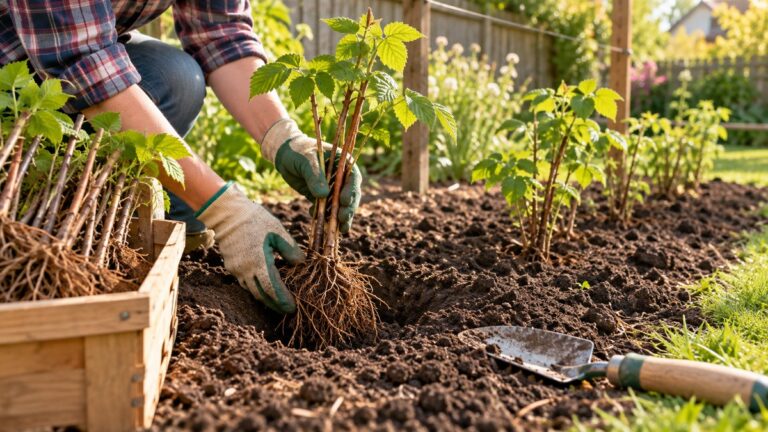
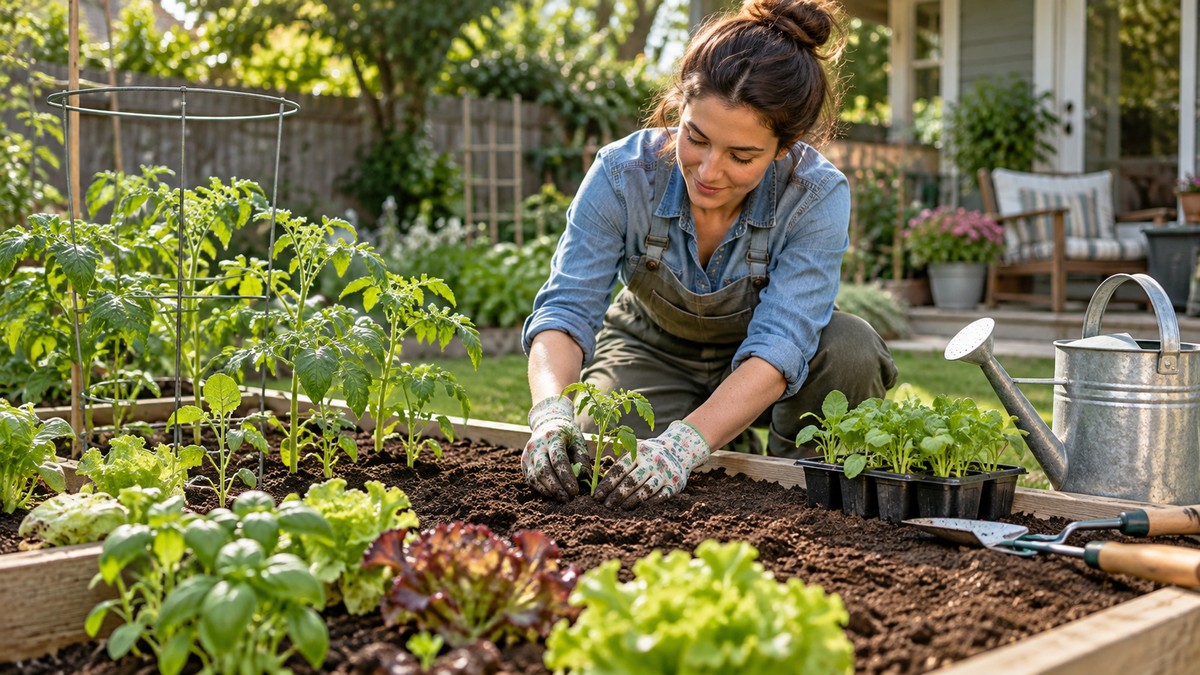
When you buy transplants, Purdue advises “Buy only sturdy, green transplants of known cultivars.” Transplants can also be hardened off before planting. Purdue describes this as exposing them gradually “to the cooler, brighter, and windier outdoors 1-2 weeks before final planting.” It also warns that “One of the most common errors in gardening is planting too deep.” For seed, Purdue says to “Sow seed evenly and a little thicker than the plants will finally stand; then gently cover and firm the soil with a rake.”
Set planting dates by frost and crop
Planting dates depend on how cold-hardy each crop is. Reno explains that “Frost-tender and cold-sensitive vegetables will not survive a frost without some protection; they need to be planted after the last frost date.” It adds that “Since there are many microclimates in the Reno area, planting dates may differ by several days to two weeks.”
Purdue’s planting table is for Indiana. The footnote reads “Early date is for Indianapolis.” The page does not give a rule for converting its dates to another area, so use the table as a pattern and check your own local dates.
Water steadily and deeply
Reno warns that plants “should never be allowed to dry out or sit in waterlogged soil”. Purdue puts the weekly need at one to one and a half inches, applied in a single watering unless rain supplies it. It also warns that light sprinklings “may do more harm than good because roots tend to form near the surface of the ground” when water does not penetrate deeper.
Maryland suggests watering in the morning and using drip or soaker hoses: “Use a soaker hose or drip irrigation system to reduce water use.” Purdue adds to “always apply water slowly so it can soak in”, so the water reaches the root zone.
Mulch and control weeds
Purdue’s advice on weeds is direct: “The best time to control weeds is when they’re small.” Its method is to “Weed with a sharp hoe, using a shallow shaving stroke, not a chop”, and to “Cultivate no deeper than 1/4-1/2 inch.” Maryland says to “Start early, as soon as weeds appear.”
Mulch helps. Purdue says “Mulching encourages growth by conserving moisture, controlling weeds, and moderating soil temperature”, and that “A 2-4-inch layer of organic matter will control most of the weeds.” It adds a caution: “During rainy seasons or in wet areas, any mulch may keep the soil too damp.”
Thin, stake and support
Seed-sown rows need thinning. Purdue advises “Thin plants while they are small and when the soil is moist to minimize injury to the remaining plants.” Its reason is that “Vegetables need room to grow”, and that proper spacing promotes faster growth and a better crop.
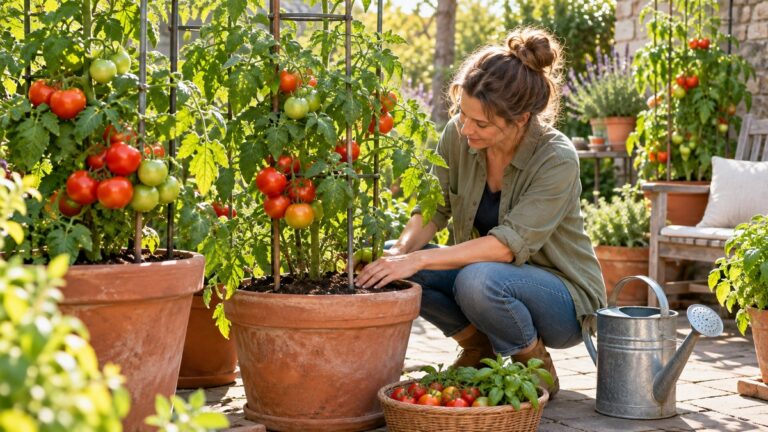
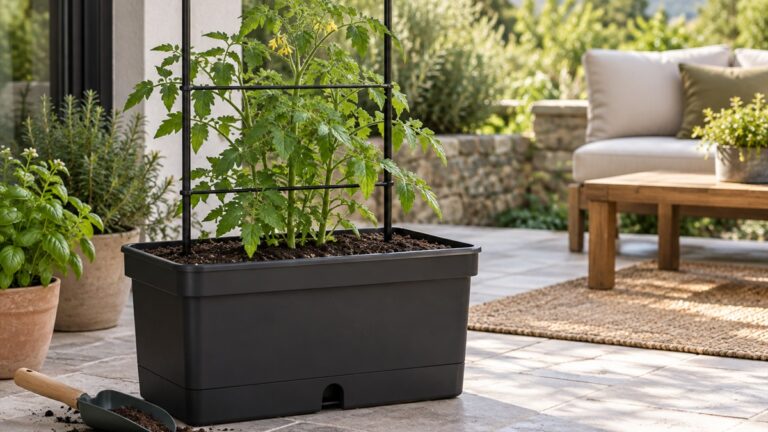
Vining crops need support. Maryland says to “Support tomato, pepper, and cucumber plants with stakes or trellises to save space.” Our general advice is only what the pages state, so use the stake or trellis that suits your bed.
Cover tender plants and watch for pests
Frost is the main weather risk for young plants. Purdue says to “Cover tender crops such as tomatoes, peppers, and eggplants when frosty nights are forecast.” It warns: “Do not allow the coverings to touch the plants, for they could injure the plants.” It also says “Don’t use metal or plastic sheets to protect plants from frost damage.”
Maryland’s pest advice is to “Monitor plants regularly for problems” and to “Learn to take an integrated pest management (IPM) approach to any plant or pest problem.” Purdue says “The very first step in controlling diseases and insect pests is to identify the cause of the problem.” Maryland also says to “Know your local animal population (deer, groundhogs, raccoons, etc.) and surround the garden with a fence as needed.”
Harvest at the right stage
Purdue says “proper harvesting at the right stage is essential” for quality and to prevent waste. Its summer squash example is to harvest “when fruit is small (6-8 inches long, or 3-4 inches across for round types), young, and tender.” The guide lists harvest signs for many crops, so check the entry for yours.
Mistakes to avoid
- Working wet soil. Purdue says “If it clings together, it’s still too wet”, and that soil worked too wet “will remain hard and cloddy for weeks.”
- Planting too deep. Purdue says seeds planted too deep “often do not come up.”
- Planting more than you can tend. Reno and Purdue both warn about the time that weeding, thinning and harvesting take.
- Setting transplants out in the heat. Purdue says to set them out “during the late afternoon or early evening, when the sun’s intensity and the wind have died down.”
- Letting weeds establish. Purdue says the best time to control weeds is when they are small.
How we chose
We drew on three extension pages, all opened with curl on 2026-10-22. They are the University of Maryland’s How to Start a Vegetable Garden, the University of Nevada, Reno’s Getting Started with a Vegetable Garden (Fact Sheet 10-15), and Purdue’s HO-32 Home Gardener’s Guide. We kept the steps that more than one page gives, and we attached each figure to the page that states it. The Reno sheet is written for northern Nevada and the Purdue guide for Indiana, so their dates are local examples, not national rules. We did not add product recommendations, fertilizer rates or pest products.
What we could not verify
The three pages do not agree on every number, and their figures are local. The planting dates, the sun hours and the watering amounts each come from one region or one guide, so a beginner should check them against local advice before planting.
What the sources do not say
- How to test for lead in garden soil, or what to do with a high reading. Maryland gives the threshold only.
- The depth of a raised bed. None of the three pages gives one.
- A single planting date that fits every area. Purdue’s table is for Indiana, and Reno’s dates are for the Reno area.
- How much each crop yields per square foot, or what a starter set of tools costs.
Frequently asked questions
How big should a first vegetable garden be?
Maryland says “A good starter size is 50-75 square feet.” It also advises starting small and expanding when you are ready, so a first bed can stay modest.
How much sun do vegetables need?
Maryland and Purdue both state six hours as the minimum. Purdue says “Most vegetables require a minimum of 6 hours of direct sunlight daily.” Reno asks for six to eight hours of full sun per day, so the pages differ and the spot should be checked before you dig.
Should a beginner start from seed or buy transplants?
Purdue recommends transplants for tomatoes, broccoli, cabbage, cauliflower, eggplant and peppers, because they are difficult to start directly from seed in the garden. Maryland says to learn whether each vegetable is best direct-seeded or started indoors.
When should planting happen?
Reno says that frost-tender crops “need to be planted after the last frost date.” Purdue’s table gives a date for Indianapolis, so use it as a pattern and check the dates for your area.
How often should a new garden be watered?
Purdue gives one to one and a half inches a week, delivered in one watering unless rain covers it. Maryland recommends a soaker hose or drip system to reduce water use, and Reno says plants need “a consistent supply of water to support their growth.”
Sources
- https://extension.umd.edu/resource/how-start-vegetable-garden (opened 2026-10-22)
- https://extension.unr.edu/publication.aspx?PubID=3168 (opened 2026-10-22)
- https://www.extension.purdue.edu/extmedia/HO/HO-32-W.pdf (opened 2026-10-22)