How to Keep Weeds Out of Raised Garden Beds
As an Amazon Associate we earn from qualifying purchases.
Learning how to keep weeds out of raised garden beds comes down to three habits: start with a clean bed, block the light and seeds that weeds need, and deal with the edges and bare spots all season. Extension sources agree that mulch stops many weed seeds from sprouting. None of them promises a weed-free bed, so plan on some hand pulling.
Raised beds make weeding easier. Utah State University Extension notes that most gardeners find raised beds easier to care for than in-ground gardens. This guide covers clearing, mulching, barriers and pulling, and it points out where the sources stay silent.
Quick answer
- Clear established weeds before you mulch, since mulch mainly stops seeds from sprouting and does not stop weeds that are already up.
- Use a coarse mulch that blocks light, and keep it covering the soil with no bare spots.
- Pull small weeds from the sides of the bed, and treat barriers as temporary, because perennial weeds can poke through their edges.
Why mulch works on weeds
Iowa State University Extension says mulches control weeds by preventing the germination of weed seeds. The King County Conservation District fact sheet adds that mulch which blocks light, and can physically interfere with seed germination, suppresses weeds. The University of Nebraska-Lincoln Extension states the mechanism plainly: by blocking sunlight, mulch reduces the germination and growth of weeds, which means less competition for water and nutrients.
The limits matter just as much. The King County sheet warns that covering perennial and grassy weeds will not suppress them, because they grow up through the mulch layer. It also notes that tiny seedlings may be smothered by mulch. Mulch is strongest against new seedlings and weakest against weeds that are already rooted.
The fact sheet also makes a point about texture. Coarse material works best, with particles from about 2/3 inch to three inches across. Finely textured, highly composted material is less effective at weed suppression, and it can give annual weeds a nutrient-rich seed bed.
Start with a clean bed
Begin with the weeds that are already there. Iowa State says established weeds should be destroyed before mulch goes on. In practice that means pulling or cutting them out first, since the King County sheet says covering perennial and grassy weeds does not suppress them. The University of Nebraska-Lincoln page asks for the same clearing step: remove weeds and debris from the area where you plan to apply mulch.
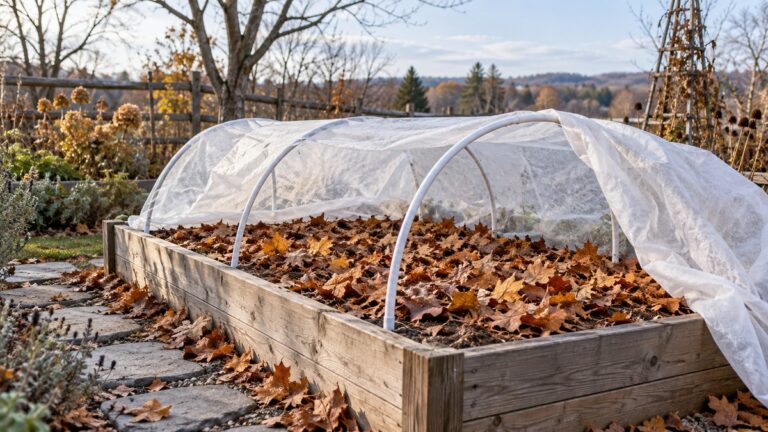
Timing counts. The King County sheet says weed suppression is most effective when mulch is applied after weeding. Washington State University Extension makes the same point in its fall handout. Weeding in the fall is critical for a successful garden in the spring, and bare spots should get mulch right after weeding, which helps deter new weeds from establishing themselves.
A clean start also makes later pulling easier. The King County sheet says weeds are much easier to pull from the well conditioned soil beneath good mulch. If you are still choosing what goes into the bed, see our guide to vegetables to plant in raised beds.
Use mulch that blocks light
Coarse, light-blocking material does most of the work. Iowa State’s FAQ lists grass clippings, shredded leaves, coco hulls and weed-free straw as excellent mulches for vegetable gardens. It says to apply several inches of them in early June, after the soil has warmed sufficiently. Plant growth may be slowed if these materials go on while soil temperatures are still cool in early spring.
Iowa State’s how-to adds a warning about clippings. Let lawn clippings dry before you apply them, because fresh clippings may form a dense mat or produce an odor. Clippings from weed-infested lawns will contain weed seeds, so a weedy lawn can bring its problem straight into the bed.
Colorado State University Extension describes a layered method with newspaper. A couple of sheets of newspaper may be used under the clippings to help control weeds, because the paper shuts out the light that seeds need to germinate. Newspaper blows away easily, so the sources say to cover it immediately with grass to hold it in place.
Barriers under mulch: what helps and what does not
Barriers are often the first thing gardeners reach for, so the cautions in these sources deserve attention. The King County sheet says plastic sheeting and fabric weed barriers are not always the quick fix they may seem to be. Some perennial weeds poke through or go around the edges, and barriers do not stop seeds from growing on top of them.
The University of Nebraska-Lincoln page says that if you use landscape fabric, you should lay it down before applying the mulch. It describes fabric as a layer that allows water and air to pass through while blocking sunlight to weeds. The King County sheet offers a biodegradable alternative for level ground: cardboard, newspaper or paper-based products placed beneath coarse organic mulch. That layer must be kept moist and fully covered, or it will not be effective.
The King County sheet puts fabric and biodegradable barriers in a narrow role. They are best used as temporary measures to subdue heavy weed growth, or as a no-till method to prepare a new garden over open ground. For a bed you already maintain, treat a barrier as a short-term helper, and let the mulch layer do the day-to-day work.
Keep the edges and bare spots covered
Edges and bare spots are where weeds come back. Washington State’s fall handout says to add mulch, cardboard or a cover crop to help keep weeds from establishing in your planting beds. It also says to add mulch to bare spots after weeding, which helps deter new weeds from establishing themselves.
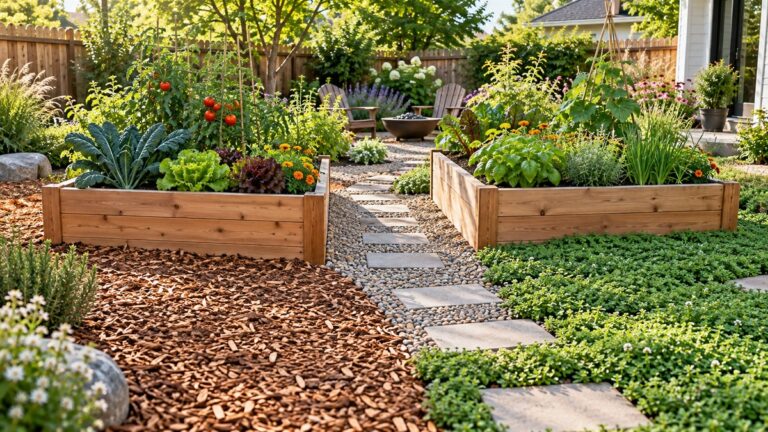
The paths between raised boxes need attention too. Colorado State says that in a raised-bed garden, wood or bark chips make excellent mulch between the boxes, and it recommends three to four inches deep to control weeds. The sources cover the paths and the beds as separate jobs, so decide on each one separately.
Pull weeds while they are small
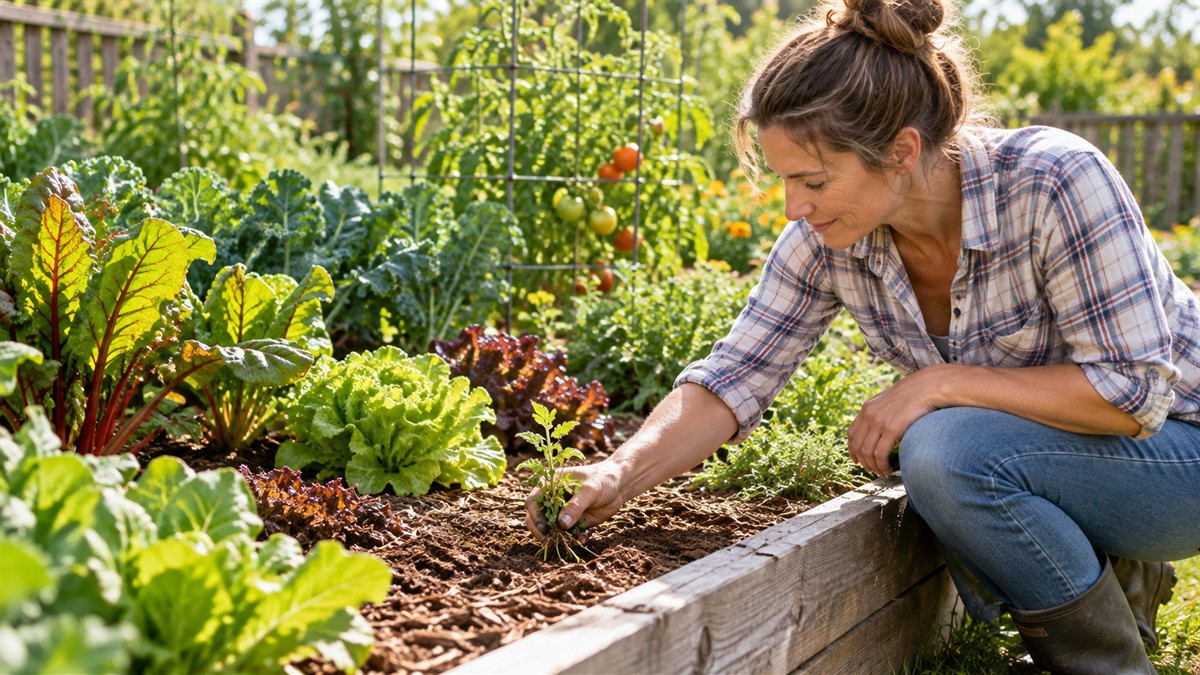
Hand pulling stays part of the routine, and the sources make it easier. Utah State University Extension says weeding can be accomplished in a matter of minutes by walking around the sides of the bed. The King County sheet adds that weeds are much easier to pull from the well conditioned soil beneath good mulch.
Pull weeds while they are still small, and do it before they set seed. The sources do not give a fixed weeding schedule, so set one that matches how quickly weeds show up in your bed.
Prepare a new bed over bare ground
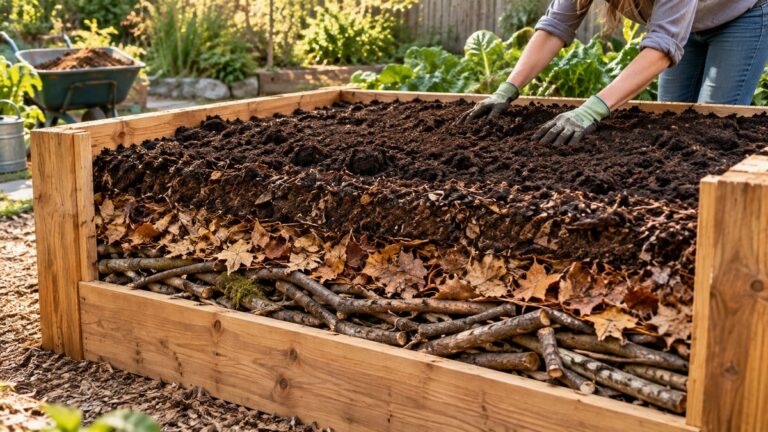
If the bed is new, or the ground under it has been left alone, the King County sheet describes a way to smother weeds before planting. Coarse woody mulch can be applied more deeply to suppress weeds on barren ground, and the sheet calls this an effective way to prepare new planting beds. Its sheet-mulch method starts with overlapping layers of several sheets of newspaper, optionally adds two to three inches of compost, and then covers the area with three to four inches of wood chips.
The sheet is clear about timing. Wait three to four months, or longer, before planting. When you plant, pull the wood chips aside for each planting hole, dig the plant in, and rake the chips back around it, leaving mulch at least one inch away from stems.
Plastic mulch for warm-season crops
Plastic is a different tool, and Colorado State University Extension treats it separately from organic mulch. Black or colored plastic mulch is extensively used in commercial tomato, pepper, melon, and strawberry production in Colorado, and the extension says it merits consideration for these crops in the home garden. The black plastic also controls weeds and reduces the need for irrigation.
Setup matters in a raised box. Cover the growing bed with the plastic and bury all edges two to four inches. On a raised-bed box made with lumber, staple the plastic to the sides of the box. The same source says that because plastic warms the soil, it is undesirable for most cool season crops.
Plan for the end of the season. The source says to remove the plastic in the fall rather than plow it in, because polyethylene plastic will never decompose in the soil. It breaks down with sunlight, so it generally can be used only for a single season.
Mistakes that let weeds back in
- Mulching over live weeds. Covering perennial and grassy weeds will not suppress them, because they grow up through the mulch layer.
- Spreading mulch too thin. The King County sheet says that when coarse mulch breaks down to less than two inches, weed seed germination is likely to increase.
- Topping the bed with fine compost. Finely textured, highly composted material is less effective at weed suppression and can feed annual weeds. If you are filling a bed from scratch, our guide to filling raised beds covers the layering side.
- Trusting fabric alone. Perennial weeds can poke through or around its edges, and seeds can still sprout on top of it.
- Using weedy lawn clippings. Those clippings will contain weed seeds.
- Skipping the fall. Washington State’s handout calls fall weeding critical for a successful garden in the spring.
How we chose
The sources are university extension pages, a conservation district fact sheet, and a state university handout. Each one was fetched with curl on 2026-10-22, and its weed, mulch and barrier sections were read before any sentence was used. Quoted lines were checked word for word against the fetched text. Retail pages, pages that returned errors, and pages that focused on chemical control were left out. No product is named or recommended.
The Utah State fact sheet is dated February 2012, so check your local extension office for advice tuned to your region.
What we could not verify
The sources agree that mulch slows new weeds, but they do not measure how much weeding time a given mulch saves, and they do not offer one schedule that fits every garden. Coverage of barriers varies between sources, and the sources differ on how thick a layer of loose clippings should be.
What the sources do not say
The sources do not identify individual weed species or predict which weeds a given bed will get. They do not say how long fabric or cardboard lasts in a raised box, and they do not give a weeding schedule. They do not compare mulch prices, rank products, or name a brand. Beyond the warning about weedy lawn clippings, none of them covers how weeds reach a bed from neighboring lawns, so plan for that on your own.
Frequently asked questions
Does mulch stop weeds completely?
Not on its own. Mulch prevents weed seeds from germinating and blocks the light they need, but perennial and grassy weeds grow up through the layer. The King County sheet says tiny seedlings may be smothered by mulch, which is a real benefit, but established weeds still need clearing before the mulch goes down.
Is it better to weed before or after mulching?
Before. Iowa State says established weeds should be destroyed before mulch is applied. The King County sheet says weed suppression is most effective when mulch goes on after weeding. Washington State’s handout makes the same point for fall, and it advises adding mulch to bare spots right after weeding.
Can grass clippings bring weeds into the bed?
Yes, if they come from a weedy lawn. Iowa State says clippings from weed-infested lawns will contain weed seeds. It also says to let lawn clippings dry before using them, because fresh clippings may form a dense mat or produce an odor. Colorado State advises thin layers of fresh clippings, letting each one dry before adding another.
Can cardboard or newspaper work under mulch?
Both appear in these sources. The King County sheet describes cardboard, newspaper and paper-based products as a biodegradable alternative for level ground, placed beneath coarse organic mulch. It says they must be kept moist and fully covered. Colorado State describes newspaper under grass clippings as a way to control weeds, and it warns that the paper needs covering right away.
How can the paths between raised boxes stay weed-free?
Colorado State says wood or bark chips make excellent mulch between the boxes, and it recommends three to four inches deep to control weeds. Iowa State notes that bark mulch comes in sizes from fine to large chunks, so choose a coarse grade for the paths. Keep the paths separate from the beds in your planning, since the sources treat them as different jobs.
Sources
- https://yardandgarden.extension.iastate.edu/faq/how-can-mulches-be-used-control-weeds (opened 2026-10-22)
- https://cob.org/wp-content/uploads/Manage-Weeds-Naturally-Mulch-Booklet-Digital.pdf?pdftype=e (opened 2026-10-22)
- https://byf.unl.edu/mulch (opened 2026-10-22)
- https://extension.colostate.edu/resource/mulches-for-the-vegetable-garden/ (opened 2026-10-22)
- https://extension.usu.edu/yardandgarden/research/raised-bed-gardening.pdf (opened 2026-10-22)
- https://wpcdn.web.wsu.edu/wp-extension/uploads/sites/2056/2025/08/Fall-Composting-Handout.pdf (opened 2026-10-22)
- https://yardandgarden.extension.iastate.edu/how-to/using-mulch-garden (opened 2026-10-22)