How to Plan Crop Rotation
As an Amazon Associate we earn from qualifying purchases.
Learning how to plan crop rotation means moving vegetables to a new spot each season, so that pests, diseases and soil nutrients do not build up in one place. The three university extension pages we opened on 2026-10-22 agree on the basic rule: do not plant vegetables from the same plant family in the same spot year after year. Each page groups vegetables by plant family, and that grouping is the unit the whole plan depends on.
The sections below explain why rotation works, how to group crops, how long to wait, how to manage a small garden, and what the sources leave open.
Quick answer
- Sort your vegetables into plant families before you lay out the beds.
- Do not plant the same family in the same spot more than once every three to four years. Iowa State adds that five or more years is better where possible.
- Use separate beds or containers, because separate beds make rotation straightforward.
- Keep a garden log or map so you can see where each crop went last season.
Why rotation works
The UW-Madison page says crop rotation reduces damage from insect pests, limits the development of vegetable diseases, and helps manage soil fertility. The reason is that plants in the same family often draw the same insects and diseases, and they often need the same nutrients. The UW page explains that when vegetables from one family are grown year after year in the same area, they give insect pests a reliable food source and give disease-causing organisms a continual supply of hosts. Over time, pest and pathogen numbers build up and damage increases.
Disease is the sharpest part of that picture. Iowa State says many disease organisms live in the soil and may persist there for several years. Rotating crops breaks the cycle, because the pest or disease loses the host plant it needs to finish its life cycle. Nutrients follow a similar logic. Iowa State notes that gourd family plants use a lot of nitrogen and that onion family plants use a greater share of potassium, while members of the bean family can help add nitrogen to the soil. Changing crops evens out those losses and gives nutrients time to replenish.
Group your crops by plant family
The UW-Madison page includes a table that sorts common vegetables into families. The goosefoot family includes beet, spinach and Swiss chard. The gourd family includes cucumber, muskmelon, pumpkin, summer squash, watermelon and winter squash. The grass family includes ornamental corn, popcorn and sweet corn. The mustard family includes broccoli, Brussels sprouts, cabbage, cauliflower, Chinese cabbage, collard, kale, kohlrabi, mustard greens, radish, rutabaga and turnip. The nightshade family includes eggplant, pepper, potato and tomato. The pea family includes bush bean, kidney bean, lima bean, pea, pole bean and soybean.
The Washington State University sheet gives a worked example. If tomatoes grow in one bed this year, peppers, eggplant and potatoes should not go into that bed next year either, because all of these plants belong to the nightshade family. That is why the plan is built on families rather than on the names of individual vegetables. Grouping by family makes the rule easy to apply to a new crop, since you only need to find its family on the list.
Weeds count too. Iowa State says that various weeds in and around vegetable gardens belong to some of the same families as the vegetables. They can serve as alternate hosts for diseases and insect pests, which is one reason good weed control is important. Weeds from the same families are part of the rotation problem, not a separate issue.
Cover crops add another layer. Iowa State advises knowing the plant family of any cover crop before you use it, and building that family into the plan. The UW-Madison page says cover crops and green manures improve soil fertility and drainage, prevent erosion and hold nutrients, and that the same family rule applies to them. It also says that leaving an area fallow is often less desirable than planting a cover crop, because bare ground tends to erode and can end up draining poorly.
Plan the rotation step by step
Put the plan on paper before you dig. Start by listing every vegetable you intend to grow and assigning each one to its family. The UW-Madison table does this for common crops, and the Washington State University sheet says that each vegetable can be classified into a particular plant family.
Next, count your beds or zones. Iowa State says separate beds or plots make rotation most effective, so a garden with three or four beds is the simplest to rotate. If you have one bed, the Washington State University sheet describes the same principle: change the planting location within the site each season.
Mark each bed with the family planted there this year, and check that map before you assign next year’s crops. The sources give three to four years as the gap, so a family should not return to a bed until that time has passed.
Add cover crops to the same map. Iowa State says to know the family of any cover crop you plan to use and to fit it into the rotation, and the UW-Madison page applies the same three to four year rule to cover crops and green manures.
Finally, write it down. The UW-Madison page and Iowa State both suggest a garden log, a map, a diagram or a photo, and Iowa State adds that the record should include your plans for upcoming years.
How long to wait before a family returns
The three pages agree on the core interval. The UW-Madison page says not to plant an area with vegetables or cover crops from the same plant family more than once every three to four years. The Washington State University sheet says the same, and Iowa State says gardeners should not plant the same family in the same location for three to four years, or for five or more years if possible.
The longer interval is the ideal rather than the minimum. The UW-Madison page notes that the three to four year gap can be hard to reach in a small garden, and it adds that even changing plant families from one year to the next helps manage insect pests and diseases. If a full cycle is not possible in your space, a shorter gap between the same families is still better than none.
Plan beds for a small garden
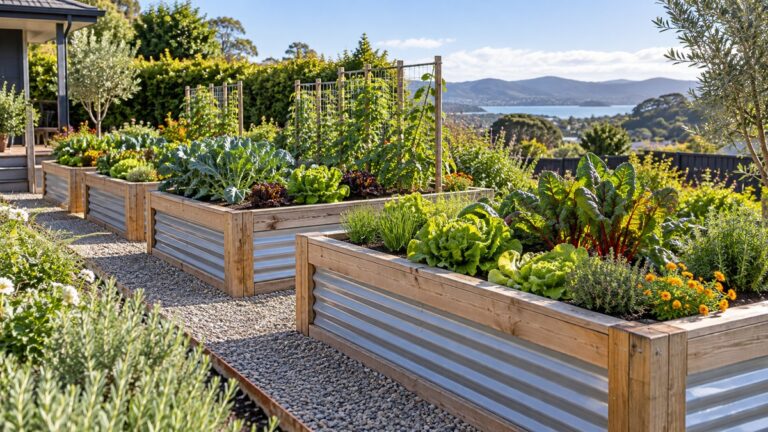
Iowa State says the best way to rotate is to have several separate beds or plots. Four raised beds, for example, let you move plant families around so that each family returns to a given bed only once every four years. The same page says a garden can be split into zones, but the disadvantage is that the plot is often cultivated all at once. That mixes the soil between zones and spreads overwintering pests and disease into the other zones, which lowers the benefit of rotating. Iowa State also notes that some tasks, such as harvest and watering, are easier when all the vegetables share one location, so separate beds involve a trade-off.
For a small plot, Iowa State suggests several tactics. Use containers for especially disease-prone crops, such as heirloom tomatoes, to move that crop out of the main plot. Set up small plots in different sunny spots around the yard, so that you can rotate vegetables from one spot to another each year. Work with family, friends and neighbors to grow different crops in their own gardens and share the harvest. If you are building the beds, the guide to filling raised beds covers the soil side of the same setup.
Iowa State also says that even when the set-up is not ideal, rotating crops as best you can is still helpful. A partial rotation is better than leaving the same family in the same place every year. For a bed layout idea, the raised bed companion planting garden layout post is a useful next read.
Keep a garden map or log
Records make rotation possible. The UW-Madison page says to keep a garden log or map as a reminder of where vegetables were planted each year. Iowa State says a log, a drawing, a diagram or a photo will do, and that the record should also note your plans for upcoming years. Check the log before you choose a bed for a family.
Common mistakes to avoid
Iowa State names soil mixing as a drawback. When a garden is cultivated all at once, soil moves between zones and spreads pests and disease that overwinter in the ground. Keep beds separate where you can, because rotation gives less benefit when they are not.
The UW-Madison page warns against leaving an area empty as a shortcut. An unplanted area is more prone to erosion, it can end up with soil that does not drain properly, and it can fill with weeds that cause problems for future vegetable production.
Iowa State also warns that a cover crop can slip past the plan. Its family belongs in the rotation, just like the family of a vegetable does.
Do not expect one season to show the effect. The UW-Madison page says pest and pathogen numbers build up over time when the same families keep returning to one area, so the benefit appears across several years.
How we chose
We looked for university extension pages on crop rotation that returned HTTP 200 to curl and gave the family rule in their own words. We opened three on 2026-10-22: the UW-Madison article, the Iowa State how-to page and the Washington State University sheet. A West Virginia University Extension page returned 403, and an NC State Extension sheet returned 404, so neither was used. The UW-Madison and Washington State University pages share much of their wording, so they are not two separate tests of the rule. Iowa State is the one page with independent wording on small-garden layouts, and the draft gives it that weight. Where the pages differ, both figures are shown.
What we could not verify
This section covers what the sources do not settle, so you know where the advice stops.
What the sources do not say
None of the three pages measures a result. They say rotation reduces pests, diseases and nutrient loss, but they give no yield numbers and no before-and-after counts for any garden. They do not give a year-by-year rotation schedule for specific crops beyond the nightshade example and the four-bed example. They do not say which cover crops suit your climate, and the Iowa State page leaves that to your local extension office. The pages are written for Wisconsin, Iowa and Washington, so the length of a full cycle in your own region may differ.
Frequently asked questions
Which plant families should a garden track first?
Start with the families of your main crops. The UW-Madison table covers the common ones: the nightshade family for tomatoes, peppers, eggplant and potatoes, the gourd family for cucumbers and squash, the mustard family for cabbage and kale, and the pea family for beans and peas. Add cover crops and common weeds to your list, because the sources say they follow the same rule.
Does the three to four year gap apply to cover crops as well?
Yes. The UW-Madison page says not to plant an area with vegetables or cover crops or green manures from the same family more than once every three to four years. Iowa State adds that the family of any cover crop you use should be part of the plan.
Is it still useful to change crops within the same bed each year?
Yes, according to the UW-Madison page. It says that even changing plant families from year to year is helpful in managing insect pests and diseases, even when a full three to four year cycle is hard to achieve in a small garden.
What can a garden too small for a full rotation do?
Iowa State suggests containers for disease-prone crops, scattered plots in different sunny spots, and shared growing with neighbors. It also says that rotating as best you can still helps. Keep a log so you can see what went where.
Can weeds affect a rotation plan?
They can. Iowa State says weeds that belong to the same families as your vegetables can host the same diseases and pests, so good weed control supports the rotation. The sources do not say how many weeds are needed before the effect matters.
Sources
- https://hort.extension.wisc.edu/articles/using-crop-rotation-home-vegetable-garden-0/ (opened 2026-10-22)
- https://yardandgarden.extension.iastate.edu/how-to/crop-rotation-vegetable-garden (opened 2026-10-22)
- https://wpcdn.web.wsu.edu/extension/uploads/sites/68/2015/08/Crop-Rotation-in-Home-Gardens.pdf (opened 2026-10-22)