How to Clean Up Garden Beds in Fall
As an Amazon Associate we earn from qualifying purchases.
How to clean up garden beds in fall starts with one idea: remove what looks untidy, but keep what insects need through the winter. Most fall tasks are cleanup, and many of them leave shelter behind. The extension sources we opened agree that some stems and leaves should stay in the garden. They disagree on when to trim the stems, so this guide sets out both timing views and says where the evidence is firmer.
Quick answer
- Leave some stems standing, since hollow stems give bees nesting space and shelter.
- If you trim stems, leave a stubble of 12 to 24 inches, as the NC State study describes.
- Leave leaves in beds where you can, because they insulate overwintering insects.
- Check bare ground for small holes before you rake, since some may be bee nests.
Why stems and leaves matter to insects
Stems can be a winter home. The NC State publication says that “Stems of perennial plants can provide nesting and overwintering habitat for several species of native solitary bees (and solitary wasps) in North Carolina.” These bees are not aggressive: “Unlike social insects, such as honey bees and yellowjacket wasps, solitary bees nest individually and do not aggressively defend their nests.” Each bee divides a stem into chambers and fills “each cell with pollen and one egg”. The young “develop into adults inside the stem, then fly off to make their own new nest.”
The publication adds a point that matters for any cleanup: “Bees do not generally damage healthy, living stems.” Illinois notes that native bees such as “leafcutter and mason bees lay their eggs and nest in the stems and then emerge in the spring as temperatures warm up.” Leaves matter too, since “Illinois moths and butterflies will overwinter in the protected leaves, camouflaged to blend in.” Penn State’s list of steps for wild bees in Pennsylvania includes “protecting their natural habitats” and “providing access to water.” Illinois also makes a broader point: “Honeybees are the most recognized pollinators, but insects like moths, butterflies, wasps, beetles, and flies are also frequent pollinators.” Those steps and that broader view sit beside the cleanup choices below.
Decide which stems to leave standing
The Illinois Extension release gives the core instruction: “Instead of cutting back flower stems to the ground, leave some standing.” The reason is habitat. “Pollinators rely on hollow stems for nesting and shelter.” Butterflies use the stems too: “Butterflies also overwinter as pupae that attach to dry stems.”
Seed heads count as well. The release suggests keeping “seed heads on some plants like native grasses, sunflowers, and coneflowers to add winter interest to your garden.” It adds that they “provide food and hiding spots for birds and wildlife during the cold winter months.” The same release says to “Leave spent flower stems and dead plant material.” Iowa State’s leaf guide makes a related point: leaving “the leaves, stems, dried flowers, and seed heads of many plants” gives winter interest “rather than a flat bed of mulch.” It also says that “It is not necessary to clear-cut the perennial garden after the first freeze of the season.” That line removes the pressure to finish everything in October.
Cut stems to a stubble, not to the ground
The NC State Extension study is the most specific source on stems. Its team sampled stems from 20 gardens in 10 counties across North Carolina, collecting nearly 3,000 stems at four times of year. About 1.5 percent of the stems contained nests, but the seasonal pattern was clear. To create maximum habitat for stem-nesting bees, the publication says to “trim stems back to leave a stubble 12 to 24 inches tall”.
The stubble is useful because it is ready when the bees arrive. “If you cut the stems in their first winter, this stubble will be ready and waiting as soon as early spring bees begin to search for nest locations.” The publication also says that “From a bee’s perspective, an untrimmed garden will have fewer immediate nesting opportunities than a garden trimmed to stubble.” Some solitary bees nest in dead stems that are naturally hollow, and others tunnel into cut or damaged stems, so the cut ends matter as well as the stems.
Settle the timing question
Here the sources differ. Penn State Extension says: “Delaying your garden cleanup until spring, for example, is a simple way to encourage overwintering insects.” The NC State publication says: “The results show that winter—not spring—is an ideal time to trim stems of perennial plants to provide pollinator habitat.” It also notes that “Although many resources on gardening for pollinators suggest waiting until late spring to trim or cut down dead stems, there wasn’t much hard evidence available to support this advice.”
Both views keep stems in place through the cold months, which is the step that matters most for the insects these sources describe. The practical difference is when the stems are cut. The NC State publication explains why the stems stay useful for so long: “Depending on the species, larvae or young adult bees may spend the winter inside the stem.” That is one reason the study looked at stems across four seasons rather than only in the fall. The sources do not say which timing suits every region, so use your local extension guidance for the final call.
Keep leaves in the bed where you can
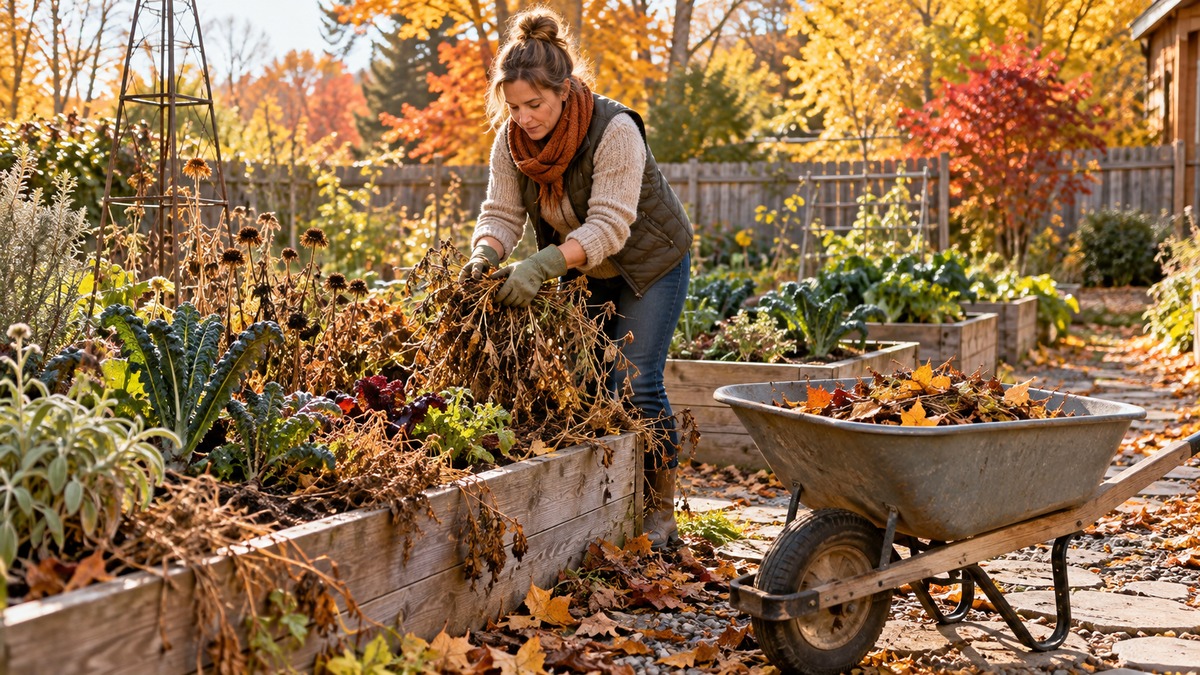
Leaves are the second decision. The Illinois release says: “Instead of raking and removing the leaves from the garden, consider leaving them to provide insulation to overwintering insects.” Its blog post makes the same point: “Leaves provide insulation for overwintering insects, plus organic matter and nutrients that would otherwise end up on the curb.” The blog also names removing all fallen leaves as the first bad habit to break. It adds that “Leaves from healthy trees can be used to mulch your beds, or incorporated into your lawns and garden soils.”
Penn State’s advice covers the leaves you do collect. Rather than “bagging up your fallen leaves”, the article suggests putting them in the compost pile. For that route, see our guide on how to make a compost pile. Illinois offers a bed-side option: “rake some leaves together and put them in the garden beds, where they will slowly break down and provide nutrients to your plants next season.”
Depth matters. Iowa State’s guide warns: “Be sure not to layer leaves too thick as they can smother the crowns of perennials if too deep.” The sources do not give a number, so judge depth by whether the crowns of your perennials are still clear. Iowa State also says “There are, however, a few situations where the cleanup and removal of leaves and debris are beneficial, particularly in the vegetable garden and lawns.” That exception names the vegetable garden and lawns, which is one reason the advice here leans toward perennial and flower beds. For raised beds, see preparing raised beds for winter.
Leave a brush pile and some open ground
Illinois suggests a brush pile for leftover branches: “Instead of bagging up fallen branches or leaves, create a brush pile in a corner of the garden.” The reason is shelter: “The added insulation and protected space are great for bees and butterflies.”
Bare ground is part of the habitat too. “Layers of mulch prevent bees from nesting, so leaving some open bare ground allows it.” The release also notes that some gardeners “might feel the urge to entirely cover the bare ground with mulch or leaves for the winter.” Iowa State’s comparison of stems and seed heads with “a flat bed of mulch” makes a similar point from the design side.
Check the ground before you rake
Ground-nesting bees are common. The Illinois release says “About 70% of Illinois native bees are solitary, and many build their nests in the ground.” It adds a tip for anyone who clears beds in fall: “Small holes in a sunny spot in the garden might not be an ant hill; it could be a bee nest.” Look for holes in sunny spots before raking or digging, and leave those spots alone until the season is clearer.
Mistakes to avoid
- Cutting every stem to the ground. The NC State study favors a stubble of 12 to 24 inches for stem-nesting bees.
- Raking every leaf out. Illinois suggests leaving leaves in beds for insulation.
- Bagging all fallen leaves. Penn State suggests the compost pile for leaves that come off the bed.
- Piling leaves too thick. Iowa State warns that deep layers can smother perennial crowns.
- Covering all bare ground. The Illinois release says layers of mulch prevent bees from nesting.
How we chose
We opened six pages with curl on 2026-10-22. Five returned HTTP 200 with readable text, and the draft relies on them: the Penn State Extension article, two University of Illinois Extension pages, the NC State Extension publication and the Iowa State Extension guide. The sixth, a Missouri Extension page, returned HTTP 403 and does not count. We chose these sources for their regional extension guidance, and the NC State publication for its stem counts. Only the NC State publication counts stems, so we treat its numbers as a single-state result. We read the Penn State and NC State items side by side because they disagree on timing. We did not rank products, and we named none.
What we could not verify
The sources do not settle the timing question for every region. The NC State stem counts come from one state, and the Illinois and Penn State advice does not describe a stem count. The Penn State item is written for Pennsylvania, the Illinois items for Illinois, and the NC State study for North Carolina, so none of them covers every climate. The sources do not say how much leaf cover a bed can carry before it stops being useful, and they do not give a calendar for when each insect becomes active.
What the sources do not say
The sources do not say whether a stubble of 12 to 24 inches works for every perennial, or which bees suit which stems in your area. The Penn State and Iowa State items do not describe a stubble height or a stem count at all. They do not say how much of a bed to leave bare, beyond “some” open ground. The Illinois blog suggests a leaf layer of 3 to 6 inches around perennials, trees and shrubs, while Iowa State warns against deep layers. The sources do not reconcile those two figures. None of the sources names a product for cleanup.
Frequently asked questions
Should every stem be cut to the ground?
No. The Illinois release says to leave some standing, and the NC State study favors a stubble of 12 to 24 inches. The same study says a garden trimmed to stubble gives bees more immediate nesting opportunities than an untrimmed one.
Do all the leaves have to be raked up?
Not necessarily. Illinois suggests leaving leaves in beds for insulation, and Penn State suggests the compost pile for leaves you bag. Iowa State warns against layering leaves too thick over perennial crowns.
When is the best time to cut back the stems?
The sources disagree. NC State says winter is an ideal time to trim, while Penn State says delaying cleanup until spring encourages overwintering insects. Both views keep stems standing through the cold months, so the disagreement is mainly about the timing of the cut.
What to do when holes show up in the bed?
Leave that spot alone. Illinois says small holes in a sunny spot could be a bee nest, and it notes that about 70% of Illinois native bees are solitary, with many nesting in the ground.
Can leaves double as mulch over winter?
Yes, with limits. The Illinois blog treats shredded leaves as mulch for beds, and the Illinois release warns that layers of mulch prevent bees from nesting. Iowa State warns against layering leaves too thick, so keep some ground open and the leaf layer modest.
Bottom line
Leave some stems standing, keep leaves where they can insulate, and check bare ground for holes before you rake. If you trim, leave a stubble of 12 to 24 inches, and settle the timing with your local extension guidance, since the sources disagree on it.
Sources
- https://extension.psu.edu/delay-garden-cleanup-to-benefit-overwintering-insects (opened 2026-10-22)
- https://extension.illinois.edu/news-releases/consider-pollinators-during-fall-garden-cleanup (opened 2026-10-22)
- https://extension.illinois.edu/blogs/flowers-fruits-and-frass/2019-10-18-break-bad-fall-garden-cleanup-habits (opened 2026-10-22)
- https://content.ces.ncsu.edu/garden-cleanup-for-pollinators-trim-perennial-stems-in-their-first-winter (opened 2026-10-22)
- https://yardandgarden.extension.iastate.edu/how-to/managing-fallen-leaves-and-fall-cleanup (opened 2026-10-22)