What to Feed Birds in Winter (and What to Skip)
As an Amazon Associate we earn from qualifying purchases.
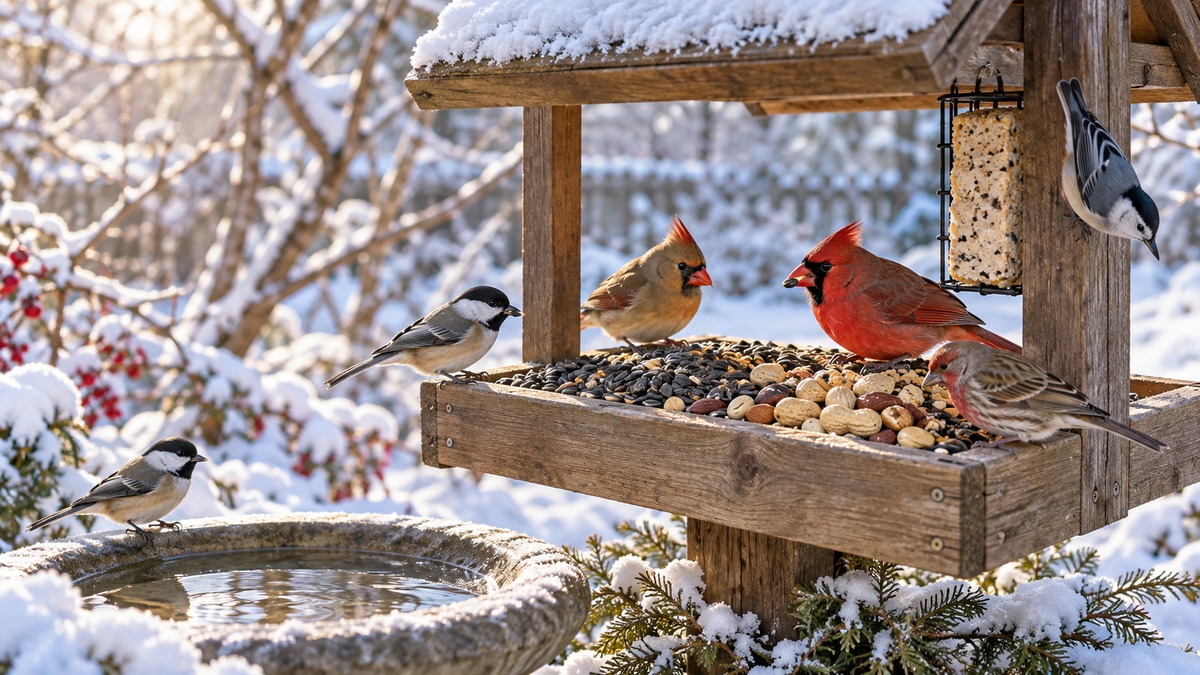
The short answer to what to feed birds in winter is black oil sunflower seed, suet while the weather stays cold, and water that has not frozen. Oregon State University Extension puts sunflower at the top of its list, and Penn State Extension says that “If you are going to provide one seed, this is the one to choose.” Most of the sources also point away from filler seed mixes, bakery scraps and any food that has gone moldy. The steps below follow those points, with the reason each source gives.
Quick answer
- Fill feeders with black oil sunflower seed first. The Cornell Lab of Ornithology’s FeederWatch note says it is the seed that attracts “the greatest number of species.”
- Offer suet mainly in cold weather. Oregon State says suet “can spoil quickly” in warm weather, and the UNH fact sheet says it “will go rancid quickly in warm temperatures.”
- Skip filler mixes, bread and other bakery scraps, and any food that smells musty or looks moldy. The sources do not fully agree on baked goods, so the reasons given in the EC 1554 guide decide this list.
- Keep water unfrozen and change it daily or every other day. Keep feeding through late winter and into early spring, because birds that rely on a feeder may struggle when feeding stops.
Start with the seed birds actually eat
Seed is the base of most winter feeding, and the seed you choose matters more than how much you pour in. The FeederWatch note says that “The seeds that attract the greatest number of species are black-oil sunflower.” It gives the reason: these seeds “have a high meat-to-shell ratio, they are nutritious and high in fat, and their small size and thin shells make them easy for small birds to handle and crack.” Penn State Extension describes the same seed as having “a high oil content that is nutritionally important for birds and a thin seed coat that is easy for them to crack open.”
A generic blend can work against you. The FeederWatch note says that “it is often wasteful to fill a feeder with a standard mix,” because visitors “may eat the prized sunflower seeds and leave the rest.” Oregon State’s wildlife specialist, Dana Sanchez, is quoted in its guide as saying that “Mixes with red millet, golden millet, flax seed, rape seed and oats are a waste.” The practical result is to choose the seed the birds finish, not the one that fills the most space in the bag.
Ground feeders are the exception
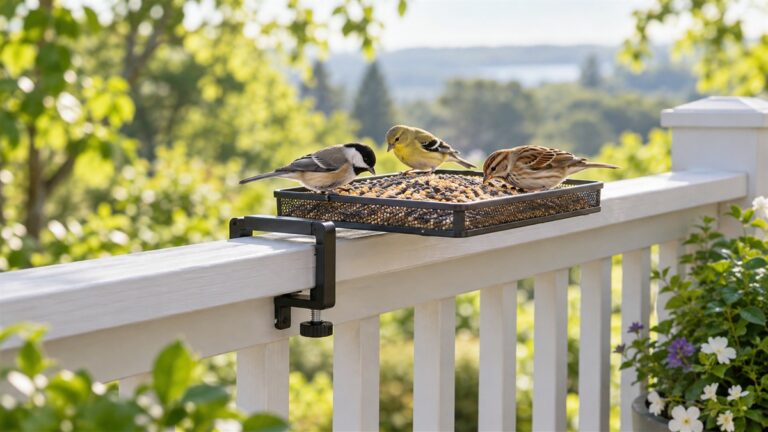
Not every bird feeds in the same place. The FeederWatch note reports that “most groundfeeding bird species prefer white millet or red milo to black-oil sunflower seed, but many tree-feeding species prefer sunflower seed.” A yard with juncos, mourning doves or sparrows may need a separate low tray of white millet. The UNH tips page says that ground feeders such as juncos, mourning doves, sparrows and cardinals “will feed on seed kicked off of platform feeders by other birds or on feed placed on the ground for them.”
A homemade blend, if you want one
UNH Extension offers a specific blend instead of a store mix. Its tips page says that “a simple mix of 50% sunflower seeds (unhulled oil type), 35% white proso millet, and 15% cracked corn will appeal to a broad cross-section of seed-eating birds.” The Wisconsin guide takes a stricter line and recommends “avoiding seed mixtures entirely” for new feeders. You can read the two positions side by side. If you want a recipe-based approach, see our guide to homemade bird food for winter.
Finches and fruit
Finches need their own feeder. Oregon State’s guide says that “To draw finches, offer nyjer (thistle) seed in a feeder designed to hold the tiny seed.” The FeederWatch note adds that the seed is small, so a special feeder with tiny ports keeps it from spilling. If your finch feeder sits full, our piece on birds that skip nyjer seed covers why.
Fruit can help too. Oregon State says that “Many birds – waxwings, grosbeaks, chickadees and robins – will also take fruit placed on an elevated platform feeder.” For a longer view, the same guide suggests that you “plant native, fruiting trees and shrubs such as elderberry, serviceberry, dogwood and snowberry.”
Suet and fat in cold weather
Fat foods are the other half of the winter menu. Oregon State quotes Sanchez saying that “The fat-and-seed mixtures are best used in fall and winter when birds need the extra energy to keep warm.” Penn State Extension calls suet “a high-quality animal fat that is highly sought-after in winter.” Both point the same way: suet is a cold-weather food, and its energy matters most when birds are working hard to stay warm.
The seasonal limit matters most. The UNH fact sheet says that “Suet is best used in cold weather, as it will go rancid quickly in warm temperatures.” Penn State’s processed suet cakes are made so that they “don’t turn rancid in warmer weather,” and UNH says that “Specially made suet cakes sold specifically for bird feeding can be used year-round.” The seasonal warning is written for plain beef suet, while processed cakes are designed to hold up in heat.
For plain suet, UNH says that “You can find beef suet in the meat department of any supermarket,” and that suet is usually best in “a mesh bag or wire basket suspended from a pole or attached to a tree.” Penn State adds that suet can be hung in a mesh bag or placed in a special suet feeder.
Check the food before you fill the feeder
The North Carolina State Extension wildlife handbook gives a plain rule for any food at a feeder: “Do not dispense food that smells musty, feels wet, looks moldy, or has fungus growing on it.” The same handbook says to clean and disinfect feeders “at least once every two weeks, and more often if sick birds appear.” Our guide to cleaning bird feeders with vinegar covers one way to handle that step.
What to skip
Skipping matters as much as feeding. On most points the sources line up, and on a few they split.
Filler seed mixes
Penn State Extension warns that “Some of the inexpensive commercial mixes contain items such as wheat, milo, hulled oats, rice, and rye seed that are not attractive to birds.” Its guide also notes that birds sort through a mix, “selecting the seeds they preferred and discarding the rest.” That leftover pile is the wasted seed. The EC 1554 guide from Oregon State makes the same argument: “birdseed mixes usually contain a lot of milo or millet, which most wild birds don’t eat.” It adds that “Millet seed and milo also can attract unwanted species such as starlings, English sparrows, and rodents.”
The UNH tips page is the most direct: “The simplest answer is that supermarket wild bird seed mix is what should not go in your feeders.” EC 1554 leaves room for a specialty mix, saying that “If you want to attract a large variety of birds with one product, try a specialty mix.” The fair reading is that cheap supermarket mixes are a poor buy, while a carefully chosen blend can work.
Bread, cake and other bakery scraps
This is where the sources split most clearly. The EC 1554 guide lists bread, donuts, cookies and crackers, and says that “These do not provide the nutrition birds need.” It adds: “They mold easily, and birds can get sick and die from eating moldy food.” It also warns that “Also, bakery goods can attract unwanted species such as starlings, rats, and mice.”
The UNH fact sheet takes a different line. It says that “Seeds, grains, nuts, baked goods, suet, and fruit can all be used.” That statement gives no reason and no amount. Because EC 1554 explains its warning, this guide puts bakery scraps on the skip list and treats the UNH line as a point of disagreement.
Keep water unfrozen
Water is the part of winter feeding people forget. The UNH fact sheet says that “Unfrozen water is especially difficult to find in the winter months.” It also says that “If your yard offers shelter and unfrozen water source, the birds are likely to stay a while.” A full feeder will not keep birds in the yard if they cannot drink.
Oregon State gives the simplest setup. Its guide says that “Birds need water, too,” and recommends that you “Use a shallow, flat-bottomed dish with 1/2 to 1 inch of water.” The same guide says to “Change the water daily or every other day.”
UNH mentions an immersion-style water heater for a bird bath. If you use an electric heater outdoors, follow the manufacturer’s manual and your local rules. The sources give no rating or cord length for any heater, so none is given here.
Place feeders and keep the area clean
Placement changes how often birds visit. The UNH tips page says that “Birds will visit feeders that are placed close to branches of trees or shrubs (especially evergreens) more readily than they will visit feeders in the open.” Feeders in the open are more exposed to weather and predators.
Spacing matters too. The UNH fact sheet advises that you “Avoid overcrowding at feeders by spacing a number of feeders apart.” It also warns that “Feeding birds can expose them to some hazards they might otherwise avoid.” The Wisconsin guide adds a rule about covers: “Select or build feeders that have a roof to protect the seed from getting wet and/or that have drainage holes to allow water to drain out.” The North Carolina handbook also says to “Remove spilled seed from beneath bird feeders,” because seed on the ground draws rodents.
Keep feeding through late winter
Consistency is the last piece. The Wisconsin guide says that “If you make the decision to feed birds this winter, it’s important to continue through late winter, early spring.” The UNH tips page notes that “Birds that habitually visit feeders may be slow to adapt to other food sources if feeding is interrupted or discontinued.” It also says that “Birds will increase their visits to feeders in bad weather, especially after heavy snows and ice storms which make natural foods inaccessible.”
The FeederWatch note makes the case from the bird’s side: “Finding food can be especially challenging for birds during days with extreme cold temperatures.” A steady supply of seed, suet and water gives birds a reliable source on the days when natural food is hardest to reach.
How we chose
This guide uses winter feeding advice from university extension services and one Cornell Lab of Ornithology bird note. We kept advice that more than one source states, or that one source states with a reason. We left out product listings and retail pages. Where the sources disagree, as they do on seed mixes and bakery scraps, the post says so instead of picking a side by repetition.
The pages come from Oregon State, Penn State, New Hampshire, Wisconsin, North Carolina and Cornell. The Oregon State EC 1554 guide is a 2003 reprint. Its advice on mixes and mold matches the newer pages, so this guide uses it for the reasons it gives, and treats it as older guidance. The Cornell item is a BirdNote script hosted with Project FeederWatch material.
What we could not verify
The sources we opened cover several states, so they do not show whether the timing or foods suit every climate. The guide names no seed brand, feeder, suet product or heater, and nothing in it is a product claim. Use these points as a starting plan and adjust them to the birds in your yard.
What the sources do not say
The sources do not give a temperature at which suet should come down, only that it “can spoil quickly” in warm weather. They do not give a daily amount of seed for a feeder, a water depth for every climate, or a number of days to refill a dish during a cold snap. They do not settle bakery scraps: UNH lists baked goods as usable, while EC 1554 says they do not provide the nutrition birds need. They do not give a rating or a safe distance for any heater.
Frequently asked questions
Should you feed birds in winter at all?
The sources support feeding, and they say it should last. The Wisconsin guide says it is important to feed birds consistently throughout winter and into early spring. UNH Extension notes that birds that visit feeders may slow to adapt to other food when feeding stops, so a steady routine is the safer choice.
What is the best seed for winter birds?
Black oil sunflower seed is the most common first answer. The FeederWatch note says it attracts the greatest number of species, and Penn State Extension says that if you provide only one seed, “this is the one to choose.” Ground-feeding birds may prefer white millet, according to the FeederWatch seed preference data.
Can you put bread out for birds?
The sources disagree. EC 1554 says bakery items “do not provide the nutrition birds need” and that they “mold easily.” UNH Extension lists baked goods among foods that “can all be used.” This guide puts bread on the skip list because EC 1554 gives specific reasons, and the sources do not give a safe amount to offer.
How often should you change the water in winter?
Oregon State’s guide says to change the water daily or every other day, in a shallow, flat-bottomed dish with 1/2 to 1 inch of water. The sources do not give a rule for freezing weather, so check the dish often when the temperature drops.
Is suet a good food in warm weather?
The sources say suet is best in cold weather. UNH says it “will go rancid quickly in warm temperatures,” and Oregon State says it “can spoil quickly” in warm weather. Penn State notes that processed cakes are made so they “don’t turn rancid in warmer weather,” so plain suet is the food to take down when the weather warms.
Sources
- https://extension.oregonstate.edu/news/feed-winter-birds-right-seed-shelter-water (opened 2026-10-21)
- https://extension.psu.edu/winter-bird-feeding-the-basics (opened 2026-10-21)
- https://extension.unh.edu/resource/winter-bird-feeding-fact-sheet (opened 2026-10-21)
- https://extension.unh.edu/resource/birds-bird-feeding-tips (opened 2026-10-21)
- https://cdn.feederwatch.org/wp-content/uploads/2013/09/BirdNote01-WinterFeeding.pdf (opened 2026-10-21)
- https://extension.oregonstate.edu/sites/extd8/files/documents/ec1554.pdf (opened 2026-10-21)
- https://naturalresources.extension.wisc.edu/five-tips-for-winter-bird-feeding/ (opened 2026-10-21)
- https://content.ces.ncsu.edu/extension-gardener-handbook/20-wildlife (opened 2026-10-21)