Birds Not Eating Nyjer Seed? Causes and Fixes
As an Amazon Associate we earn from qualifying purchases. Details
Updated 19 October 2026 | Author: Editorial team, homelycapers.com
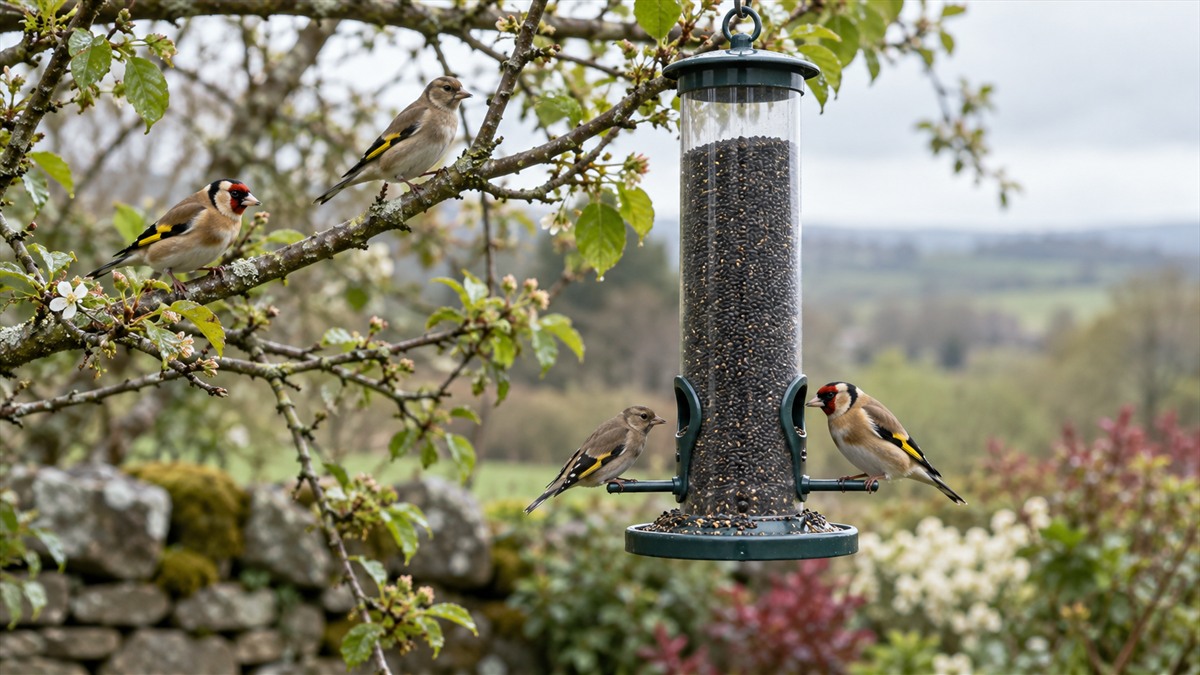
Birds not eating nyjer seed usually have a simple cause, and it is rarely the bird. Nyjer is a tiny dark seed that finches and some other small songbirds often visit, but a feeder of it can sit untouched when the seed is damp or moldy, when the feeder is the wrong kind, or when the feeder is getting rained on. This guide works through those causes in order. Check the seed first, then the feeder, then the setup around it.
Quick answer
- Check the seed. Dry, fresh seed should not be clumped or moldy. The University of Wisconsin-Madison Extension says to act when you notice “an accumulation of moldy, wet seeds and droppings.”
- Use a feeder built for tiny seed. Oregon State University Extension says that “To draw finches, offer nyjer (thistle) seed in a feeder designed to hold the tiny seed.”
- Keep the feeder covered and draining. The UW-Madison guidance is to pick feeders with a roof or drainage holes so the seed does not stay wet.
- Clean and dry before refilling. Oregon State says to let the feeder dry completely before refilling, and gives a rinse of 10 parts water to 1 part bleach.
Why nyjer behaves differently
Nyjer is not the same as the thistle most people picture. The Ask Extension answer on nyjer says the seed “is often sold or referred to as thistle seed,” but it is not a thistle. That matters for buying, because the name on a bag tells you little about the seed inside. The same answer says most nyjer is imported from Africa or India and must be heat treated before sale.
The heat treatment has a practical effect that many people do not expect. Ask Extension says that treatment “keeps the nyjer seed from germinating but preserves its nutrition for birds.” In plain terms, the seed is treated so it will not sprout, which is why a spill under a feeder does not produce a patch of seedlings. The seed still needs to stay dry, because the Oregon State guidance ties moisture directly to mold, and mold is the problem that turns a good feeder into a feeder birds avoid.
Because nyjer is small and light, a feeder full of it is easy to misread. Before you decide that the birds have stopped coming, open the feeder, empty the old seed, and look at the ports and the seed inside. That quick look shows which of the causes below applies.
Check the seed first
Start with the seed itself. Open the feeder and look for three things: clumps, a sour smell or visible mold, and droppings mixed in with the seed. The UW-Madison Extension tip is specific on this point. It says to clean the feeder when you notice “an accumulation of moldy, wet seeds and droppings,” which is a sign that the birds are no longer eating from it.
Oregon State University Extension explains the mechanism. Its winter feeding guidance says, “Moisture contributes to mold, which can cause disease.” So a feeder with damp seed is not only less attractive to birds; the seed can also make them sick. If you find mold, empty the whole feeder, not just the top layer. Fresh seed poured over moldy seed will not stay fresh, and the old seed keeps the problem going.
Once the feeder is empty, clean it. The Oregon State guidance gives one cleaning solution, a rinse of 10 parts water to 1 part bleach, and then says to let the feeder dry completely before refilling. The rinse is only one part of the job. Dry the feeder fully before you add new nyjer. Moisture left in a feeder is the risk the Oregon State guidance warns about, so a damp feeder should go back into service only after it has dried. Refilling a feeder that is still wet undoes the cleaning, and the cycle starts again.
Check the bag, too. The sources we downloaded do not give a shelf life for nyjer, so the safest habit is to store the seed dry and sealed, away from damp ground, and to open a new bag when the seed in the feeder looks clumped or smells off. If the seed in the bag is already clumped, a new feeder will not solve the problem. Replace the seed and check the storage spot.
Check the feeder
Nyjer is so small that a feeder built for larger seed lets it fall out. Oregon State University Extension says that to draw finches you should offer nyjer in a feeder designed to hold tiny seed. A feeder with wide openings or large ports can let seed spill onto the ground, and the seed that lands there is no longer in the feeder doing its job.
Look at the feeder design, then at the ports. A feeder with small, well-spaced ports is the right shape for nyjer. If the ports are larger than the seed, the seed will fall out before a bird can feed from it. The Oregon State guidance also advises keeping seed off the ground, and says that doing so reduces the chance of rats visiting the bird station. Clean up any spilled seed that collects under the feeder, as part of the same routine.
The feeder also needs cover and drainage. The UW-Madison Extension tip is to choose or build feeders with a roof, or with drainage holes, so the seed stays dry. If your feeder hangs in open rain, the seed will get wet every time, even if you refill with fresh seed. A roof, a porch or a hook under an eave can change the result without any other change to the seed.
The two checks above are the most direct ones the sources support. Oregon State’s moisture guidance and the UW-Madison roof and drainage tip point the same way: keep the seed dry in the feeder and let any water leave it. A feeder that meets both points is the setup the extension pages describe, and the seed inside it has the best chance of staying fresh.
Mixes and fillers
Many people who ask why birds are not eating nyjer are actually using a seed mix in a feeder that is supposed to hold nyjer. The mix is the problem in that case. The UW-Madison Extension notes that cheaper birdseed mixes often contain fillers such as milo or hulled oats, and that birds pick through them. The Oregon State guidance makes the same point more bluntly: birds will push those fillers out of the feeder.
That behavior is useful for diagnosis. If the feeder holds mostly leftover filler after a few days, the birds have probably sorted the mix and left the part you wanted. Remove the filler and check what remains. What you see tells you whether the seed you want is still being eaten.
Oregon State also lists black oil sunflower seed near the top of its list for feeder birds, because the seed attracts species such as chickadees. If you want nyjer specifically, keep it in its own feeder. A single-seed feeder makes it easy to see what the birds are doing and to notice when the seed has gone damp. It also keeps a filler mix out of the nyjer feeder, so the seed you buy is the seed the birds get.
What the table shows
The table below turns the sources into a short diagnosis. Each row names the symptom you can see, the cause the sources point to, and the check that follows from it.
| What you see | What the sources point to | What to check |
|---|---|---|
| Seed is clumped, damp or moldy | Moisture leads to mold, which can cause disease (Oregon State) | Empty the feeder, dry it fully, and refill with fresh seed from a dry bag |
| Seed is dry but birds ignore it | The feeder may not suit tiny seed (Oregon State) | Use a feeder with small ports, built to hold nyjer |
| Seed is wet after rain or snow | Feeders need a roof or drainage holes (UW-Madison) | Add cover or move the feeder under an eave |
| Feeder fills with leftover filler | Birds push fillers out of a mix (Oregon State; UW-Madison) | Offer straight nyjer in its own feeder |
| Seed on the ground under the feeder | Keeping seed off the ground reduces the chance of rats visiting (Oregon State) | Use a feeder that keeps seed inside and clean up what falls |
The table does not replace a close look at your own feeder. It gives you the order to check things in, and it stops you from buying new seed when the real problem is the feeder or the weather.
How we chose
We chose the causes that the pages we downloaded name directly. The four extension sources cover what nyjer is, how moisture and mold affect seed, what kind of feeder holds tiny seed, and how mixes and fillers change what birds eat. We left out product rankings and brand comparisons, because the question is about the seed and the setup, not about which feeder to buy. Every cause in the table has a source attached to it. Where a source gives a rule, we give the rule. Where it does not, we say so.
What we could not verify
The sources we downloaded do not give a set number of days after which nyjer goes bad, so we do not give one. They also do not say how long a bag stays good once opened, or how quickly a feeder should be cleaned in hot weather. The Ask Extension answer explains heat treatment but does not say how long treated seed keeps. The pages do not tell you which species visit your yard, because that depends on your region and season. Check local bird guides and your extension office if you need those details.
FAQ
Why would nyjer seed not sprout if it spills on the ground?
The Ask Extension answer says the nyjer is heat treated, and that the treatment keeps it from germinating while leaving its nutrition for birds. Spilled seed on the ground is therefore not a new plant problem. It is a waste and a rodent attraction problem, which Oregon State also raises.
Is nyjer the same as thistle seed?
Ask Extension says nyjer is often sold or referred to as thistle seed, but it is not a thistle. The name on the bag is a sales name, so read the ingredient label and check that the product is nyjer.
How often should I clean a nyjer feeder?
The pages we downloaded do not give a fixed number of days for nyjer feeders. The rule they support is to clean the feeder when you see wet or moldy seed, and to let it dry completely before refilling. Check the feeder more often in wet weather, since damp seed is what the sources warn about.
Are cheap seed mixes a good way to feed nyjer birds?
Not usually, if your goal is nyjer. The UW-Madison Extension says cheaper mixes often contain fillers such as milo or hulled oats that birds pick through. Oregon State says birds will push those fillers out of the feeder. A mix can work for other birds, but it is a poor match for a nyjer feeder.
What should I use to rinse a feeder that has mold on it?
Oregon State gives a rinse of 10 parts water to 1 part bleach and says to let the feeder dry completely before refilling. Rinse the feeder well and dry it fully before you add new seed. If you prefer another cleaner, check the label and dry the feeder completely in either case.
Related reading
For keeping squirrels from reaching a feeder, see our guide to deterring squirrels from bird feeders. For a cleaning routine, see how to clean bird feeders with vinegar.
Bottom line
If birds are not eating nyjer seed, fix the seed condition first, then the feeder, then the mix. The rule that decides most cases is simple: if the seed is damp or moldy, empty the feeder, clean it, dry it fully and refill with fresh, dry seed in a feeder designed for tiny seed.
Sources
- Ask Extension, “Nyger”: nyjer is often sold as thistle seed but is not a thistle, most is imported and heat treated so it does not germinate.
- University of Wisconsin-Madison Division of Extension, “Five Tips for Winter Bird Feeding”: fillers in cheap mixes, feeders with roofs or drainage holes, and moldy or wet seed.
- Oregon State University Extension, “Feed winter birds with the right seed, shelter and water”: feeders for tiny seed, mold from moisture, the bleach rinse and drying before refilling, and keeping seed off the ground.