How to Clean Bird Feeders Properly
As an Amazon Associate we earn from qualifying purchases.
Knowing how to clean bird feeders properly helps limit mold and disease where birds feed. Most of the sources agree on the core routine: scrub the feeder, disinfect it, rinse it, and let it dry completely before refilling. They disagree on how often to do it, so this guide shows each schedule and says where the difference lies.
Cleaning matters most when feeders are busy, when damp weather keeps seed wet, and when birds look unwell. None of the pages we opened sets one schedule for every yard, so treat the routine below as a starting point and adjust it to how much your birds eat.
Quick answer
- Clean feeders at least once a week, as Oregon State and Penn State extension guidance says. NC State Extension sets two weeks as the minimum and asks for more often when sick birds appear.
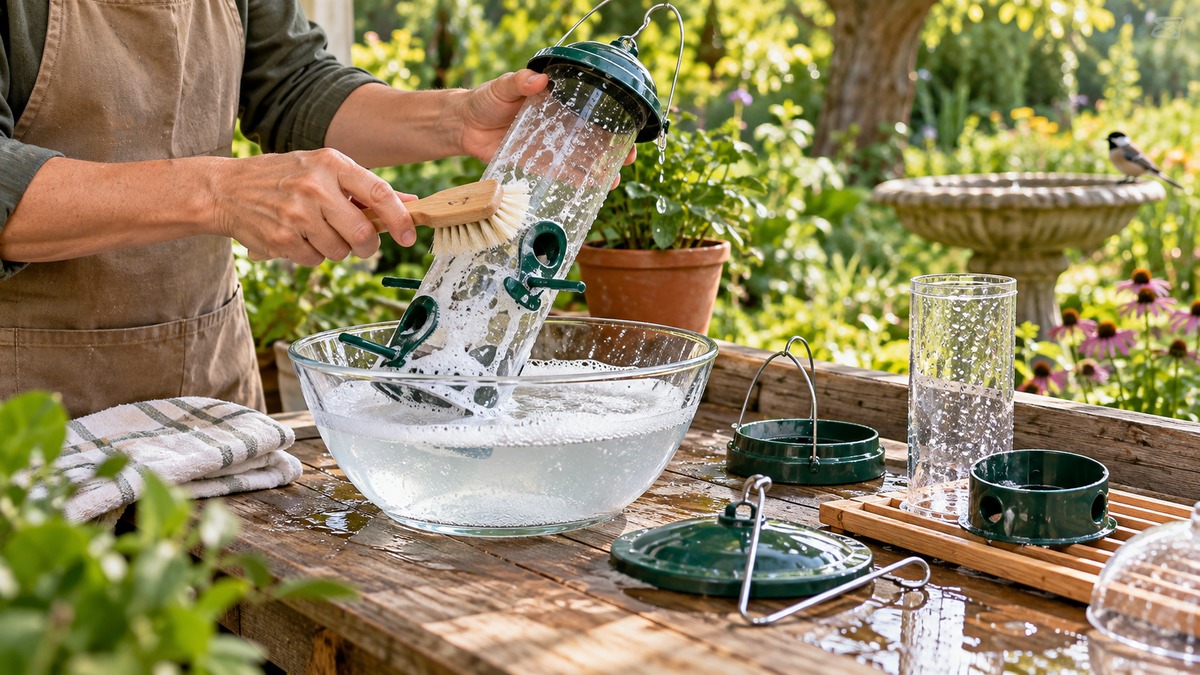
- Scrub inside and out before you disinfect. Use a brush and soap, then disinfect with a bleach or vinegar solution, or use the dishwasher if the feeder allows it.
- Rinse the feeder, then let it dry completely before you refill it.
- When birds look sick, follow your state wildlife agency’s current guidance, and clean feeders more often.
Why feeders need regular cleaning
Feeders collect moisture, residue and droppings. Oregon State Extension’s avian flu article explains the risk in one line: “Moisture encourages mold in seed, while droppings can spread disease.” The same point appears in the Oregon State winter article, which quotes a wildlife specialist: “Moisture contributes to mold, which can cause disease.”
Penn State Extension focuses on the parts people often miss. On hanging tube feeders it says, “Do not allow residue and mold to accumulate in the bottom of hanging tube feeders.” Penn State ties the residue and the mold together, which is why its advice is to empty the feeder and scrub it.
Disease is the other reason to keep a schedule. Penn State also says, “Bird feeders may help spread disease if a sick bird comes to your feeder.” That sentence explains why cleaning is more than appearance: a sick bird at a feeder can pass illness along to the birds that come after it.
Illinois Extension reports that the Illinois Department of Natural Resources has recommended bird feeders and baths be removed or cleaned weekly to reduce the likelihood that birds will gather and spread the virus. The same post notes that avian influenza usually does not affect songbirds, and that it is always a good idea to keep feeders clean.
How often to clean
The sources do not give one number, so the schedules are laid out here as they appear. Oregon State says, “Regardless of avian flu, feeders should be cleaned at least once a week.” Penn State Extension says, “Scrub your feeder with soap and a disinfectant once a week.” The NWF’s 2019 article quotes a Millikin University biologist: “Take your feeders down once a week and soak them in a bucket of bleach solution,” he says.
NC State Extension’s gardener handbook sets a floor rather than a target. It says, “Clean and disinfect feeders at least once every two weeks, and more often if sick birds appear.” If you can keep only one schedule, the weekly rule that Oregon State, Penn State and the NWF all give is the safer choice. The two-week interval is the longest routine schedule in the sources we opened.
Busy feeders need more attention than quiet ones. The Oregon State winter guide says, “Cleaning all bird feeders once a week is essential,” and Penn State’s platform feeder advice is to feed only as much seed as birds can consume in a day. Less seed on the ground means less for the feeder area to collect.
Water dishes need more frequent attention than seed feeders. Oregon State’s avian flu article says, “Birds also need clean, fresh water in shallow dishes refreshed daily.” A once-a-week scrub for the feeder and a daily refresh for the water is the pattern the sources describe for each item.
Choose a disinfectant the sources name
Three methods come up across the pages. The NWF’s tip sheet says feeders can be disinfected “in the dishwasher or by soaking feeders in a 20 percent solution of white vinegar and hot water.” Oregon State recommends a bleach solution: “Rinse with a bleach solution of 10 parts water to 1 part bleach.” Penn State Extension calls for soap plus a disinfectant without naming one. If vinegar suits your feeder better, our guide to cleaning bird feeders with vinegar covers that route.
Use the method your feeder material can take. The sources we opened do not say which plastics or metals tolerate bleach, hot vinegar or the dishwasher, so check the manufacturer’s manual before you soak a feeder. Oregon State also says to use a long-handled brush: “Scrub inside and out with a long-handled brush.”
The NWF’s 2019 article gives a practical order for the work: “Before soaking feeders, scrub them thoroughly to remove debris.” That order matters because it removes loose debris before the disinfectant goes on, so the solution works on the surface a bird actually touches.
Step-by-step cleaning
A simple routine that matches the sources looks like this. Take the feeder down and empty out the seed. Scrub it to remove debris, then scrub inside and out with a brush. Disinfect it with the method you chose, rinse it well, and let it dry completely before you add seed.
Drying is not optional. NC State Extension says, “Allow the feeder to air dry before refilling.” Oregon State says, “Let the feeder dry completely before refilling.” The NWF repeats the advice: “be sure to let them dry thoroughly before refilling.” Since moisture encourages mold in seed, the drying step is worth not skipping.
Before you refill, check four things:
- The feeder has been scrubbed inside and out, with loose debris removed first.
- Any disinfectant has been rinsed off the feeder.
- The feeder is completely dry.
- The seed is dry, fresh and not moldy.
Refill with good seed kept in good condition. The NWF’s 2019 article advises, “Use quality seed and store seed in rodent-proof containers.” It explains the reason: “Mice can carry some bird diseases without being affected themselves.” If squirrels are part of the problem, our guide to preventing squirrels from eating bird seed covers that side of the feeder.
Seed that has gone moldy should go. Penn State’s guide says, “Store seed in a cool, dry place and if it becomes moldy, do not use it.” Sweep up what has fallen as well, since the NWF says to keep the area around feeders clean.
Tube and hopper feeders
Tube feeders need extra attention because the seed sits in narrow spaces. Penn State Extension says, “To remove mold and residue, empty the feeder and scrub the interior thoroughly.” It also advises choosing feeders that suit the job: “Use only feeders that can be dismantled or otherwise cleaned easily.”
The same advice applies to other seed feeders. A model you can take apart is easier to keep clean than one you cannot open, so when you replace a feeder, look at how easily it comes apart before you buy. This article does not recommend any brand.
The NWF’s 2019 article also flags contact at the feeding port. It says, “Avoid table or tube feeders.” Its reason: “With tube feeders, birds put their heads right next to ports to get the seed, which can spread conjunctivitis, or pink eye.” That is the main reason the article gives for moving away from those designs during an outbreak.
Clean the ground under the feeder
The area under a feeder matters as much as the feeder. The NWF’s 2019 article says, “Keep the area around feeders clean.” It suggests a practical tool for the job: “Use either a broom and shovel or a wet-dry vacuum to pick up spilled food and droppings.” Spilled food and droppings collect right where birds feed, so the ground deserves the same attention as the feeder.
When birds look sick
Sick birds change the schedule. NC State Extension calls for cleaning “more often if sick birds appear.” The NWF’s 2019 article explains why some feeders are riskier in that case: “When sick birds sit directly on seed at table feeders, they are more likely to contaminate it.” It also gives a firm rule for sightings: “If anyone sees sick or dead birds, stop feeding them for at least two weeks.”
Illinois Extension points readers to the state recommendation, which calls for removing or cleaning feeders weekly. The same post explains how the virus can travel on people: it “can persist on our hands, clothing, shoes, and tools when we work around flocks of infected birds.” Because of that, the sources treat hygiene as part of the cleaning job, not an extra step.
Protect yourself while you clean. The NWF’s 2019 article says, “Practice good hygiene. Wear rubber gloves when cleaning feeders, then wash hands and forearms when finished.” It also advises keeping cleaning tools separate: “Segregate brushes and other tools used for cleaning.”
The NWF’s article adds a neighborhood point. “Because birds move around between backyards, diseases can spread easily unless everyone is taking precautions.” Clean your own feeders on schedule, and let neighbors know if you see sick birds.
How we chose
We chose sources that are extension services or a national wildlife nonprofit: NC State Extension, Penn State Extension, Oregon State Extension, Illinois Extension and the National Wildlife Federation. We opened each page on 2026-10-22 and kept only sentences that appear in the text we fetched. Where sources gave different schedules, we show each figure instead of choosing one. We left out retail pages and content-farm pages, even when they came up in searches. No product is recommended in this article.
What we could not verify
What the sources do not say
The sources we opened do not name a contact time for any disinfectant, so this article gives no soak duration beyond what each page states. They do not say which feeder materials tolerate bleach, hot vinegar or the dishwasher, and they do not rank the three methods against one another. They do not give a schedule for feeders that sit empty for a season. Disease guidance changes, and the pages were written for their own states, so check your state wildlife agency before you change your routine.
Frequently asked questions
How often should you clean a bird feeder?
Once a week is the schedule that three of the sources name. NC State Extension sets every two weeks as the minimum and asks for more often when sick birds appear. Busy feeders need the weekly routine, and the two-week interval is the longest routine schedule in the sources we opened. Water dishes are a separate case, and the sources point to a daily refresh for those.
Can you put a bird feeder in the dishwasher?
The NWF’s tip sheet lists the dishwasher as one way to disinfect feeders, alongside a soak in a 20 percent white vinegar and hot water solution. Check the manufacturer’s manual first, because the sources do not say which feeder materials handle the heat. Dry the feeder thoroughly before refilling, whichever method you use.
What is the best way to disinfect a bird feeder?
The sources name three methods: a dishwasher cycle, a soak in a 20 percent white vinegar and hot water solution, and a bleach solution of 10 parts water to 1 part bleach. They do not rank these against each other. Pick the one your feeder can take, scrub first, and rinse well.
Do you need to clean the ground under a bird feeder?
Yes, according to the NWF’s 2019 article. It says to keep the area around feeders clean and to pick up spilled food and droppings with a broom and shovel or a wet-dry vacuum. Sweeping up under the feeder is part of the same routine.
What should you do if birds look sick?
Follow your state wildlife agency’s guidance. NC State Extension says to clean and disinfect “more often if sick birds appear.” The NWF advises that if anyone sees sick or dead birds, feeding should stop for at least two weeks. It also advises wearing rubber gloves and washing hands and forearms after cleaning, and the NWF says to keep cleaning tools separate.
Sources
- https://content.ces.ncsu.edu/extension-gardener-handbook/20-wildlife (opened 2026-10-22, HTTP 200)
- https://extension.psu.edu/reducing-disease-risk-at-feeders (opened 2026-10-22, HTTP 200)
- https://extension.oregonstate.edu/news/experts-its-ok-leave-bird-feeders-avian-flu-outbreak-reaches-state (opened 2026-10-22, HTTP 200)
- https://www.nwf.org/Magazines/National-Wildlife/2019/Feb-Mar/Gardening/Keep-Bird-Feeders-Clean (opened 2026-10-22, HTTP 200)
- https://www.nwf.org/-/media/Documents/PDFs/Garden-for-Wildlife/Tip-Sheets/Bird-Feeders.pdf (opened 2026-10-22, HTTP 200)
- https://extension.illinois.edu/blogs/naturalist-news/2022-04-26-be-vigilant-about-bird-diseases (opened 2026-10-22, HTTP 200)
- https://extension.oregonstate.edu/news/feed-winter-birds-right-seed-shelter-water (opened 2026-10-22, HTTP 200)
- https://extension.psu.edu/winter-bird-feeding-the-basics (opened 2026-10-22, HTTP 200)