Homemade Bird Food for Winter: Suet, Seed and Safe Mixes
As an Amazon Associate we earn from qualifying purchases. Details
Updated 19 October 2026 | Author: Editorial team, homelycapers.com
Homemade bird food for winter usually means suet, which is fat mixed with seed or other food and set in a cake, and the extension sources we downloaded treat it as the cold-weather food. Oregon State and Illinois Extension both describe suet as a simple, high-energy food that is easy to make at home. The sources also give limits: fat spoils in warm weather, moist food molds, and seed mixes can draw rodents. This guide covers what goes into a winter cake, how to make one from an Oregon State recipe, how to keep it safe, and where the sources stop.
Quick answer
- Make suet for cold weather. Oregon State says “The fat-and-seed mixtures are best used in fall and winter when birds need the extra energy to keep warm.”
- Keep it out of warm weather. The same Oregon State guide warns that suet can spoil quickly in warm weather, and advises removing it when it starts to smell.
- Make it simple. Oregon State says suet cakes are simple to make at home, and gives a cornmeal and flour recipe.
- Keep the food and the feeder dry. Moisture leads to mold, so keep food out of rain and let the feeder dry completely before you refill it.
Why suet works in winter
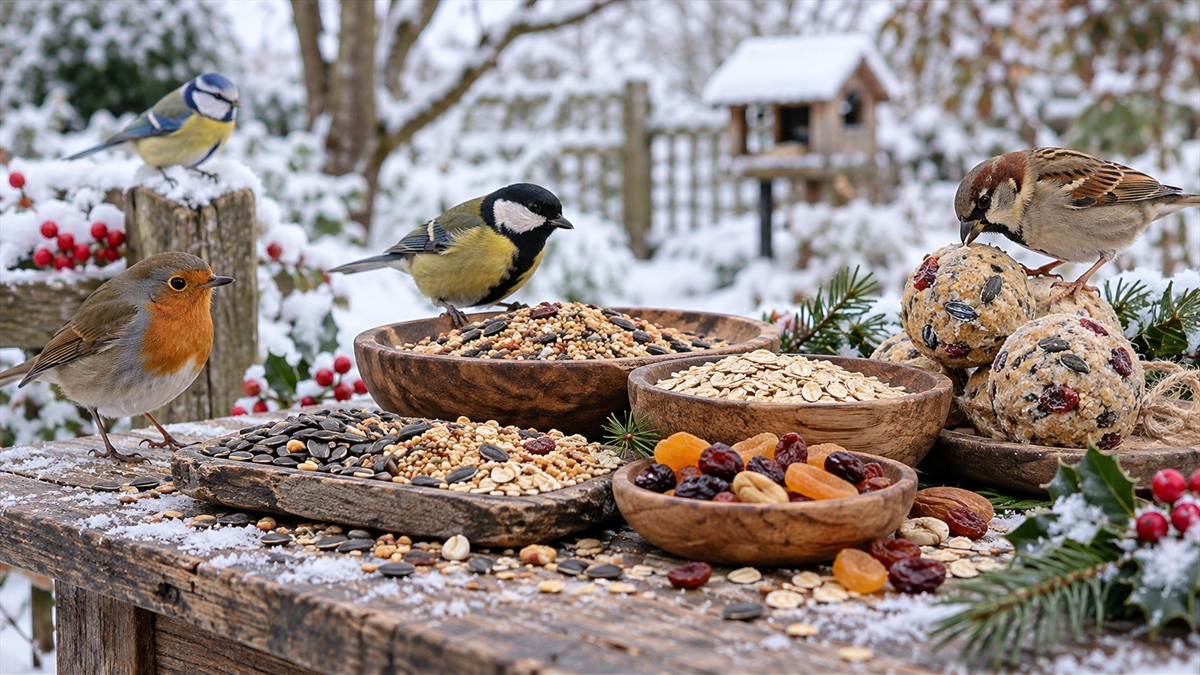
Suet is valuable because fat gives birds energy when the weather is cold. Illinois Extension describes it as “high-quality animal or vegetable fat in a solid square ‘cake’ containing various seeds and dried fruit.” The same Illinois post says the author feeds birds only with suet in winter, because loose birdseed in winter drew many birds but also drew rodents such as voles and squirrels. That is the trade-off that makes suet attractive. It is a cake that stays together rather than a loose pile of seed.
Illinois Extension also says that “Suet is also an incredibly easy method for feeding birds,” and that all you need to do is hang the cake on a hook outside. That simplicity is part of the appeal for anyone starting a winter feeding routine.
Oregon State puts the seasonal point most clearly. It says that the fat-and-seed mixtures are best used in fall and winter, when birds need the extra energy to keep warm. Its warm-weather warning follows from that. Suet can spoil quickly in warm weather, so a cake you hang in summer should be checked often and taken down when it smells.
Oregon State also says that suet attracts many insect-eating birds that need animal fat for energy. That is a general point about who visits a suet feeder, and the sources do not list every species you will see in your own yard.
A simple cake from the Oregon State recipe
The Oregon State publication EC 1554 describes making suet at home rather than buying it. It says suet cakes are “simple to make at home.” The recipe heats the suet, then adds cornmeal and flour as the dry part of the mix. The publication gives the dry part as 2 parts cornmeal and 1/2 part flour, which is the ratio to follow.
The ratio is easier to picture with a worked example. Suppose one part is one cup of fat. The recipe then calls for 2 cups of cornmeal and half a cup of flour. The total dry part is 2 + 0.5 = 2.5 cups, and the cornmeal makes up 2 ÷ 2.5 = 0.8, or 80 percent of the dry mix. That is our arithmetic on the source’s ratio, and it assumes one part is one cup. Scale the parts to the size of your mold, and keep the ratio the same.
| Ingredient | What the source says | Share in a one-part example |
|---|---|---|
| Fat (suet) | Fat-and-seed mixtures suit fall and winter (Oregon State) | 1 part, or 1 cup |
| Cornmeal | Recipe uses 2 parts (Oregon State) | 2 cups, 80% of the dry mix |
| Flour | Recipe uses 1/2 part (Oregon State) | 0.5 cup, 20% of the dry mix |
| Seed and dried fruit | Suet cakes can contain various seeds and dried fruit (Illinois) | Add as you like; the sources give no amount |
Pour the mix into molds to set it, as the Oregon State recipe describes. The sources give the ratio and the cold-weather timing, but they do not give a set cooling or setting time, so check the cake until it is firm.
Mold, moisture and cleaning
Moisture is the main risk in homemade food, and the sources name it directly. Oregon State says “Moisture contributes to mold, which can cause disease.” UW-Madison Extension advises clearing a feeder when you notice “an accumulation of moldy, wet seeds and droppings.” A seed cake that gets rained on or sits in a wet tray will mold, and the sources treat that as a reason to clear it.
The feeder needs the same care. Oregon State’s guidance is to rinse with a solution of 10 parts water to 1 part bleach, and then to let the feeder dry completely before refilling. It applies to any feeder that holds homemade food as much as to a seed feeder.
Placement helps too. UW-Madison points to cover and drainage: choose feeders with a roof or drainage holes so the food stays drier. Oregon State advises keeping seed off the ground, because the page says doing so reduces the chance that rats visit the bird station.
Seed mixes and fillers
Loose seed mixes are a different case from suet. The UW-Madison Extension notes that cheaper birdseed mixes often contain fillers such as milo or hulled oats, which birds pick through. Oregon State makes the same point by saying birds will push those fillers out of the feeder. If you make a seed cake, use clean seed rather than a bulk mix full of filler, so that the cake is what the birds eat.
The rodent point comes from Illinois, which links loose winter birdseed to voles and squirrels. The sources do not say that suet keeps rodents away, so do not count on suet alone to solve a rodent problem. Keep seed off the ground, as Oregon State advises, and check the feeder area after each refill.
What the sources do not settle
The sources agree that suet cakes are a cold-weather food and that the cake should be clean and dry. They do not agree on every technique. The Illinois post describes a basic cake, and the Oregon State publication describes a heat-and-mix method, so the exact steps depend on which source you follow. The sources also do not give a shelf life for a finished cake in the refrigerator or freezer, and they do not say how long a cake lasts outdoors in your climate.
The sources do not name fats to avoid. If you are considering bacon grease or other seasoned fat, check the label and check whether another source covers it, because the sources in this guide do not settle that question.
How we chose
We chose the sources that deal with suet and winter feeding directly. Oregon State University Extension’s EC 1554 gives the cornmeal and flour recipe. Oregon State’s winter feeding guide gives the cold-weather and warm-weather timing and the mold and cleaning points. Illinois Extension’s suet post gives the definition of a suet cake and the rodent point. The UW-Madison Extension tips give the feeder cover and the moldy food check. We did not rank premade suet products. Where the sources give a ratio, we show it, and where they do not, we say so.
What we could not verify
The sources do not give a shelf life for a homemade cake, and they do not give a single setting time. They do not say which seed mix works best in a suet cake, and they do not name every species that will visit. They also do not give a temperature at which suet becomes unsafe to hang, beyond the general warm-weather warning. Where the source says warm weather, judge by your own conditions, and take down any cake that smells or softens.
Water, shelter and planting
Food is only part of a winter feeding station. The Oregon State guide covers water as well, which is easy to forget in cold months. It advises a shallow, flat-bottomed dish with about 1/2 to 1 inch of water, and says to change that water daily or every other day. Keeping the dish clean and filled is part of the same routine as clearing moldy food from the feeder.
The same publication also looks past the winter. It recommends planting native, fruiting trees and shrubs for future bird food, and names elderberry, serviceberry, dogwood and snowberry as examples. Those plants take years to fruit, so they do not replace a winter cake, but they add natural food over time. The sources do not give a planting distance or a time to first fruit, so check those details with a local nursery or extension office.
A practical winter routine follows from the sources in order. Refill the suet only in cold weather. Clear wet or moldy food from the feeder when you see it. Refresh the water on the schedule above. Check the cake before you hang it, and take it down in warm weather. Each step has a source behind it, and none of them needs a product to work.
A checklist for a winter cake
Before you hang a cake, run through these checks. Each one comes from a source named in this guide.
- Choose the season. Oregon State’s fat-and-seed guidance is written for fall and winter, when birds need the energy to stay warm.
- Leave out bulk filler. UW-Madison notes that cheap mixes often carry milo and hulled oats, which birds leave behind, so a cake made from clean seed gives the birds what they came for.
- Hang it where rain cannot reach it. UW-Madison’s roof and drainage advice applies to a cake as much as to a feeder.
- Take it down when it smells. Oregon State says suet can spoil quickly in warm weather and should be removed once it starts to smell.
- Keep seed off the ground. Oregon State says doing so reduces the chance that rats visit the bird station, so sweep up any loose seed under the cake.
FAQ
When should I offer homemade suet?
Oregon State says fat-and-seed mixtures are best used in fall and winter, when birds need extra energy to keep warm. In warm weather suet can spoil quickly, so check it often and take it down when it starts to smell.
Can I make suet at home?
Yes. Oregon State says suet cakes are simple to make at home, and its publication EC 1554 gives a cornmeal and flour recipe with 2 parts cornmeal and 1/2 part flour.
Will suet attract squirrels or rodents?
Illinois Extension reports that loose birdseed in winter drew voles and squirrels. The sources in this guide do not say that suet avoids them, so plan for rodents whatever food you offer.
How do I keep homemade food from molding?
Keep the food dry and clean the feeder when you see moldy food. Oregon State says moisture contributes to mold, and UW-Madison advises clearing moldy, wet seed and droppings. Let the feeder dry completely before refilling.
Should I use bacon grease in a suet cake?
The sources in this guide do not address bacon grease or seasoned fat. Check the label and look for a source that covers it before you use any fat other than plain suet.
Related reading
For a feeder built around peanut butter, see our guide to a peanut butter bird feeder. For a whole-peanut homemade feeder, see our homemade whole peanut bird feeder guide.
Bottom line
Make homemade bird food for winter as a suet cake with the cornmeal and flour ratio from Oregon State, keep it dry, and take it down in warm weather or when it smells. Clean and dry the feeder, and use clean seed rather than a bulk mix full of filler.
Sources
- Oregon State University Extension, EC 1554 (suet and winter feeding): suet cakes are simple to make at home, and the cornmeal and flour ratio.
- Oregon State University Extension, “Feed winter birds with the right seed, shelter and water”: fat-and-seed mixtures for fall and winter, suet spoiling in warm weather, moisture and mold, cleaning with a dry feeder, and keeping seed off the ground.
- Illinois Extension, “Winter Bird Feeding with Suet” (Good Growing blog): the definition of a suet cake and the rodent point about loose birdseed.
- University of Wisconsin-Madison Division of Extension, “Five Tips for Winter Bird Feeding”: cover and drainage for feeders, fillers in cheap mixes, and the moldy, wet food check.