How to Grow Peppers in Pots
As an Amazon Associate we earn from qualifying purchases.
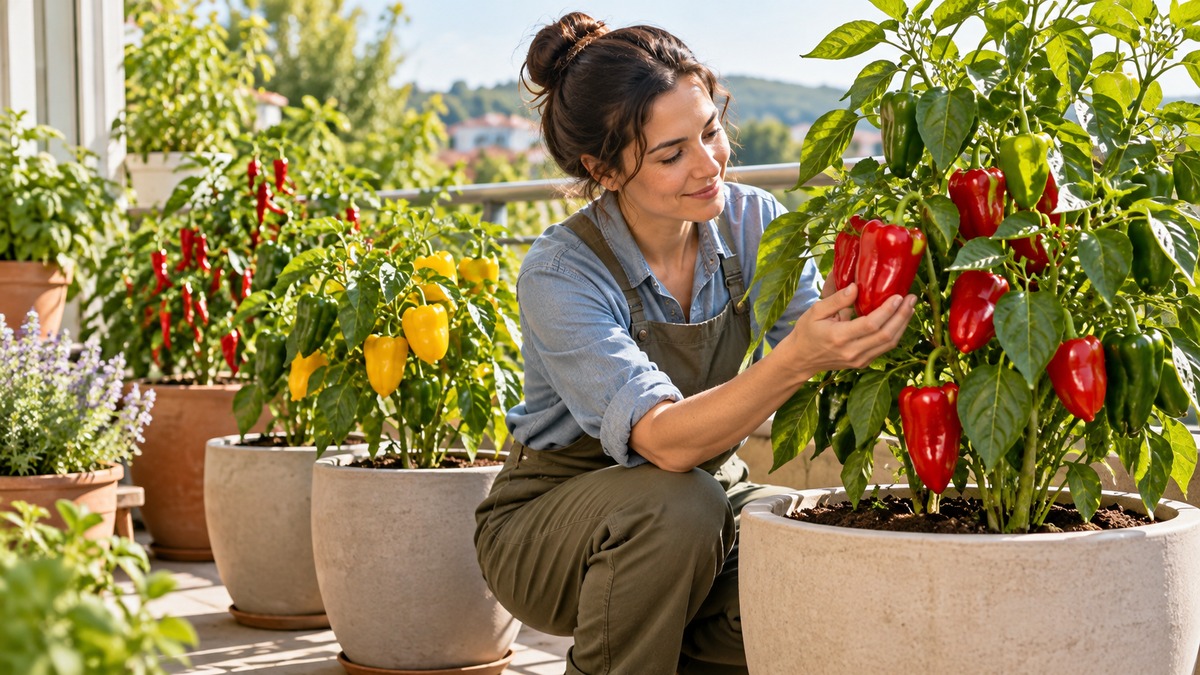
Peppers grow well in containers, and the pot is often the easiest way to get a good crop from a small space. The Oregon State guide says that “Peppers grow well in containers”, and that the best plant growth and fruit set come when “the container is big enough to support a large root system.” Getting the pot size, the sun and the watering right covers most of how to grow peppers in pots.
This guide draws on four extension pages from Oregon State, North Carolina A&T and the University of Maine. They agree on most points. Where they differ, we say so and show the figures side by side.
Quick answer
- Use a container of at least five gallons with drainage holes in the bottom and sides, and set one plant in it.
- Give the pot six to eight hours of direct sun, and start with transplants rather than seed.
- Water one to two inches a week, keep the soil moist but not soggy, and water more often in the late summer heat.
- Feed the plant on a schedule, and switch to a high potassium fertilizer once it starts to flower.
Choose a type that suits your season
Peppers take time. Oregon State says that “Peppers mature slowly”, and that under good conditions they “take at least 45 to 55 days” to produce harvestable fruit after they have been pollinated. The guide adds that “some cultivars should not be grown where the frost-free growing season is less than 120 days.” If your season is short, pick a type with a shorter days-to-harvest figure on the seed packet or plant tag.
Sweet and hot types both work in a pot. North Carolina A&T notes that “Hot peppers are more forgiving than bell peppers when growing.” Oregon State points out that peppers “hold their fruit upright” in some types, while others “hang down”, which can matter on a balcony rail or a small patio table where you want to see the fruit.
Pick a pot that gives the roots room
Size is the first decision. Oregon State recommends that “A 5-gallon bucket, half-barrel planter or similar-sized container works well for a single plant.” North Carolina A&T says to “Select a container at least five gallons in size”, and it allows one or two plants in that pot. The University of Maine table is more lenient, and it lists a 2-gallon pot for one sweet pepper plant and a 15-gallon tub for five plants.
The table below puts the figures side by side, so you can choose the pot that fits your space and your plant count.
| Source | Pot size the source gives | Plants per pot |
|---|---|---|
| Oregon State Extension, EC1227 | 5-gallon bucket, half-barrel or similar | One plant |
| North Carolina A&T Cooperative Extension | At least five gallons | One or two plants |
| University of Maine Extension | 2-gallon pot, or 15-gallon tub | One plant in the 2-gallon pot, five in the tub |
| Oregon State Extension news release | Five-gallon containers for deeper roots | Not stated |
A larger pot gives more margin for error. Oregon State says that “You’ll get the best plant growth and fruit set when the container is big enough to support a large root system.” Because the pot is the whole root zone, it is the one place where going up a size is almost always the safer choice.
Drill drainage holes and lift the pot
Drainage keeps the roots healthy. North Carolina A&T says to “Make sure containers have drainage holes on the bottom to avoid the possibility of drowning plants.” Oregon State’s method adds holes in the sides as well: “Add drain holes to the bottom of the container and to the sides (about an inch above the bottom) to ensure that water doesn’t pool.” The same guide advises that you “Elevate pots on bricks or boards so water can escape.”
Use a container that is clean and has at least one drainage hole, as the University of Maine guide requires. Light-colored plastic is the better choice if you are using plastic. North Carolina A&T warns that “Dark-colored plastic containers hold excess heat, increasing soil temperature and possibly damaging roots in summer.”
Fill with potting mix and plant transplants
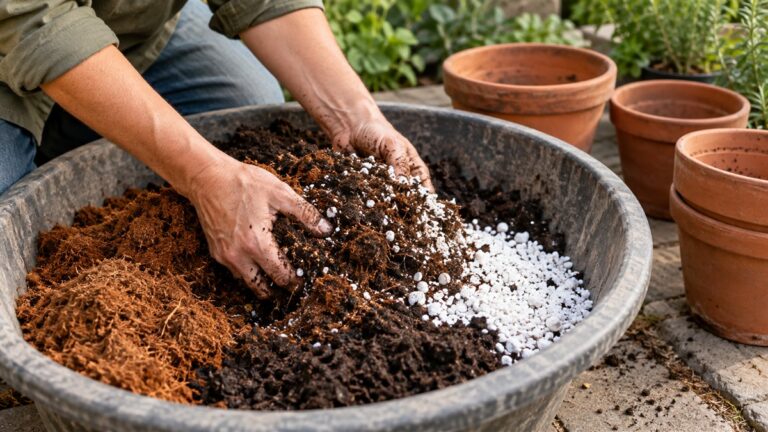
Use a mix made for containers. Oregon State warns against topsoil, and says that “Do not use topsoil” for a pot. North Carolina A&T describes a good mix as one that is “free of disease and weed seeds, hold moisture and nutrients, drain well, are lightweight, and have good fertility.” Oregon State’s guide tells you to “Check the label on the potting soil bag”, because many mixes already contain enough fertilizer for weeks or more. For soil options, see our guide to soil for raised planters.
Start with transplants rather than seed. Oregon State says that “Peppers are best started using transplants rather than direct seeding into the garden.” Timing matters too: “Delay transplant until the danger of frost is past”. Oregon State advises you to “Remove flowers and fruit from the plant at transplanting and while the plant is beginning to grow.” If the plant sets fruit while it is small, “the plant will be stunted and may fail to develop the size necessary for a good yield.”
Buy a plant that is ready to go. Oregon State advises that you “Look for a stocky plant with dark green leaves and no signs of disease or insect damage.” When you move it, “Leave as much soil as possible around the roots.” North Carolina A&T says that “Using transplants is recommended”, and Oregon State suggests transplanting “in the evening or on a cloudy day. This will keep the plants from wilting and getting too dry.” Home-grown transplants need hardening first, since Oregon State says to harden them off “to avoid transplant shock.”
The University of Maine guide asks you to “Keep all plants at least one inch away from the side edge of the container so they don’t get too hot.” Leave a gap between the stem and the rim, and fill the mix to within an inch of the top.
Give the pot full sun and shelter the young plant
Pick the sunniest spot you have. Oregon State says to “Chose a site that provides full sun for at least six to eight hours.” The University of Maine guide says the same thing with a lower floor: “at least 6 hours of sun each day.” Peppers can also take too much sun in the wrong part of the day. Oregon State warns that “Peppers are susceptible to sunscald from hot, late-afternoon sun”, and suggests shade cloth where the afternoon sun is strongest.
Protect the first week or two after transplanting. Oregon State recommends that you “Use a board, shade cloth, cardboard or other material to protect transplants from excessive wind and sun until the plants are established.” Harden off the plants before they go outside, because sunscald can also appear on leaves of transplants that were not hardened off.
Water often and evenly
Water is where pot-grown peppers struggle most. Oregon State says that “Peppers require 1-2 inches of water each week either by rain or watering.” North Carolina A&T gives a simpler version: “Keep the container soil moist but not soggy.” The Oregon State guide warns that “Blossoms may not set fruit if the soil is too dry.”
Containers need more attention than beds. For a planter that drains from below, see our roundup of bottom watering planters. Oregon State explains that “Plants grown in containers may need daily watering, especially later in the season when the plant’s root system is large.” It advises that you “Try to keep the soil consistently moist rather than allowing it to dry out between waterings.” Wetting the leaves is a poor habit, so “Avoid wetting the leaves with overhead sprinklers” and water the soil instead. Oregon State adds that during heatwaves you should “provide additional irrigation and shade as needed”, which it calls “especially important for container-grown peppers.”
Feed the plant on a schedule
A pot holds fewer nutrients than a bed. North Carolina A&T says that “Most commercial media contains a fertilizer charge that lasts about two weeks.” After that, it recommends that you “begin fertilizing weekly with a water-soluble fertilizer.” Oregon State adds that “Container plantings may need two fertilizer applications during the growing season.” Oregon State also notes that “Dry fertilizers sprinkled on top of the soil are a second-best option”.
Change the feed as the plant grows. North Carolina A&T suggests a balanced fertilizer until the plant starts to flower, and then “Once flowering begins, change over to a high potassium fertilizer.” Peppers need little pruning. The same guide says to “Remove suckers up to the first flower cluster”, where a sucker is “a small shoot growing between a leaf and main stem.”
Watch for blossom end rot and sunscald
Two problems are common in pots. Blossom end rot shows up as a sunken patch at the tip of the fruit. Oregon State says that the most common cause is “a water imbalance affecting the movement of calcium” in the plant, and it advises “maintaining consistent soil moisture throughout the growing season.” Sunscald appears as “light brown or white patches on areas of the fruit exposed to the sun.” It is most likely on fruit that sits above the leaves, so a shade cloth or a pot placed where late sun is softer can help.
Steady moisture in the pot helps with the first problem, and shade during the hottest afternoon hours helps with the second.
Harvest when the fruit is ready
Expect the first fruit about two months after transplanting. Oregon State says that “The first peppers should be ready eight to 10 weeks after transplanting.” Sweet peppers can be picked before they color up. North Carolina A&T says that “peppers can be harvested green if you do not want to wait for full color”, but it also recommends allowing full color development before harvesting.
Hot peppers give you more choice. North Carolina A&T says that “Hot peppers can be harvested green or allowed to ripen and change color on the plant”, and that “More mature hot pepper fruits are usually spicier.” Pick the fruit when it is ripe, since that keeps the plant setting new fruit.
Frequently asked questions
What size pot is best for one pepper plant?
Oregon State recommends a 5-gallon bucket or half-barrel planter for a single plant. North Carolina A&T uses the same five-gallon minimum, and the University of Maine lists a 2-gallon pot for one sweet pepper plant. Larger pots are safer for the root system.
How much water do pepper plants need in a pot?
Oregon State gives 1 to 2 inches a week, and says that container plants may need daily watering late in the season. North Carolina A&T says to keep the soil moist but not soggy. Check the top of the mix before you water.
Can peppers grow in a sunny window indoors?
The four pages we read focus on outdoor pots. They describe full sun for six to eight hours, and none of them gives indoor light levels for peppers. We did not find a source that covers indoor pepper growing, so treat the sun guidance here as an outdoor rule.
Why are my pepper fruit ends sunken?
Oregon State attributes blossom end rot to a water imbalance that affects the movement of calcium to the fruit. The fix it gives is consistent soil moisture through the growing season, not a product.
When does a pepper in a pot need feeding?
North Carolina A&T says that the mix’s starting charge lasts about two weeks, and that you should begin weekly feeding after that. Switch to a high potassium fertilizer when the plant begins to flower.
What we could not verify
The four pages do not agree on a single pot size for one plant. Oregon State and North Carolina A&T recommend five gallons, while the University of Maine table lists a 2-gallon pot for sweet peppers. We have shown both in the table and did not pick one.
What the sources do not say
The pages we read do not give a yield per pot, and they do not say how many peppers a pot will produce. Oregon State gives days to harvest for peppers in general, not for pot-grown plants, and the University of Maine table does not give harvest timing. None of the four pages covers indoor pepper growing. The Oregon State guide includes heat ratings for pepper groups, but we did not use them, so this guide makes no claim about how hot a specific pepper will be.
How we chose
We chose four extension pages that we could open and read on 2026-10-22: Oregon State Extension publication EC1227 on growing peppers, the North Carolina A&T guide on fruiting vegetables in containers, the University of Maine bulletin on container vegetable gardening, and the Oregon State news release on growing vegetables in containers. We kept only statements that appear word for word in the fetched text, and each quote was checked against it. Other search results were not opened and are not cited.
Sources
- https://extension.oregonstate.edu/sites/default/files/catalog/auto/EC1227.pdf (opened 2026-10-22)
- https://www.ncat.edu/caes/cooperative-extension/covid-19/files/growing-fruiting-vegetables-in-containers.pdf (opened 2026-10-22)
- https://extension.umaine.edu/publications/?p=4567 (opened 2026-10-22)
- https://extension.oregonstate.edu/es/node/146716/printable/print (opened 2026-10-22)