DIY Raised Garden Bed Along a Fence: Layout Guide
As an Amazon Associate we earn from qualifying purchases. Details
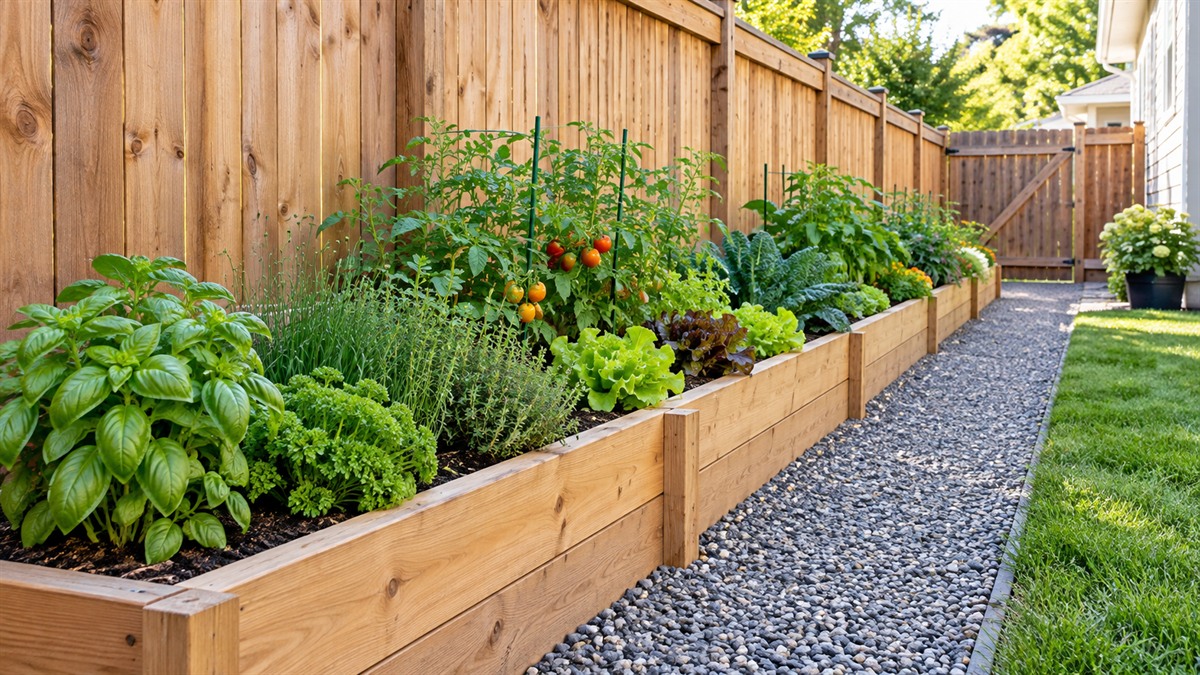
A raised bed along a fence is one of the simplest ways to use a narrow strip of yard. The fence gives the bed a backdrop, and the bed uses the strip without taking up the lawn. The planning matters more than the build. You need to know how wide the strip is, how far you can reach across it, and how much soil the depth requires. This guide covers the planning steps first, then the build, and ends with three bed kits from Amazon listings that fit a fence-side layout. The product details come only from those listings. We have not built or tested any of these beds.
Quick answer
For a bed along a fence, keep the width to 4 feet or less so you can reach the centre from the open side. The Farmer’s Almanac raised bed guide gives the same width limit and says about 6 inches of depth suits most vegetables, with about 10 inches for root crops. Choose a bed that fits the strip and leaves room to walk. A narrow 2-foot bed is easier to reach from one side than a 4-foot bed. If the strip is long and thin, a modular kit that sets up in a 2-foot by 8-foot footprint may fit better than a wide bed. None of the listings we read says anything about fence clearance, so measure the gap yourself.
What the person typing this keyword wants
The person typing “diy raised garden bed along fence” wants to build a raised bed that runs along a fence line, and needs to know how to place it, how wide to make it, what materials to use and whether a kit can save the build. Their question is a layout question first and a materials question second.
Step 1: Measure the strip before you buy anything
Measure the length of the fence line and the width of the free space between the fence and the path or lawn. Leave room to walk along the bed and to reach across it. If the strip is narrower than 4 feet, you can plan a bed the full width of the strip and reach it from the open side. If the strip is wider, make the bed narrower than the strip and leave a walkway on the open side. A kit that lists its width can match the strip, so note the listing’s width before you buy.
Worked example (illustration, our arithmetic): soil for a 12-foot fence run
Suppose the fence run is 12 feet long and you want a bed 2 feet wide along it. The bed’s footprint is 12 x 2 = 24 square feet. At 6 inches deep, the bed holds 24 x (6 / 12) = 12 cubic feet of soil, which is under half a cubic yard. At 10 inches deep, it holds about 20 cubic feet, which is roughly three-quarters of a cubic yard. This is our arithmetic for planning. It assumes the bed is full to the top and does not allow for settling. Add a little extra soil at the start, because it will sink as it settles.
Step 2: Keep the bed width within reach
Keep the bed 4 feet wide or less so that the centre is within reach from the open side. If the fence is on one side, the bed is reached from the other, so a 2-foot-wide bed is the easiest to tend. A bed that runs against a fence but is 4 feet wide is still reachable, but only from the open edge. Plan the path on the open side. Do not plan a bed that you have to reach over a fence or around a gate.
Step 3: Choose the depth for what you grow
Depth sets the soil volume. The Farmer’s Almanac guide gives about 6 inches for most vegetables and about 10 inches for root crops such as carrots, beets and onions. A fence-side bed that grows salad greens and herbs can stay at 6 inches. A bed for root crops needs the deeper range. Choose the depth first, then pick a kit or lumber that gives you that depth.
Step 4: Decide how the bed meets the fence
You have two choices. The bed can sit a short distance from the fence, which leaves the fence and the bed separate. Or the bed can be built against the fence and use it as one wall. The listings we read do not describe either option, so the decision is yours to make. If you build against a fence, check the fence’s condition first and make sure the bed does not block a gate. Keep a gap so the bed can be reached and tended. Our advice is to leave the gap, because it makes the bed easier to reach and to clean.
Step 5: Build or choose a kit
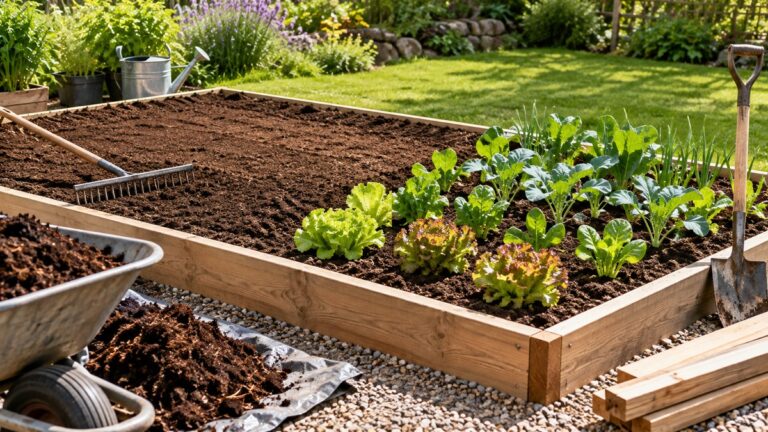
If you build from lumber, cut boards to the length and width you planned. Use cedar if you can, because the Farmer’s Almanac guide names it as the best choice for a frame. The same guide advises against pressure-treated lumber for any bed that grows food. A galvanized kit saves cutting and fastening, but it is fixed to the listed size. Match the kit’s width to the strip you measured in step 1.
Three fence-side bed kits from Amazon listings
These three kits suit a fence-side layout, each for a different strip. We checked the listings on 2026-10-18. Where a listing does not state a detail, the card says so. We have not tested any of the kits.
1. Vego Garden Modular Bed, 8 x 2 ft at 17 inches: the narrow strip option
Specs (from the listing, checked 2026-10-18): Dimensions: 96 x 24 x 17 inches. Capacity: 23 cubic feet. Weight: 33 pounds. Pieces: 20. Shape: oval. Finish: powder coated. The listing says the kit forms one of nine configurations. The listing does not state an open base.
Pros: A 2-foot width is easy to reach from one side. The 17-inch height is deeper than the 6-inch guide depth, and the bullets describe rubber edging over the sharp edges. Cons: At 33 pounds it is the heaviest kit here. The listing makes claims about its paint and a 20-year life; those are the maker’s claims and we have not verified them.
Best for: A long, narrow strip along a fence. Skip if: You want a wider bed or the listing’s open base is a must.
View on Amazon (affiliate link)
2. Foxlang 8 x 4 ft Galvanized Oval Bed, 2-Pack: two beds for a longer run
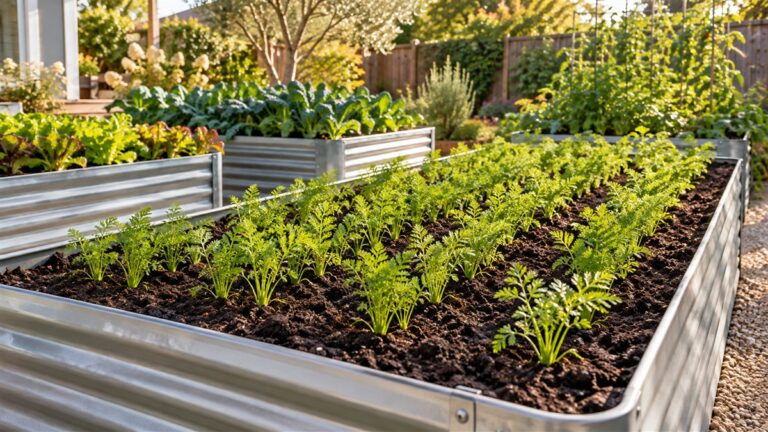
Specs (from the listing, checked 2026-10-18): Dimensions: 96 x 48 x 12 inches. Capacity: 906.24 liters. Weight: 27.7 pounds. Material: galvanized steel. Shape: oval. Features: drainage hole, rust resistant. Included: garden bed, manual, tools, screws and gloves. Warranty: the listing states a 3-year warranty.
Pros: Two beds in one pack, with the tools and gloves included. The listing states a 3-year warranty. Cons: The 4-foot width is at the upper limit for reaching the centre, so the bed should be reached from one side only. The listing does not state the steel gauge.
Best for: A long fence run where you have room for a 4-foot bed and a path. Skip if: The strip is narrower than 4 feet.
View on Amazon (affiliate link)
3. Land Guard 6 x 3 x 1 ft Galvanized Bed Kit: a shorter bed with an open base
Specs (from the listing, checked 2026-10-18): Material: Q195 galvanized metal sheet, listed at 0.78 mm. Dimensions: 72 x 36 x 12 inches. Capacity: 15.55 cubic feet. Weight: 15.02 pounds. Shape: oval. Base: open base, per the bullets. Assembly: the listing says about 5 minutes. Warranty: the listing does not state one.
Pros: The open base is stated in the bullets, and the 12-inch height is deeper than the guide’s 6-inch depth. Cons: A 3-foot width is wider than the 2-foot strip option and needs more reach planning. The listing does not state the drainage hole layout.
Best for: A fence-side bed with a 3-foot width. Skip if: You want a bed narrower than 3 feet.
View on Amazon (affiliate link)
Mistakes with fence-side beds
The most common mistake is planning the bed before measuring the strip. A bed that does not fit the gap forces you to reach across the bed, and it gets trampled. The second is building too deep for the crop. Carrots need the deeper range, but salad greens do not. The third is blocking the path or a gate. Check the layout from the open side before you fill the bed. The fourth is buying soil before you calculate the volume. Use the worked example above first.
What the fence search turned up
Searches for this keyword also return no-dig garden fences, which are wire or metal barriers for dogs and rabbits. They are fences, not raised beds, so we did not include them as products. If you want to keep animals out of a fence-side bed, check a fence product’s listing separately before you buy.
Related guides
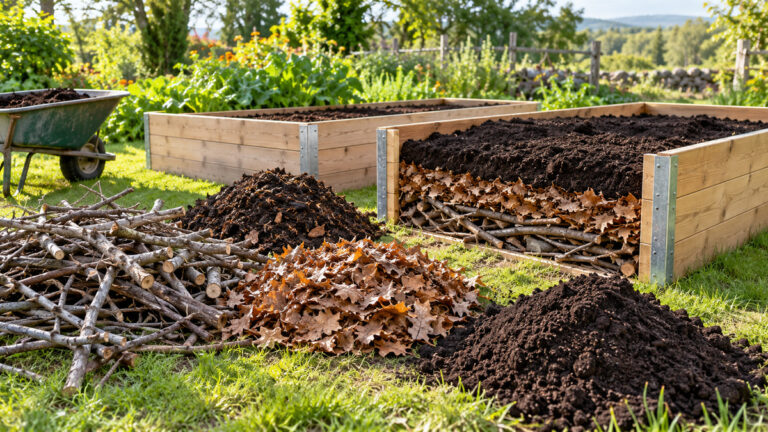
For a worked check on soil quantity, see our guide to how much soil a raised bed garden needs. For filling a bed once it is built, read our post on the best way to fill raised beds. For what to plant along a fence, see our list of vegetables for raised beds.
Frequently asked questions
How wide should a raised bed along a fence be?
Keep it 4 feet wide or less, so you can reach the centre from the open side. A 2-foot bed is easier to tend than a 4-foot bed.
How deep should a fence-side bed be?
About 6 inches suits most vegetables, and about 10 inches suits root crops, according to the Farmer’s Almanac guide.
Can I build a raised bed against the fence?
You can. The listings we read do not cover fence contact, so check the fence’s condition and make sure the bed does not block a gate or access path before you build against it.
Are the no-dig garden fences the same as raised beds?
No. They are wire or metal barriers for animals and edging, not beds that hold soil. We did not list them as products in this guide.
Bottom line
A raised bed along a fence works best when you measure the strip first, keep the bed within reach, and choose a depth for the crop. The kits above differ mainly in width and height, so pick the one that matches your strip, then use the worked example to calculate the soil.