How to Deadhead Flowers Properly
As an Amazon Associate we earn from qualifying purchases.
Learning how to deadhead flowers properly comes down to three things: where you cut, when you stop, and which plants should keep their blooms. Deadheading is the removal of spent flowers, and the four university extension pages below agree that it encourages more flowers when it is done with care.
The pages also explain what is happening inside the plant, and where they differ, the guide shows each version. Some plants should never be deadheaded, and the guide says which ones the sources name.
Quick answer
- Cut the spent flower just above the next full set of healthy leaves or buds, rather than leaving a bare stem.
- Check the plant for hidden buds before you cut.
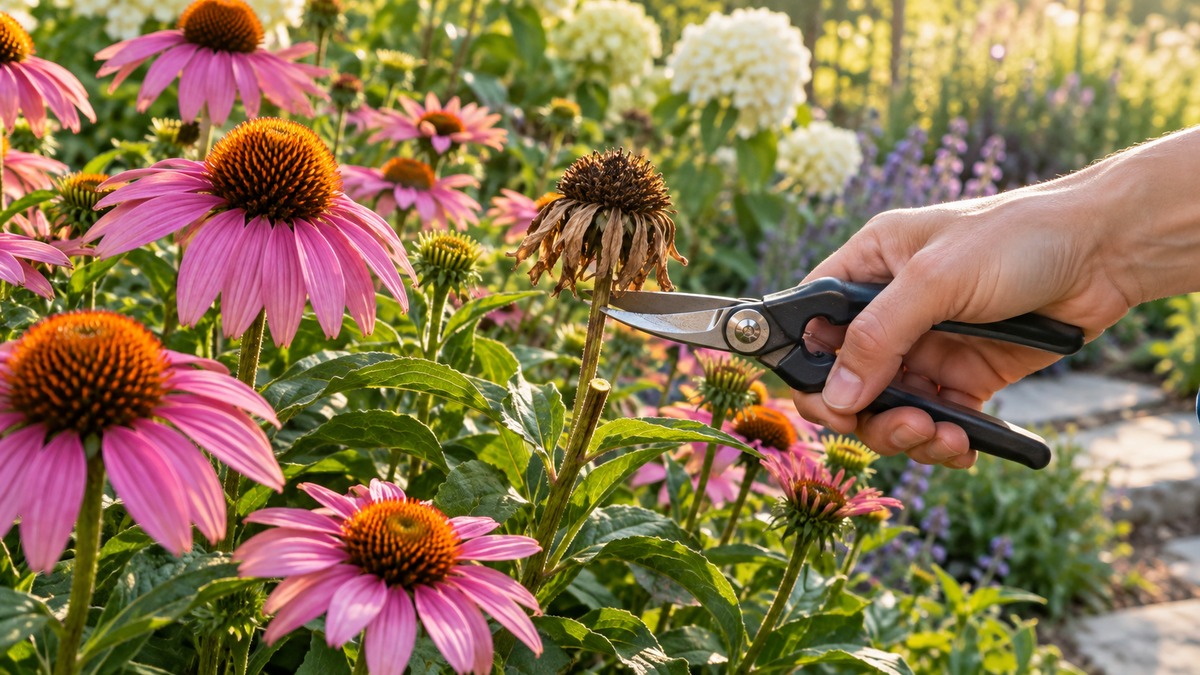
- Pinch thin stems by hand, and use sharp pruners on thick stems such as daylilies and coneflowers.
- Stop when cold weather arrives, and leave some seed heads for wildlife.
What deadheading does for the plant
The plant’s own life cycle explains why deadheading works. South Dakota State University Extension says: “When a spent flower is removed before it sets seed, the plant will try to produce another flower.” It adds: “Deadheading prevents seed production.” Penn State Extension describes the same process: “The deadheading process redirects plant’s energy from seed production to root and vegetative growth.”
Colorado State University Extension gives the broad purpose: “Deadheading is the removal of spent blooms to prolong flowering, improve overall plant appearance, and/or to prevent unwanted fruit or seeds.” Iowa State University Extension describes the benefit for perennials: “The flowering period of many perennials, such as coreopsis, garden phlox, shasta daisy, and yarrow, can be prolonged by deadheading.” It also notes that “Removing spent flowers on daffodils, peonies, and bearded irises promotes plant vigor by preventing the formation of seed pods.”
Where to cut
The cut is the part that matters most. Penn State says: “As blooms fade, pinch or cut off the flower stems below the spent flowers and just above the first set of full, healthy leaves.” Iowa State says the same in shorter form: “To deadhead, you simply remove the blooms by pinching or cutting the spent flower off just above the next healthy set of leaves or buds.” South Dakota State adds: “Remember to cut off the whole flower above the first set of leaves directly below it.”
The bare stem is the mistake to avoid. South Dakota State warns: “Do not leave the bare stem or remove only some of petals.” Its reason is that “Remove the entire flower to encourage new growth.” Colorado State describes a slightly different cut, saying to pinch spent flowers “at the base where they meet the stem immediately after blooms fade”. The four pages do not explain the difference in wording, but all of them point to removing the whole spent flower rather than part of it.
Check for hidden buds first
Look before you cut. Penn State warns: “Always check plants carefully to be sure that no flower buds are hiding amid the faded blooms before you shear off the top of the plant.” When a stalk has more flowers still to open, South Dakota State says: “If there are still unopened buds lower on the stalk, then just remove the dead flower on top.” When every bloom on the stalk has opened, “remove the entire stalk at the base of the plant.”
Timing matters too. Penn State says: “The best time to deadhead a flower is when its appearance begins to decline.” It adds that the schedule depends on the flower: “This can range from a day to several weeks, depending on the species.” South Dakota State suggests a routine: “Develop the routine of grooming your plants every few days during the growing season and your persistence will be rewarded.”
Pinch or prune, depending on the stem
South Dakota State gives the simple split. For thin stems, “pinch them off between your fingers or with your fingernails.” For thicker stems, the advice changes: “When deadheading larger perennial plants, like daylilies and coneflowers or annuals with thicker stems, using a hand pruner is recommended so you have nice, clean cuts on the stems where you deadhead”. The page explains the reason: “This prevents plant-tissue injury that could become an entry point for disease.”
Keep the pruners clean and sharp, because a clean cut is the aim. Penn State also notes that “Deadheading is very simple”, so the tools need not be complicated. What matters is the position of the cut, not the number of cuts.
Cut back a whole plant for repeat bloom
Sometimes the whole plant needs a trim, not single flowers. South Dakota State says: “Some annuals and perennials will benefit by having all spent blooms removed at one time.” It calls this shearing back: “This method is sometimes referred to as shearing back and is typically accomplished by removing one-third of the entire plant, including spent blooms as well as a small portion of foliage”.
The result takes a short wait. South Dakota State says that “When you shear back annuals or perennials, a few flowers may still be in full bloom, and you will lose those.” It promises: “However, the plant will quickly recover and set a completely new flush of blooms.” The example it gives is “thread-leaf coreopsis,” which sets most of its blooms in one period, so one trim can bring a second flush.
Colorado State names plants that respond to deadheading: “Perennials such as blanket flower, yarrow and salvia can be encouraged to re-bloom by pinching off spent flowers before they form seed heads.” Iowa State adds that “Some perennials, like delphinium, salvia, and catmint, often bloom a second time in late summer if the initial flower stalks are cut back after flowering.”
Know which plants will not rebloom
Deadheading does not work on every plant. South Dakota State says: “Realize that many perennial plants, such as the peony, only bloom once in a growing season regardless of human intervention.” Its warning is direct: “Removing faded blooms will not promote new flowers.”
The sources also note that some plants do better with no deadheading at all. South Dakota State says: “Some hybrid annuals have been bred to not set seed.” It adds that “It is not necessary to deadhead continuous bloomers”. Iowa State says impatiens and many petunias are self-cleaning, which means they need no help from the gardener.
Leave some plants to self-seed
Some plants should keep their seed heads so they can reseed. Penn State says: “Some perennials that should not be deadheaded so that they reseed for the following year are Alcea (Hollyhock), Digitalis (Foxglove), Lobelia (Cardinal Flower), and Myosotis (Forget-me-not).” It also says there are “some perennials that are great self-seeders”, and that the seedlings “can help fill in areas of your garden or allow the gardener to share plants with other gardeners.”
South Dakota State describes hollyhock and foxglove as biennials and gives the same advice: “Avoid deadheading these plants to allow them to set seed.” The page explains that “These seeds will drop in the garden and germinate in the next year”. Penn State lists these two among perennials, so the sources describe the same plants with different labels, while agreeing on the cut.
The other side of self-seeding is control. Iowa State says that “Deadheading prevents the self-seeding of spreaders like golden marguerite, yarrow, columbine, blackberry lily, garlic chives, and other potentially invasive perennials.” Colorado State makes the same point about yarrow: “Deadheading also prevents some perennials such as yarrow from self seeding and becoming invasive.”
Roses need their own rules
Roses follow different steps. Iowa State gives the first-year rule: “During the first growing season, remove the faded flowers above the uppermost 3-leaflet leaf.” For established roses, it says the stem “may be cut back to a 5-leaflet leaf.” South Dakota State gives the same leaf count and explains the reason: “make your cut right above a stem with five (not three) leaflets to stimulate reblooming.”
Iowa State says to stop in late summer for hybrid teas, grandifloras and floribundas: “Stop deadheading hybrid teas, grandifloras, and floribundas in late summer (late August or September).” It explains that “The development of rose hips (fruits) slows plant growth and helps prepare the plants for winter.” Old-fashioned roses are simpler: “There is usually no need to deadhead old-fashioned roses as many are one-time bloomers.”
Stop in autumn and leave seed for wildlife
South Dakota State says to stop with the first cold: “When the weather turns chilly, stop deadheading annuals and perennials.” Its reason is that “Perennials will begin reallocating nutrients to their roots in preparation for winter survival.”
Seed heads have a second job. South Dakota State says: “Seeds that are left on perennials also provide food for wildlife in the winter.” Penn State adds that “It is very important to keep seed pods on the plants for wildlife to enjoy during the winter months”, and that “Birds enjoy perching on Echinacea (coneflowers) and snacking on the seed heads.” For plants that need the seed for winter food, leave the last flowers standing.
Mistakes to avoid
- Leaving a bare stem with no leaves below the cut, which South Dakota State warns against.
- Cutting off a bud hidden among faded blooms, which Penn State says to check first.
- Deadheading biennials such as hollyhock and foxglove that need to set seed.
- Expecting peonies to rebloom after deadheading, since they bloom once a season.
- Cutting back every seed head in autumn, when the seeds feed birds through winter.
Frequently asked questions
Do all flowers need deadheading?
No. South Dakota State says that “It is not necessary to deadhead continuous bloomers”, and Iowa State names impatiens and many petunias as self-cleaning. Plants that bloom once a season, such as peonies, gain nothing from deadheading.
Where exactly should a spent flower be cut?
Cut just above the first full set of healthy leaves below the faded flower, as Penn State and Iowa State describe. Do not leave a bare stem, and check for hidden buds before you cut.
Should flowers be deadheaded in the fall?
Stop when cold weather arrives. South Dakota State says to stop once the weather turns chilly, and Penn State notes that in many gardens no deadheading guidelines apply in autumn. Seed heads can stay on the plant for wildlife through winter.
Will deadheading make peonies bloom again?
No. South Dakota State notes that peonies “only bloom once in a growing season regardless of human intervention”, so removing faded flowers will not produce a second flush.
Should fingers or pruners be used?
Use your fingers for thin stems, and sharp pruners for thick stems such as daylilies and coneflowers. South Dakota State says clean cuts from a hand pruner prevent injury to the plant.
How we chose
Four university extension pages form the basis of this guide, all opened on 2026-10-22: South Dakota State University Extension’s article on deadheading regularly, Colorado State University Extension’s PlantTalk script 1072, Iowa State University Extension’s page on deadheading herbaceous ornamentals and roses, and Penn State Extension’s article “To Deadhead or Not?” (updated September 23, 2025). Each covers where to cut, when to stop, and which plants to leave alone. Commercial pages from the search results were left out.
What we could not verify
The four pages give general advice for annuals, perennials and roses. They do not give a cut date or a bloom count for each species, and this guide does not invent one. No product is named as a recommendation, and this guide does not name one.
What the sources do not say
- The pages do not give one number of days after bloom to deadhead. Penn State says the interval can range from a day to several weeks.
- They describe the cut in slightly different terms. Penn State and Iowa State say above the leaves, while Colorado State says at the base where the flower meets the stem, and no page explains the difference.
- They label hollyhock and foxglove differently: South Dakota State calls them biennials, and Penn State lists them among perennials.
Bottom line
Cut each spent flower just above the next healthy leaves, check for hidden buds first, and leave seed heads when the weather turns cold. For the autumn steps that come next, see preparing raised beds for winter, and for spring planning, see vegetables to plant in raised beds.
Sources
- https://extension.sdstate.edu/enjoy-more-flowers-your-garden-deadheading-regularly (opened 2026-10-22)
- https://planttalk.colostate.edu/topics/annuals-perennials/1072-deadheading-how-to-and-when-to (opened 2026-10-22)
- https://hortnews.extension.iastate.edu/2003/6-16-2003/deadhead.html (opened 2026-10-22)
- https://extension.psu.edu/to-deadhead-or-not-your-final-answer-is (opened 2026-10-22)