How to Transplant Seedlings
As an Amazon Associate we earn from qualifying purchases.
The person typing how to transplant seedlings wants to move healthy plants from a tray into the garden without losing them to shock. The three sources we opened agree on the basic steps: pick the right time of day, handle the plant gently, water the hole and the plant, and set the depth correctly. This guide covers those steps in order, then the crop-specific cases where the pages give different advice.
Quick answer
- Transplant on a cloudy day or in the evening. Mississippi State University Extension says “If possible, set all vegetable transplants on a cloudy day or in the evening.”
- Hold each seedling by a leaf or the root ball, never by the stem. The UVM factsheet says to “Always handle the plants by their individual leaves or by the root ball.”
- Water the planting hole before you finish filling it, and soak the seedlings an hour or two before moving them.
- Set most seedlings at the same depth they grew before. Tomatoes and peppers can go deeper, and tall transplants can be buried up to the first set of leaves.
Start with healthy seedlings
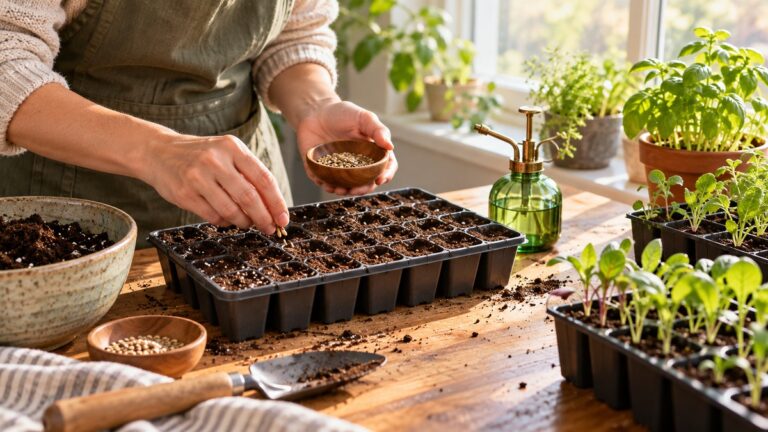
Mississippi State University Extension explains why transplants are used at all. It says “Some vegetables are planted in the garden using small plants (transplants) rather than seeds.” For cucumbers, squash, cantaloupes and watermelons, the page says the practice is spreading because “transplants shorten the time by several weeks between planting and harvest.”
The same page says the ease of moving a plant varies: “Not all vegetable plants transplant with the same degree of ease as small seedlings or when setting them out in the garden.” It adds that “even vegetables described as difficult to transplant can be transplanted into the garden with great success when they are started in containers.” Starting the crop in containers is the approach the page recommends for tricky vegetables.
Choose stock carefully. The page says “Plants with good roots that are healthy, stocky, medium-sized, and free of disease or insects are best.” Check the roots of each seedling before you buy it or move it, and set aside any plant that looks weak.
Pick the right time of day and weather
Timing is the most common source of transplant shock. Mississippi State University Extension says “If possible, set all vegetable transplants on a cloudy day or in the evening.” The UVM factsheet explains why: it advises that you “transplant during the evening hours so that the plants will enjoy a cool night with no sunlight beating down on them.” Both pages aim to keep sun off the plant during its first hours outdoors.
Carter County’s extension column gives the same advice in a slightly different form. It says “Transplant on a shady day in late afternoon or in early evening to prevent wilting.” The point across the pages is to avoid wilting, and the Carter County column ties that to late-afternoon or evening planting in shade.
Weather matters beyond the time of day. The UVM factsheet says “Don’t set your vegetable plants out into the garden until the weather conditions are just right for the crop you are transplanting.” It warns about frost: “Why risk having your sensitive plants destroyed by an unexpected late frost, especially if planting early doesn’t provide much benefit.” It also warns against leaving cool-season crops too late: “you don’t want to transplant cool weather crops too late into the growing season.” The balance is to wait for safe weather without waiting so long that the crop runs out of season.
The best conditions are the ones the UVM factsheet describes at the end: “The absolute best time for transplanting is immediately before a period of rainy weather or cloudy overcast days.” Check the forecast before you dig. If the forecast shows excessive heat, the factsheet says to “avoid transplanting vegetable seedlings when the weather is expected to be excessively hot.” Moving the seedlings on a cool, damp day or just before rain is the easiest path.
Prepare the hole before you lift the plant
The UVM factsheet gives the order of work. It says “Dig the appropriate size hole before removing the transplant from its container to reduce the length of time that the roots will be exposed.” Digging first keeps the roots out of the air. For seedlings in individual containers, the same page suggests a trick: “you can judge the level and size of the hole by setting the entire container in the hole before you remove the plant.”
Water the seedlings ahead of time. Carter County’s column says “Soak transplants’ roots thoroughly an hour or two before setting them in the garden.”
If the seedlings were started indoors, they also need to adjust to outdoor conditions before the move. The UVM factsheet says to “spend at least one week of hardening off before transplanting those home-grown vegetable seedlings.” Harden them off gradually before they go in the ground.
Lift and handle gently
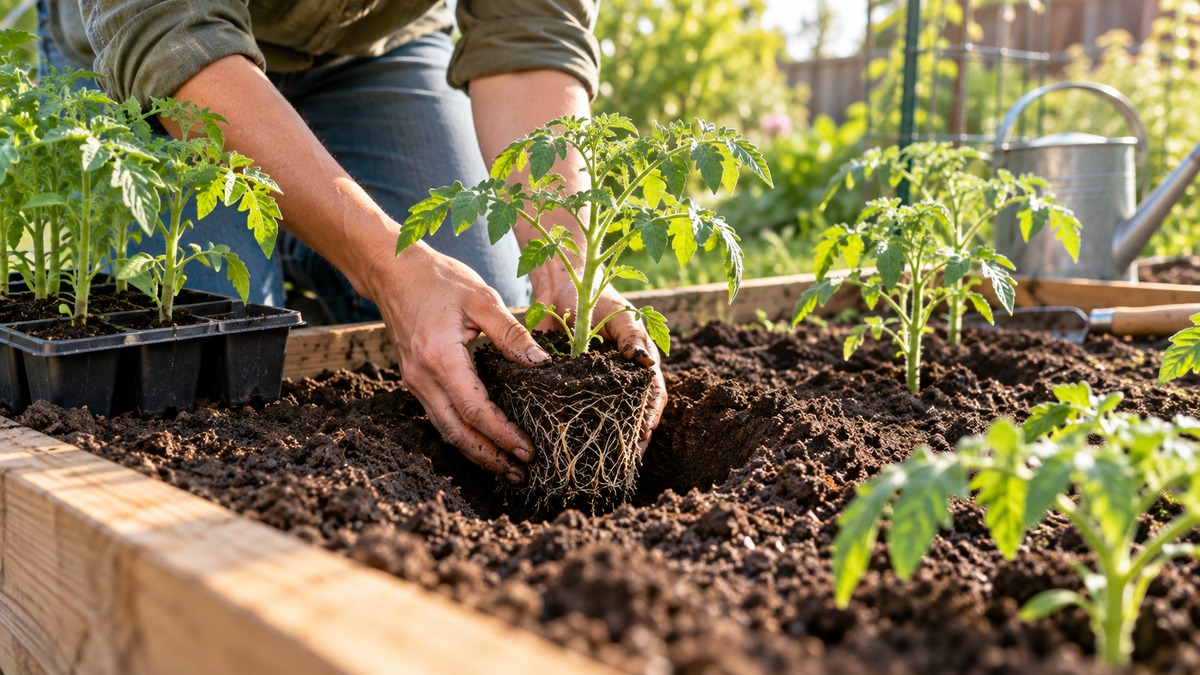
Handling is where many seedlings are lost. The UVM factsheet says “Always handle the plants by their individual leaves or by the root ball.” It explains why the stem is off limits: “Avoid grasping the plant by its stem which would be like holding someone by the neck.” Carter County’s column says the same thing more briefly: “It is better to grasp plants by their leaves than their tender stems.”
Work from the bottom and the sides to loosen the plant from its container. The UVM factsheet says to avoid disturbing the soil around the roots, and to leave the root ball intact. Carter County says “Handle the plants carefully. Avoid disturbing the roots.” If several seedlings share one cell, the factsheet says to “separate them evenly by dividing the root ball.” It adds that “With some plants, it may be wiser to sacrifice one plant rather than attempt to untangle the intertwined root systems.”
Why a move slows the plant down
Carter County’s column is direct about the cost of moving a plant: “Transplanting will temporarily check a plant’s growth.” It follows with the goal: “Therefore, for successful transplanting, try to interrupt plant growth as little as possible.” Every step in this guide serves that goal, from the timing to the handling to the watering. The column also says “Dig a hole large enough to hold the roots.”
The UVM factsheet makes a related point about timing and harvest. It says “Don’t be in a rush to harvest the first fresh tomato from the garden; instead aim to have the healthiest and most productive plants when they begin to bear fruit.” The goal is a healthy plant at the right time, not the earliest possible move.
Set the depth correctly
For most seedlings, the rule is the same as the one the pages give for the container. The UVM factsheet says “Set the plant into the ground at about the same level that it was growing in the tray or flat.” Carter County says “For most plants, keep the soil depth similar to how they were previously growing.” Burying a seedling deeper than it grew is not the general rule in these sources.
Tomatoes and peppers are the exception. The UVM factsheet says “Tomato (and pepper) plants are exceptions and should be planted much deeper than when they sat in their growing containers.” It explains the benefit: “Seedlings treated in this manner will develop a stronger root system by growing roots all along the portion of the stem that is buried underground.” Mississippi State University Extension gives a matching instruction for tall transplants: “Plant tall transplants deeply, burying the stem to the first set of leaves.”
Fiber pots need one more step. Mississippi State University Extension says “Place peat pots and other fiber pots directly into the planting holes.” Then it says to “Be sure to cover the upper edges of the pots with soil to prevent wicking the moisture out of the pots.” An exposed pot rim wicks water away from the root ball, which is the opposite of what the transplant needs.
Water in and protect the plant
Water the hole, not just the top of the soil. The UVM factsheet gives a specific sequence: “Place about half of the soil back into the planting hole, then stop and water the plant before you finish filling the hole with garden soil and lightly tamp.” It explains the purpose: this “will supply moisture to the plant’s root zone rather than the soil surface where it may quickly evaporate.” Watering the root zone is the step that counts.
After planting, protect the seedling from the elements. Mississippi State University Extension says “Protect newly set plants from sun, cold, and wind.” The factsheet adds a diagnostic point for the first day or two: “If you notice that your new transplants are wilting, often this is a sign of transplant shock rather than a lack of moisture.” Protect the seedling from sun and wind while it settles.
Crop-specific cases
Some crops need a different approach. Mississippi State University Extension says “Transplants of cucumbers, squash, and melons grown in small containers must be set in the garden while still quite young (cotyledons expanded and first leaf showing), about 3 weeks after planting the seeds.” For these crops the seedling’s age is the main point, so set them out while they are still young rather than waiting for them to grow larger in a small container.
Hardening off is a separate step, and the UVM factsheet’s advice on it is covered above.
Mistakes to avoid
- Holding seedlings by the stem. The UVM factsheet says to avoid it.
- Planting in strong midday sun. Carter County says to transplant on a shady day or in the evening.
- Setting tomatoes at the same depth as the tray. The UVM factsheet says they should go deeper.
- Filling the hole before watering it. The UVM factsheet says to water before finishing the fill.
- Leaving peat pot rims above the soil. Mississippi State University Extension says to cover them.
For the bed the seedlings are going into, the guide to vegetables to plant in raised beds covers the crop choice, and the easiest vegetables to grow in raised beds is a good companion for a first season.
How we chose
We chose three extension sources because each brings a different angle. Mississippi State University Extension gives the transplant-to-garden steps for vegetables. The UVM factsheet gives the detailed handling and watering sequence. The Carter County column is an extension notes column in a local paper, and it adds the late-afternoon and soaking steps. We opened each page with curl and kept only pages that returned HTTP 200 and could be read as text. Pages that returned any other status are not counted. We did not use retail listings or general gardening blogs for any step, and every quoted sentence was checked against the text of its page.
What we could not verify
The pages we opened do not give one transplant date for any region, and they do not say how many days a seedling should spend in its tray before it is ready. The timing advice comes from general weather conditions rather than your local frost calendar, so check that calendar yourself. The pages also do not give a fixed number of hours of shade for each crop.
What the sources do not say
The sources do not say how much water a transplant needs each day after planting, beyond the soaking and hole-watering steps above. They do not give a single rule for every crop, and the cucumber, squash and melon timing comes from one page only. The Carter County source is an “Extension notes” column in a local newspaper, not a formal publication.
Frequently asked questions
When is the best time to transplant seedlings into the garden?
Mississippi State University Extension says to set vegetable transplants on a cloudy day or in the evening. The UVM factsheet says the best time is just before a period of rainy or overcast weather, and that you should avoid excessive heat. Check the forecast and pick a cool window.
Is watering needed before transplanting seedlings?
Yes. Carter County’s column says to soak transplants’ roots thoroughly an hour or two before setting them in the garden. The UVM factsheet adds that you should water the planting hole partway through filling it, so the moisture reaches the root zone.
How deep should tomato seedlings go?
Deeper than they grew. The UVM factsheet says tomato and pepper plants should be planted much deeper than they sat in their containers. Mississippi State University Extension says tall transplants can be buried up to the first set of leaves.
Do seedlings need hardening off before transplanting?
The UVM factsheet says to spend at least one week of hardening off before transplanting home-grown seedlings. Harden them off gradually, so they adjust to sun and wind before they go in the ground.
What does wilting after planting usually mean?
The UVM factsheet says that wilting in new transplants is often a sign of transplant shock rather than a lack of moisture. Protect the seedling from sun and wind, and watch it before adding more water.
Sources
- https://extension.msstate.edu/lawn-and-garden/vegetable-gardens/transplanting (opened 2026-10-22)
- https://www.uvm.edu/d10-files/documents/2026-04/HardeningOffTransplants_factsheet.pdf (opened 2026-10-22)
- https://cartercountytimes.com/features/extension-notes-transplanting-tips-for-vibrant-gardens/ (opened 2026-10-22)