Best Vegetables to Plant in Raised Beds: Easy Picks
As an Amazon Associate we earn from qualifying purchases. Details
The best vegetables for raised beds are the ones whose roots fit the soil depth you have and whose mature size matches the space. Shallow-rooted crops handle a modest bed well, while deep-rooted plants need more soil and more room to spread.
Start by measuring your bed depth, counting the hours of direct sun it gets, and noting your growing season. Those three limits narrow the list quickly. The sections below cover the criteria that matter, which beds and supports fit small plots, which crops grow well together, and the mistakes that reduce yields in compact beds.
At a glance: matching vegetables to bed depth
| Bed depth | Well-suited crops | Needs more depth or ground plot |
|---|---|---|
| 12 inches (shallow) | Lettuce, spinach, arugula, green onions, radishes, most herbs, bush beans, peppers, compact tomatoes | Carrots and compact potatoes need the full 12 in loose and stone-free; deep-rooted crops do not fit |
| Deeper bed with trellis | Compact indeterminate tomatoes, cucumbers, pole beans (with support) | — |
| Not recommended for raised beds without extra depth | — | Sprawling winter squash, tall corn (save for larger ground plots unless using a trellis and deep bed) |
Depth and spacing figures come from the bed listings covered in this guide (several state 12 inches of height, e.g. a 36 x 72 x 12 in fabric bed and a 48 x 24 x 12 in metal bed). The listings do not state soil depth after settling, so plan to top up the mix after watering.
Quick answer
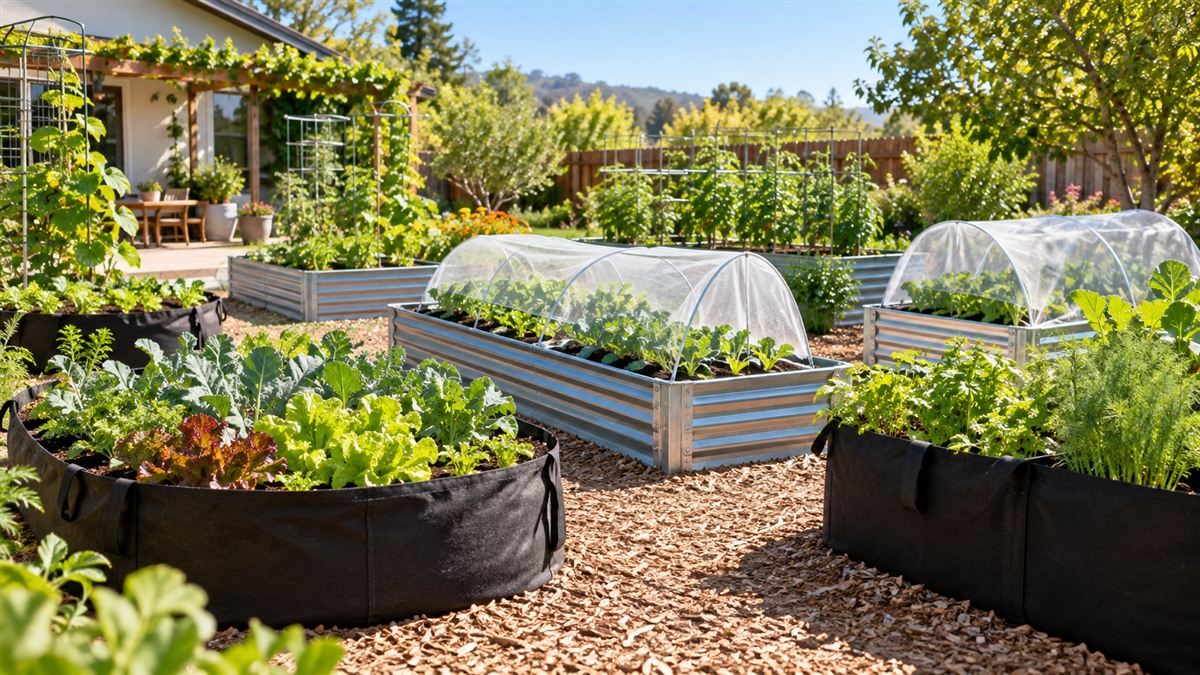
Choose leafy greens, herbs, bush beans, carrots, peppers, and compact tomatoes for most raised beds, and save sprawling winter squash and tall corn for larger ground plots unless you have a trellis and a deep bed. Shallow beds 12 inches deep suit lettuce, spinach, radishes, green onions, and herbs, while carrots and compact potatoes do better with 12 inches of loose, stone-free fill. A fabric bed with divided grids helps keep different vegetables separated, and a metal bed with a cover helps you start earlier in spring and protect seedlings from wind and rain.
If you are new to planning, a month-by-month raised-bed vegetable book helps you sequence sowing and harvests. If birds, rabbits, or insects pressure your patio, add mesh or frost covers sized to your bed. Check the product listing for exact dimensions, capacity, materials, and what is included before you buy, because bed depth and usable growing area control which vegetables will fit.
What matters for vegetables in raised beds
1. Bed depth and root length
Depth decides which vegetables can form roots and hold moisture. The listings here state 12 inches of height for several beds, including a 36 x 72 x 12 inches fabric bed and a 48 x 24 x 12 inches metal bed. Lettuce, spinach, arugula, green onions, radishes, and most herbs can work in that depth. Carrots need loose fill through the full depth and no hard layer below. The listing does not state soil depth after settling, so plan to top up mix after watering. For more soil ideas, see raised bed garden soil mix for vegetables.
2. Footprint and spacing
Footprint decides how many plants fit without crowding. A 6 x 3 ft bed gives more rows than a 4 x 2 ft bed, and divided grids help separate aggressive growers from slow growers. Crowding reduces airflow and makes watering uneven. Choose compact or bush forms for small beds, and give climbing cucumbers and pole beans vertical space instead of letting them sprawl across neighbors.
3. Drainage and airflow around roots
Raised beds drain faster than ground soil. Breathable fabric promotes drainage and air circulation around roots, and metal beds in this data use an open base to avoid water accumulation. Good drainage helps lettuce and herbs, but it also means small beds dry faster in summer. Mulch the surface and water deeply rather than briefly. If your bed sits on concrete, read drainage for raised beds on concrete.
4. Season length and protection
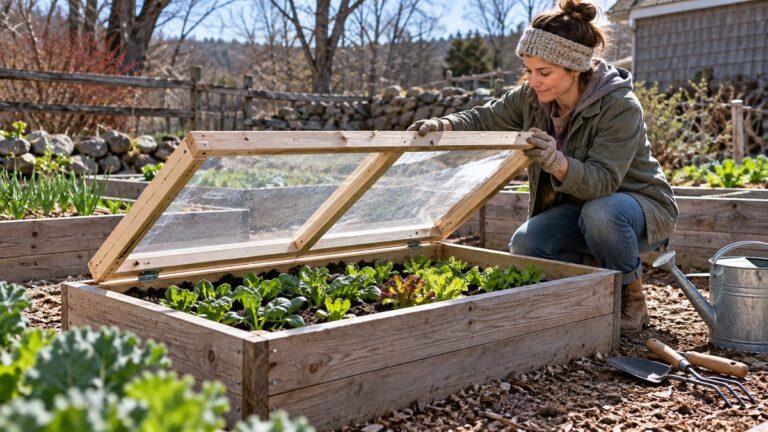
Cool-season vegetables such as lettuce, spinach, carrots, peas, and radishes grow in spring and fall. Warm-season vegetables such as tomatoes, peppers, cucumbers, beans, and squash need warm soil and a longer frost-free window. A polyethylene cover or frost blanket lets you start earlier and shields seedlings from wind and rain. Covers must be vented on warm days to prevent overheating. For winter care, see preparing raised beds for winter.
5. Support for vining vegetables
Cucumbers, pole beans, and compact indeterminate tomatoes need support in a raised bed. Without support, vines cover neighboring squares and shade low greens. An A-frame trellis sized 50 inches wide by 50 inches high fits across a bed and keeps fruit off damp soil. Check the listing for footprint and weight limits before you load it with heavy fruiting vines.
6. Planning help for succession and companions
Pair quick radishes with slower carrots, or lettuce around young peppers that will later shade them lightly. A planning book with month-by-month steps helps beginners avoid sowing everything at once. For layout ideas, see small raised bed vegetable garden layout.
Beds, guides, and supports that fit raised-bed vegetables
1. KLEWEE Fabric Raised Garden Bed, 6 x 3FT 8 Grids Plant Grow Bags (Best overall)
Specs from the listing (checked 2026-10-10):
- Material: Fabric
- Size: 6FT x 3FT 8 Grids
- Capacity: 128 gallons
- Item Dimensions D x W x H: 36"D x 72"W x 12"H
- Number of Levels: 8
- Indoor Outdoor Usage: Outdoor
Pros
- Listed 36 x 72 x 12 inches with 128 gallons capacity for multiple vegetable rows
- 8-grid divided surface keeps different vegetables separated in one bed
- Breathable fabric walls support drainage and air pruning per listing
Cons
- Fabric walls dry faster than rigid beds in hot wind, so greens need closer watering watch
- Listing does not state settled soil depth, so topping up after watering is needed
Best for: Gardeners wanting one large divided bed for mixed vegetables
Skip if: You want rigid sides that hold a straight edge for covers
View on Amazon (affiliate link)
2. Miory Raised Garden Bed with PE Cover, 6x3x1 FT Galvanized Planter Box Outdoor with Greenhouse (Best for early start)
Specs from the listing (checked 2026-10-10):
- Size: 6x3x1Ft
- Cover Material: High Density Polyethylene (HDPE)
- Number Of Vents: 2
- Special Features: Easy Assembly, Extend Growing Season, Galvanized Garden Bed
- Indoor Outdoor Usage: Outdoor
- Brand: Miory
Pros
- Listed 6x3x1Ft galvanized bed with PE greenhouse cover for shoulder seasons
- Two zippered screen windows allow airflow and access to vegetables and herbs
- Kit includes plant labels and gloves for tracking sowing dates
Cons
- Listing does not state capacity in gallons or cubic feet, so soil must be calculated from dimensions
- Cover warmth requires venting on warm days to avoid heat buildup
Best for: Gardeners who want to start spring vegetables earlier and shield seedlings
Skip if: You want an open bed only or garden where summer heat is the main limit
View on Amazon (affiliate link)
3. Land Guard Galvanized Raised Garden Bed Kit, Galvanized Planter Garden Boxes Outdoor, Oval Large (Best small patio bed)
Specs from the listing (checked 2026-10-10):
- Size: 4×2×1ft
- Capacity: 7.14 cubic feet
- Item Dimensions D x W x H: 48"D x 24"W x 12"H
- Material: Metal
- Item Weight: 5 pounds
- Indoor Outdoor Usage: Outdoor
Pros
- Listed 48 x 24 x 12 inches with 7.14 cubic feet capacity for patio vegetables
- Open base design helps avoid water accumulation per listing
- Q195 galvanized metal sheet with double-layer galvanizing and 5-pound listed weight
Cons
- 4 by 2 ft footprint holds fewer plants than 6 x 3 ft beds for succession planting
- No cover stated, so frost protection must be bought separately
Best for: Small patios needing a compact oval bed for herbs, lettuce and beans
Skip if: You need room for many vegetable families at once
View on Amazon (affiliate link)
4. 2-Pack Fabric Raised Planter Beds, 22 Gallon, 3x1x1 Ft (Best for renters)
Specs from the listing (checked 2026-10-10):
- Capacity: 22 gallons
- Item Dimensions D x W x H: 35.4"D x 11.8"W x 11.8"H
- Material: Polyester Non-woven Felt
- Size: 22 gallons
- Indoor Outdoor Usage: Indoor, Outdoor
- Unit Count: 2 Count
Pros
- Two beds each listed 35.4 x 11.8 x 11.8 inches with 22 gallons capacity
- Each bed has 3 separate compartments for grouping by water need
- Breathable felt with reinforced side handles for moving on balconies and patios
Cons
- Narrow compartments are cramped for large tomatoes or sprawling vines
- Small volume dries faster, so summer watering needs closer attention
Best for: Renters trialing companion groups without one large bed
Skip if: You want one deep continuous bed for carrots or large tomatoes
View on Amazon (affiliate link)
5. Veg in One Bed New Edition: How to Grow an Abundance of Food in One Raised Bed, Month by Month (Best planning guide)
Specs from the listing (checked 2026-10-10):
- Publisher: DK
- Print length: 240 pages
- Dimensions: 8 x 0.98 x 9.5 inches
- Item Weight: 1.94 pounds
- Publication date: June 13, 2023
- Language: English
Pros
- 240 pages month-by-month plan for growing food in one raised bed
- DK 2nd edition dated June 13, 2023 for seasonal succession ideas
- Compact 8 x 0.98 x 9.5 inches reference at 1.94 pounds for planning use
Cons
- Book only with no bed, soil or seed included for planting
- Listing does not state hardiness zones, so compare calendar to local frost dates
Best for: Beginners who want a seasonal sowing and harvest sequence
Skip if: You already have a planting calendar that works for your area
View on Amazon (affiliate link)
6. 50"x17" A-Frame Cucumber Trellis for Raised Bed, Heavy Duty All-Metal Support for Climbing Plants (Best support)
Specs from the listing (checked 2026-10-10):
- Size: 50"x17"
- Shape: A-Shape
- Finish Type: Powder Coated
- Brand: YOBAZAN
- Product Dimensions: 50"W x 50"H
- Number of Items: 1
Pros
- Listed 50 inches wide by 50 inches high A-shape for raised-bed vines
- Powder-coated steel frame described for cucumbers, tomatoes and beans
- Folds flat for off-season storage with matched connectors
Cons
- Listing does not state maximum load in pounds for heavy fruiting vines
- Provides no pest or frost protection for seedlings
Best for: Small beds where cucumbers and beans need vertical space
Skip if: You grow only compact bush vegetables that do not climb
View on Amazon (affiliate link)
KLEWEE Fabric Raised Garden Bed, 6 x 3FT 8 Grids
This is a rectangular fabric bed meant for outdoor vegetable growing in yards and patios. It measures 36 x 72 x 12 inches and lists 128 gallons of capacity, which gives room for several rows or blocks of vegetables. The 8-grid layout divides the surface so you can keep mint away from lettuce or separate carrots from sprawling zucchini. The listing states the material is thickened non-woven felt fabric with reinforced stitching.
The listing describes breathable walls that allow drainage and air pruning of roots. That design suits leafy greens, peppers, onions, herbs, and other crops that dislike soggy soil. Setup is unfold, fill, and plant, with no assembly stated. When the season ends, the listing says you can empty it and store it.
Limit: fabric walls can dry faster than rigid metal in hot wind, so shallow-rooted greens may need more frequent watering. The listing does not state a soil-depth mark after settling. Skip it if you want a rigid bed that holds a straight edge for covers or cold frames.
Miory Raised Garden Bed with PE Cover, 6x3x1Ft
This is a galvanized planter box with a high density polyethylene cover for outdoor use. The stated size is 6x3x1Ft, and the listing describes three uses as a raised bed, a mini greenhouse, or both combined. Two zippered screen windows allow airflow and access, and the cover helps retain warmth and shield plants from wind and rain.
It fits gardeners who want to start lettuce, carrots, herbs, and flowers earlier in spring and stretch harvests into cooler seasons. The listing states the frame is thick galvanized steel with two reinforced middle support poles. The kit includes plant labels and gloves, which help track different sowing dates in one bed.
Limit: the listing does not state a capacity in gallons or cubic feet, so you must calculate soil needs from dimensions and check the listing. The cover adds warmth, but you must open windows on warm days to avoid heat buildup. Skip it if you want an open bed only or you garden where summer heat is the main limit.
Land Guard Galvanized Raised Garden Bed, 4x2x1ft Oval
This is a small oval metal bed for outdoor vegetable growing. It measures 48 x 24 x 12 inches, lists 7.14 cubic feet of capacity, and lists item weight as 5 pounds. The listing states the material is Q195 galvanized metal sheet with double-layer anti-corrosion galvanizing and an open base.
The open base helps avoid water accumulation and lets roots reach soil below, which suits peppers, bush beans, lettuce, and herbs in a patio footprint. The listing states assembly takes about 5 minutes and includes tools. The oval shape fits tight patios where a sharp-corner rectangle would block a path.
Limit: at 4 ft by 2 ft, it holds fewer plants than a 6 x 3 ft bed, so it does not suit sprawling squash or large successions of corn. The listing does not state a soil-depth line or a cover, so plan separate protection for frost. Skip it if you need room for many families of vegetables at once.
LionWalk 2-Pack Fabric Raised Planter Beds, 22 Gallon
This set includes two fabric planter beds, each listed as 35.4 x 11.8 x 11.8 inches with 22 gallons of capacity. Each bed has stitched internal dividers that form 3 separate planting compartments. The material is listed as polyester non-woven felt, and use is listed for indoor and outdoor spaces.
It fits renters and balcony gardeners who want to trial vegetables to plant together in raised beds without committing to one large bed. Use one compartment for lettuce, one for herbs, and one for radishes or green onions. The listing states breathable felt drains excess water and allows air circulation, and reinforced side handles allow moving the beds.
Limit: each compartment is narrow, so large tomatoes, watermelon, or potatoes listed as possible in larger fabric beds would be cramped here. Check the listing for mature plant spacing. Skip it if you want one deep, continuous bed for carrots or a large tomato.
Veg in One Bed New Edition
This is a 240 pages guide from publisher DK, with publication date June 13, 2023 and dimensions 8 x 0.98 x 9.5 inches. The title states it covers how to grow food in one raised bed, month by month. Item weight is listed as 1.94 pounds. Language is listed as English.
It fits beginners who want a seasonal plan for the best vegetables to plant in raised beds rather than a single sowing chart. Use it to stagger lettuce, follow spring radishes with beans, and plan fall spinach after summer peppers. The month-by-month format helps avoid bare squares and overplanting one crop.
Limit: it is a book, not growing space, soil, or seed, so you still need a bed and mix. The listing does not state which hardiness zones the schedules target, so compare its calendar to your local frost dates. Skip it if you already have a planting calendar that works for your area.
YOBAZAN 50×17 A-Frame Cucumber Trellis for Raised Bed
This is an all-metal A-shape support listed as 50 inches wide by 50 inches high with a powder-coated finish. The listing describes it as a support for cucumbers, tomatoes, and beans in raised beds, patios, and small backyards. It folds flat for off-season storage.
It fits small beds where vining vegetables would otherwise cover greens. Train cucumbers or pole beans up the frame to free bed space for lettuce, carrots, and onions below. The listing states a thick solid steel frame for heavy fruiting vines, with matched connectors for assembly.
Limit: the listing does not state a maximum load in pounds, so check the listing and tie heavy stems rather than hanging large fruit from one point. It provides no pest or frost protection. Skip it if you grow only compact bush vegetables that do not climb.
How to choose for your space and season
Start with sunlight. Most fruiting vegetables need full sun, while lettuce, spinach, arugula, and many herbs tolerate less. Watch your patio for a day and place fruiting crops in the brightest bed and greens where afternoon shade lands. If you garden on a balcony, narrow fabric beds move more easily than a rigid 6 ft bed.
Match depth to roots. Use 12 inches of loose mix for most raised-bed vegetables, and reserve the loosest section for carrots. Avoid a hard pan of undecomposed wood directly under carrot rows. For fill methods, see best way to fill raised beds and calculating dirt for raised beds.
Plan companions by size and speed, not just flavor. Tall tomatoes shade lettuce in summer heat, which can help in hot areas but hurts spring growth. Quick radishes mark rows for slow carrots. Bush beans fix modest space and finish before fall greens need the square. Keep mint and aggressive herbs in their own grid or pot. For pairings, see vegetables that grow well together in raised beds.
Add compost to the mix. You can compost at home using food scraps from your kitchen and dry leaves and woody material from your yard. Composting reduces the volume of materials that might otherwise go to landfills or trash incinerators, and produces a free soil amendment that can reduce fertilizer and pesticide use. Compost also helps soil absorb and hold water better, which steadies watering in fast-draining raised beds. Those points come from the EPA home composting page. For bagged options, see bagged compost for raised beds.
Choose protection by pest. Fine mesh keeps insects and birds off seedlings while allowing light, air, and rain. Frost fabric adds cold protection. Solid polyethylene adds the most warmth but needs venting. Measure your bed before ordering a cover, because a 48 inch by 24 inch cover will not fit a 72 inch by 36 inch bed.
This example shows how much mix a larger fabric bed needs so you can judge bag counts and which vegetables fit.
Define the scenario: you choose a bed listed as 72 inches long by 36 inches wide by 12 inches high. You plan 10 inches of settled mix depth, leaving 2 inches as a watering lip. You will grow lettuce, spinach, bush beans, peppers, carrots, and basil across 8 grids.
Step 1: convert inches to feet. Length: 72 / 12 = 6 ft. Check: 12 x 6 = 72. Width: 36 / 12 = 3 ft. Check: 12 x 3 = 36. Depth of mix: 10 / 12 = 0.8333 ft. Check: 0.8333 x 12 = 10.
Step 2: volume in cubic feet. Multiply length by width by depth: 6 x 3 x 0.8333 = 15 ft. Check: 6 x 3 = 18, then 18 x 0.8333 = 15. So settled mix is about 15 cubic feet.
Step 3: convert to gallons for reference. One cubic foot holds 7.48052 gallons. Multiply 15 x 7.48052 = 112.2078 gallons. Check: 10 x 7.48052 = 74.8052, plus 5 x 7.48052 = 37.4026, sum = 112.2078. Rounded, about 112 gallons of settled mix.
Step 4: compare to listing capacity. The listing states 128 gallons brim-full capacity. Our 112-gallon estimate is 16 gallons less. Subtract: 128 – 112 = 16. Check: 112 + 16 = 128. The difference is the 2-inch watering lip plus fabric flex.
Step 5: use the result. About 15 cubic feet of mix fills the bed to your target. Grow shallow greens and herbs across most grids, keep one grid loose and stone-free for carrots, and train cucumbers on a trellis at the north end so they do not shade peppers. If bags list volume in cubic feet, add about 10 to 20 percent extra for settling, then top up after the first deep watering.
Common mistakes in raised-bed vegetable planting
1. Sowing sprawling crops in a small bed
Winter squash, sprawling melons, and tall corn overwhelm a 4 x 2 ft bed. They shade lettuce and drink water meant for neighbors. Give them ground space or skip them. Use compact zucchini, bush beans, and trellised cucumbers instead.
2. Mixing vegetables with opposite water needs
Lettuce and spinach want steady moisture, while rosemary and thyme prefer drier feet. Planting them in one undivided square forces a compromise. Use grids or separate fabric planters to group by water need.
3. Planting everything on the same day
One large sowing gives one large harvest, then bare soil. Sow lettuce and radishes every two to three weeks, follow peas with beans, and set peppers after night temperatures warm. A month-by-month book helps pace the work.
4. Ignoring mature size on the seed packet
Seedlings look small, but tomatoes and peppers widen fast. Crowded leaves stay damp and produce less. Follow packet spacing, thin carrots on time, and prune lower tomato leaves only as the seed source directs. Check the listing and packet before you buy supports.
5. Forgetting covers and vents
Seedlings attract birds and rabbits, and late frost harms warm-season transplants. Add mesh or frost covers sized to your bed, then open or remove them when heat builds. Covers that trap heat on a sunny 70-degree day can stress cool-season greens.
FAQ
What are the easiest vegetables for a first raised bed?
Lettuce, spinach, radishes, green onions, bush beans, and basil are forgiving in 12 inches of loose mix. They germinate fast and show stress early, so you can adjust water. Save long carrots and large tomatoes for your second season. For easy options, see easiest vegetables to grow in raised beds.
Which vegetables grow well in 12 inches of soil?
Most greens, herbs, radishes, bush beans, peppers, and compact tomatoes fit 12 inches. Carrots need the full loose depth and no hard layer. Potatoes can work in deeper fill but yield less in shallow beds. Check the product listing for bed height and plan 1 to 2 inches of freeboard for watering.
What vegetables should not share a small bed?
Avoid pairing heavy sprawlers with slow, low greens in a 4 x 2 ft bed. Winter squash will cover lettuce and carrots. Tall corn shades peppers. Mint spreads into every grid. Give aggressive plants their own container or grid.
Can I grow tomatoes and cucumbers together?
Yes if you manage size and support. Use a sturdy A-frame or other support, place vines on the north side so they do not shade peppers, and prune to the seed instructions. Compact or bush forms fit small beds better than large indeterminate vines.
How do I arrange vegetables to plant together in raised beds?
Group by sun, water, height, and days to harvest. Put tall trellised crops north, mid-size peppers and beans center, and low lettuce and onions south. Tuck quick radishes beside slow carrots. Rotate families each season. See raised bed companion planting garden layout.
Do raised beds need special soil for vegetables?
Use a loose raised-bed mix with compost, not dense native soil alone. The EPA notes that compost helps soil absorb and hold water better, which helps in fast-draining beds. For mixes, see soil mixture for raised vegetable garden and dirt for raised bed vegetable garden.
How do I protect seedlings from birds and frost?
Size mesh or frost covers to your exact bed length and width. Fine mesh blocks insects and birds while passing light and rain. Frost fabric adds cold protection. Vent polyethylene covers on warm days. Always follow the cover maker’s manual for attachment and wind limits.
When should I ask a professional?
Ask your local extension service if soil contamination, persistent wilt, or repeated pest loss occurs. Bring bed size, mix source, watering routine, and photos. Do not apply pesticides beyond the label, and keep children and pets to label directions.
Bottom line
Choose shallow greens, herbs, bush beans, and radishes if your bed is 12 inches deep and under 8 square feet. Choose peppers, compact tomatoes, and trellised cucumbers only if you have sun, support, and room to space them. Use divided fabric or a 6 x 3 ft bed for variety, a small oval metal bed for patios, covers for cold and pests, and a month-by-month guide to time successions. Measure your space, confirm dimensions and capacity on the listing, and plant what you will harvest on time.
Sources
- EPA Composting at Home: supports compost feedstocks, landfill reduction and soil water retention statements