How to Grow Sage
As an Amazon Associate we earn from qualifying purchases.
How to grow sage starts with sun and drainage, and the extension pages we opened agree on both. Culinary sage is a woody perennial, and it does best where its roots never sit in wet ground. Start with cuttings or a named plant rather than seed, prune lightly in spring, and replace the plant once it turns woody.
Six extension pages sit behind this guide: University of Maryland Extension, University of Illinois Extension, Iowa State University Extension and Outreach, the University of Wisconsin-Madison Division of Extension, North Carolina State University Extension and Penn State Extension. Where the pages disagree, both views appear below.
Quick answer
- Plant sage in full sun and very well-drained soil. Iowa State says plants need at least six hours of direct sunlight each day.
- Space plants 18 to 24 inches apart, following Wisconsin’s figure, and divide them every few years.
- Start from cuttings, because Illinois notes that seed may take several years to produce harvestable plants.
- Harvest before the plant flowers, and replace it as it ages. Maryland advises replacing culinary sage every three to four years.
Choose a sunny spot with fast drainage
Sage needs sun. Iowa State says it “grows best in full sun and well-drained soil”, and gives a number: “Plants require at least 6 hours of direct sunlight each day to develop strong growth and excellent flavor.” Maryland’s advice is short: “Plant sage where it will receive full sun in very well-drained soil.” North Carolina State describes the plant’s home setting: “Common sage prefers full sun and well-drained, medium to dry soils that mimic those of its Mediterranean homeland.” Penn State ties sage to the same conditions, saying that Mediterranean herbs “thrive in full sun and in well-drained, dry, gravelly soil like that found in their native habitats.”
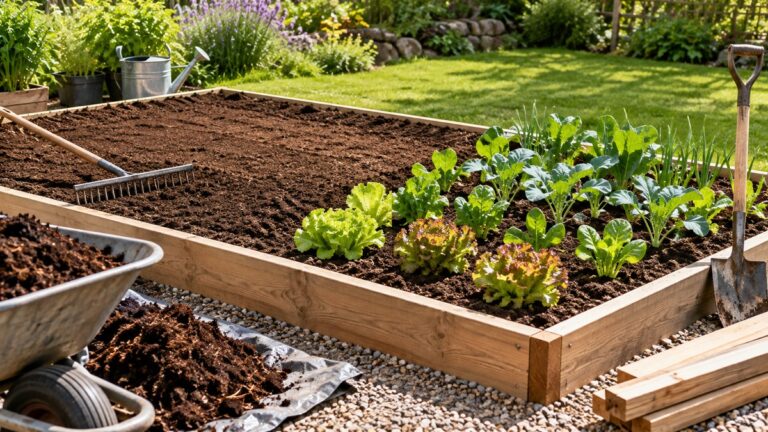
Drainage decides whether sage survives the winter. Iowa State says that “Wet soil is the most common cause of plant decline and winter loss.” North Carolina State puts it in one line: “It is intolerant of wet or poorly drained soils.” Illinois gives the winter angle: “For sage to perform as a perennial, it must have very well drained soil especially over the winter.” Iowa State adds that “Raised beds, slopes, and sandy or loamy soils are often ideal planting locations.” For a raised bed that will hold sage, see how much soil a raised bed garden needs.
Soil and feeding
Soil preparation is modest. Illinois says “Sage prefers a full sun location in soils that are well prepared with compost.” Iowa State makes a related point, noting that “While sage tolerates average soils, it performs best in moderately fertile soils amended with organic matter before planting.” The sources treat sage as tolerant of average soil, so the drainage advice above matters more than feeding.
North Carolina State says the plant “will tolerate drought and poor soils”. The pages stress drainage far more than fertility, so the drainage advice above matters most when you choose the spot.
Spacing and room to spread
Wisconsin gives the spacing directly: “Space plants 18 to 24 inches apart and divide every few years to rejuvenate the plants.” Penn State explains why a narrow bed does not suit the plant: “Plants that are wide, such as sage, or those that spread on top of the ground, such as the mints, would be quite confined in a 1-foot row.” North Carolina State gives the mature size as up to 2 feet tall and 2 to 3 feet wide, and Iowa State says plants “typically reach 2 to 3 feet tall and develop shrubby, woody stems with age.” Maryland’s spacing line is unclear in the text we fetched, so this guide does not use it. North Carolina State adds that “Tall plants may require staking.”
Airflow matters as well. Wisconsin says that “Good air circulation will reduce potential problems with foliar diseases.” Iowa State warns that “Powdery mildew and other foliar diseases may develop when air circulation is poor.” Leaving room between plants serves both purposes.
Start from cuttings, division or seed
Named sage plants are usually grown from cuttings or division rather than seed. Wisconsin says that “most named varieties are propagated vegetatively.” Maryland gives the same preference, saying that “Cuttings or transplants are preferred because growing from seed is a slow process.” Illinois agrees that “Cuttings are preferred as seeds may take several years to produce harvestable plants.” Iowa State lists the options: “Sage can be propagated from seed, stem cuttings, or division.”
Summer is the time for cuttings. Iowa State says that “Softwood cuttings taken during summer root readily in moist potting media and can be grown indoors over winter.” Illinois adds that cuttings can be rooted and potted for indoor use, and says to “Place pots in a sunny location for best growth.” Maryland suggests moving the potted plants to a sunny indoor location, which fits the same winter plan. Iowa State adds that “Established plants may also be divided when needed.”
If you choose seed, Wisconsin gives the timing: “To grow from seed, either plant directly in the garden on the average date of last frost or start indoors 6 to 8 weeks before then.” It adds a caution that “Either way, plants may not flower the first year.” Seed is the slower path, so plan for patience.
Harvest and first-year care
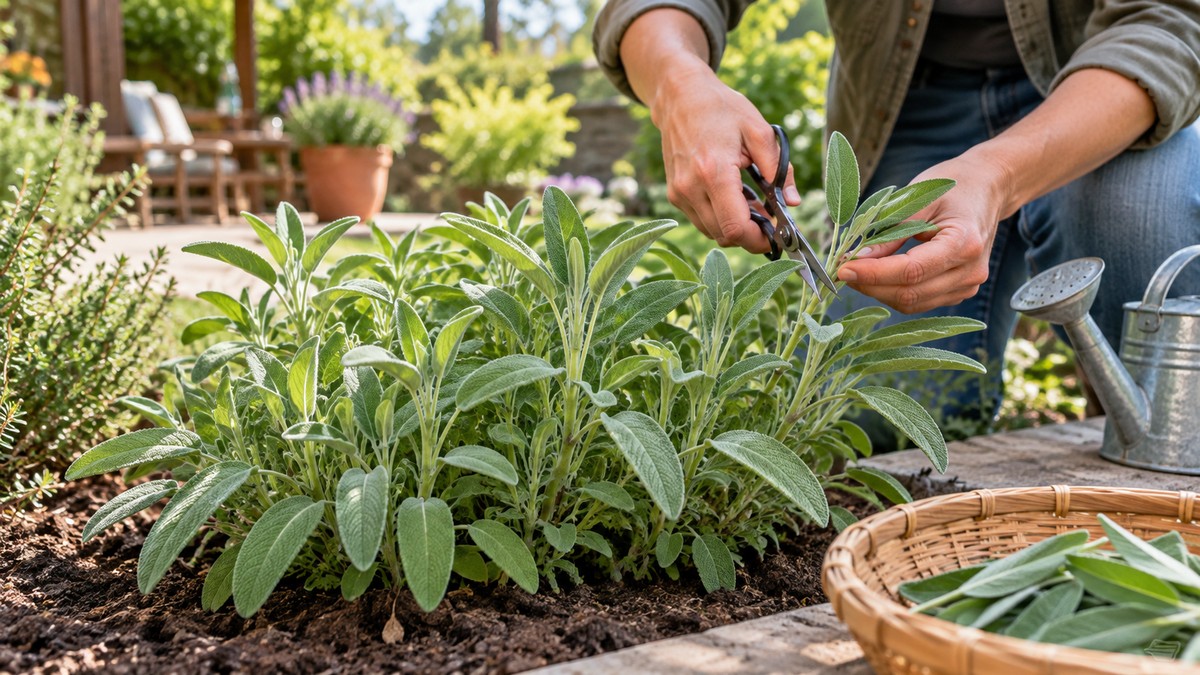
The first year calls for restraint. North Carolina State advises: “For new plantings, it is best to harvest lightly the first year.” Wisconsin gives a time frame: “Sage takes about 75 days from planting to first harvest.” Once the plant is established, Iowa State says to “Harvest sage leaves as needed throughout the growing season”, and adds that “Regular harvesting encourages branching and produces fresh, flavorful growth.”
Timing is consistent across the pages. Maryland says “Pick the leaves before or at blooming”, and Wisconsin says “Harvest before the plant flowers.” For larger harvests, Iowa State recommends “cutting stems 6 to 8 inches long just before plants bloom.” Wisconsin uses the same length, advising that “At least twice during the growing season, cut 6 to 8 inches from the top of the plants.” Illinois notes that “Leaves can be harvested through the season as needed.”
Dry and store the leaves
For drying, Iowa State gives the method: “For long-term storage, tie stems into small bundles and dry them in a warm, dark, well-ventilated location.” It adds that “Properly dried sage retains its flavor for many months and is often more concentrated than fresh leaves.” Illinois suggests cutting “6-8 inch long stems for drying”, and says that “Leaves can then be removed and stored in a sealed container.”
For a short wait rather than a long one, Illinois offers a refrigerator route: “Sage can keep for up to two weeks when dry leaves are loosely packed in plastic and stored in the refrigerator.” That two-week figure applies to dry leaves. Iowa State gives a longer window for properly dried leaves, which keep their flavor for many months when stored away from heat and light.
Prune and replace the plant
The sources disagree on how hard to prune. Maryland says “Plants eventually become woody and should be hard pruned when you begin to see signs of regrowth in the spring.” Iowa State takes a lighter line: “Prune plants lightly in spring as new growth begins”, and it warns to “Avoid cutting deeply into old woody stems that lack healthy buds.” Illinois says “Prune plants back in the spring just as new growth resumes.” North Carolina State is the most cautious: “Do not prune into mature woody stems, as these seldom sprout new growth.” North Carolina State also says that “Pruning is recommended in the spring and during the growing season to keep the plant from becoming leggy and to control flowering when used as a culinary herb.”
Maryland also gives a clear cleanup step: “Prune off dead, woody stems but not the new growth.” Two pages agree on the cleanup, and the disagreement is only about how much old wood to remove. This guide reports both positions and does not choose between them.
Replacement is the long-term question. Maryland says “Culinary sage should be replaced every 3-4 years.” Iowa State says “Replacing plants every few years helps maintain foliage quality and strong growth.” Illinois gives the reason, saying that “As plants age, they become woody and benefit from being replaced in order to maintain quality foliage for culinary use.” Division is the other option, since Wisconsin says to divide every few years to rejuvenate the plants.
Water in the establishment year
Iowa State says that “Once established, sage requires relatively little maintenance.” It gives the first-year rule: “Water regularly during establishment, then only as needed during prolonged dry periods.” The same page notes that “Sage is drought tolerant and generally performs better when kept slightly dry.”
Pick a culinary type and a container plan
Cultivar choice matters for flavor and hardiness. North Carolina State advises that gardeners “avoid the ornamental cultivars, as they may have suboptimal flavor” in an herb bed. Iowa State describes the Berggarten cultivar as valued for its large silver-gray leaves and compact habit, and as winter hardy to USDA Hardiness Zone 5. Illinois warns that its golden, purple and tricolor types are “Not dependably winter hardy in zone 5.” Iowa State calls common sage “the primary species grown for culinary use”, and says the purple and tricolor forms are best grown as annuals in Iowa, since they are hardy only to Zone 6.
If you plan to grow sage in a pot, Illinois says “Sage is also useful as an ornamental plant in containers or in the garden.” Iowa State adds a caution: “Containers are also a good option, but plants will not overwinter in containers without extra protection.” For container ideas, see diy herb planters.
Common problems
Root rot is the problem the pages name most often. Iowa State says “Root rot is the most common issue and can quickly kill plants growing in wet soils.” Wisconsin lists “slugs, spider mites, spittle bugs, root rot and wilt” as possible problems. Iowa State also says “Most problems result from excessive soil moisture, poor drainage, or overcrowding.” This guide gives no treatment for any of these problems, and a local extension office is the right source for a specific case.
How we chose
We chose pages that give growing instructions for culinary sage, published by a university extension service that we could open with curl and read. We fetched all six pages on 2026-10-22 and read the text we received. This guide does not record an update date for each page, so the live pages should be checked before any reuse. We quote only sentences that appear word for word in the fetched texts.
We left out retail listings and nursery pages, so no product, seed packet or plant brand is named or recommended here. Where two pages disagree, such as on pruning or replacement, both positions appear in the text.
What we could not verify
The six pages do not cover seed packets, nursery labels or plant prices, so those are outside this guide. This guide also does not offer a yield, a harvest count for a whole season, or a recipe.
What the sources do not say
The sources do not agree on how hard to prune, and they do not settle the question for an old plant with a lot of woody growth. Maryland’s spacing line is unclear in the text we fetched, so the only spacing figure in this guide comes from Wisconsin. The pages give replacement intervals, three to four years from Maryland and a few years from Iowa State, rather than a fixed life span.
Frequently asked questions
Does sage need full sun?
Yes, the sources say so. Iowa State says sage grows best in full sun and well-drained soil, and it gives six hours of direct sunlight each day as the target for strong growth and good flavor.
Should you grow sage from seed or cuttings?
Cuttings are the usual choice. Maryland and Illinois both prefer them, because seed takes longer to produce a harvestable plant. Wisconsin notes that plants from seed may not flower in the first year.
How often should sage be replaced?
Maryland says every three to four years. Iowa State says every few years, and Illinois says to replace plants as they become woody. Dividing the plant every few years is another way to renew it, according to Wisconsin.
When is the best time to harvest sage?
Harvest the leaves before the plant flowers. Maryland says to pick them before or at blooming, and Wisconsin says the same. Wisconsin also gives about 75 days from planting to a first harvest.
Does sage come back after winter?
It can, but the sources warn that wet soil is the main threat. Iowa State says wet soil is the most common cause of plant decline and winter loss, and Illinois says sage must have very well drained soil to perform as a perennial.
Sources
- https://extension.umd.edu/resource/sage (opened 2026-10-22)
- https://extension.illinois.edu/herbs/sage (opened 2026-10-22)
- https://yardandgarden.extension.iastate.edu/how-to/all-about-sage (opened 2026-10-22)
- https://hort.extension.wisc.edu/articles/sage-salvia-officinalis/ (opened 2026-10-22)
- https://plants.ces.ncsu.edu/plants/salvia-officinalis/ (opened 2026-10-22)
- https://extension.psu.edu/growing-herbs-in-the-garden (opened 2026-10-22)