Can You Grow Cabbage in a Raised Bed?
As an Amazon Associate we earn from qualifying purchases.
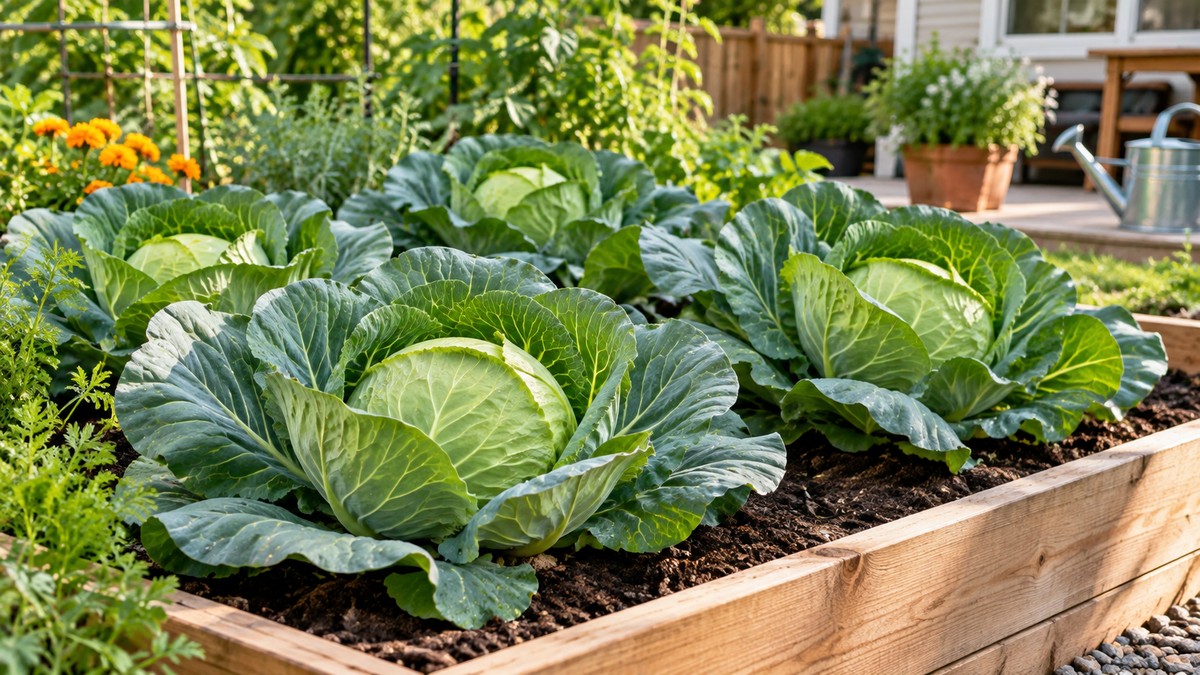
Can you grow cabbage in a raised bed? Yes, and the extension pages we opened treat the crop as a good fit for a bed, provided the soil is fertile, drains well and gets full sun. Cabbage is a cool-season vegetable, and a raised bed gives you control over the soil it grows in. The three pages cover the bed itself, the spacing, the watering and the harvest.
The pages do not agree on every figure. Spacing and watering differ from one page to the next, so this guide gives each number with its source instead of choosing one silently.
Quick answer
- Space plants 15 to 18 inches apart in the bed, the range the Tennessee table gives for cabbage in raised beds.
- Water deeply and infrequently. The Utah State fact sheet says “Water cabbage deeply and infrequently while trying to maintain even soil moisture.”
- Do not walk on the bed once it is formed, and keep tilling away from the plants, since cabbage has a shallow root system.
- Stop adding nitrogen once heads start to form, because late feeding can lead to splitting.
Why a raised bed suits cabbage
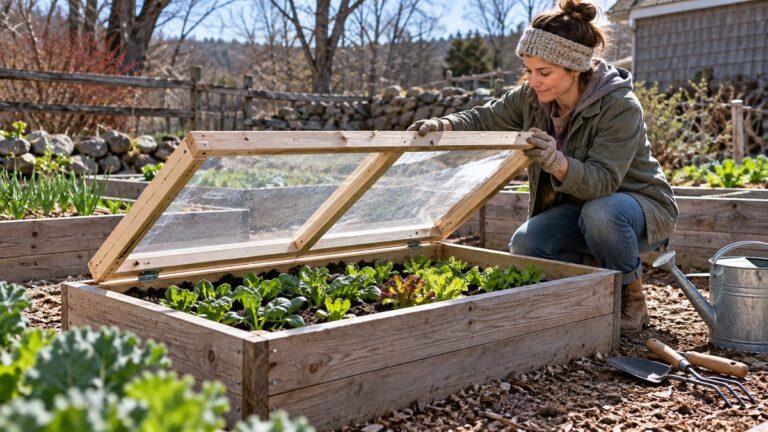
The Tennessee publication says that “Raised beds drain and warm up earlier in the spring,” which allows cool-season vegetables to go in at the recommended planting dates. That matters for cabbage. The Ohio State factsheet describes cabbage as a cool-weather vegetable that grows best with average temperatures between 60 and 65 degrees F and no higher than 75 degrees F. A bed that warms early gives a spring crop a head start.
Cabbage also has a shallow root system. The Ohio State factsheet says “Cabbage has a shallow root system, so tilling near plants may cause harm.” That is a reason to prepare the bed fully before planting and then leave the soil alone. The Tennessee page describes a method called double digging, which produces “soft, enriched soil to a depth of nearly 2 feet” in a permanent bed.
Drainage is the trade-off. The Tennessee page says drainage is “The most severe problem associated with raised beds.” Fast drainage helps in early spring, but in summer drought stress can quickly lower yield and quality. A cabbage bed therefore needs regular water even though its soil drains well.
Build the bed and fill it
The Tennessee publication gives basic dimensions. It recommends four- or five-foot-wide beds with one or two feet between them, so that you can reach halfway across each bed from one side. It says to make raised beds four to eight inches high and any convenient length. Edges can be made from old lumber, landscape timbers, railroad ties or concrete blocks.
The page describes two kinds of bed. A temporary bed is made by raking or plowing worked soil into ridges, and it must be reformed each year. A permanent bed is built with the double-dig method, which the page calls a lot more work than the simple method but the way to get soft, enriched soil. To double dig, you dig a trench one or two feet wide and one fork length deep at the end of the bed, loosen the soil in the bottom, and work in fertilizer, lime and organic matter. You then repeat the process across the bed, placing each loosened layer on top of the previous trench.
Compost matters. The Tennessee page says that “Compost worked into the soil annually reduces soil crusting and enhances seedling emergence.” It also says that once the bed is formed, nobody should walk on it. The page states that “Raised beds should never be walked on once they are formed,” and that avoiding compaction is one of their strongest advantages. Reach into the bed from the aisle instead.
If you want a bed that lasts for several seasons, the Tennessee page describes a permanent bed, built with compost and organic matter worked in each year. Our guide on how to fill raised beds covers the filling step in more detail. The soil depth a bed needs for other crops is a separate question, and our notes on how much soil a raised bed needs cover that.
Spacing cabbage in the bed
The Tennessee table of recommended spacings lists cabbage at 15 to 18 inches between plant centers in raised beds. The page adds a caution: “Gardeners new to raised bed gardening should use the wider spacings.” Experienced gardeners can use the closer figures. The Utah State fact sheet is written for a garden row and recommends 12 to 18 inches between plants in the row, with rows two to three feet apart. The Ohio State factsheet gives 16 inches within rows and 30 inches between rows in its fall-crop instructions.
Raised beds allow a different layout from rows. The Tennessee page says a raised bed works most efficiently when plants are spaced equidistant from each other rather than in rows, and that they should ideally just touch when they are mature. The sources do not describe a grid pattern for cabbage specifically, so treat the layout as your own choice, using the table figure as the distance between plants.
Spacing also affects air movement. The Tennessee page notes that close spacings can reduce air circulation and keep plants moist for longer. A bed planted with cabbage at the closer figures should be checked for airflow as the heads grow, which is one reason to start at the wider figure if you are new to beds.
Start the plants
Direct seeding is hard for cabbage, according to the Ohio State factsheet, which says “Direct seeding of cabbage is difficult, so seeds should be sown indoors 6 to 8 weeks prior to the frost-free date for your area.” It suggests transplanting after four to six weeks, with germination best near 75 degrees F and a temperature of about 60 degrees F once the seedlings emerge. The Utah State guide says transplants go out “2-3 weeks before the last frost free date,” and that they should have four to six mature leaves and a well-developed root system first.
The Utah State guide notes that growing transplants to that size usually takes six to seven weeks. The Ohio State factsheet says the crop is frost tolerant in spring.The Utah State guide says cabbage grows best when temperatures stay at or below 80 degrees F, and that it is not seriously damaged down to 25 degrees F. Both figures help you judge the spring window for a bed.
Water, mulch and feed the bed
Water is where the pages differ most. The Utah State guide says “About 1-2 inches of water are required per week,” and it asks for deep, infrequent watering that keeps the soil evenly moist. The Ohio State factsheet says about one inch per week is adequate if an equal amount of rain does not fall. The Tennessee page says “Supplemental irrigation should also be considered essential when gardening on raised beds,” and it warns that “Sandy soils and very high beds are particularly susceptible to drying out.”
Mulch helps the bed hold water. The Ohio State factsheet says “Mulching around the plants will help keep the ground cool and moist.” The Utah State guide lists grass clippings, straw and shredded newspaper as organic mulches that help cool the soil and reduce water stress. The Tennessee page recommends applying mulch to the surface of the beds.
On feeding, the Utah State guide says to side-dress with nitrogen about four weeks after planting, and then to “Avoid applying additional nitrogen after heads begin to form.” It explains that “High nitrogen levels at this time cause loose heads and splitting to occur.” The Ohio State factsheet says “Do not fertilize late in the season, as this can lead to head splitting.” Both pages also tie fertilizer amounts to a soil test. The Ohio State factsheet says fertilizer and lime are best applied using the results of a soil test as a guide.
Keep the bed in shape through the season
Weeds compete with young cabbage, so deal with them early. The Utah State guide says “Plastic and organic mulches effectively control weeds,” and adds “Be sure to control weeds when plants are small.” It also warns to be careful not to damage roots when cultivating. The Ohio State factsheet says to hand-pull weeds or use shallow cultivation, and to avoid damaging shallow roots near the row.
Both the Utah State and Ohio State pages list common insects and diseases. This guide does not give treatment advice for them. The Ohio State factsheet says to contact the local Extension office for identification and control, and it adds “Always read and follow all label precautions and directions.”
Harvest and store
Harvest when the heads are firm and full size. The Utah State guide says to cut the stem below the head and leave two to three wrapper leaves for protection. It says cabbage can be stored for 2-6 months at 32°F and 95% relative humidity. It also warns “Avoid storing cabbage with apples, pears, or other ethylene producing fruits as bitter flavors will develop.” The Ohio State factsheet gives a similar window of up to five months near 32 degrees F with high humidity.
Splitting is the main harvest problem, and the sources tie it to water and feeding. The Ohio State factsheet says heads become prone to splitting after heavy rain, especially following dry weather, and it advises that you “harvest heads as soon as they are firm.” The Utah State guide says moisture fluctuations during heading can cause maturing heads to split open.
How we chose
We opened three pages on 2026-10-22: a Utah State University Extension fact sheet (published March 2020), an Ohio State University Extension factsheet (HYG-1611, dated May 18, 2018), and a University of Tennessee Extension publication (SP291-N, Raised Bed Gardening, web page dated April 5, 2018). All three are university extension publications. We picked them because each covers cabbage culture, and the Tennessee page covers raised beds directly.
We kept a statement only when one of these pages states it in plain words. Where the pages give different figures, such as spacing or water, we show each figure with its page rather than choosing one.
What we could not verify
Each page covers cabbage in a garden, and the Tennessee page covers raised beds in general. None covers cabbage in a raised bed in depth, so the points that combine the two are our reading of the pages.
What the sources do not say
No page gives a soil depth for cabbage in a raised bed, or a bed height chosen for the crop. The Tennessee page gives a height range for beds in general and a depth of nearly two feet for double-dug soil. None of the pages compares cabbage yield in a raised bed with yield in the ground. The sources also do not say how many cabbages a bed of a given size will hold, so a count is a calculation you make from the spacing figure.
Frequently asked questions
Can you grow cabbage in a raised bed?
Yes. None of the three pages says cabbage fails in a raised bed. The Tennessee table lists cabbage among the crops it spaces for raised beds, which is a clear sign that the crop fits.
How far apart should cabbage plants be in a raised bed?
The Tennessee table gives 15 to 18 inches between plant centers for cabbage. The Utah State guide gives 12 to 18 inches in the row, with rows two to three feet apart, and the Ohio State factsheet gives 16 inches within rows.
How much water does raised-bed cabbage need?
The sources differ. The Utah State guide says one to two inches per week, and the Ohio State factsheet says about one inch per week if rain does not supply it. The Tennessee page calls supplemental irrigation essential on raised beds.
Should I walk on the bed while the cabbage grows?
No. The Tennessee page says raised beds should never be walked on once they are formed. The Ohio State factsheet adds that tilling near cabbage plants may cause harm, because the roots are shallow.
Why do my cabbage heads split?
Both the Ohio State and Utah State pages link splitting to moisture swings and late feeding. The Ohio State factsheet points to heavy rain after dry weather, and the Utah State guide points to nitrogen applied after heads form.
Sources
- https://extension.usu.edu/yardandgarden/research/cabbage-in-the-garden.pdf (opened 2026-10-22)
- https://ohioline.osu.edu/factsheet/hyg-1611 (opened 2026-10-22)
- https://solutions.tennessee.edu/?view_pub_pdf=1963 (opened 2026-10-22)