How to Grow Zinnias
As an Amazon Associate we earn from qualifying purchases.
Learning how to grow zinnias comes down to three things: full sun, warm weather and enough space for air to move between the plants. Zinnias are long-blooming annuals, and the seed is large enough for a child to handle, so they make a good first flower bed or a sunny corner of a patio.
The guidance below comes from four university and extension publications. Where they disagree, or say nothing at all, the text says so.
Quick answer
- Give zinnias full sun. Rutgers University recommends a full sun location, and Illinois Extension lists full sun in moist, well-drained soil.
- Wait for warm weather. Zinnias do not tolerate frost, and Rutgers ties planting to soil that has warmed to at least 60°F in late spring.
- Space plants for airflow and water the soil rather than the leaves. Powdery mildew comes up in several of the sources.
- Deadhead for more blooms, and put cut stems into water quickly with a floral preservative.
Start with sun, warmth and drainage
Full sun comes first. Rutgers University’s fact sheet on zinnias says that “A full sun location is recommended for successfully growing zinnias at the farm or in the garden.” Oregon State University adds a planning point: zinnias should not block the light for other plants, and they like direct sunlight. Plant the tall types where they will not shade shorter neighbors.
Warmth matters just as much. Oregon State says zinnias “cannot survive frost”, and it notes that they grow best when the daytime temperature stays above 60°F. The Florida cut-flower guide from UF/IFAS, which is written for commercial growers, uses the line “Zinnia is a drought-tolerant, warm-weather annual that does not tolerate frost.” Both points matter when you choose a planting date.
Soil comes third. Illinois Extension describes the growing conditions as “Full sun, in moist well-drained soil.” Rutgers suggests a raised bed if your soil is heavy. The Florida guide gives a germination window of “74-80°F in five to seven days”, which is a warm range and fits the other sources’ emphasis on waiting for warm soil.
Choose height and bloom size first
Zinnia height varies more than many gardeners expect. Oregon State says that “Different varieties of zinnias can grow from 6 inches to 3 feet tall.” The Florida guide describes dwarf cultivars that grow to about 6 inches for bedding use, and it notes that cut-flower cultivars up to 3 feet tall are common. Illinois Extension gives a mature height range of 8 to 36 inches and a bloom size of 1 to 4 inches across.
Choose by use. Dwarf types are described for bedding, and the taller cut-flower types suit vase stems. The Florida guide says that a zinnia’s “size averages 30 inches tall”, which is a useful number when you measure the space you have. That figure comes from a commercial cut-flower guide, so treat it as a rough planning guide for a home bed.
Sow seed or buy transplants, and time both to frost
Zinnia seed is big and easy to handle. Oregon State points out that “Zinnia seeds are large, which make them a good choice for children to plant.” Rutgers takes a different route for cut flowers and calls transplanting “the preferred method of growing since it offers a quicker turn around in terms of planting and harvesting the cut flowers.” The Florida guide allows both approaches: you can sow directly in the field or in plug flats, and you can set out transplants that are “3-6 week old seedlings”.
Timing follows the last frost. The Florida guide advises that you “Sow seeds after last freeze or sow plug seedlings 3 to 4 weeks before the last frost for transplanting.” It also notes that “60 to 70 days from seed to flower is often cited”, which helps when you plan a bloom date. Oregon State’s guide shows how much the window moves with location, since its indoor sowing dates differ for the Willamette Valley, the coast, and central and eastern Oregon. Check your own last frost date before you count backward from a calendar date.
Space plants so air can move
Spacing is where the sources agree most. Oregon State says that “Thinning the seedlings increases airflow between plants and helps prevent powdery mildew later in the summer.” Rutgers recommends a minimum of 6 inches between plants to lower the chance of powdery mildew and other leaf diseases. The Florida guide reports that “In bed culture, 6 inches between plants was satisfactory for summer production in Florida.” It also notes a tradeoff. Tighter spacing suits one large harvest, while wider rows, with 2 feet between rows and 6 inches within the row, suit repeated cutting.
| Source | Spacing figure | What it is for |
|---|---|---|
| Rutgers fact sheet | At least 6 inches apart | Fewer leaf diseases, including powdery mildew |
| Florida cut-flower guide | 6 inches between plants in beds | Summer production in Florida |
| Florida cut-flower guide | 2 feet between rows, 6 inches within rows | Repeated harvests |
| Oregon State guide | Thin crowded seedlings | Airflow and powdery mildew |
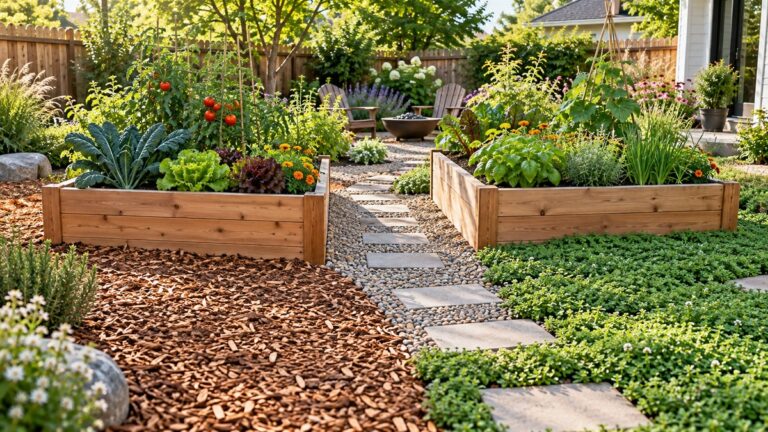
A bed laid out this way gives you room to walk between rows, which is useful when you pick flowers every few days. Plan the bed before you sow, not after the seedlings come up. If you are still building the bed, see our guide to creating a flower bed from scratch.
Water the soil and keep the leaves dry
Watering gives practical rules too. Rutgers says that “Zinnias can tolerate some levels of drought, but avoid overhead watering, as prolonged wetting of the foliage encourages fungal and bacterial flower and leaf diseases.” Oregon State’s disease note is short: “water early in the day, and allow enough space between plants for airflow.” If you water from a hose, see the post on hose attachments for watering plants.
The sources differ in emphasis. Illinois asks for moist soil, while Rutgers and the Florida guide describe zinnias as tolerant of dry spells. Both can be true, because the Illinois line also asks for good drainage. The sources agree on one thing: keep the foliage as dry as you can.
Deadhead for steady color
Illinois Extension gives the short version: “Deadhead for continuous bloom.” The sources we opened do not explain the mechanism behind that advice, so this guide keeps to the instruction itself. Pick off spent flowers as they fade, and keep the bed clean enough that the new blooms are easy to see.
Harvest habits matter too. The Florida guide frames the spacing choice as a trade-off between one heavy harvest and repeated cutting, which means how often you pick should guide how you plant. A bed you cut from every few days needs the wider rows.
Cut and condition flowers for a vase
The Rutgers fact sheet is the most detailed source on cut flowers. It says that “The lower leaves on the stem should be removed and the cut ends should be placed into water as quickly as possible.” It also recommends that “Clean, sharp tools should be used as well as a clean container filled with clean, warm water and a floral preservative.”
Heat is the enemy after cutting. The fact sheet warns that “Once cut, zinnias are susceptible to garden heat, and should not be left lying about, exposed to the sun and warm temperatures.” Move the stems indoors quickly and out of direct sun. Water matters too. Rutgers says that “Water in the vases or flower containers should be changed daily to promote a longer and healthier post-harvest life.” The fact sheet also reports that “Cut zinnias placed into water mixed with a floral preservative were found to have a much longer life span as a cut flower than those placed in a container with plain water.”
Pollinators and bloom season
If you grow zinnias for more than cut flowers, the pollinator line is worth knowing. Oregon State says that “The most attractive flowers will be visited by many pollinators such as butterflies, hummingbirds and bees.” Illinois Extension lists a bloom season of May through September, which gives a long run of color when the plants start early and stay healthy.
Warmth shapes the rest of the season. Oregon State notes that the plants “may then produce flowers throughout the entire summer” once daytime temperatures stay above 60°F. A cool spell slows the bloom, so a warm summer is the best case for long color.
Choose mildew-resistant types when you can
Illinois Extension points gardeners to one group if mildew is a problem in your yard: “For dependable, low maintenance zinnias resistant to powdery mildew, consider using Zinnia angustifolia cultivars.” The Illinois page lists some of these at 10 to 14 inches tall. Rutgers adds a step that works for any type: “A good seed catalog will alert you to the varieties that are tolerant or resistant of specific diseases.” Read the variety notes before you order seed.
Mistakes to avoid
- Crowding the bed. Close spacing limits airflow, and the sources link that to powdery mildew.
- Watering the leaves. Rutgers warns against overhead watering.
- Planting before the air and soil warm. Zinnias do not survive frost, and cold weather delays flowering.
- Expecting bloom right away. Plan on about 60 to 70 days from seed, and expect longer in cold weather.
- Leaving cut stems in the sun, or keeping vase water for days. Change the water every day.
How we chose
We chose university and extension publications about zinnias, and we opened each one on 2026-10-22. The pages covered sun, spacing, watering and cut flowers in enough detail that we could check every quoted sentence against the text of the page it came from. We drew on the Florida guide only for growing facts it states. We left out its fertilizer rates, because they are written for commercial beds. We did not use retail seed listings or general gardening blogs, since those are not extension sources.
What we could not verify
The pages answer the basic questions, but they leave gaps. Read this section before you plan a bed around a specific date, size or variety.
What the sources do not say
The pages we opened do not give a sowing depth for home gardens, so this guide does not state one. They also do not give a shade tolerance figure, a frost date for your area, or a rule for pots and containers. Varieties are a gap too. Rutgers reports cut-flower quality ratings for named varieties, but the fact sheet does not turn those ratings into a planting recommendation, and this guide does not make one. Finally, the Florida guide is written for commercial production, so its 60 to 70 day figure is a planning estimate and not a promise for your garden.
Frequently asked questions
Can zinnias grow in partial shade?
The sources we opened all ask for full sun, and Rutgers calls full sun the recommended location. None of them says how much shade zinnias can handle, so plan for full sun and ask your local extension office about any shady spot.
Should you start from seed or buy transplants?
Either works. Rutgers prefers transplants for cut flowers because they shorten the time to harvest. The Florida guide accepts direct sowing or plug seedlings set out at 3 to 6 weeks old. Oregon State points out that the large seed suits children, which makes sowing a good first job for a young gardener.
How long do zinnias take to bloom?
The Florida guide says that “60 to 70 days from seed to flower is often cited.” It also notes that “Crop scheduling is highly dependent on temperature,” so a cold spring pushes the first bloom later. Count from your planting date, and expect a slower start when the weather stays cool.
How can you keep powdery mildew off zinnia leaves?
The sources focus on prevention. Give each plant room for airflow, water early in the day, avoid overhead watering, and choose resistant types when you can. The sources do not give treatment steps, so ask your local extension office about treatment.
How can you make cut zinnias last longer?
Remove the lower leaves, put the cut ends in water right away, and use clean, sharp tools with a clean container. Add a floral preservative to clean, warm water, and change the water every day. Keep the stems out of the sun and heat after cutting, because the fact sheet warns that cut zinnias are sensitive to garden heat.
Sources
- https://extension.oregonstate.edu/imported-publication/zinnias (opened 2026-10-22)
- https://ocean.njaes.rutgers.edu/wp-content/uploads/2024/09/fs1161.pdf (opened 2026-10-22)
- https://extension.illinois.edu/flowers/zinnia (opened 2026-10-22)
- https://journals.flvc.org/edis/article/download/109358/104545/152684 (opened 2026-10-22)