How to Harvest Herbs
As an Amazon Associate we earn from qualifying purchases.
Learning how to harvest herbs is mostly about timing and cutting. Pick leaves before the plant flowers, pick early in the morning, and cut cleanly so the plant can keep growing. The guidance below draws on four university and extension publications about herbs, and it shows where those publications differ. If you are still deciding where to grow them, see our post on DIY herb planters.
Quick answer
- Harvest leafy herbs before the plant flowers, because leaf production declines once flowering starts (Illinois Extension).
- Pick in the early morning, after the dew has dried and before the heat of the day (NC State Extension).
- Use a sharp knife or pruners, and cut just above a leaf or pair of leaves (Iowa State Extension).
- Stop harvesting perennials about one month before the frost date (NC State Extension).
Match the harvest to the plant part
Herbs are harvested for different parts, and each part has its own timing. Leaves are the most common harvest, and the sources agree that they are best picked before flowers open. Flowers, seed heads and roots follow other rules. The table below gathers the timing each source gives, so you can see where a single rule does not fit every herb.
| Plant part | When the sources say to pick | Source |
|---|---|---|
| Leaves | Before the plant flowers, since leaf production declines after that | Illinois Extension; NC State Extension |
| Leaves, peak oil | Just before flowers open | Washington State University (C159) |
| Flowers, for flavor | After flower buds appear, before they open | NC State Extension |
| Flower heads, for drying | Fully open, but just before they reach maturity | Washington State University (C159) |
| Seed heads | When pods turn from green to brown to gray, before they open | NC State Extension |
| Roots | In fall, after the foliage fades | NC State Extension; Washington State University |
The table shows one real disagreement. For flower heads that you plan to dry, NC State says to pick them just before they are fully open, while Washington State says to pick them when fully open but just before they reach maturity. Both guides are describing the same kind of flower, so the choice is a matter of timing within a short window.
Pick in the morning, after the dew
Time of day comes up in almost every source. Iowa State Extension says to “Harvest herbs in the morning as soon as the dew evaporates from the foliage.” NC State Extension says to “Harvest early in the morning, after the dew dries, but before the heat of the day.” Illinois Extension gives the same window: “Try to harvest early in the day after plants dry off and before it gets hot.”
The reason is oil. Washington State University puts the picking window at “early on a clear, sunny morning just after the dew has evaporated and before the sun becomes hot enough to volatize the essential oils that provide the desired flavor.” NC State adds a second concern: “UV rays from the sun and moisture from dew and frost can discolor and severely reduce the quality of many herbs.” Pick when the leaves are dry, and move the harvest out of the sun as soon as you can.
Cut cleanly and leave enough growth
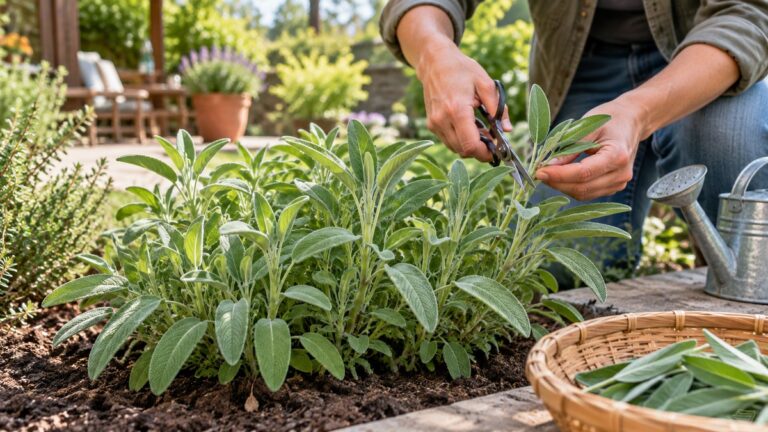
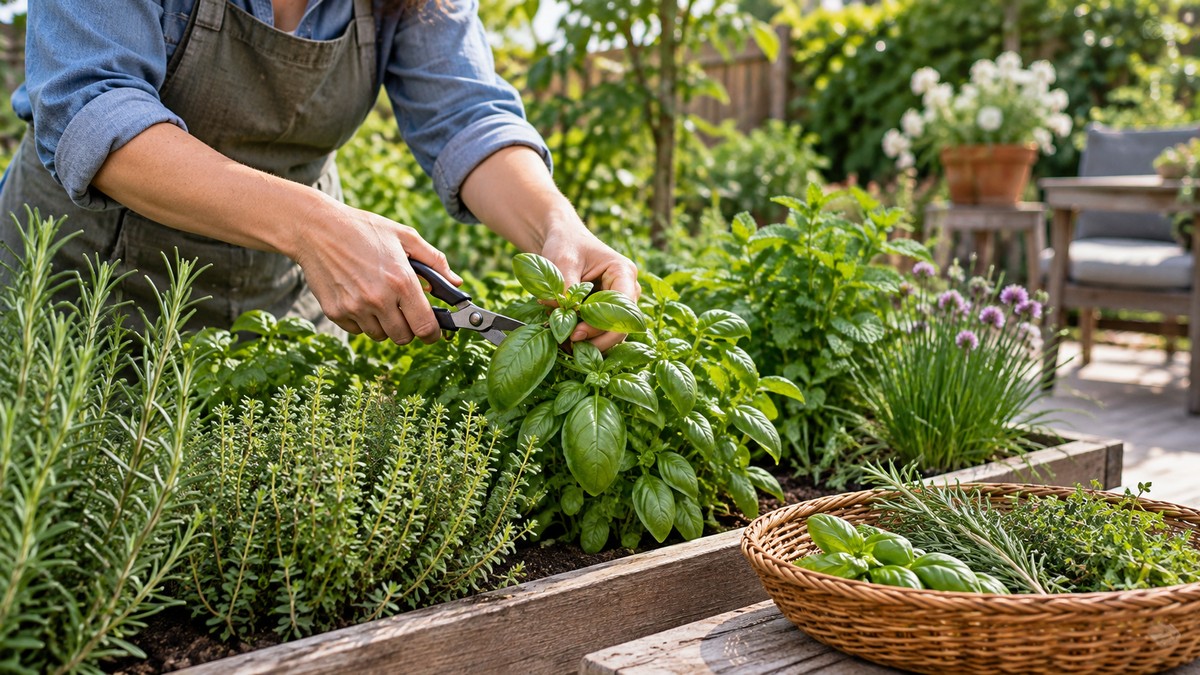
Illinois Extension asks for clean cuts: “Use a sharp knife or pruners to make clean cuts.” Iowa State Extension gives a more specific method for annual herbs: “Using a sharp knife or pruning shears, cut just above a leaf or pair of leaves.” It also says to “Leave approximately 4 to 6 inches of the stem for later growth”, and the stem left behind is there for that purpose.
Where you cut matters on some herbs. Washington State University advises that for annual herbs such as basil and borage, you should “not cut them too close to the ground.” For herbs grown for their leaves, it recommends that they be “frequently sheared or pinched back to assure a continuous supply of tender branch tips free of bristly flower or seed heads.” It also gives a simple shaping trick: “As the plants grow, cut sprigs from the ends of stems to promote bushier growth such as thyme.” If you grow herbs in a raised bed, see our post on companion planting in raised beds.
How much to take at one time
This is where the sources disagree most, so the table shows each figure. Illinois Extension says that “With annual herbs, they can be cut back 50-75 percent and still recover.” For perennials, it says that “With perennial herbs, remove about one-third of the growth at any one time.” NC State Extension gives a single broader ceiling: “Up to 75% of the current season’s growth can be harvested at one time.” Washington State University gives a different perennial rule: “When harvesting perennials cut two-thirds the length of the stalks and the side branches”, with the warning that you should “Cut less than this if the stalks are stiff and woody.”
| Source | Annual herbs | Perennial herbs |
|---|---|---|
| Illinois Extension | Cut back 50 to 75 percent | Remove about one-third of the growth at one time |
| NC State Extension | Up to 75 percent of the season’s growth at one time | Not split by plant type in the guidance we opened |
| Washington State University | Cut sprigs from the ends of stems | Cut two-thirds the length of the stalks, less if they are woody |
When two figures conflict, starting with the smaller cut is the cautious choice. The sources do not say how a perennial responds to a heavy cut, so the table is a guide to what each publication recommends, not a promise about how your plant will recover.
How often you can harvest, and when to stop
Herbs give more than one picking. Washington State University says that “Both annuals and perennials should yield two to three cuts per season”, and it notes that “Basil may yield as many as eight cuttings per season.” The last cut matters more for perennials. NC State Extension says that “Annual herbs can be harvested until frost” and that “Perennial herbs can be clipped until late August.” Its rule of thumb is to “Stop harvesting about one month before the frost date.” Washington State makes the same point from the plant’s side: finish perennial harvests in late summer, so that new growth can harden off before the first frost.
The season also changes the plant. NC State Extension describes shearing after an early harvest: “Harvest tarragon or lavender flowers in early summer and then shear the plants to half their height to encourage a second flowering period in the fall.” The guide treats that second flush as a separate job from picking leaves.
Flowers, seed heads and roots
Flowers have their own timing. NC State Extension says that “Herb flowers have their most intense oil concentration and flavor when harvested after flower buds appear but before they open.” For flowers you plan to dry for crafts, the same guide says they “should be picked just before they are fully open.” Washington State University gives a slightly different window for drying flower heads: pick “when the flowers are fully open, but just before they reach maturity.” The two guides disagree on that point, so pick the stage that fits your project and note what you did.
Seed is a separate job. NC State Extension advises that you “Harvest herbs grown for seeds as the seed pods change in color from green to brown to gray but before they shatter (open).” Washington State suggests a bag to catch the seed: “An easy method is to slip a paper or plastic bag over the seed head and gather it around the stem before cutting; this prevents seeds scattering and being lost when stem is snipped.”
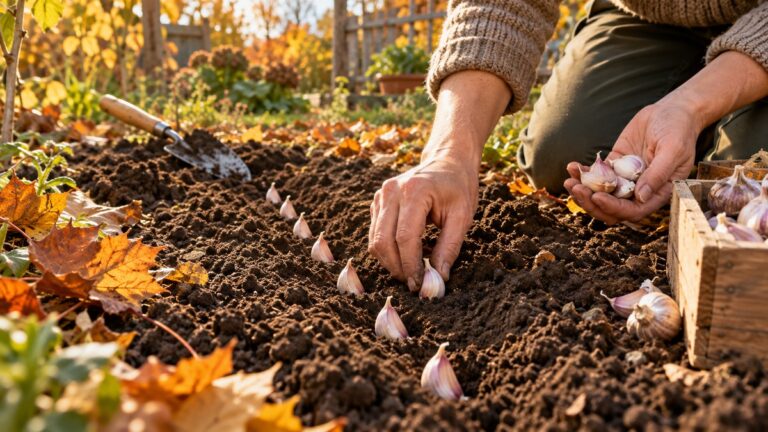
Roots come last in the season. NC State Extension says to “Harvest herb roots, such as bloodroot, chicory, ginseng, and goldenseal, in the fall after the foliage fades.” Washington State University adds that “Most herb roots are dug for drying in the fall, when they are plump and full of stored food for winter.” This part of the guidance applies only if you grow one of the herbs named.
Dry or freeze what you pick
NC State Extension’s preservation guide covers two simple methods. It calls drying “the traditional method of herb preservation.” The steps are to rinse dust and dirt from the foliage, shake off the extra water, and spread the herbs on paper towels or dishcloths until the surface moisture is gone. Then the guide says to “tie the stems into small bundles with twine or string and hang them upside down in a warm, dry, airy place out of the sun.” It adds, “Be sure to make small, loose bundles and allow for good air circulation around each bunch.”
Freezing is the other option. NC State Extension says that “Freezing is one of the easiest methods to preserve herbs”, and it describes placing generous pinches of herbs into water-filled ice cube trays before freezing them.
Mistakes to avoid
- Waiting until the plant flowers to pick leaves. The sources say leaf production declines after flowering.
- Cutting in the heat of the afternoon. Illinois Extension and NC State Extension both point to early morning.
- Taking foliage from a plant that has been sprayed. Illinois Extension says to “be certain that the plants have not been sprayed with pesticides.”
- Cutting basil or borage too close to the ground. Washington State University warns against it.
- Letting perennial harvests run into the frost. NC State Extension says to stop about one month before the frost date.
- Leaving harvested herbs in the sun. NC State Extension links UV exposure to quality loss.
How we chose
We chose four university and extension publications about harvesting herbs, and we opened each one with curl on 2026-10-22. Each page gave enough detail on timing, cutting and preservation that we could check every quoted sentence against the text of the page it came from. Where two pages gave different figures, we show both figures and the source of each, rather than choosing one. We drew on the NC State and Washington State pages for flower, seed and root timing, and on the Illinois and Iowa State pages for picking time and cutting. Search results we did not open are not used here.
What we could not verify
Harvest timing depends on the plant and on what you plan to do with it, and four pages cannot cover every herb in a garden. Read the gaps below before you apply a rule to an herb that is not named in these pages.
What the sources do not say
The pages we opened do not give storage times for dried herbs, so this guide does not state how long dried herbs keep. They do not give a figure for how many cuts a particular perennial can take. They also leave the perennial cutting figure unsettled: Illinois Extension and Washington State University give different numbers, and the pages we opened do not say which fits your plants. The drying advice assumes a warm, dry, airy room, and the page does not say how to adjust that for a humid climate. Finally, the pages do not compare drying and freezing for flavor, so this guide does not rank them.
Frequently asked questions
Can you harvest herbs all season long?
Mostly, yes, until the plants stop producing well. NC State Extension says that annual herbs can be harvested until frost, and Washington State University says that annuals and perennials should yield two to three cuts per season. Perennials need a stop date, and NC State Extension advises stopping about a month before the frost date.
Should you cut herbs before or after they flower?
Before, if you want leaves. Illinois Extension says herbs are best harvested before they start to flower, and NC State Extension says the same for herbs grown for their foliage. Flowers are a different case, and the flower section above explains the timing for each guide.
What time of day is best to pick herbs?
Early in the morning. Iowa State Extension says to harvest as soon as the dew evaporates, and NC State Extension says after the dew dries but before the heat of the day. Avoid the hottest part of the day, because the sun and heat affect quality.
How do you dry herbs at home?
NC State Extension describes rinsing the dust off, drying the leaves on towels, and hanging small, loose bundles upside down in a warm, dry, airy place out of the sun. Drying is the traditional method of preservation. The guide does not give a drying time, so this article does not give one either.
Can you freeze herbs instead of drying them?
NC State Extension calls freezing one of the easiest methods to preserve herbs, and it describes putting generous pinches into water-filled ice cube trays. The same guide also covers drying, so the choice depends on how you plan to use the herbs. The pages we opened do not compare the two for flavor, so this article does not rank them.
Sources
- https://extension.illinois.edu/herbs/harvesting (opened 2026-10-22)
- https://yardandgarden.extension.iastate.edu/faq/when-should-i-harvest-herbs (opened 2026-10-22)
- https://content.ces.ncsu.edu/harvesting-and-preserving-herbs-for-the-home-gardener (opened 2026-10-22)
- https://wpcdn.web.wsu.edu/extension/uploads/sites/44/2026/06/C159-Harvesting-Herbs-2026.pdf (opened 2026-10-22)