How to Grow Oregano
As an Amazon Associate we earn from qualifying purchases.
How to grow oregano is mostly a question of sun, drainage and restraint. Oregano is a perennial herb, and the extension pages we opened agree that it needs a sunny spot with soil that drains well. Once established, the plant tolerates dry spells. This guide follows the steps those pages describe, and it names the places where they disagree or say nothing at all.
Four pages sit behind the advice: Penn State Extension, Iowa State University Extension and Outreach, the University of Illinois Extension, and the University of California Integrated Pest Management program. Where two pages give different figures, both are shown.
Quick answer
- Plant oregano in full sun, in soil that drains well. Penn State and Illinois both name full sun.
- Give each plant at least 18 inches of space, since the UC IPM page says plants can grow up to 24 inches high and 18 inches wide or more.
- Pinch the tips while the plant is young, and cut stems before it flowers, when the leaves hold the most aromatic oil.
- Start from cuttings or divisions when you want a specific flavor, because seed-grown plants can vary. Mulch in late fall where winters are harsh.
Pick a sunny spot with fast drainage
Penn State Extension states the core rule in one line: “It grows best in full sun with well-drained, average soil with a pH of 6.8.” The sources do not agree on a single sun figure. Iowa State says that “Plants perform best when they receive at least 6 hours of direct sunlight each day.” The UC IPM page is looser, saying that oregano “grows best if the plant receives full sun to partial shade (at least 4 to 6 hours a day).” If your spot gets about four hours of sun, the UC wording allows it, while the Iowa State wording points to a brighter location.
Drainage is the point all four pages make. Iowa State warns that “Poor drainage can lead to root rot and reduced vigor.” The Illinois page puts it plainly: oregano “must be planted in a full sun location and good drainage is required for best growth and overwintering.” The UC page offers a field test. It says that “If your soil forms a clump when squeezed, then it is too wet; if the soil crumbles easily, it is a good soil to use.” Squeeze a handful of soil from the spot you plan to use. If it holds together in a ball, look for a better-drained spot before you plant.
Soil, pH and spacing
The two pages that give a soil pH do not match. Penn State Extension gives a pH of 6.8. The UC IPM page says “The soil should be kept at a pH level of 6.0 to 6.5.” Neither page explains the gap, so the two figures are best read as a rough target rather than a fixed rule. The UC page adds that “Herbs will do well on a wide range of soils and especially in well-drained soils.”
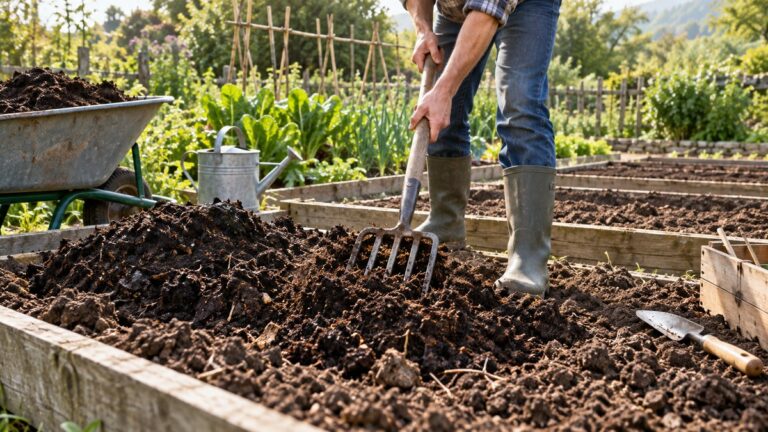
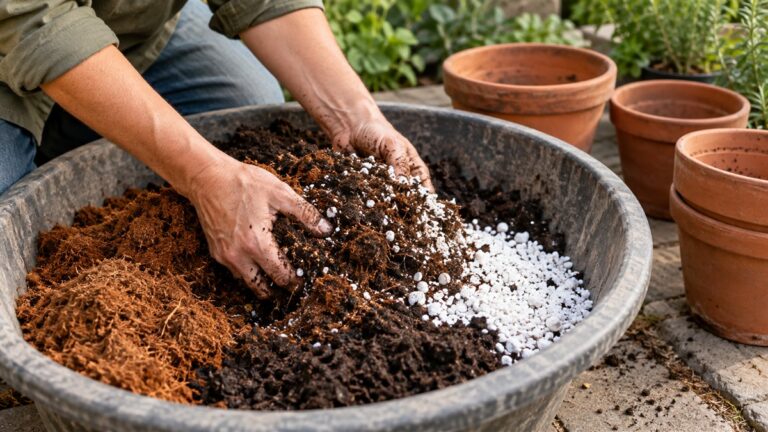
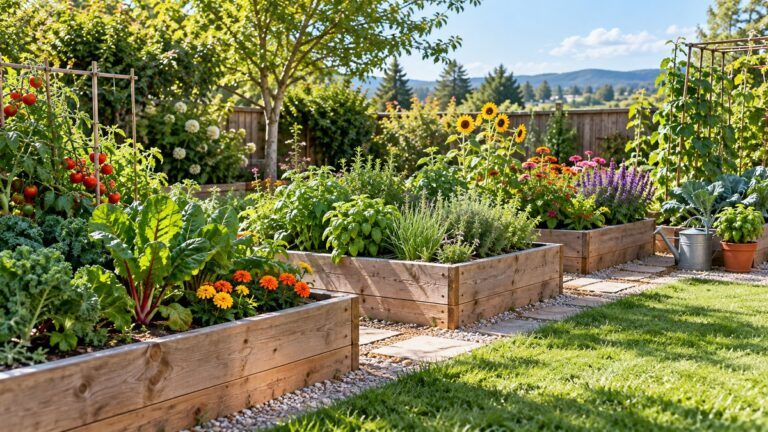
For a heavy bed, the UC page offers the most direct guidance. It says that “Adding organic matter (compost, peat moss, manure, sawdust, ground bark) makes clay and sandy soils easier to work with.” It also makes a point that is easy to miss: “It may not be necessary to add fertilizers or amendments when growing herbs in well-amended soil.” Work the bed first, then check whether it still needs a feed before you add one. For a raised bed that will hold other vegetables as well, see which vegetables grow well in raised beds.
The spacing figures differ by source. The UC page says “Space plants at least 18 inches apart to accommodate their full size.” Penn State’s mature size is smaller, with “Height 12 to 24 inches; width 10 to 20 inches.” Its seed guidance is tighter still, since seedlings are thinned to “about 8–12 inches between plants”. A gardener planting finished plants should follow the UC figure, because it is the only one written as spacing for a mature plant.
Start from cuttings, division or seed
Penn State lists three ways to propagate oregano and gives the season for each: “Use seeds, cuttings, and root division, all in spring.” The routes differ in how predictable the result is. Iowa State explains the trade-off: “Oregano grown from seed may vary in flavor and growth habit, so superior cultivars are often propagated from cuttings or division.” The Illinois page makes the same point from another angle: “Seed propagated plants often do not come true from seed so it is suggested to obtain plants grown from cuttings.”
If you sow seed outdoors, Penn State’s pattern is rows “19–24 inches apart,” with seedlings thinned later. Indoors under lights, the same page says to “Transplant when seedlings reach about 3 inches in height.” It also says that “Germination occurs in approximately 4 days in warm soil.” Illinois adds a detail that is easy to get wrong. Sow on the surface, because “Do not cover the seeds as light is needed for germination.” Press the seed into the surface, then keep it moist.
Cuttings suit a plant with a known flavor. Penn State says to wait for late spring “once the leaves are firm enough to prevent wilting.” Its method is clear: “Take softwood cuttings from a few new shoots about 3–5 inches long, cut at a 45-degree angle with a sharp knife, removing the bottom leaves, then plant in a sandy medium.” The same page adds that “First, be sure to taste them for good flavor.”
Division is the third option for an established plant. Iowa State says that “Established oregano plants can be divided every few years in spring to maintain vigor and create additional plants.”
Water, feed and prune
Once oregano has settled in, the watering rule is to wait. Penn State says: “As it is drought-tolerant, wait until the soil dries out between waterings.” The UC page says the plant “is heat and drought tolerant when established and requires little to moderate water.” Iowa State points out the opposite mistake: “Excessive watering and overfertilization can reduce flavor and encourage weak growth.”
Feeding is where the pages differ. Penn State recommends a routine: “A balanced fertilizer can be applied annually.” The UC page takes a more cautious line, saying that a well-amended bed may need no added feed at all.
Pinching shapes the plant. Penn State says that “After about 6 inches of growth, pinch back tips to encourage more shoots.” Iowa State explains the effect: “Pinching shoot tips when plants are young encourages branching and produces fuller, bushier plants.” Flowers are the other lever. Illinois warns that “Allowing the plant to flower will reduce or stop growth completely.”
Old plants need a different kind of attention. Penn State says to “Cut out old wood that becomes leggy at the end of winter and replace plants every four years.” Iowa State says older plants “may become woody, sparse, and less productive”, and that “Regular pruning and periodic division help maintain vigorous growth and high-quality foliage.” Read together, the routine is to prune in late winter, divide in spring when a clump thins out, and replace plants on a schedule of several years.
Harvest before the plant flowers
Timing matters more for oregano than the calendar. Iowa State says that “The highest concentration of aromatic oils occurs just before flowering, making this the best time for larger harvests.” Penn State gives a season as well as a rule: “Harvest in summer or early autumn, before the plants are in full flower.”
The cutting method keeps the plant productive. Iowa State advises: “Cut stems several inches above the soil, leaving enough foliage for regrowth.” The UC page recommends a steady, light harvest, saying “Harvest frequently to encourage new growth and tender leaves.” Illinois describes a pinch-back method: “Remove the stem tips leaving 4 to 6 pairs of leaves on the plant in order for it to produce side shoots for additional harvesting.”
Dry and store the leaves
The sources agree on the basics of drying but differ on the air temperature. Iowa State says that “For long-term storage, stems can be bundled and dried in a warm, dark, well-ventilated location.” Illinois says to “Hang the cut stems in a cool, dry, dark well-ventilated location.” The two pages do not settle between warm and cool. Penn State gives a clear method: “Tie small bundles, place them in a ventilated paper bag, and hang them indoors.”
Storage is the next step. Penn State says that “Once dry, store leaves in an airtight container for up to 6 months for a pungent and flavorful herb.” Iowa State is less specific, saying that “Properly dried oregano and marjoram retain their flavor for many months.” For a short wait, the UC page says oregano “can be dried for later use or stored fresh in the refrigerator for about one week.”
Winter care and hardiness
Hardiness is where the sources differ most. Penn State says “Oregano is a perennial that thrives in USDA Plant Hardiness Zones 5–8.” Iowa State calls oregano “a hardy perennial that can survive Iowa winters,” and lists the Greek type as “Hardy to USDA Hardiness Zone 4.” Illinois says “True oregano is marginally hardy in zone 5.” The Greek type may tolerate colder winters than Penn State’s range implies, and the figures are not reconciled on the page.
Winter mulch is the protection the pages describe. Illinois advises that “To help insure winter survival a winter mulch of evergreen boughs or straw applied in November or December after the soil has frozen is helpful.” Iowa State says that “In late fall, a light winter mulch can help improve the survival of less hardy oregano selections”, and to “Remove mulch as growth resumes in spring.” Illinois also notes that “Many of the really desirable types are treated as tender perennials and may need to be brought indoors for the winter.”
Oregano or sweet marjoram
Many plants are sold as oregano, and the labels can mislead. Iowa State notes that “flavor, winter hardiness, and ornamental value vary among species and cultivars.” Illinois makes a sharper distinction, saying of common marjoram: “It is more of an ornamental herb as it is considered to be inferior for use as a culinary herb.”
Penn State says “Oregano is closely related to marjoram, but it has a coarser texture and a stronger flavor.” Iowa State puts the difference in winter terms: “Oregano is a hardy perennial that can survive Iowa winters, while sweet marjoram is a tender perennial typically grown as an annual in Iowa gardens.”
Common problems
Most problems trace back to wet soil. Iowa State warns about root rot and reduced vigor, and the UC page says “Damp soil surfaces encourage snails, slugs, sowbugs, and root diseases; leaf spot diseases may also increase.” Good drainage is the one point all four pages share, and this guide offers no treatment steps for any disease.
Insect problems are also listed. Iowa State says “Aphids and spider mites occasionally infest plants, particularly during hot, dry weather or when plants are grown indoors”, and that “These pests rarely cause significant damage”.
How we chose
We chose pages that give growing instructions for oregano itself, published by a university extension service or a university pest management program, and that open with curl and return readable text. We fetched all four on 2026-10-22 and read the text we received. Penn State Extension shows an update date of April 22, 2026. Iowa State shows a last-reviewed date of July 2026. The UC IPM page is an archived copy with a 2021 copyright line. The Illinois page shows no date in the text we read. We quote only sentences that appear word for word in those fetched texts.
We left out retail listings and product pages, so no product is named or recommended here. Where two pages disagree on a figure, this guide shows both figures and says so. For the soil volume a raised bed needs, see how much soil a raised bed garden needs.
What we could not verify
The four pages above do not cover seed packets, nursery tags or plant labels, so those are outside this guide. The guide also does not offer a yield, a count of days to harvest, or a rule for a plant grown in a container.
What the sources do not say
The sources do not give a number of days from planting to the first harvest. They do not say how deep to set a transplant in the garden, and they do not give a container size for a pot-grown plant. Penn State gives six months for stored dried leaves, but the other pages give no storage period. The sun figures use two different measures, hours in one case and a range in the other. The UC page is an archived 2021 copy, and it does not say whether its advice has changed since then.
Frequently asked questions
Can oregano grow in partial shade?
The UC IPM page says oregano “grows best if the plant receives full sun to partial shade (at least 4 to 6 hours a day).” Iowa State gives a higher bar, saying plants “perform best when they receive at least 6 hours of direct sunlight each day.” Partial shade can work, but the sources point to more sun for the best growth.
Should you start oregano from seed or from cuttings?
Cuttings are the better bet when flavor matters most. Iowa State says seed-grown plants may vary, and Illinois suggests obtaining plants grown from cuttings.
How often should oregano be watered?
Penn State says to wait until the soil dries out between waterings. Iowa State warns that excessive watering can reduce flavor.
Does oregano come back every year?
It depends on your zone. Penn State describes oregano as a perennial in Zones 5 to 8, and Illinois calls true oregano marginally hardy in Zone 5. Penn State also advises replacing plants every four years, so even a plant that survives the winter will need replacing on that schedule.
When is the best time to harvest oregano?
Harvest the leaves before the plant blooms. Iowa State places the peak of aromatic oil just ahead of flowering, and Penn State puts the harvest window in summer or early autumn.
Sources
- https://extension.psu.edu/herb-garden-plants-oregano (opened 2026-10-22)
- https://yardandgarden.extension.iastate.edu/how-to/all-about-oregano-and-marjoram (opened 2026-10-22)
- https://extension.illinois.edu/herbs/oregano (opened 2026-10-22)
- https://ipm.ucanr.edu/home-and-landscape/oregano/cultural-tips/index.html (opened 2026-10-22)