How to Grow Eggplant in Pots From Seed
As an Amazon Associate we earn from qualifying purchases.
How to grow eggplant in pots from seed is mostly a question of timing. You start the seed indoors under good light, keep the seedlings growing steadily, and move them into a container only after the weather has warmed. The three pages we opened agree on the main steps, but they count the weeks from different starting points and give different maturity figures. This guide shows what each page says and marks where they differ.
A pot changes two things compared with a garden bed. The soil dries faster, and the size of the container sets how much root space the plant gets. The pages give a few figures for both, and this guide keeps to those figures.
Quick answer
- Start seed indoors about 8 to 10 weeks before the last average frost, the window the Fairfax page gives.
- Sow the seed 1/2 inch deep and keep the medium moist. Be sure the soil doesn’t dry out during the germination period.
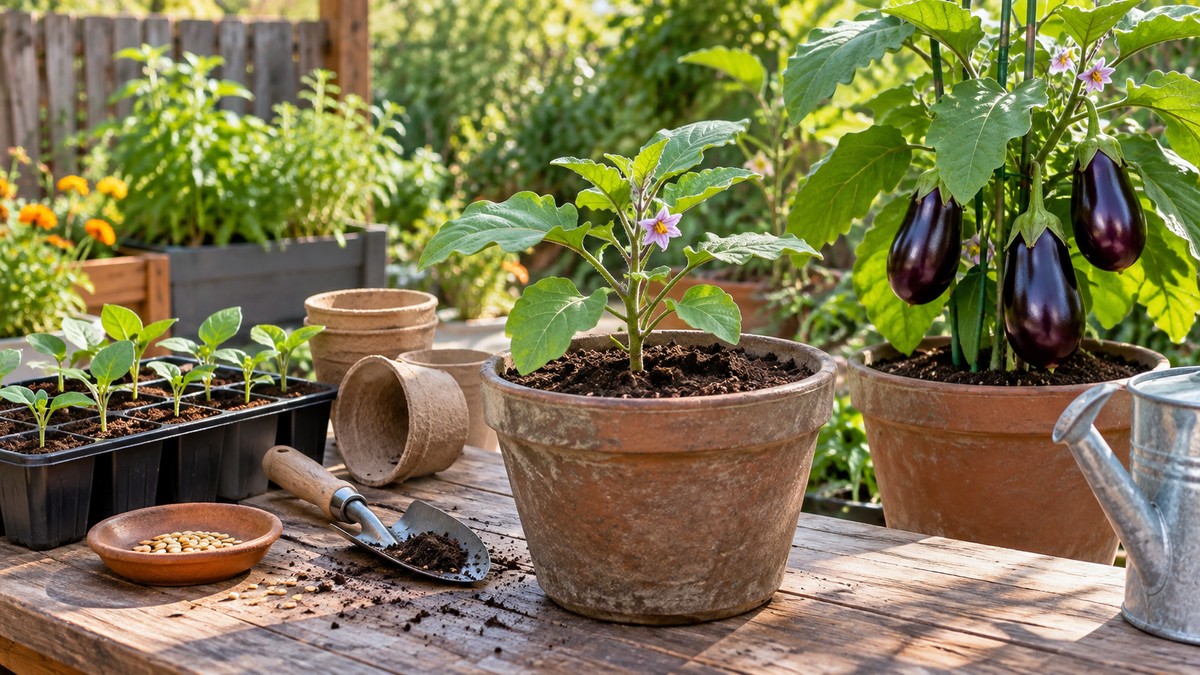
- For a pot on a deck or patio, the Fairfax page suggests 5-gallon containers.
- Move plants outside after the danger of frost has passed and the soil is thoroughly warm, as the Virginia Tech factsheet says.
Choose a cultivar that suits a container
Not every eggplant variety is a good fit for a pot. The University of Nebraska NebGuide lists several cultivars that it describes as adapted to container growing. ‘Dusky’ is medium-sized. ‘Ichiban’ is a long, slender, oriental-type fruit, and the guide lists it alongside ‘Ichabod’. ‘Hansel’ produces clusters of miniature, finger-sized fruit and matures early. ‘Fairy Tale’ has small, elongated, white fruit with violet or purple streaks, which the guide says can be picked small.
The Virginia Tech factsheet describes the standard eggplant and the long, slender Japanese type, and it says both perform well in containers. The Fairfax page notes that garden centers and mail order catalogs offer seed and seedlings, including varieties for containers. Match the cultivar to your pot before you sow, since the seed packet or plant tag is the place to confirm container suitability.
Start the seed indoors on the right schedule
The pages do not agree on how early to start. The Fairfax page says to start seed indoors under lights 8 to 10 weeks before the last average frost. The Virginia Tech factsheet says plants should be grown for eight to ten weeks before they go out. The NebGuide counts from a later point: seed grown at home should be sown four to six weeks before the plants are set out in the garden. Each figure starts from a different date, so pick the one that matches your calendar.
The NebGuide adds that transplants are usually ready about 15 to 20 days after sowing, and that this can take longer at lower temperatures. Warmth matters at this stage. The Fairfax page suggests bottom heat to keep the medium at 80 to 90 degrees, then removing the heat once sprouts appear and holding about 70 degrees. The Virginia Tech factsheet says seed germinates quickly at 70 to 90 degrees.
Sow, germinate and grow on
The NebGuide says to plant the seeds 1/2 inch deep and to keep the medium moist and warm, at 75 to 85 degrees. Commercial mixes for starting seed are available, according to the guide. Once the seeds break through the surface, water only as much as needed to keep the soil moist to the touch. The same page warns that damping-off disease can be a problem, so avoid soggy trays.
The NebGuide says young plants should be exposed to full sunlight if possible, and that supplemental artificial light may be needed when natural light is short. Once the seedlings are sturdy, transplant them into growing containers when the stems have straightened and the first true leaves have opened. The Fairfax page says larger seedlings with 6 to 9 leaves and well-developed root systems lead to better results.
Harden off and plant out
Eggplant needs more care at transplant than many other garden plants. The NebGuide recommends starting the hardening off process 10 days to 2 weeks before planting. Move the containers to a shady spot first, then gradually increase the time in sun and outdoors. Reduce watering to slow growth, but do not let the plants wilt, and keep tender seedlings out of windy weather.
The Fairfax page gives a similar plan with a different start day. It says to begin hardening off a week before transplanting, once outside temperatures are forecast to stay consistently above 50 degrees F. It also says to be ready to protect the seedlings if sudden cold arrives. The Virginia Tech factsheet suggests hot caps and cloches to protect plants from cold conditions.
Timing the final move matters more than the calendar. The Virginia Tech factsheet says to transplant after the danger of frost has passed, when the soil is thoroughly warm. The Fairfax page says planting out can happen two to three weeks after the last average frost date, or when outdoor air and soil reach at least 70 degrees. The NebGuide says the plant is very sensitive to frost, and that cold periods can injure it even above freezing. The Fairfax page calls planting too early the most common transplanting mistake.
Pick the container, soil and spot
The Fairfax page is direct about containers: “If your only space with full sun is a deck or patio, try growing eggplant in 5-gallon containers.” It pairs that advice with a spot that gets 8 to 10 hours of sun and with well-drained, fertile soil. For container growing, it recommends a good quality soil mix for vegetables from a local garden center. Our guide to the easiest vegetables to grow in raised beds covers crops that handle limited root space well.
Read the label on bagged soil. The Fairfax page says some container mixes include long-lasting fertilizer, which reduces how much feeding you need at planting and later. The Virginia Tech factsheet gives a pH between 6.0 and 7.0 for the plant and calls for well-drained soil with high organic matter.
The NebGuide says individual plants can be grown in large containers, but these plants need more attention because the soil tends to dry out quickly. The pages do not give a minimum volume beyond the 5-gallon suggestion, so the size you choose is a judgment based on that guidance. For more crops that suit tight spaces, see our list of vegetables to plant in raised beds. The Fairfax page also asks for 8 to 10 hours of sun, so place each pot where it gets that light.
Water, mulch and feed
Eggplant needs steady moisture. The NebGuide sets one inch of water each week as a minimum, and it says the real need changes with air temperature, wind, soil type, rainfall and mulch. The Fairfax page gives a range of 1 to 2 inches per week, depending on rainfall, and says the critical period for soil moisture is during fruit set and fruit development.
The NebGuide says heavy soakings at weekly intervals work better than many light soakings, because light, frequent waterings promote shallow root systems. A container with limited root space is the case where that matters most. The Fairfax page says to mulch to maintain consistent soil moisture, conserve water and reduce weeds, and it lists black plastic, compost, wood chips and low-growing green mulches such as Alyssum as options.
Feed lightly. The NebGuide says eggplant is a heavy feeder, but also says not to over-fertilize. The Fairfax page warns that overfertilizing can cause excessive foliage growth and slow flowering and productivity. For a pot, the label on the mix is the best guide to how much feeding the plant still needs.
Pinch, stake and pick
The Virginia Tech factsheet says to nip back the growing tip when the plant is about 6 inches high, to encourage branching. The Fairfax page says lower branches can be pruned for air circulation and to encourage growth and productivity. Pinching is a choice rather than a requirement, so decide based on how much fruit you want.
Support matters as the fruit grows. The Fairfax page says small tomato cages or stakes help, depending on the variety, because larger fruit gets heavy and can break stems or pull the plant over. The NebGuide adds that rain, wind and irrigation can cause branches to break or droop, so staking may be needed later in the season.
Pests and problems
The Fairfax page calls flea beetles eggplant’s most common insect pest. It says they chew numerous tiny holes in tender leaves, which stunts growth and reduces productivity. Floating row covers can protect tender seedlings from flea beetle damage. The Virginia Tech factsheet lists flea beetles, aphids, Colorado potato beetle, red spider mites and whitefly as common insect problems, and it names verticillium wilt among the diseases.
Both the Fairfax page and the Virginia Tech factsheet link disease risk to crop rotation. The Fairfax page says that if you grew other solanaceous crops in the past two to three years, you should rotate the planting. This guide gives no treatment advice for insects or diseases and refers readers to product labels instead.
Harvest and storage
The timing of harvest depends on where you start counting. The Fairfax page says eggplant should be ready 55 to 80 days after transplanting. The Virginia Tech factsheet gives 70 to 85 days from transplants and 100 to 150 days from seed. Harvest when the fruit is large enough to use but before it loses its glossy texture and becomes tough and bitter, and use shears, because breaking fruit off by hand damages the plant.
Keep the plant producing by picking regularly, as the Fairfax page says. Mature fruit left on the plant reduces overall productivity, according to the Virginia Tech factsheet. The NebGuide says eggplant fruit will only keep well for a few days, and the Virginia Tech factsheet gives a cool, moist storage range of 45 to 50 degrees F for about one week.
How we chose
We opened three pages on 2026-10-22: a University of Nebraska NebGuide (G1905, issued December 2008), a Virginia Tech factsheet (SPES-686, publication date March 25, 2025), and a Fairfax Gardening article by a Fairfax County Master Gardener. The first two are university publications. The third is a county Master Gardener page, included because it covers seed starting and container culture in detail.
We kept a statement only when one of these pages states it in plain words. Where the pages give different numbers, such as weeks before transplanting or days to harvest, we show each figure with its page. This guide does not recommend a product or a brand.
What we could not verify
The three pages cover eggplant in general and in containers, but none gives a full growing plan for a pot-grown plant from seed.
What the sources do not say
No page gives a minimum pot volume beyond the Fairfax suggestion of 5-gallon containers for a deck or patio. No page names a drainage-hole size or a pot material. None says how much fruit one potted plant produces, and the Virginia Tech factsheet gives its yield figure per row, not per pot. The sources also do not say how to rotate crops when all growing happens in pots, since their rotation advice refers to garden beds.
Frequently asked questions
How many weeks before frost should I start eggplant seed indoors?
The Fairfax page says 8 to 10 weeks before the last average frost. The Virginia Tech factsheet says eight to ten weeks before setting plants out, and the NebGuide says four to six weeks before planting out. Pick the window that fits your calendar.
What pot size works for one eggplant?
The Fairfax page suggests 5-gallon containers for a deck or patio. The NebGuide says large containers can grow individual plants, though they need more attention. The pages give no smaller minimum.
Can I move the seedlings outside before the last frost?
None of the three pages recommends it. The Virginia Tech factsheet says to transplant after the danger of frost has passed, and the NebGuide says the plant is very sensitive to frost.
How much water does a potted eggplant need each week?
The NebGuide gives one inch per week as a minimum, and the Fairfax page gives 1 to 2 inches depending on rainfall. Containers dry out faster than beds, so check the mix often in hot weather.
How do I keep an eggplant producing into late summer?
The Fairfax page says to pick regularly to encourage further production, and it notes that productivity slows as the weather cools. The Virginia Tech factsheet says fruit left on the plant reduces overall productivity.
Sources
- https://extensionpubs.unl.edu/publication/g1905/na/pdf/view (opened 2026-10-22)
- https://fairfaxgardening.org/eggplant-2/ (opened 2026-10-22)
- https://pubs.ext.vt.edu/content/pubs_ext_vt_edu/en/SPES/SPES-686/SPES-686.html (opened 2026-10-22)