How to Grow Parsley in Pots
As an Amazon Associate we earn from qualifying purchases.
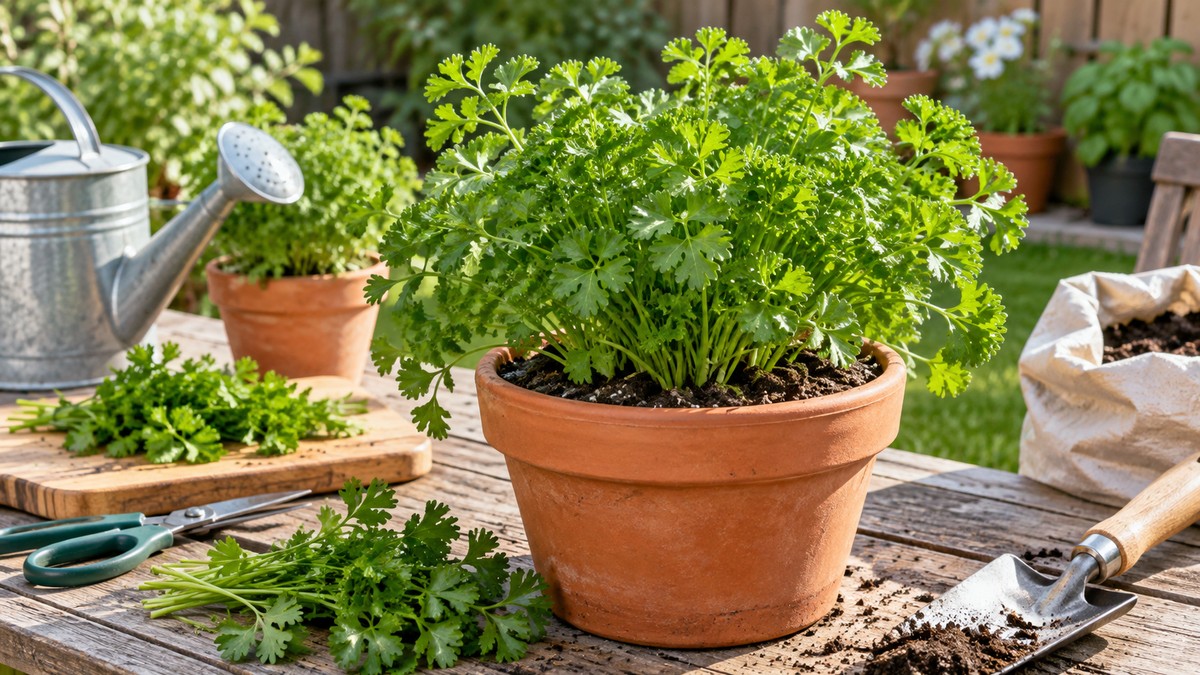
How to grow curly parsley in pots starts with the seed, which is slow to sprout. The Arkansas and Illinois extension guides both advise soaking the seed and keeping the soil moist, but they differ on seeding depth and on whether parsley is annual or biennial.
A curly type suits a pot well, according to the Illinois growing guide, which says it “remains more compact” than the flat-leaf kind.
Quick answer
- Pick a dark green, deeply cut, curled cultivar, and soak the seed overnight before sowing.
- Use a container with drainage holes and a loose, well-drained mix. The Illinois herb guide says herbs “can be grown in any type of container so long as it has drainage holes.”
- Give the pot full sun to part shade, and keep the soil consistently moist so it does not dry out.
- Pick leaves one at a time for daily use, and cut flower stalks when they form to keep the leaves coming.
Choose a curly cultivar for a pot
The Arkansas table lists curled cultivars including ‘Extra Curled Dwarf’, ‘Forest Green’ and ‘Green River’. The table describes the leaves of ‘Extra Curled Dwarf’ as dark green, deeply cut and curled. It describes ‘Forest Green’ as a mix of double- and triple-curled leaves that holds its color well, with good flavor and high yield. For ‘Green River’, the table says its double-curled leaves stay curly even in heat and are great for drying.
Curly leaves have a trade-off. The Illinois growing guide says most gardeners grow the flat-leaf type for cooking because it has more flavor, while the curly type is more ornamental and stays compact. For a pot on a deck or step, the compact habit is often the deciding factor, and the Iowa State guide’s point about clay anchoring a pot matters too. The guide also says curly parsley can be enjoyed chopped or dried.
Sow the seed
The Arkansas page recommends planting 10 to 15 seeds per inch of row, and it notes that parsley seed is short-lived, so fresh seed matters for a good start. Its garden figure is no more than 1/4 inch deep. The Illinois growing guide gives a shallower figure, about 1/8 inch deep. Both pages agree on the next step, which is to soak the seed. The Arkansas page says to soak it because parsley is slow to germinate, and the Illinois guide says to “Soak seeds overnight before planting for better germination rates.”
Patience is part of the job. The Illinois guide says parsley can be slow to germinate, so be patient and water consistently so the soil does not dry out. Keep the surface moist while the seed is sprouting. Thin the seedlings once they are up. The Arkansas page gives 4 to 6 inches between plants for the garden, so the spacing sets how many plants a pot can carry.
Timing is set by the calendar, not the pot. The Arkansas page says parsley needs 70 to 90 days from seed to a harvestable plant. It advises planting in late fall for a winter harvest, or in late winter for a spring and early summer harvest. Its note on early planting is that cold temperatures can make the plant send up a flower stalk in its first season if it goes out too early in spring.
Choose the container and the mix
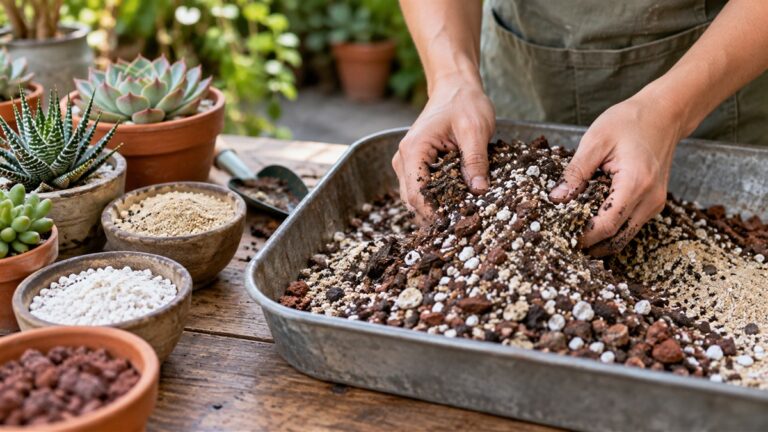
The Illinois herb guide says herbs “can be grown in any type of container so long as it has drainage holes,” and it advises a “loose, well-drained potting mix.” The Iowa State guide suggests either a commercial potting mix or a blend of potting mix, peat moss and perlite in equal parts. The University of Maryland guide recommends a commercial soilless mix that drains well and is lightweight, which fits parsley’s need for moisture without standing water.
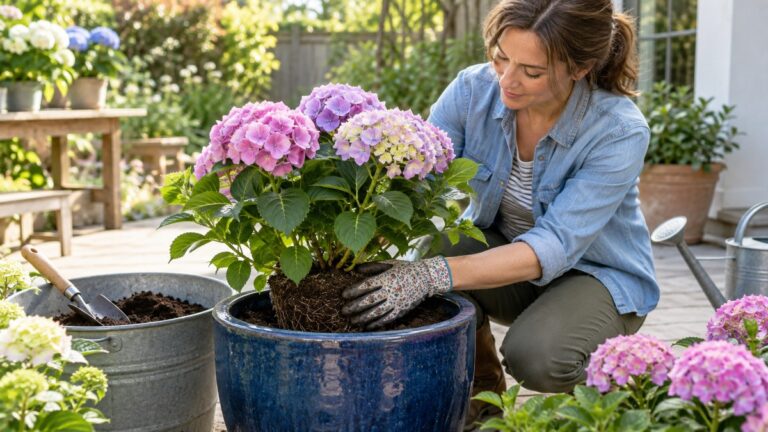
Clay or plastic? The Iowa State guide says clay pots “may require more frequent watering because they tend to dry out faster,” and it notes that plastic is lighter and therefore easier to move around. The Maryland guide adds that containers need adequate drainage holes whatever their material. For a pot you plan to move in and out, plastic is the easier choice. For a pot that stays put, clay gives a stable anchor, as the Iowa State guide notes.
The sources do not give a pot size for parsley. The Arkansas page does give a size for dug-up plants, which can go into 4 to 6-inch pots for winter, but it does not say how big a pot should be to grow parsley from seed. Our only figure for a seed-grown plant is the spacing above, which is for the garden.
Two of our sources offer a plant-grouping idea that suits a pot. The Iowa State guide lists parsley in an Italian group with basil, oregano, sage, rosemary and thyme, and it marks parsley as an annual in that list. If you want more herbs in one bed, our guide on raised bed companion planting and garden layout covers how herbs sit beside vegetables, and our guide to the easiest vegetables to grow in raised beds suggests which crops handle a tight space.
Light, water and feeding
Parsley wants sun, but it tolerates some shade. The Arkansas page calls parsley suitable for “sunny or partial shade,” and the Illinois growing guide says “full sun to part shade.” The Iowa State guide gives a number for herbs in containers: “at least 4 to 6 hours of sunlight each day.” A pot on a sunny patio or deck can meet that figure, but a pot in a shaded yard may need to be moved to get the light.
Water is the other key. The Illinois growing guide says to “consistently water to ensure they do not dry out.” The Illinois herb guide notes that water requirements vary from plant to plant, and it advises to “Apply water until it starts to drip from the drainage holes,” which is a practical check that water is reaching the bottom of the pot.
Feed lightly. The Illinois herb guide says “Do not over fertilize herbs.” The Iowa State guide says herbs do not need as much fertilizer as other container plants, but they benefit from “periodic light fertilization with a dilute fertilizer solution.” For a pot, a light and regular feed is the sensible approach, and the bagged mix’s label tells you how much is already in it.
Harvest for a long season
Parsley is a cut-and-come-again crop. The Arkansas page says parsley is “usually picked leaf by leaf for daily use after the plants are well established.” When there is enough for the week, the page says the leaves can be harvested and dried, or stored by wrapping them in a plastic bag or wide-mouth jar in the refrigerator. The Illinois growing guide adds that parsley can be harvested throughout the season by cutting stems at the base of the plant, ideally in the morning after the dew has dried.
The Iowa State guide describes how to cut without damaging the plant. Remove the top leaves and stems with a sharp knife or shears, cutting just above a leaf or pair of leaves. It says to leave 4 to 6 inches of plant material on annual herbs so they can regrow. For leafy annual herbs, it says to harvest when the flower buds first appear, because that is when the flavor from the volatile oils is best.
Flower stalks change the plant’s habit. The Arkansas page says that when a flower stalk starts, you should remove it and continue harvesting the mature leaves. The same page links an early stalk to cold temperatures in the plant’s first season, so a stalk in spring is worth noting for next year’s sowing date.
Heat, cold and winter
Parsley handles cold better than heat. The Arkansas page says parsley “is cold hardy and can overwinter,” and that it “may be covered lightly with straw and picked continuously over winter” in the garden. In heat, the page warns that “If parsley is forced to grow for long periods at temperatures above 90 degrees F, growth is greatly reduced and death may occur.” The heat limit matters most for a pot in full summer sun.
For a pot, the Arkansas page offers a clear route: dig a few plants, pot them up and keep them growing indoors for a fresh winter supply. The page says the plants need a cool location and ample light, and it advises discarding them the following spring. The Illinois herb guide says herbs grown in containers can be moved indoors for winter, but they should be acclimatized in early fall and moved gradually so they adjust to indoor temperature and light.
Biennial or annual?
The sources disagree here. The Arkansas page calls parsley a biennial, which means it “grows a plant the first year and sends up a seedstalk or flowers the second year.” It says that if grown in an area protected from excessive heat or cold, parsley can be harvested well into its second year. The Iowa State guide lists parsley among herbs that are annuals in its Italian group. For a pot, the practical difference is whether to keep the plant past its first season, so decide early and plan the next sowing if you want a continuous supply.
Watch the plant indoors
If you bring a pot inside, the Illinois herb guide says to check plants for common indoor insect pests such as aphids, spider mites, thrips and whiteflies, and to act when problems appear. This guide does not give treatment advice for those pests. Read the label on any product you use, and follow the instructions there.
How we chose
We opened five pages on 2026-10-22: a University of Arkansas Division of Agriculture home garden series sheet (FSA6091, Parsley), a University of Illinois Extension growing parsley handout, a University of Illinois Extension guide to growing herbs in containers, an Iowa State University Extension guide to growing herbs in containers (last reviewed January 2023), and a University of Maryland Extension guide to growing herbs in containers (updated March 4, 2024). All five are university extension pages, and the Arkansas sheet is the most specific to parsley.
We kept a statement only when one of these pages states it in plain words. Where pages differ, such as on seeding depth and on whether parsley is annual or biennial, we show both figures and name each page.
What we could not verify
The parsley-specific material comes mostly from one sheet, and the container guides are written for herbs as a group. That leaves several gaps.
What the sources do not say
No page gives a pot size for growing parsley from seed or a drainage-hole size. The sources do not give a yield for a container-grown plant, and none says how many plants fit a given pot. The Arkansas figures for spacing and depth are for the garden, and the guide does not convert them to pot dimensions. Only the Arkansas page is written for parsley itself, so the container advice in this guide rests on the general herb guides.
Frequently asked questions
How long does curly parsley take to grow from seed?
Count on roughly 70 to 90 days from sowing to a plant you can pick from, according to the Arkansas page. Sow in late fall for a winter harvest, or in late winter for spring and early summer.
How deep should I plant parsley seed?
The sources differ. The Arkansas page says no more than 1/4 inch deep, and the Illinois growing guide says about 1/8 inch deep. Soak the seed overnight before sowing, as both pages advise.
Is parsley a biennial or an annual?
The Arkansas page calls it a biennial that flowers in its second year, and the Iowa State guide lists it among annual herbs. Plan for either, depending on how long you want the pot to produce.
Can I keep parsley in a pot through winter?
The Arkansas page says you can dig a few plants, pot them in 4 to 6-inch pots and keep them in a cool location with ample light for a winter supply. The Illinois herb guide says to acclimatize container herbs in early fall before moving them indoors.
Why did my parsley send up a flower stalk?
The Arkansas page says that if plants go out too early in spring, cold can cause them to send up a flower stalk in their first season. Remove the stalk and keep harvesting the mature leaves.
Sources
- https://www.uaex.uada.edu/publications/PDF/FSA-6091.pdf (opened 2026-10-22)
- https://extension.illinois.edu/sites/default/files/growing_parsley.pdf (opened 2026-10-22)
- https://extension.illinois.edu/container-gardens/growing-herbs-containers (opened 2026-10-22)
- https://yardandgarden.extension.iastate.edu/how-to/growing-herbs-containers (opened 2026-10-22)
- https://www.extension.umd.edu/resource/growing-herbs-containers-and-indoors (opened 2026-10-22)