How to Prepare Soil for Planting Vegetables
As an Amazon Associate we earn from qualifying purchases.
The person typing how to prepare soil for planting vegetables wants a sequence: what to do first, how deep to dig, and how much organic matter to add. The three extension pages we opened agree on the order. Test the soil, loosen it deeply while it is moist, work in compost, and leave wet ground alone. They do not agree on how often to till, and this guide shows where that disagreement sits. The steps below are general, so your own soil results and your local extension office should set the final amounts.
Quick answer
- Start with a soil test, because it shows which nutrients the bed is missing before you buy any fertilizer.
- Dig deeply while the soil is moist. Illinois Extension gives 6 to 10 inches, and Texas A&M gives at least 8 to 10 inches.
- Work in 2 to 4 inches of compost. Texas A&M advises against adding more than a 4-inch layer of organic material.
- Do not work wet ground. Texas A&M says working soil that is too wet can make it rough.
Start with a soil test
Illinois Extension states the first step plainly: “A soil test is best place to start to see if what nutrients are lacking.” That one sentence sets the order for the rest of the job. A test tells you which nutrients the bed needs, so you are not guessing at fertilizer rates. Purdue Extension makes the same case for garden soil in general: “Testing your landscape and garden soil for its nutrient status is an easy and relatively inexpensive planning tool.”
Illinois also explains why a regional pattern is only a starting point. It says “Most Illinois soils have an abundance of phosphorous and potassium, but the only way to know about your soil is a soil test.” A bed in another region can differ from that pattern, and the test is the only way to know. Illinois adds that “Results from a certified commercial lab can save you money.” That is a reason to send a sample out rather than rely on a rough reading.
Fertilizer labels describe three numbers, and the sources explain what each one does. Illinois Extension says “Nitrogen promotes green growth, phosphorus promotes root growth and fruit development and potassium promotes disease resistance and root development.” It also notes that vegetable garden fertilizers have “an analysis of something like 5-10-5, 10-10-10 or 12-12-12.” Read the test before you choose a blend, because the blend should follow the nutrient the test shows is missing.
Clear the ground before you dig
Illinois Extension says “Before you can plant, soil preparation is a must.” Its page notes that most home gardens go where a lawn used to be, and that removing the existing growth is the first job: “Regardless of what currently grows in your future garden location, eliminating the existing vegetation is an important first step in soil preparation.”
The same page lists several ways to clear the area. One example is a thick layer of arborist woodchips, and the page says to “Apply 4 to 6 inches deep.” It says that layer will smother most weeds. When the planting day comes, Illinois Extension says to “reduce the mulch depth to 2 to 4 inches deep.” Cardboard and silage tarp are also listed. Each method takes time before the bed is ready, so choose one that fits your schedule rather than digging in a rush.
Dig deeply, but only when the soil is moist
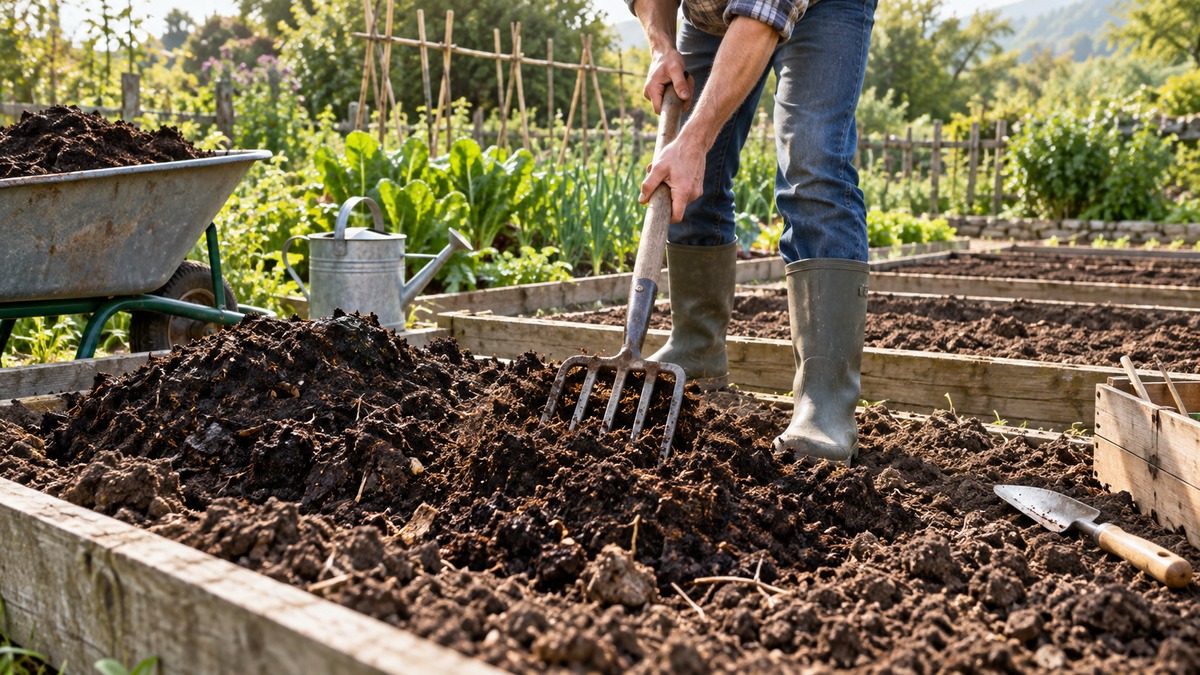
Texas A&M University gives the depth most clearly: tilling should go as deep as possible, and at least 8 to 10 inches. Its reason is that deep working loosens the soil so that vegetable roots can go further down. Illinois Extension sets a slightly wider conventional range: “Dig the soil to a depth of at least 6-10 inches.” Both pages describe a minimum, so the Texas figure is a practical target and the Illinois range is the one to meet at the very least.
Timing matters as much as depth. Texas A&M says “Till soil when it is moist but not wet.” It also warns that working soil when it is too wet can make it rough. North Carolina’s Durham County Extension makes a similar point about drainage. Its page says “Drainage can be improved by tilling or spading the soil 8-10 inches deep, and by adding organic soil amendments.” The depth and the moisture check go together: dig deep, but only when the ground is moist and not soaked.
Texas A&M also suggests timing the big job for the off-season. Its page says “Spade the soil in the winter to prepare for spring planting.” That gives amendments time to settle before the planting date, and it gives the soil a chance to dry out before spring work begins.
Add compost in a measured layer
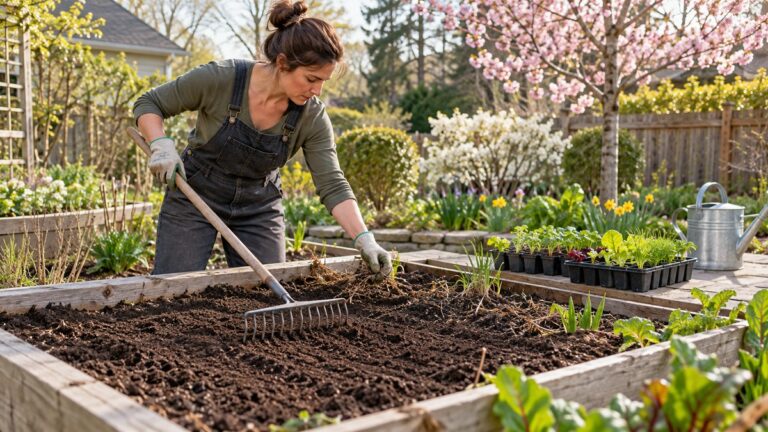
Illinois Extension gives the working amount: “Add a two-to-four-inch layer of organic matter (compost) and incorporate it into the soil.” It explains what the layer does: “Organic matter will improve your soil structure and will add nutrients to the soil.” The same page adds a limit on the nutrient effect, saying that “However, this effect is usually short-lived.” That is why compost is a yearly habit rather than a one-time job.
Texas A&M sets an upper limit on a single layer. Its advice is not to add more than a 4-inch layer of organic material, which fits Illinois’s two-to-four-inch range. For manure, Texas A&M says to use composted manure and to mix it in well ahead of planting. It warns against fresh manure, because fresh manure can damage plants and introduce diseases. Composting before use is the simplest way to avoid that problem.
Durham County’s page explains the purpose of the layer. It says “Soil amendments are materials that are worked into the top several inches of soil, to improve drainage and loosen the soil where plants grow.” It also says “Established beds will need yearly additions of soil amendments because our warm temperatures allow soil organisms to break down organic matter quickly.” For a new bed this means the first compost layer is the start of a routine, not the end of the work.
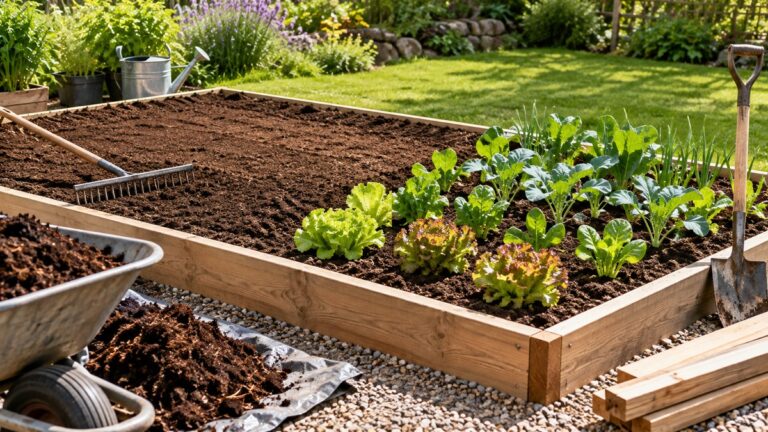
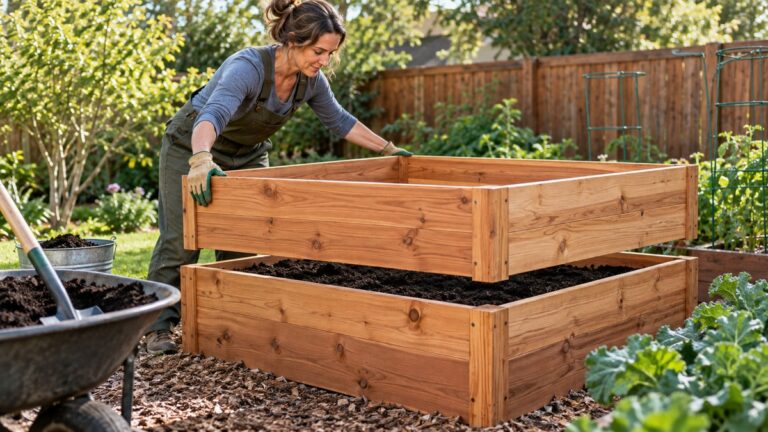
If the bed is raised, the next step is covered in the best way to fill raised beds. Check how much soil the bed holds with how much soil a raised bed garden needs, because the depth you dig and the depth you fill should match.
Protect the bed after digging
Tilling has a side effect on weeds, and Illinois Extension names it. It says tilling or lifting the soil “exposes dormant weed seeds”, and its note on silage tarps adds that “Covering after tilling kills germinating seeds creating a stale seedbed.” The page presents covering as a way to deal with those seeds before planting, so a freshly worked bed is not left bare for long.
Durham County’s page recommends mulch on top of the bed. It says “A 3-4 inch thick layer of mulch on top of your garden will benefit the soil in many ways.” The same page says mulch keeps roots cool and conserves moisture in the soil, which matters most in the first season after a bed is dug.
Check drainage before you plant
Durham County’s page gives a simple drainage check. It says “Dig a hole in your yard about 12 inches deep, and fill it with water.” It then says “Let the water drain completely and fill the hole again.” It also says to “Check it regularly for the next 24 hours.” The page says to run the check “when the soil is neither extremely dry nor extremely wet”, so the result reflects the bed rather than a single dry or soaked day.
The time the water takes to empty sorts the drainage. Durham County groups the results this way: 3 to 4 hours is good drainage, 5 to 12 hours is moderate, and 12 to 24 hours is poor. For moderate drainage the page says “Some plants will tolerate this situation, but many will drown.” If the hole stays wet for a long time, the fix is the same deep working and organic matter the page recommends, not a shortcut.
Mistakes to avoid
- Digging wet ground, which Texas A&M warns can leave the soil rough.
- Skipping the soil test. Illinois Extension calls a test the best place to start.
- Leaving compost on top. Illinois Extension says to incorporate it into the soil.
- Using fresh manure. Texas A&M advises composted manure mixed in well ahead of planting.
- Over-tilling. Illinois Extension says “Tilling also destroys the structure of your soil.”
Where the sources disagree on tilling
The pages do not agree on how much tilling is right. Illinois Extension raises the question directly: “There is increased debate on whether a gardener should pursue a tilled or no-tilled garden.” Its page lists the costs of tilling. It says “Tilling releases carbon dioxide into the atmosphere”. It also warns that “opening the soil up exposes it to air and sunlight which will greatly diminish your soil moisture.”
Illinois also names a benefit that matters for clay. It says “Tilling also aids in breaking up heavy clay soil or areas that suffer from compaction.” Texas A&M and Durham County both recommend deep working as a standard preparation step. None of the pages we opened sets a schedule for repeating deep tilling each season. The honest reading is that a deep preparation before planting is common ground across the sources, and how often to repeat it is a judgment the sources leave open.
Frequently asked questions
Is a soil test needed before preparing the soil?
Illinois Extension says a soil test is the best place to start. It shows which nutrients are lacking, so you avoid adding amendments the bed does not need. The page also says that results from a certified commercial lab are worth the cost, because they give a dependable picture of the soil.
How deep should a vegetable bed be dug?
Illinois Extension gives 6 to 10 inches for the conventional method. Texas A&M says at least 8 to 10 inches. Durham County gives 8 to 10 inches when tilling or spading to improve drainage. Use the deeper range if your drainage check comes back as poor.
How much compost should go into the bed?
Illinois Extension says to add a two-to-four-inch layer and incorporate it into the soil. Texas A&M gives a 4-inch limit for organic material in one layer. Durham County adds that established beds need yearly additions, so the amount you add each season is a repeat job.
When is the best time to dig the bed?
Texas A&M recommends spading in winter to prepare for spring planting. It also says to dig when the soil is moist rather than wet, because working it when wet can make it rough. Digging in the off-season gives compost time to settle before the planting date.
Can tilling be skipped in favor of compost on top?
The pages we opened do not settle this. Illinois Extension says there is “increased debate” between tilled and no-tilled gardens, and it does not choose a side. The pages also do not say that compost on the surface can replace digging, so this guide does not make that claim.
How we chose
We chose three extension pages because each one covers a different part of the job. Illinois covers the sequence and the clearing options. Texas A&M covers depth and moisture timing. Durham County covers drainage and the yearly habit of adding amendments. We opened each page with curl and kept only the pages that returned HTTP 200 and could be read as text. Pages that returned any other status are not counted. We did not use retail listings or general gardening blogs for any step, and every quoted sentence was checked against the text of its page before publication.
What we could not verify
The pages we opened do not give one soil recipe, and they do not match soils to specific vegetables. The Texas A&M and Durham County advice reflects the regions those pages are written for, so depth and timing may need adjusting where you live. The figures here are starting points, and your soil results should decide the final amounts.
What the sources do not say
The pages do not give a compost amount per square foot, and they do not say how long a bed should rest between digging and planting, beyond Texas A&M’s winter timing for spring beds. They do not settle the tilling debate. They also do not address raised beds directly, so the raised bed links above are routes to other guides rather than rules drawn from these three pages.
Sources
- https://extension.illinois.edu/gardening/prepare-soil (opened 2026-10-22)
- https://aggie-horticulture.tamu.edu/vegetable/wp-content/uploads/sites/10/2013/09/EHT-076.pdf (opened 2026-10-22)
- https://durham.ces.ncsu.edu/2020/04/making-the-most-of-your-gardens-soil/ (opened 2026-10-22)