How to Grow Salad Greens in Containers
As an Amazon Associate we earn from qualifying purchases.
If you want to know how to grow greens in containers, the extension sources we opened share most of the basics: drainage holes, a soilless mix, frequent watering and enough light. They differ on container size, sowing density and feeding schedule, so this guide puts those figures side by side. Salad greens grow quickly, which makes timing of sowing and harvest matter as much as the pot itself.
Quick answer
- Use a pot or tray with drainage holes. Colorado State suggests one at least 18 inches across, and Wisconsin gives a two-gallon minimum for leaf lettuce.
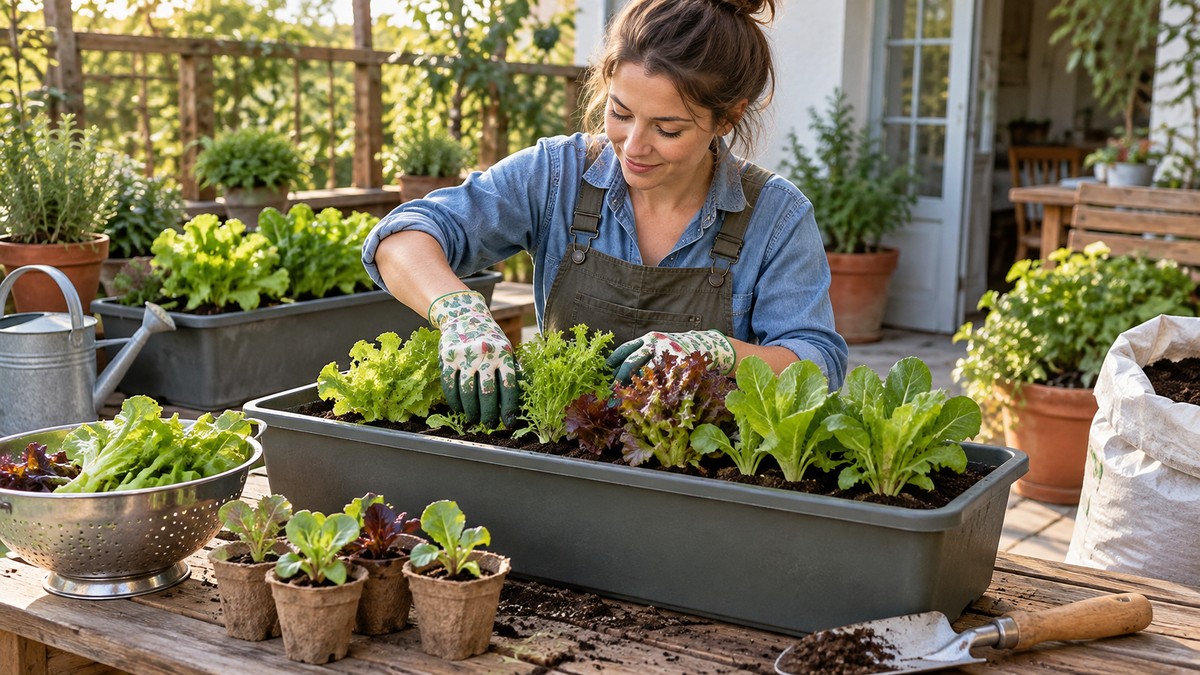
- Fill it with a soilless mix rather than garden soil, sow seed on the surface, and keep it moist until the seedlings come up.
- Harvest when plants reach 4 to 6 inches, and sow new rows every few weeks for a steady supply.
- For kale, the Royal Horticultural Society suggests a compact variety in a container at least 30 cm (12 in) wide and deep.
Choosing a container
Container size is where the sources differ most. Colorado State describes a tray, pot or window box. Wisconsin describes a volume and a depth for smaller crops. The table gives each source’s figure as it is written.
| Source | Container size stated | Other notes |
|---|---|---|
| Colorado State University Extension | At least 18 inches across and 6 to 12 inches deep | Deeper pots keep the soil from drying out as quickly |
| Wisconsin Horticulture | For leaf lettuce, spinach and similar crops: at least two gallons and at least four to six inches deep | Larger crops need more volume and depth |
| Penn State Extension | No size figure given | Smaller pots are good for herbs and greens |
| UNH Extension | No size figure given | Adequate drainage is required |
| Royal Horticultural Society (kale, compact variety) | At least 30 cm (12 in) wide and deep | Several compact kale varieties suit containers |
| NC State Extension (Onslow County, spinach) | 6 to 8 inches deep, or a 5-gallon window box | Wide, shallow container recommended |
Width and volume are different measures, and the sources do not say how to choose between a shallow tray and a deeper pot holding the same volume. The Wisconsin figure is a floor for smaller crops, not a limit. Materials are flexible: Colorado State says “The container can be made of clay, ceramic, plastic, or wood” as long as it has holes in the bottom.
What to grow in a pot
Colorado State lists a wide range: “Common choices available for leafy greens (individually or in a mix) are lettuce, mustard greens, arugula, cress, mizuna, chervil, endive, mache, Chinese cabbage, tatsoi, escarole, garden cress, kale, and Swiss chard.” It also flags heat-tolerant types: “Some varieties are identified as heat tolerant and these may be good choices for container gardening.” For a mixed pot, Colorado State explains that mesclun “means mixture and usually includes arugula, lettuce, endive, and chervil.”
For a pot you harvest from again and again, UNH describes the approach. In large boxlike containers, “crops, such as mesclun salad mixes, spinach, Swiss chard and arugula can be cut every few days,” which gives a long run of salad and cooking greens. The pages we read do not say which lettuce types suit containers best.
Potting mix and drainage
Penn State is blunt about the mix: “do not use straight garden soil!” Its reason is that “Soil and soil-based mixes are typically heavy and dense, which can prevent your container from draining properly.” UNH says the same thing in fewer words: “Garden soil is too heavy for use in containers.”
A soilless mix is the replacement. Penn State describes it as “a blend of several materials such as sphagnum moss, composted bark, perlite, vermiculite, or coconut coir to create a medium that drains well while holding onto water and nutrients.” Colorado State says to “Fill the container with a good quality potting mixture” and notes that some mixes hold moisture better, which can help in dry climates. Wisconsin says the loose, well-drained potting mixes used for container gardening “allow roots to grow easily.”
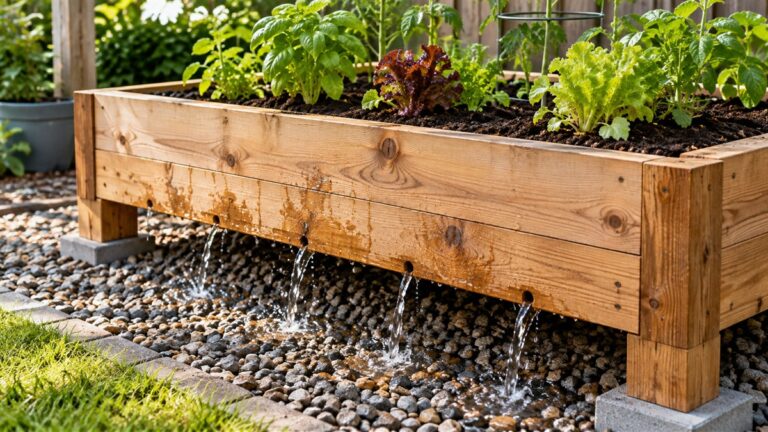
Drainage is the same requirement on every page. Colorado State says the container “needs to have holes in the bottom and a tray or dish below to catch drainage.” Penn State says the pot “should have drainage holes at the bottom so excess water can flow out easily.” UNH asks you to “Be sure to provide adequate drainage.” For a deeper container, see our guide to DIY planter boxes for deck railings.
Sowing the seed
Greens are an easy start from seed. Colorado State says “Leafy greens grow quickly so they can be started from seeds rather than transplants.” Wisconsin lists lettuce, spinach, kale and arugula among crops that “work well in containers because they are easy to seed, can be harvested frequently, and can be replanted throughout the season.”
Colorado State gives a simple method: “Scatter the seeds with about 1/2 inch spacing onto freshly prepared potting mixture”, then “Water gently after planting, keeping the soil surface moist until plants emerge.” It adds that leafy green seeds “can be sown densely since they will not be maturing into full-sized plants.”
UNH takes a different line for cut-and-come-again crops. It says to “Space the plants only a couple of inches apart in the container and harvest individual leaves as soon as they reach edible size.” The two pages differ on spacing, and the sources do not say which gives the bigger harvest. NC State’s kale spacing, which thins seedlings to one foot apart, is written for rows, so it does not carry over to a pot. If you also grow in beds, see our beginner picks for easy raised bed vegetables.
Light
Light is where the sources agree most. Colorado State says “Five or six hours of light a day is recommended but many types of salad greens can get by with less and can be grown with artificial light, partial sunlight, or even in the shade.” UNH draws the same line: “Most vegetables require full sunlight, at least six hours a day”, while “Leafy vegetables (herbs, lettuce, spinach, Swiss chard, cabbage) can tolerate less light than fruiting crops (tomatoes, peppers, cucumbers, eggplants, melons).”
Penn State puts the contrast in one line: “Tomatoes and peppers need at least 6 hours of sun per day, while lettuces and kale prefer some shade.”
The UC Master Gardener sheet on growing vegetables in containers gives its own figures. Its table lists leaf lettuce at six inches apart with 9 to 12 inches of soil depth, in the group the table marks for low planting boxes. The sheet says that “Leafy vegetables, such as lettuce, onions, carrots and beets will do okay in partial shade”, and that “Most vegetables need at least 6 hours every day.”
Growing indoors or moving the pot
Colorado State makes the year-round case: “Container gardening can provide a year-round source of fresh leafy greens since containers could be moved in order to catch more sun or shade, or transferred indoors to avoid extreme weather conditions.” UNH agrees that containerized plants “can be kept indoors in bright light or outdoors on a patio, balcony, or doorstep”. Temperature matters as well. Colorado State calls leafy greens “cool season crops” that prefer temperatures below 85°F.
Watering
Containers dry out fast. UNH says “Because soil in containers tends to dry quickly, frequent watering is critical”, and advises that you “Water thoroughly when soil dries to depth of 1/4 inch.” Penn State says the potting media “should always be moist but never waterlogged”, and it suggests adding water “until it starts to drain out of the bottom”. In hot summer months, Penn State says most container vegetable gardens “will need to be watered at least once a day during hot summer months”.
Colorado State warns about both extremes: “Overwatering and underwatering can cause stress to young plants.” The two watering tests differ. Penn State keeps the mix damp at all times, while UNH waits for the top quarter inch to dry before watering. The sources do not say which test suits a shallow tray better.
Feeding
Container plants depend on what is in the pot. Penn State explains: “Because plants only have access to the nutrients available in their pot, they need more fertilizer than in-ground plants”. It recommends you “reapply a soluble fertilizer every two to four weeks.” Colorado State suggests a half-strength vegetable fertilizer once plants reach 4 to 6 inches tall, then about every two weeks. The two schedules differ, and the sources do not give one answer. Check the label on the product you buy. For kale, NC State says leafy vegetables especially need nitrogen for good color and tenderness.
Harvesting and replanting
Colorado State says “Leafy greens may be ready for harvest in 2-3 weeks.” When plants reach 4 to 6 inches, cut them with clean scissors or shears, “carefully leaving behind about an inch of leafy growth.” You can also pick leaf by leaf: “Greens can also be picked leaf by leaf, usually from the time the first leaf emerges.” Colorado State adds a rule that keeps the crop going: “Cut only what you need and leave the other plants to grow, prolonging your harvest.” For kale, NC State gives 20 to 30 days from seeding for baby greens and 50 to 75 days for mature leaves. It advises picking the big outer leaves so the center keeps growing.
Harvested kale keeps only briefly. Oregon State says to refrigerate it in an open or perforated plastic bag for 5 to 7 days.
For a steady supply, UNH says to “make new plantings every 3-4 weeks” for fast-growing greens like lettuce and arugula. Wisconsin says the crops can be replanted throughout the season. Sowing a new pot every few weeks is the practical way to do this.
Timing by frost dates
Kale is a cool-season crop, so its timing follows the frost dates. NC State says to plant four weeks before the last spring frost for a summer harvest, and six weeks before the first fall frost for an autumn and early winter harvest. Those dates depend on your location, so look them up first. For spinach, Penn State gives four to eight weeks before the average last spring frost and six to eight weeks before the average first fall frost. Oregon State says kale can be harvested year round, but it produces the most in spring and fall.
Avoiding early bolting
Spinach bolts under warm temperatures and long days, and Wisconsin says dry, infertile soil encourages it. Penn State says failing to thin seedlings can cause premature bolting, so thin them when they reach two inches tall. Wisconsin notes that slow-bolting varieties exist and suggests bolt-resistant types for later sowings.
Common mistakes to avoid
- Filling the pot with garden soil, which Penn State and UNH both advise against.
- Putting rocks or broken pottery in the bottom, which Wisconsin says impedes drainage.
- Using a container with no holes in the bottom, or no tray to catch the water, as Colorado State describes.
- Letting the mix swing between dry and soggy. Colorado State links both extremes to stress in young plants.
- Sowing one batch and waiting. UNH’s routine is new plantings every three to four weeks.
- Feeding on no set schedule. Penn State says container plants need more fertilizer than plants in the ground.
How we chose
We opened each page with curl on 2026-10-22 and read the text that came back. We kept five extension pages that returned HTTP 200 and covered growing greens or leafy crops in containers: Colorado State University Extension, Wisconsin Horticulture, Penn State Extension, UNH Extension, and a UC Master Gardener sheet on container vegetables. For the kale notes we added three more: NC State Extension, Oregon State University Extension and the Royal Horticultural Society, a public garden organization. For the spinach notes we added three more: NC State Extension’s Onslow County page, Penn State Extension’s spinach page and Wisconsin Extension’s spinach page. Each quoted sentence was checked word for word against the fetched text. Where two sources give different figures or tests, the article shows both instead of picking one.
What we could not verify
The pages cover the basics well. They are less useful on the points where their numbers differ, and on a few practical questions.
What the sources do not say
- The sources do not say whether a shallow tray or a deeper pot of the same volume gives better greens.
- Container sizes differ between pages, and the sources do not say which figure to follow.
- The pages disagree on sowing density, and none says which spacing gives the biggest harvest.
- None of the pages gives a yield or a harvest weight.
- The pages we read do not name lettuce varieties for containers.
- NC State’s kale spacing is for rows, so the sources give no plant count for one pot.
Frequently asked questions
Do salad greens need full sun?
Not always. Colorado State recommends five or six hours of light a day, but says greens can get by with less, including partial sun or shade. Penn State says lettuces and kale prefer some shade, and UNH notes that leafy vegetables tolerate less light than fruiting crops.
How big should the pot be for lettuce?
Colorado State suggests a container at least 18 inches across and 6 to 12 inches deep. Wisconsin gives a minimum of two gallons and a depth of four to six inches for leaf lettuce. The UC table gives leaf lettuce six inches apart in 9 to 12 inches of soil depth, which is deeper than the Wisconsin minimum. The figures measure different things, so a pot that meets the deeper figure is the safest choice where you have the space.
Can you use garden soil for greens in pots?
Penn State and UNH both advise against it. Penn State says “do not use straight garden soil!” and UNH says garden soil is too heavy for containers. A soilless mix that drains well and still holds water is the usual replacement.
How often should you sow new greens?
UNH recommends new plantings every three to four weeks for a continuous harvest. Wisconsin says greens can be replanted throughout the season. The sources do not say how many sowings give the best total yield.
How do you know when greens are ready to cut?
Colorado State says greens may be ready in two to three weeks. It suggests cutting when plants reach four to six inches tall, leaving about an inch of leafy growth, and picking leaf by leaf is also possible.
Sources
- https://extension.colostate.edu/resource/growing-container-salad-greens (opened 2026-10-22, HTTP 200)
- https://hort.extension.wisc.edu/articles/growing-vegetables-containers/ (opened 2026-10-22, HTTP 200)
- https://extension.psu.edu/container-vegetable-gardening-four-keys-to-success (opened 2026-10-22, HTTP 200)
- https://extension.unh.edu/resource/growing-vegetables-containers-fact-sheet (opened 2026-10-22, HTTP 200)
- https://ccfruitandnuts.ucanr.edu/sites/default/files/2014-03/186742.pdf (opened 2026-10-22, HTTP 200)
- https://www.rhs.org.uk/advice/grow-your-own/vegetables/kale (opened 2026-10-22, HTTP 200)
- https://content.ces.ncsu.edu/kale (opened 2026-10-22, HTTP 200)
- https://extension.oregonstate.edu/imported-publication/kale (opened 2026-10-22, HTTP 200)
- https://onslow.ces.ncsu.edu/2025/03/easy-container-vegetables-and-how-to-grow-them (opened 2026-10-22, HTTP 200)
- https://extension.psu.edu/growing-spinach-a-cool-season-vegetable (opened 2026-10-22, HTTP 200)
- https://hort.extension.wisc.edu/articles/spinach-spinacia-oleracea/ (opened 2026-10-22, HTTP 200)