How Often to Replace Raised Bed Soil
As an Amazon Associate we earn from qualifying purchases.
How often to change raised bed soil is a question the extension sources answer indirectly. They describe a yearly top dressing rather than a full swap, and none of them gives a number of years for replacing the soil in a bed. The routine they support is simple: top up what has settled, keep the soil structure intact, and test before you add anything.
This guide sets out what the sources do support, what they leave open, and the signs that point to more than a top-up. It is written for a bed that is already in use, not for a new build.
Quick answer
- No source here gives a replacement interval for raised bed soil. The routine they describe is an annual top dressing with a few inches of compost or topsoil.
- Settling is a normal part of raised bed gardening, and a yearly top-up is the step Illinois Extension says keeps pace with it.
- Do not till an established bed, and test the soil before you add fertilizer or large amounts of amendment.
- For the top layer, North Carolina’s list gives finished, weed-free compost, shredded leaves, or aged manure that is not fresh.
Why raised bed soil drops over time
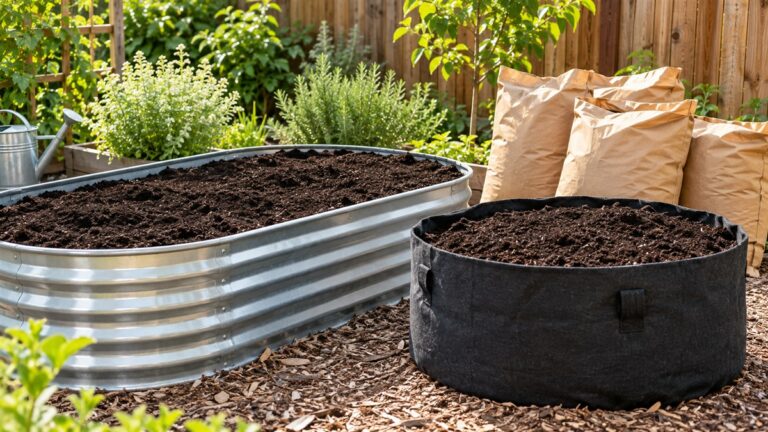
Most raised beds are filled with some type of compost and topsoil mixture, and the fill is new when it goes in. Illinois Extension notes that new fill has little soil structure at first.
The settling continues because of how the bed is used. North Carolina’s extension article says research shows that raised beds tend to settle and lose structure because of increased aeration and more frequent cropping. Illinois Extension sums it up: settling soil is simply a fact of raised bed gardening.
Cover crops can slow the process. Illinois Extension says that while cover crops will not halt settling, they slow it and build a vibrant growing medium. The article recommends sowing cover crops in the off-season, and it points readers to a separate off-season cover crop guide for the details.
The yearly top dressing
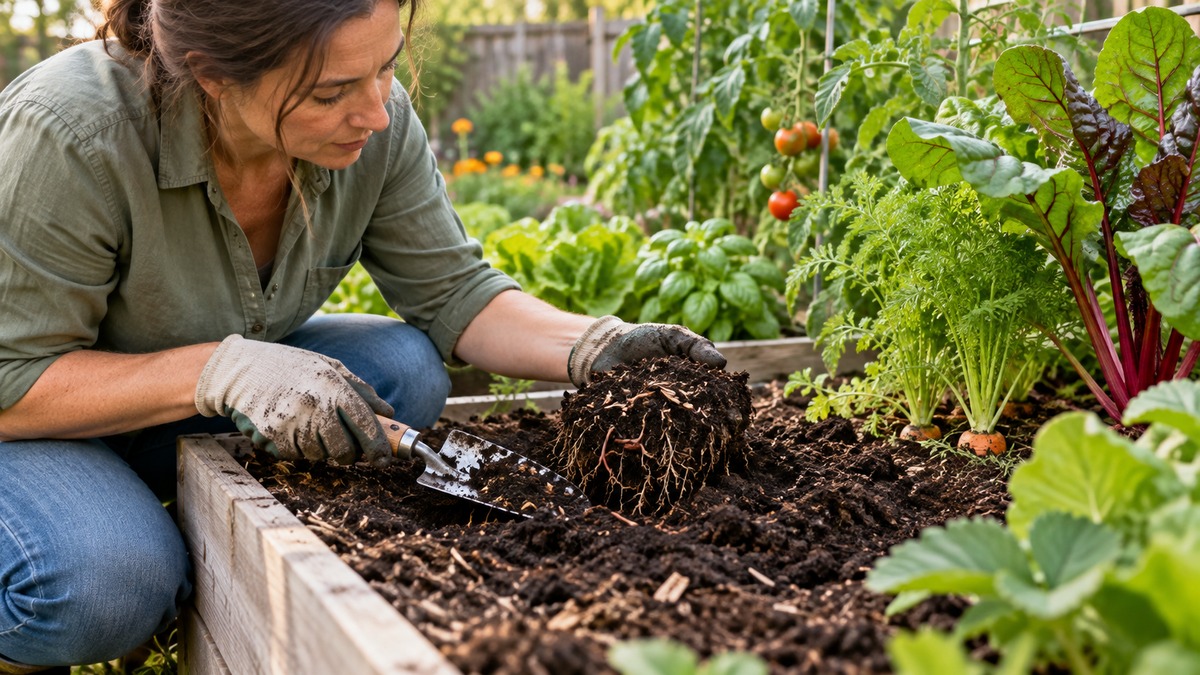
The routine the sources support is an annual top dressing. Illinois Extension says that eventually every gardener with a raised bed needs to refresh the soil to keep it productive, and that the easiest way to do this is an annual top dressing with a few inches of compost or rich topsoil. The same article says that topdressing each year should be enough to keep up with the settling soil level.
North Carolina’s extension page lists what to use as a top dressing: finished, weed-free compost, shredded leaves, aged manure that is not fresh, and fully finished compost from a home bin. It describes winter as a good time to replenish organic matter, so the top dressing can go on at the end of the season rather than in the middle of the growing year.
The King County Conservation District fact sheet offers a related method for the surface. Compost blends with a fine, soil-like texture are best for replenishing soil organic matter and nutrients, and the sheet suggests using them in a thin layer. Cover that layer with a coarse mulch, because highly composted, finely textured material is less effective at weed suppression on its own. This is a thin top layer, not a full swap, and it fits the same yearly routine.
When a top-up is not enough
Illinois Extension is candid that a yearly top-up does not solve everything. It says that occasionally a raised bed demands more significant attention to its soil structure. The article does not define when that point arrives, and it does not describe a full replacement interval.
North Carolina’s article points to three checks that show when a bed needs more than a surface top dressing. North Carolina’s article also says raised beds improve drainage, but winter rains can still cause issues. First, check that the bed frame is intact and the soil has not slumped. Second, if the soil has compacted, add compost or pine bark fines. Third, watch water after heavy rain: standing water for more than 24 hours indicates drainage issues. A bed with a sagging frame, compacted soil, or lingering standing water needs attention before you decide whether it needs more soil.
Colorado State University Extension offers a different option for compacted or clay-heavy soil. Certified weed-free straw is also a good organic source for clayey soils. After using it as a summer mulch for a few years, you can thoroughly work it into the soil as an amendment in the fall. That is a way to build organic matter over time rather than a replacement.
Test before you add anything
A test comes before the amendment. Utah State University Extension says that because soils vary in mineral and nutrient make-up, it is always best to have your garden soil tested to identify the fertilization additions the bed needs. The same point applies to a raised bed, because the fill and the native soil underneath can differ.
North Carolina’s article gives a timing for the test. Winter is the ideal time to submit soil samples, and lime benefits from several months in the soil. The article recommends applying lime well ahead of planting so it can adjust the pH. A test in late fall or early winter means you can act on the results before the spring rush.
The fill itself matters. Utah State University Extension says a raised bed can be filled with compost-enriched topsoil or with a soilless growing mix. It also warns that soilless mixes are typically expensive and may become nutrient deficient over time. If a bed uses a soilless mix, plan on more follow-up feeding than a compost-topsoil bed, and test the soil to see what it needs. For the fill side of the job, see our guide to filling raised beds and our how much soil a raised bed needs roundup.
What to add, and how much
Utah State University Extension says all soil types benefit from amendment. For native topsoil used as bed fill, the article recommends amending it with 30 to 50 percent, by volume, of well composted organic matter. That is a building rate for new fill, not an annual top-dress rate, so do not read it as the amount to add each year.
For the yearly top layer, Illinois Extension gives the working measure: a few inches of compost or high-quality topsoil. North Carolina’s list of top dressings gives the material choices, and aged manure is on that list only when it is not fresh. The King County fact sheet suggests keeping a compost layer thin when it sits on the surface, then covering it with coarse mulch.
Avoid tilling an established bed
Tilling has a place, but only at the start. Illinois Extension says tilling has its place in gardening but can be overdone. It recommends tilling new raised beds when needed to mix the different fill components. It also says tilling can help when a gardener needs to make significant amendments. Its clear warning is for an established bed: avoid tilling it, because tilling can destroy the developing soil structure of a raised bed.
The top dressing is the approach the sources point toward for an established bed. Spreading compost or topsoil over the surface adds material without tilling, which keeps the routine in line with the Illinois warning.
Mistakes that shorten the life of the soil
- Tilling an established bed. Illinois Extension warns that tilling can destroy the developing soil structure.
- Adding amendment without a test. Utah State University Extension says it is always best to test the soil before you identify the additions it needs.
- Using a soilless mix and then forgetting it. Utah State University Extension says soilless mixes may become nutrient deficient over time.
- Ignoring a sagging frame. North Carolina’s article says to check that the bed frame is intact and the soil has not slumped.
- Adding fresh manure. North Carolina’s list calls for aged manure that is not fresh.
- Leaving standing water unchecked. The article says standing water for more than 24 hours indicates drainage issues.
How we chose
The sources are a university extension news release, a Utah State University Extension fact sheet, a North Carolina county extension article, a conservation district fact sheet, and a Colorado State University Extension resource. Each one was fetched with curl on 2026-10-22, and its settling, top-dressing, tilling and testing sections were read before any sentence was used. Quoted lines were checked word for word against the fetched text. Retail pages, vendor pages and pages that returned errors were left out, and no product is named or recommended.
Dates matter. The Utah State fact sheet is dated February 2012, and the North Carolina article is dated November 18, 2025. Advice on fill volumes and test timing depends on the climate, so check your local extension office.
What we could not verify
The sources agree that settling is normal and that a yearly top dressing is the routine, but they do not agree on the amounts, and they do not give a replacement interval. The Utah State rate for native topsoil is a building rate. The Illinois figure of a few inches is a top-dress figure. Those are two different jobs, and the sources do not reconcile them.
What the sources do not say
The sources do not say how many years a raised bed can go before its soil needs replacing, and they do not describe a point at which a full swap is the right call. They do not say how much soil a settled bed loses in a given year. They do not give a cost for compost, topsoil or soilless mix. They do not compare the lifespan of compost-topsoil fill with soilless fill. Where a bed has an unknown history, the sources do not say how to read its test results. Plan those questions with your local extension office.
Frequently asked questions
Does a raised bed ever need all of its soil replaced?
The sources do not say. Illinois Extension describes occasional bigger attention to soil structure, but it does not define when that becomes a full replacement. The routine it describes is an annual top dressing. If a bed shows a sagging frame, compacted soil, or standing water for more than 24 hours, North Carolina’s article points to checks before any decision about more soil.
How much compost should go on top each year?
Illinois Extension says a few inches of compost or rich topsoil each year is the easiest way to keep up with settling. Colorado State University Extension and the King County fact sheet suggest that a compost layer on the surface can be thin, then covered with coarse mulch for weed suppression. The sources do not give a single figure for every bed, so match the layer to how much the bed has settled.
Is it okay to till an old raised bed?
The sources advise against it. Illinois Extension says to avoid tilling an established raised bed, because tilling can destroy the developing soil structure. Tilling is useful for new fill and for significant amendments, but a yearly top dressing is the routine for a bed that is already working.
Why does the soil in a raised bed sink?
Settling is normal. Illinois Extension says settling soil is simply a fact of raised bed gardening, and North Carolina’s article says research shows that raised beds tend to settle and lose structure because of increased aeration and more frequent cropping. New fill has little soil structure at first, so the early seasons can show the most settling.
When should the soil in a raised bed be tested?
Test before you add fertilizer or amendments. Utah State University Extension says it is always best to have the garden soil tested to identify the fertilization additions it needs. North Carolina’s article calls winter the ideal time to submit soil samples, and it says lime benefits from several months in the soil, so test in late fall or early winter if you plan to lime in spring.
Sources
- https://extension.illinois.edu/news-releases/refreshing-raised-bed-soil-generates-exceptional-results (opened 2026-10-22)
- https://extension.usu.edu/yardandgarden/research/raised-bed-gardening.pdf (opened 2026-10-22)
- https://wilkes.ces.ncsu.edu/2025/11/winterizing-your-raised-garden-beds/ (opened 2026-10-22)
- https://cob.org/wp-content/uploads/Manage-Weeds-Naturally-Mulch-Booklet-Digital.pdf?pdftype=e (opened 2026-10-22)
- https://extension.colostate.edu/resource/mulches-for-the-vegetable-garden/ (opened 2026-10-22)