Best DIY Herb Planters: Kits, Beds and Tiers Compared
As an Amazon Associate we earn from qualifying purchases. Details
Updated 20 October 2026 | Author: Ken
If you are looking for the best DIY herb planters, read the word DIY carefully. Most of the 12 listings we read are kits and ready-made beds that you assemble, fill and maintain yourself, not build-it-yourself plans. Six are used as cards below, and the rest are named at the end with the reason they were left out.
Quick answer
- For a kit you can assemble in an afternoon, choose a galvanized bed with an open base. The Land Guard two-pack lists a 4 by 2 by 1 foot size and an open bottom for drainage.
- For a bed you set up without tools, look at the felt design. The PPNUTSHING listing says it sets up in five minutes or less, but its food-safety claims are not covered by the sources we opened.
- For a tower that uses little ground space, choose a stacked tier. The OYEAL four-tier planter lists an overall size of 16.8 by 18.3 by 41.5 inches, and the smart spring tower lists soil capacities for two sizes.
- Check the capacity figure against the size. The Land Guard bed lists 54 gallons, while its stated size works out to about 60 gallons.
What DIY means in this set
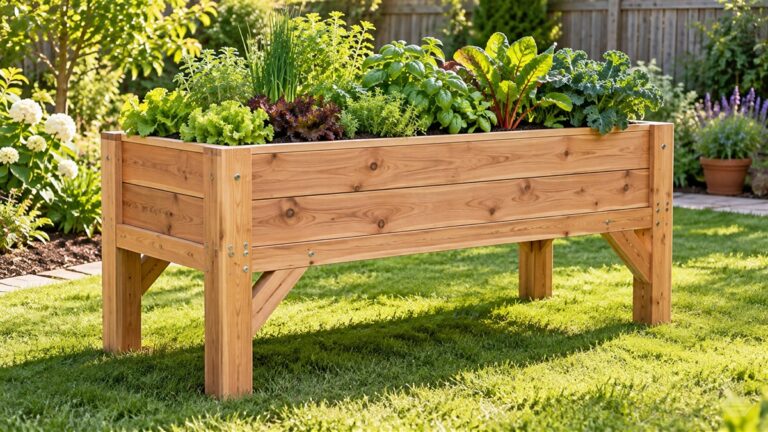
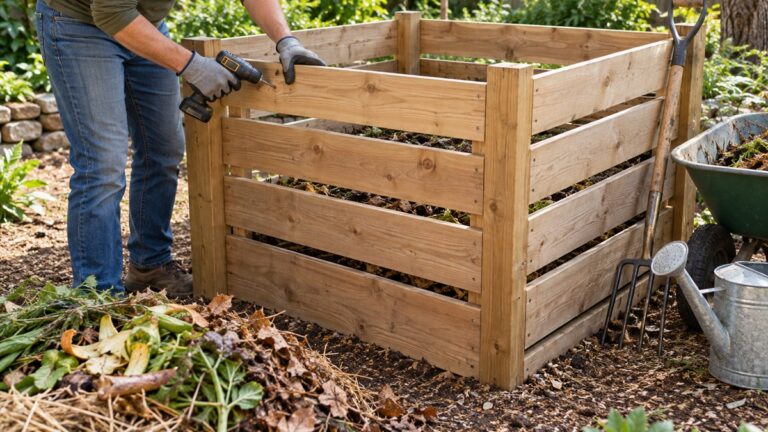
The UMD raised bed article says that raised beds can be custom-built or purchased as a kit to assemble. That is the split that matters for this set. A custom build starts with wood or metal and a cutting list. A kit starts with pre-cut panels and a set of nuts, bolts and washers. Most listings here are kits, and the rest are finished products with minimal assembly.
A kit gives you three things a finished bed does not. You choose the size from the listing, you choose the material from the listing, and you decide how the bed sits on the ground. A kit also gives you one thing a finished bed does not: the parts have to fit together. The listings describe assembly with the included hardware, the installation time or the tools supplied. The Land Guard listing includes nuts, bolts, washers and instructions. The PPNUTSHING listing includes a step-by-step guide and an installation video. Read the assembly details before you choose, because a kit that needs a drill or a screwdriver you do not own is a different job.
Materials you may choose yourself
The UMD safety page on raised bed materials lists decay-resistant woods such as cedar, black cherry, oak, black locust, Osage orange and redwood. It also says CCA-treated wood is no longer available for residential use as of 2004. If you use treated lumber, the same page says you can paint or stain the wood, use a heavy plastic liner between the wood and the soil, or use a non-wood building material such as stone or brick.
The Iowa State raised bed article makes a related point. Treated wood can be used, but the inside may need a lining of woven geotextile fabric. The fabric lets water drain through while keeping the soil and roots from taking in the chemicals. That is useful background for a wood bed you build yourself, and it does not describe any of the metal, felt or plastic products in this set.
None of the listings here is a wood bed built from a plan. The metal, felt and plastic products state materials that the sources we opened do not cover. The galvanized steel beds say rust-resistant or galvanized. The PPNUTSHING bed says food-grade felt and BPA-free materials. The OYEAL tower says metal and plastic. Those are listing claims, and this guide does not confirm them.
Size and soil: the numbers
The table uses the stated sizes in the listings. Outer volume is length times width times height, and it is larger than the soil the bed holds, because walls and bottoms take up space. Even so, the stated capacity should be close to the outer volume if the figures are consistent.
| Listing | Stated size | Stated capacity | Outer volume, worked out | What it tells you |
|---|---|---|---|---|
| Land Guard, two-pack galvanized | 4 x 2 x 1 ft per bed | 54 gallons | 4 x 2 x 1 = 8 cubic feet, or about 59.8 gallons | The stated capacity is about 6 gallons below the outer size |
| PPNUTSHING, felt with PVC frame | 2.2 x 2.2 x 1 ft | 137 liters | 2.2 x 2.2 x 1 = 4.84 cubic feet, or about 137 liters | The two figures agree |
| ProGard, galvanized with legs | 24 x 11 x 18 in | 20 liters | 24 x 11 x 18 = 4,752 cubic inches, or about 78 liters | The stated capacity is far below the outer size |
| OYEAL, four-tier stack | 16.8 x 7.02 x 5.5 in per tier | Not stated | 16.8 x 7.02 x 5.5 = 648.6 cubic inches, or about 0.38 cubic feet per tier | Each tier is small, and the four-tier total is not stated |
| smart spring, four-tier tower | Small and large sizes | 19.2 quarts (small), 51.2 quarts (large) | 19.2 / 29.92 = 0.64 cubic feet; 51.2 / 29.92 = 1.71 cubic feet | Soil volumes are given, not outer sizes |
The Land Guard two-pack is the closest to a clean match. Four feet by two feet by one foot is 8 cubic feet. At 7.48 gallons per cubic foot, that is 8 times 7.48 = 59.8 gallons. The listing says 54 gallons, which is a small gap. A gap of this size can come from wall thickness or from how the listing measures the bed, and the listing does not say which.
The ProGard gap is larger. The outer size of 24 by 11 by 18 inches is 4,752 cubic inches, which is 2.75 cubic feet or about 78 liters. The listing says 20 liters. That is about a quarter of the outer volume, and the listing does not explain it. For a herb planter, that matters if you plan to fill it to the top with a potting mix.
The smart spring tower gives soil volume directly. Its small size holds 19.2 quarts, which is about 0.64 cubic feet, and its large size holds 51.2 quarts, about 1.71 cubic feet. The two figures are the soil the tower takes, not its outer size, so they are the more useful numbers for a herb plan.
Drainage and the open base
Drainage is where the DIY choice matters most. The University of Maryland container page says all containers need adequate holes or slits so that excess water drains, which keeps roots from drowning and rotting. A bed that sits on the ground with an open base has no container bottom to block water, but the same point still applies to any bed with a closed base.
The Land Guard listing describes an open bottom that sits on the ground, which the listing says helps drainage and keeps weeds away from the soil. The sources we opened do not cover weed control for metal beds, so treat that as a listing claim. The OYEAL tower and the ETELI two-tier bed both describe drain holes and removable bottom trays. The ProGard bed describes a bottom plate with two diagonal cross funnel openings. The Illinois Extension page on container drainage says a layer of gravel at the bottom of a pot does not improve drainage, so a tray or a set of holes does the job that a gravel layer does not.
The Illinois page also warns about saucers that cannot be emptied. For a tiered tower on a patio, that is the detail to check: a tray that stays full holds water against the roots. Empty the tray after rain, and keep the holes clear.
The Iowa State potting media article says taller containers are generally easier to keep drained than shorter ones, and that shallow containers are a common choice for drainage but are generally not the best option when excellent drainage matters. That matters for a tier of 5.5 inches, such as the OYEAL planter boxes. A tier this shallow limits the soil you can put in it, so it suits smaller herbs more than a plant with a deep root system.
Herb-specific choices
For culinary herbs such as basil, parsley and chives, a stacked tower gives you separate tiers for separate plants, which is the main benefit the OYEAL and ETELI listings describe. A tower also lets you move herbs into the sun and out of wind, if you can lift the tier. The OYEAL listing gives an item weight of 7.3 pounds in one field and 6.78 pounds in another, which is a small difference but one to check if you plan to move it.
For a bed that holds a bigger herb plant, a galvanized bed of 4 by 2 by 1 feet gives more room in one place. The Land Guard two-pack and the PPNUTSHING felt bed both give that footprint. The felt bed is lighter, and the listing describes a PVC frame that keeps the bed upright. The galvanized bed is heavier to move, but its listing describes an open bottom and an anti-rust zinc layer.
For a small porch, the ProGard bed gives a 24-inch length in a compact footprint. The listing says it is suitable for porch, patio, balcony and deck. Its capacity figure of 20 liters is far below its outer size, so if you plan to fill it to the top, read the capacity as a planning limit until you can check it.
The smart spring tower is the only item in this set that lists soil volumes for two sizes. The listing describes self-watering tiers and says water added at the top reaches the bottom tiers. It also says the tower is made in the United States and works indoors with a tray, which is not included, or outdoors. The sources we opened do not cover self-watering designs, so the self-watering claim is a listing claim here.
Five checks before you buy
- Decide the material. Galvanized steel, felt with a PVC frame and plastic tiers behave differently in sun, wind and weight. The sources we opened do not compare them, so the choice is yours.
- Check the assembly tools. The Land Guard kit comes with nuts, bolts, washers and instructions, and the PPNUTSHING bed comes with a guide and a video. Confirm what you need before you start.
- Measure the space. A four-by-two bed needs a 48 by 24 inch footprint. Stacked towers need less floor but more height.
- Look for the drain holes and the tray. Check that each hole is open and that each tray can be emptied.
- Compare soil volumes, not just outer sizes. Where a listing gives a soil volume, use it. Where it gives only an outer size, use the outer size as an upper limit.
Mistakes to avoid
- Treating a kit as a finished planter. The listings describe assembly with included parts. Plan the time and the tools.
- Using the outer size as the soil volume. The ProGard listing gives 20 liters for an outer size of about 78 liters, and the listing does not explain why.
- Adding gravel for drainage. The Illinois page says it does not improve drainage.
- Leaving the tray full. The Illinois page warns about trays that cannot be emptied.
- Assuming a shallow tier suits every herb. The Iowa State potting media article says shallow containers are a weaker choice when excellent drainage matters.
1. Land Guard 2 Pack 4×2×1ft Galvanized Raised Garden Bed Outdoor, Heavy Duty Bottomless Metal Raised (Galvanized kit with an open base)
Specs from the listing (checked ):
- Material: Galvanized Metal
- Item Dimensions D x W x H: 48″D x 24″W x 12″H
Pros
- The listing gives a size of 4 by 2 by 1 feet and a set of two beds
- The listing describes an open bottom that sits on the ground and helps drainage
Cons
- The listing gives 54 gallons of capacity, about 6 gallons less than 4 by 2 by 1 feet works out to
Best for: a first herb bed that you assemble yourself with the included nuts, bolts and washers
Skip if: you want a planter that arrives fully assembled
View on Amazon (affiliate link)
2. Breathable Felt Raised Garden Bed with PVC Frame, Heavy-Duty Square Planter Box for Vegetables (Felt bed with a PVC frame)
Specs from the listing (checked ):
- Capacity: 137 liters
- Size: 2.2*2.2*1FT
Pros
- The listing says the bed sets up without tools, with a step-by-step guide and an installation video
- The listing describes a reinforced PVC frame that keeps the felt bed upright
Cons
- The listing says the felt and PVC are food-grade and BPA-free, which the sources we opened do not cover
Best for: a patio or balcony herb bed you want to set up quickly, without tools
Skip if: you want a rigid metal or wood bed, since the listing describes a felt bed with a frame
View on Amazon (affiliate link)
3. OYEAL Raised Garden Bed 4 Tier Vertical Garden Planters Indoor Outdoor Raised Planter Box with Legs (Four-tier stack for herbs)
Specs from the listing (checked ):
- Item Dimensions D x W x H: 16.8″D x 18.3″W x 41.5″H
- Number of Levels: 4
Pros
- The listing gives each planter box as 16.8 by 7.02 by 5.5 inches, one box per tier
- The listing says each plastic planter bin has drainage holes and a removable bottom tray
Cons
- The listing gives two different item weights, 6.78 pounds in one field and 7.3 pounds in another
Best for: a small balcony or patio stack where each herb has its own tier
Skip if: you need a single deep bed, since each tier is a separate box 5.5 inches tall
View on Amazon (affiliate link)
4. Raised Garden Beds with Legs Vertical Herb Garden Planter Indoor Outdoor (Two-tier bed with a trellis)
Specs from the listing (checked ):
- Item Dimensions D x W x H: 7.2″D x 35.1″W x 32.4″H
- Item Weight: 10.4 pounds
Pros
- The listing gives an overall size of 7.2 by 35.1 by 32.4 inches with two tiers
- The listing says removable bottom trays help drainage
Cons
- The listing gives only the overall depth of 7.2 inches, with no soil depth for each tier
Best for: herbs and small climbing plants on a patio, where the metal fence panels give support
Skip if: you need a bed at least 16 inches deep, since the listing gives 7.2 inches overall
View on Amazon (affiliate link)
5. Raised Garden Bed, Garden Raised Planter Box with Legs, Galvanized Garden Planter for Herbs (Compact galvanized box with legs)
Specs from the listing (checked ):
- Item Dimensions D x W x H: 11″D x 24″W x 18″H
- Capacity: 20 liters
Pros
- The listing gives a size of 24 by 11 by 18 inches and a weight of 4 pounds
- The listing describes a bottom plate with two diagonal cross funnel openings for drainage
Cons
- The listing gives 20 liters of capacity, while the outer size works out to about 78 liters
Best for: a compact herb bed for a porch, patio, balcony or deck with little floor space
Skip if: you need the capacity figure to match the outer size, since the listing does not explain the gap
View on Amazon (affiliate link)
6. Vertical Garden Planter 4 Tier Stackable System 16 Plants, Space Saving Herb, Strawberry & Food (Four-tier self-watering tower)
Specs from the listing (checked ):
- Material: Plastic
- Special Feature: Self Watering
Pros
- The listing gives soil capacities of 19.2 quarts for the small size and 51.2 quarts for the large size
- The listing says water added at the top reaches the bottom tiers and that it is made in the United States
Cons
- The listing says the indoor tray is not included, so indoor use needs a tray you buy separately
Best for: a balcony or patio herb tower you want to fill with soil and water from the top
Skip if: you need the tier depth stated, since the listing gives soil volumes only
View on Amazon (affiliate link)
Listings without a card: The Gartist two-pack of galvanized beds, which is the same 4 by 2 by 1 foot oval size as the Land Guard two-pack, so it is not carded twice. The Nedenyou two-piece bed, which lists an 8 by 2 by 1 foot size and describes the metal as both stainless steel and galvanized, so the listing is not consistent on the material and we did not use it. The Land Guard three-pack in 6 by 3 by 1 feet, which is a large bed at 18 cubic feet and suits a bigger garden than an herb planter. The Winpull oval bed in 6 by 3 by 1 feet, which lists 453.6 liters, about 16 cubic feet, against the 18 cubic feet its title size would give. The OurWarm set of three windowsill herb boxes, which the listing describes with a title only and no stated size or capacity, so it is not carded. The BIVODA black HDPE bed, which appears as a pick in the elevated planters guide.
How we chose
We read the title, the bullets and the stated specifications for all 12 listings in the research pool, which was checked on 20 October 2026. The criteria were that the product had to be a planter that a home gardener can buy and set up for herbs, the listing had to state a size, drainage holes or a tray had to be stated, and the figures had to be enough to cross-check against the others.
Six listings became cards, and each card has a reason from its own listing: the size, the open base, the number of tiers, the soil volume or the assembly. Six listings were not used. The Gartist bed is the same size as a carded bed. The Land Guard three-pack and the Winpull bed are large beds for a bigger garden, and the Winpull capacity does not match its size. The Nedenyou listing gives conflicting material claims. The OurWarm set has only a title, and it overlaps with our self-watering window box guide. The BIVODA bed is carded in the elevated planters guide.
We did not use any sales or feedback signal. The order of the cards is the order in which they appear in the research pool.
What we could not verify
- Food safety for edible herbs. The PPNUTSHING listing says its felt and PVC are food-grade and BPA-free. The sources we opened do not cover felt or PVC for edible plants, so this guide does not confirm that claim.
- Metal beds and herbs. The sources we opened do not cover galvanized steel or other metal beds for food plants. We make no claim beyond the listing.
- Durability of any material. The sources we opened do not confirm rust resistance, UV resistance or fade resistance for these materials.
- Soil depth for the kits. Most kit listings give a height or an overall depth, not a soil depth for each bed.
- Assembly time. The Land Guard listing gives no assembly time. Plan from the parts list and the instructions, not from an estimate.
- The capacity gaps. We could not explain the Land Guard, ProGard and Winpull gaps from the listing text.
FAQ
Is a DIY herb planter the same as a planter kit?
Not always. A DIY planter can be a bed you build from wood or metal, or a kit of pre-cut parts that you assemble. Most listings in this set are kits or finished products that need assembly. The UMD raised bed page describes both options, so the choice is between building from a plan and assembling from a kit.
How big should a DIY herb bed be?
Choose the size from the stated footprint and the stated depth, not the height. The Land Guard bed is 4 by 2 by 1 feet, which is 8 cubic feet of outer volume, and the listing gives 54 gallons. The UMD raised bed page says a bed should be planned around its dimensions and configuration, because the structure is relatively permanent.
Do DIY herb planters need drainage holes?
Yes. The University of Maryland container page says all containers need adequate holes or slits so that excess water can drain. An open base on a metal bed gives drainage at the bottom, but check that the bed sits on soil that drains, and that any tray under a tower can be emptied.
Is gravel needed in the bottom of a herb planter?
No. The Illinois Extension page says a layer of gravel does not improve drainage in a container, and the University of Maryland container page says rocks, gravel or broken pot shards do not improve drainage. Use holes, an open base or a tray that you can empty.
How often should a herb planter be watered?
Check the soil by hand. The Iowa State container page says to water when the potting mix is dry about 1 to 2 inches down, to keep watering until it runs out of the drainage holes, and to expect containers to need more frequent watering than garden beds. Shallow tiers and small planters will usually need checking more often than a deep bed.
Bottom line
For a DIY herb planter, buy the kit whose size, assembly and drainage suit your space, and check the capacity figure against the outer size before you plan the soil. Use a tower when space is tight and a bed when you need room in one place. Where the listing does not state a soil volume, use the outer size as a ceiling, not a target.
If you are planning a bed in the ground rather than a kit, read our guide to how to fill raised beds and our guide to how much soil a raised bed garden needs. For the plant side, see the easiest vegetables to grow in raised beds.
Sources
- University of Maryland Extension, “Growing Vegetables in Raised Beds” (updated March 26, 2026), opened 2026-10-20. https://extension.umd.edu/resource/growing-vegetables-raised-beds
- University of Maryland Extension, “The Safety of Materials Used for Building Raised Beds”, opened 2026-10-20. https://extension.umd.edu/resource/safety-materials-used-building-raised-beds
- Iowa State University Extension and Outreach, “Creating Raised Bed Planters”, opened 2026-10-20. https://yardandgarden.extension.iastate.edu/how-to/creating-raised-bed-planters
- University of Maryland Extension, “Growing Vegetables in Containers and Salad Tables”, opened 2026-10-20. https://extension.umd.edu/resource/growing-vegetables-containers-and-salad-tables
- Illinois Extension, “Container Drainage Options” (Container Gardens), opened 2026-10-20. https://extension.illinois.edu/container-gardens/container-drainage-options
- Iowa State University Extension and Outreach, “Potting Media: Components and Handling” (March 2025), opened 2026-10-20. https://yardandgarden.extension.iastate.edu/article/2025/03/potting-media-components-and-handling