Best Compost Bin for Small Garden: Four Picks That Fit
As an Amazon Associate we earn from qualifying purchases. Details
The best compost bin for a small garden is the one whose footprint fits your spot and whose volume matches what you add each week. This guide helps you choose between in-ground worm bins, a rigid outdoor bin and a set of fabric bags. The EPA notes that you can compost at home with kitchen food scraps and dry leaves or woody yard material, so the choice mostly comes down to size, setup and volume. Four choices below cover two in-ground bins, a rigid bin and a bag set, with the dimensions and capacities each listing states. A worked example shows how quickly a bin can fill, and a short list covers common mistakes.
Quick answer
For most small gardens, start with an in-ground worm bin if you mainly add kitchen scraps. The top choice’s listing gives a size of 9.5 inches by 9.5 inches by 10.8 inches, which keeps the footprint small. Choose the rigid bin if you have room for a larger base and want a bottom door to remove finished compost. Its listing gives 80 gallons and a base of 23.89 by 23.81 inches. Choose the fabric bag set if you want something that folds away when not in use. Match the volume to what you actually add each week, because listed capacity is an upper limit. The best compost bin for small garden space is the one whose footprint fits and whose volume matches your waste.
Why a compost bin is worth the space
The EPA notes that you can compost at home using food scraps from your kitchen and dry leaves and woody material from your yard. Composting also reduces the volume of leaves, grass clippings, yard trim and food scraps that might otherwise go to landfills or trash incinerators. The EPA says the result is a soil amendment that can reduce fertilizer and pesticide use. Compost helps soil absorb and hold water better, which can reduce erosion and flooding in heavy rains and help soil retain water during droughts. For a small garden, a bin is a practical way to handle a steady stream of scraps and leaves, and the finished material goes back into the soil.
How to choose a compost bin for a small garden
Four factors change the answer for a small garden: footprint, volume, burial and material. Each one can be checked against the listing before you buy.
Footprint and height
Measure the spot first. The rigid bin’s base is 23.89 by 23.81 inches, and it stands 32.48 inches tall. The top choice is 9.5 by 9.5 inches at the base and 10.8 inches tall. The second choice is 10.24 inches tall, but one of its bullets gives a footprint of 4.33 square inches that does not match its 4.33 by 4.33 inch dimensions, so rely on neither footprint figure for that bin.
Volume against what you add
Listed capacity is a maximum, not usable fill. The rigid bin lists 80 gallons, and the bag set lists 34 gallons per bag in a two-pack. The top choice lists 8 liters per bin. The second choice lists 6.4 ounces, which suits a few scraps rather than a season of leaves. Compare each figure with your own weekly total before you buy.
Burial or above ground
Two choices are in-ground bins, and their listings say to dig a hole and bury the bin in soil. The top choice’s listing says no complex assembly is required. The rigid bin’s listing says assembly takes 5 minutes, and the bag set needs no tools. If you do not want to dig, skip the two in-ground choices and choose one of the other two.
Material, lid and airflow
The rigid bin is polypropylene with a top lid and a bottom door, and its listing describes four-sided ventilation. The top choice is also polypropylene, with a removable lid and 360-degree ventilation holes. The second choice is PVC, with a breathable valve and a safety lock cover. The bag set is breathable polyethylene with openings at the top and bottom. Choice the material that fits how you want to handle the pile.
1. 2-Pack Inground Worm Composter, Outdoor Worm Compost Bin for Garden Beds & Home Use (Best for a few scraps in a garden bed)
Specs from the listing (checked 2026-10-11):
- Capacity: 8 liters
- Product Dimensions: 9.5″L x 9.5″W x 10.8″H
- Item Weight: 1.13 kg
- Material: Polypropylene (PP)
Pros
- Listing gives 8 liters per bin
- Lid is removable and vented
- Listing says no complex assembly
- Two bins in the pack
Cons
- Package does not contain earthworms
- Listing says 2-3 months to compost
- 8 liters is small for leaves
Best for: A few kitchen scraps and a spot in the garden bed
Skip if: You want a bin above ground or a larger volume of leaves
View on Amazon (affiliate link)
2. Underground Worm Farm, Garden Mini vermicomposting bin for use in Outdoor Gardening from Kitchen (Best for a very small amount of scraps)
Specs from the listing (checked 2026-10-11):
- Capacity: 6.4 ounces
- Item Dimensions L x W x H: 4.33″L x 4.33″W x 10.24″H
- Material: PVC
Pros
- Listing gives a height of 10.24 inches
- Lid has a breathable valve
- Safety lock cover keeps rainwater out
- Easy to dig and bury
Cons
- Capacity is only 6.4 ounces
- Footprint figures conflict in the listing
- Listing does not say worms are included
Best for: A very small amount of scraps in an in-ground spot
Skip if: You add a lot of scraps or leaves each week
View on Amazon (affiliate link)
3. VEVOR Garden Compost Bin 80 Gal, BPA Free Composter, Large Capacity Outdoor Composting Bin with Top (Best for a larger base and a bottom door)
Specs from the listing (checked 2026-10-11):
- Capacity: 80 gallons
- Product Dimensions: 23.89″L x 23.81″W x 32.48″H
- Item Weight: 13.9 pounds
- Material: Polypropylene (PP)
Pros
- Listing gives 80 gallons of capacity
- Bottom pull-out door for removing compost
- Listing states four-sided ventilation listed
- Listing says five-minute assembly
Cons
- Largest footprint of the four choices
- Listing gives a 32.48-inch height
- Item weight is 13.9 pounds
Best for: A yard corner with room for a larger base
Skip if: Your garden has no room for a 23.89 by 23.81 inch base
View on Amazon (affiliate link)
4. Ideal Swan 2 Pack Outdoor Compost Bin Bags, 34 Gallon Collapsible Composter (Best for folding storage and leaves)
Specs from the listing (checked 2026-10-11):
- Capacity: 34 gallons
- Item Dimensions L x W x H: 17.7″L x 17.7″W x 31.5″H
- Number of Packs: 2
Pros
- Two bags listed at 34 gallons each
- Viewing window shows breakdown progress
- Openings at top and bottom
- No tools needed for setup
Cons
- Fabric bag rather than rigid walled bin
- Listing says keep soil off the strip
- Listing does not state a weight limit
Best for: Leaves, scraps and yard waste that need folding storage
Skip if: You want a rigid walled bin
View on Amazon (affiliate link)
The choices in more detail
Top choice: an in-ground worm composter for a few scraps
The top choice is a two-pack of green, polypropylene in-ground worm composters. Each bin is listed at 8 liters and measures 9.5 inches by 9.5 inches by 10.8 inches. The listing gives an item weight of 1.13 kg for the set. The listing says you can bury the bin in soil or a garden bed, add kitchen scraps, paper and leaves, and expect the contents to become compost in 2-3 months.
The lid is removable, and the 360-degree ventilation holes are meant to keep the bin well aerated. The listing says no complex assembly is required, so setup is mostly a matter of digging a hole. It also states that the package does not contain earthworms, so you need to add worms yourself.
It suits a small garden where you want a bin set into the soil and only a few scraps each week. Skip it if you want a bin that stands above ground, or if you add a large volume of leaves, since 8 liters is small for that job.
Second choice: a small underground bin with a breathable valve
The second choice is a small underground vermicomposting bin in white PVC. Its listing gives a height of 10.24 inches and a capacity of 6.4 ounces, which makes it the smallest unit in this set. The lid has a breathable valve, and the listing describes multiple 360-degree inlets for airflow. A safety lock cover is said to let gas escape while keeping rainwater out.
The listing says to dig a hole in the garden and bury the bin. One bullet gives a footprint of 4.33 square inches that does not match the 4.33 by 4.33 inch dimensions, so rely on neither footprint number. The listing does not say whether worms are included.
It suits a tiny area or a few scraps each week, and it suits someone who wants an in-ground bin with a locking cover. Skip it if you add a lot of scraps or leaves, because 6.4 ounces is small. Skip it also if you want worms included, since the listing does not say they are.
Third choice: an 80-gallon rigid bin with a bottom door
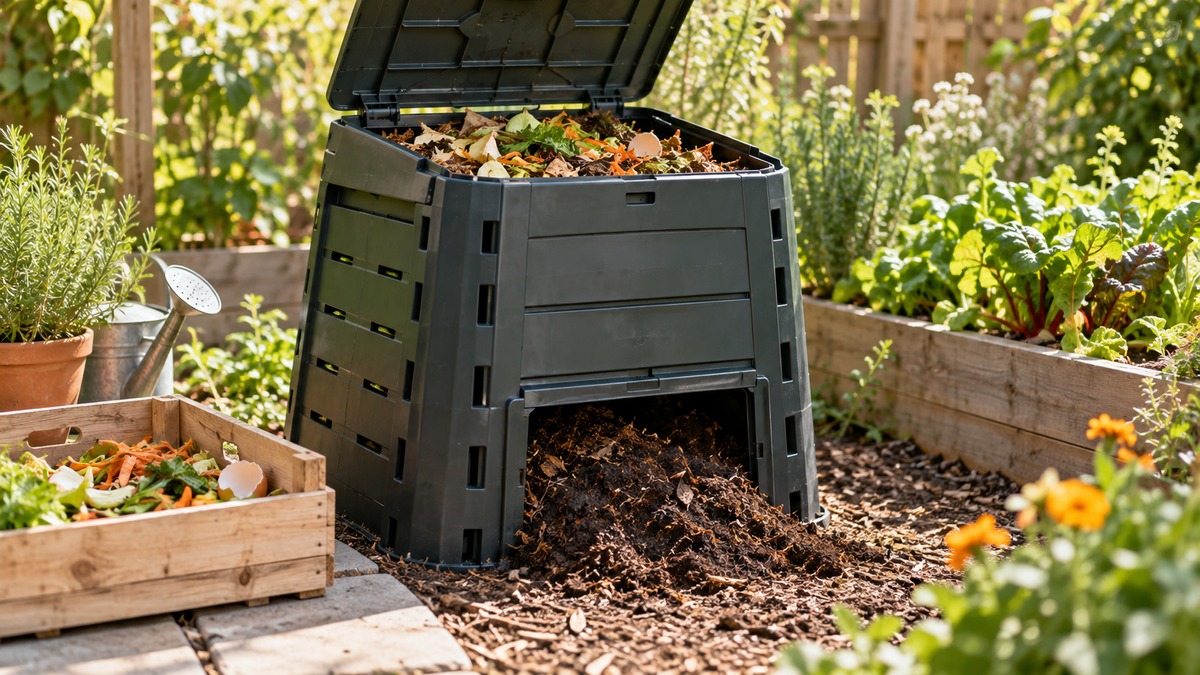
The third choice is a black, polypropylene rectangular bin listed at 80 gallons. Its base is 23.89 inches long and 23.81 inches wide, and it stands 32.48 inches tall. Among these four choices it has the largest footprint, and its item weight is 13.9 pounds.
The listing describes four-sided ventilation, a top lid that opens with one hand, and a bottom pull-out door. It also says the bin is UV-resistant and BPA free, and that the black plastic retains heat and regulates water. Assembly is listed at 5 minutes. The bottom door is the feature to use when you remove finished compost.
It suits a corner of the yard with room for a larger base, especially if you want a big volume and a bottom door. Skip it if you have no room for a 23.89 by 23.81 inch base, or if your garden is too small for a bin that stands 32.48 inches tall.
Fourth choice: a two-pack of fabric bags with a viewing window
The fourth choice is a two-pack of green fabric bags, each rated 34 gallons (127 L). Each bag measures 17.7 inches by 17.7 inches by 31.5 inches. The listing describes a breathable polyethylene material, a viewing window to check breakdown, and two openings, one at the top and one at the bottom, for checking progress and removing compost.
Setup needs no tools, so you unfold each bag and start filling. The listing says the bags are lightweight yet sturdy, and that they can be moved or stored when not in use. Two bags give you two places to fill at once, which helps if you add leaves in season and scraps all year.
It suits a small garden where you want folding storage for leaves and scraps, and it suits anyone who wants to see inside. Skip it if you want a rigid, walled bin, since these are fabric. Be careful when you remove compost: the listing asks you to keep soil off the self-adhesive strip.
The four choices side by side
| Choice | Type | Listed size (inches) | Capacity | Setup |
|---|---|---|---|---|
| First | In-ground worm composter, two-pack | 9.5 x 9.5 x 10.8 | 8 liters each | Bury; no complex assembly |
| Second | Underground vermicomposting bin | Height 10.24; footprint conflicts | 6.4 ounces | Dig a hole and bury |
| Third | Rigid outdoor bin | 23.89 x 23.81 x 32.48 | 80 gallons | Listing says 5 minutes |
| Fourth | Fabric bag, two-pack | 17.7 x 17.7 x 31.5 | 34 gallons each | No tools |
Buying scenarios
A few scraps each week in a tiny spot
Choice the first or second choice and bury it in soil. Plan to add worms separately for the top choice, because its package does not include earthworms.
Room for a larger base
Use the third choice if you have space for a 23.89 by 23.81 inch base. Its bottom door is the feature for removing finished compost, and its volume suits steady additions of leaves and scraps.
Leaves and yard waste in quantity
Use the fourth choice when you need folding storage for leaves and garden waste. Check the pile through the viewing window, and use the top or bottom opening to reach the compost.
That is 5 gallons a week (2 + 3 = 5). These are setup numbers, not measured amounts.
Step 1: Third choice. Step 2: Fourth choice, two bags. 2 bags × 34 gallons = 68 gallons. Step 3: Fourth choice, two bags. Step 4: Difference.
Check: 5 × 16 = 80, and 5 × 13.6 = 68. The two bags fill about 2.4 weeks sooner than the rigid bin, but they hold less in total. Listed capacity is an upper limit, not usable fill, so treat both times as the longest they could take, not as a schedule.
Common mistakes
- Treating listed capacity as usable fill. The rigid bin’s 80 gallons is a maximum, so plan your fill time with a margin.
- Expecting worms in the top choice. Its package does not contain earthworms, so plan to add them separately.
- Adding only kitchen scraps. The EPA says home composting works with kitchen food scraps plus dry leaves and woody yard material, so mix wet and dry materials.
- Choosing the largest base for a small garden. The third choice’s 23.89 by 23.81 inch base is the largest of the four, so measure the spot before you order.
- Letting soil touch the adhesive strip on the bag set. The listing asks you to keep soil off the self-adhesive strip when you remove compost.
Related buying guides
Read more: Best Compost Bin for Kitchen Counter.
Read more: Best Stainless Steel Compost Bin for Kitchen Countertop.
Read more: Best Compost Bin Diy Trash Can.
FAQ
How big a compost bin does a small garden need?
Start with how much you add each week and how much room the spot has. The worked example shows the arithmetic. The footprints in this set range from 9.5 by 9.5 inches to 23.89 by 23.81 inches.
Can I compost only kitchen scraps?
Not on their own. The EPA says home composting works with food scraps from the kitchen plus dry leaves and woody material from the yard, so add dry material along with wet scraps.
Do worm bins need worms added?
Yes, for the top choice, because its listing says earthworms are not included. The second choice’s listing does not say whether worms are included, so check the product page before you buy.
Are these bins BPA free?
The third choice’s listing says it is BPA free. The other listings in this set do not make that claim in their text, so check each product page if that matters to you.
Can I bury a bin in a garden bed?
Yes, for the first two choices. Both listings describe digging a hole and burying the bin, and the top choice’s listing mentions a garden bed directly.
What should I avoid when removing finished compost from the bags?
Avoid letting soil touch the self-adhesive strip on the fourth choice, as its listing advises.
How long will one bin take to fill?
It depends on your weekly total.
Bottom line
Choose the top choice for a few scraps in a spot in the soil, and the second choice for a very small amount of scraps. Choose the third choice if you have room for its base and want a bottom door, and the fourth choice if you need folding storage for leaves. Measure your spot and estimate your weekly total before you buy, since listed capacity is only an upper limit. If you already have a bin with enough volume and an opening to remove compost, you may not need another one.
SOURCES:
- EPA: Composting at Home: home composting with kitchen scraps and yard material, reduced waste volume, and soil benefits
Sources
- www.epa.gov: You can compost at home using food scraps from your kitchen and dry leaves and woody mater
- www.epa.gov: Composting reduces the volume of materials (leaves, grass clippings, yard trim, food scrap