How to Make Suet for Birds
As an Amazon Associate we earn from qualifying purchases.
Knowing how to make suet for birds starts with the fat. Suet is a solid cake of animal fat, usually beef, mixed with seed, nuts or dried fruit, and it gives woodpeckers, chickadees, nuthatches and titmice a rich winter food. Making it at home takes little more than mixing, freezing and hanging, although the sources differ on the recipe, especially on flour.
Each point in this guide comes from one of seven extension pages we opened on October 22, 2026. Penn State, the University of New Hampshire, the University of Illinois and Michigan State University Extension all give suet advice, and where they differ, we show the difference.
Quick answer
- Use beef kidney fat or beef fat trimmings from a butcher, and leave out bacon, cured fat and added salt.
- Mix peanut butter, shortening, cornmeal and optional nuts or dried fruit, then freeze the mixture and cut it to size.
- Hang suet in a mesh bag or wire cage within 10 feet of protective cover, and keep it out of direct summer sun.
- Avoid raw beef fat in summer, check for spoilage often, and wash feeders monthly.
What suet is and which birds eat it
Penn State Extension describes suet as a high-quality animal fat that is highly sought after in winter. It is particularly attractive to woodpeckers, chickadees, nuthatches and titmice, and some other feeder birds, such as Carolina wrens and brown creepers, also use it. The University of New Hampshire calls beef suet a great choice in the wintertime for attracting woodpeckers and nuthatches, along with an array of other species.
Commercial suet cakes are usually beef kidney fat. An Illinois Extension post from 2021 says that commercial suet comes in cakes made from beef kidney fat, and a 2026 Illinois post adds that the base of suet is often kidney fat with added seeds, nuts and berries. Penn State says suet is sold in the meat section of grocery stores, and UNH says you can find beef suet in the meat department of any supermarket.
Suet cakes suit cling feeders. These are the feeders that birds cling to on the trunk of a tree while they hunt for insects. An Illinois post from 2018 notes that many different types of birds will feed on suet, and it lists woodpeckers, chickadees, nuthatches, blue jays, titmice and wrens among the birds it sees at suet feeders. Penn State and UNH both describe the usual ways to hang suet, which are discussed in a later section.
Buy the fat or render it yourself
The fat is the base of the cake, so its source matters. The 2026 Illinois post says that if you make your own suet, you can go to the local butcher and ask for kidney fat at a low price. A Michigan State Extension answer on homemade suet says beef fat trimmings are another option, and that they can be bought very cheaply at most butcher counters.
That same answer explains rendering. You melt the trimmings on the stove top, which is called rendering the fat, and then use the result as the binding agent for the cake. The answer also advises using raw, unprocessed ingredients where you can. That advice matters for the flour question covered below.
Two warnings come up in more than one source. Illinois Extension says not to use bacon or a cured fat when you make suet, and it says birds do not need the added salt in their diet. Michigan State notes that raw suet spoils very quickly in summer, so the rendering and mixing should be done with that in mind.
A simple suet recipe
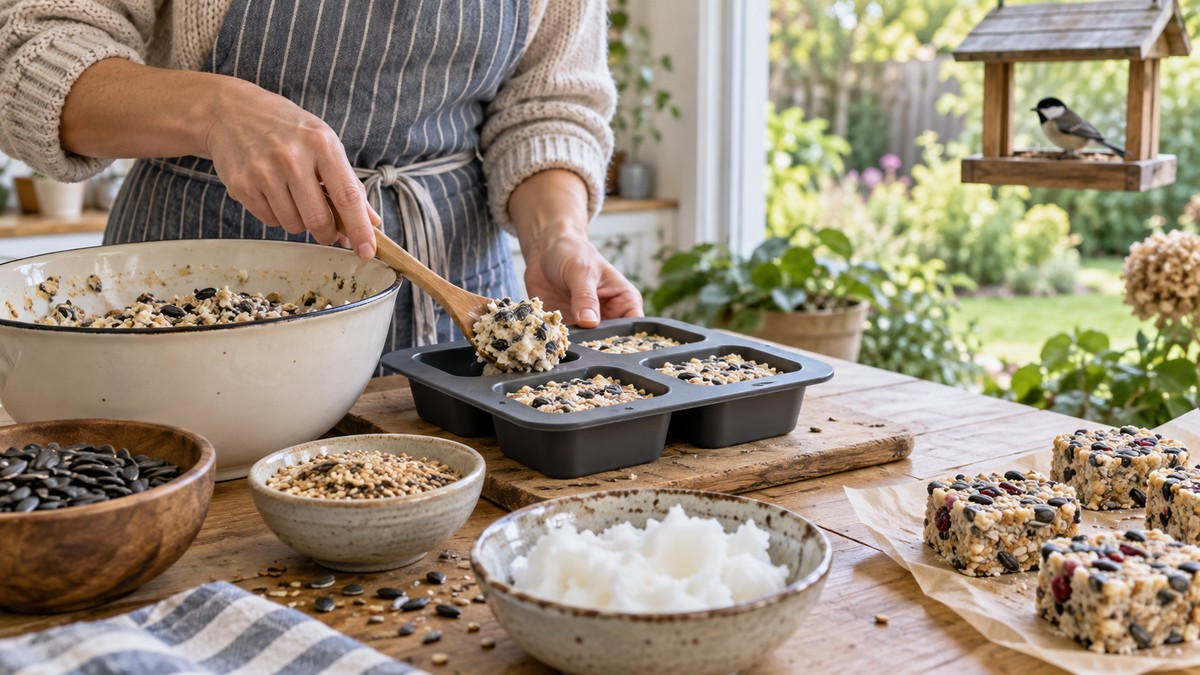
The 2026 Illinois recipe uses 1 cup of peanut butter, 1 cup of vegetable shortening, 4 cups of cornmeal, 1 cup of flour and a handful of nuts, chopped dried fruit or raisins. The method is short. Mix the ingredients well, place the mixture on a cookie sheet and freeze it, then cut it to the needed size, place it in the feeder and hang it. Because the recipe uses shortening, it does not need beef fat from a butcher.
Penn State’s Marvel Meal uses the same quantities. The table below compares the two recipes and the method each source gives.
| Ingredient or step | Illinois Extension (2026) | Penn State Extension (Marvel Meal) |
|---|---|---|
| Peanut butter | 1 cup | 1 cup |
| Vegetable shortening | 1 cup | 1 cup |
| Cornmeal | 4 cups | 4 cups |
| Flour | 1 cup | 1 cup |
| Add-ins | A handful of nuts, chopped dried fruit or raisins | 1 handful of sunflower seeds (optional) |
| Method | Mix well, place on a cookie sheet and freeze, then cut to size | Press into log holes, smear on trees, or freeze into blocks |
The flour is the point where the sources disagree. Both recipes include one cup of flour. Michigan State says to avoid the flour in the recipe it was asked about, because processed grains can be harmful to some birds in large amounts. Its general advice is to stick to the more raw, unprocessed ingredients. We show that difference here rather than choosing one side.
The no-render option: Marvel Meal
Marvel Meal does not need rendered fat. Penn State describes it as a peanut butter mixture that is fun for children to make and a favorite of chickadees, titmice, wrens and even bluebirds. It can be pressed into the holes of a log feeder or smeared directly onto tree bark. It can also be frozen into blocks for a suet feeder, or sliced into chunks for a feeder tray. Illinois Extension’s 2018 post describes the same options. For a peanut-butter feeder idea, see our guide to making a peanut butter bird feeder.
Hang it where birds can reach it
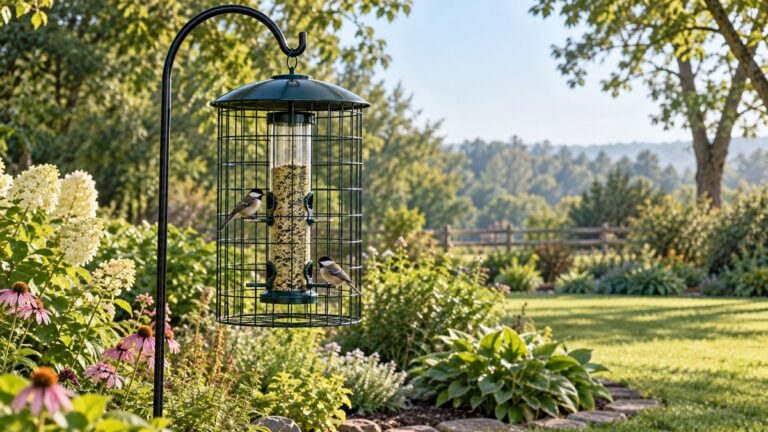
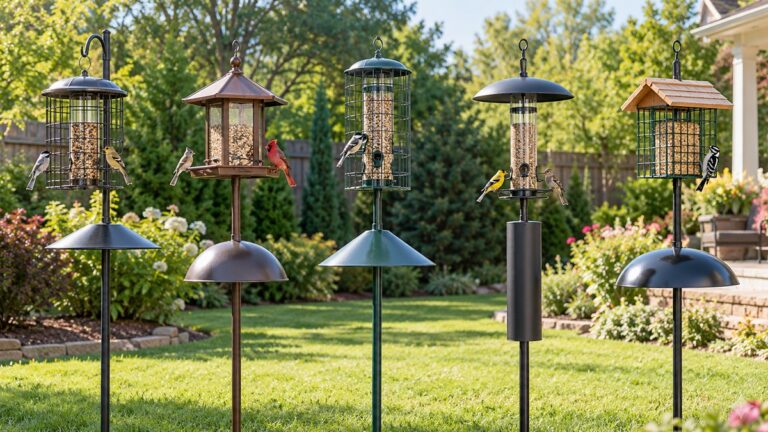
UNH says suet is usually best served in a mesh bag or wire basket, suspended from a pole or attached to a tree. Penn State says a suet cake can be hung in a mesh bag, which is often provided with the suet, or in a special suet feeder. Illinois 2018 says that suet often comes with the mesh bag or wire cage needed to hang it outside.
Placement matters as much as the container. Penn State advises placing feeders near a favorite window and within 10 feet of protective cover, such as trees and shrubs. Illinois 2018 gives the same limit: hang feeders where you can see them from inside the house, but no more than ten feet from protective cover. For windows, Penn State recommends placing feeders within three feet of the glass to reduce window strikes, and the 2026 Illinois post says feeders on a pole or in a tree should sit at least ten feet from the house.
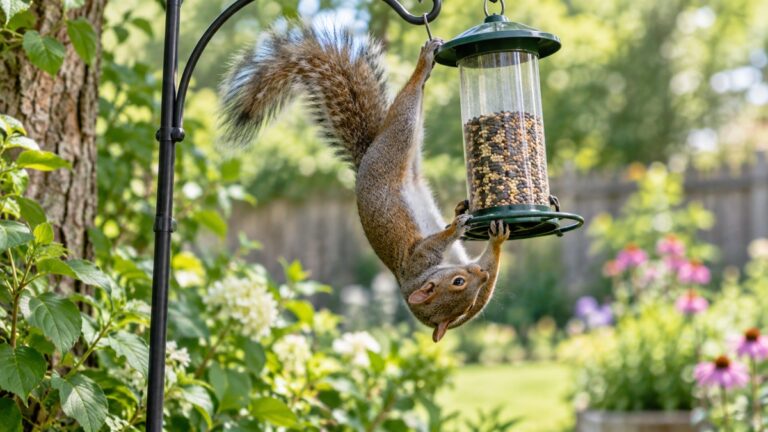
Some feeders change which birds reach the food. Illinois 2018 notes that you can buy bottom-feeding suet cages, which allow birds to reach the suet only by hanging upside down. European starlings do not prefer that position. Illinois also says starlings can pose a problem on occasion, so a bottom-feeding cage can be worth considering if they arrive.
Keep suet fresh in warm weather
Suet is a cold-weather food. UNH says it is best used in cold weather, because it goes rancid quickly in warm temperatures. Specially made suet cakes sold for bird feeding can be used year-round, according to UNH, but raw beef fat is a different matter. Michigan State says suet can be fed year-round, and that the summer problem is raw fat.
Michigan State gives the practical summer rules. It advises against raw beef fat or other unprocessed fat in summer feeding, because fat in the summer can get very melty. Melted oils or fat that get on a bird’s feathers can cause damage and result in harm or death to the bird. For that reason, Michigan State says to use a cage feeder or a mesh bag for any suet, and not to put the suet in direct summer sunlight.
Check often. Michigan State says to check regularly for spoilage and to pull spoiled suet, and UNH says food that sits out for too long can spoil after exposure to the elements and should be discarded promptly.
Clean feeders and remove spoiled food
Cleaning matters as much as the recipe. Michigan State recommends washing feeders monthly, or more often, in soap and water, and then sanitizing them with a bleach solution. Penn State advises scrubbing a platform feeder with soap and disinfectant once a week, and it notes that feeders may help spread disease when a sick bird visits. UNH says poorly maintained feeders can contribute to the spread of diseases. For a cleaning routine, see our guide to cleaning bird feeders with vinegar.
Squirrels, cats, hawks and other animals
Several animals can turn a suet feeder into a problem. Penn State suggests offering squirrels dried ears of corn, peanuts or cracked corn at a location away from the feeders. Cats can be a problem too. Penn State says cats are non-native predators, and it advises moving feeders away from low shrubs or tree branches where cats may hide.
Hawks can also hunt at feeders. Illinois 2018 says winter-feeding songbirds are prey for Cooper’s hawks and sharp-shinned hawks. Penn State says that if a hawk has been hanging around, you can take the feeders down for a couple of days.
Ground food draws other animals as well. The 2026 Illinois post says not to place too much food on the ground, because it can attract other animals. If other animals are bothering feeders, it suggests placing ear corn in another part of the yard.
Add fruit as well
Fruit can also go out for birds. The 2026 Illinois post says that orange sections, apples and raisins are all good fruits to put in a feeder or hang.
How we chose
We limited this guide to extension pages that give suet advice. The seven pages come from Penn State Extension, the University of New Hampshire Extension, the University of Illinois Extension (three posts) and Michigan State University Extension (two answers). We opened each one on October 22, 2026. A Missouri Extension PDF, a Cornell FeederWatch page and an All About Birds suet page returned errors, so we do not count them.
We chose the Illinois 2026 recipe and the Penn State Marvel Meal recipe because both give the same quantities. We show the flour difference rather than picking one version. We did not name a product, brand or feeder model.
What we could not verify
The sources do not give a fat-to-seed ratio, chilling or cooling times, or a freezer life for homemade cakes. They also do not give a temperature that marks the start of spoilage. Treat the recipe as a starting point, and check the cake at the feeder.
What the sources do not say
- A fat-to-seed ratio. The recipes give cup amounts only.
- A freezing or chilling time. The 2026 Illinois post says to freeze the mixture and cut it, without a time.
- How long a homemade cake keeps. Michigan State describes checking for spoilage, not a shelf life.
- A temperature cutoff for warm weather. UNH says suet goes rancid quickly in warm temperatures, without a number.
- Local rules on feeding wildlife. The sources we opened do not cover them, so check your city or county rules before you set out food.
Frequently asked questions
Can suet be fed in summer?
Michigan State says suet can be fed year-round, but raw beef fat or other unprocessed fat should be avoided in summer. Commercial suet cakes can be used year-round, according to UNH. In summer, keep the suet out of direct sun, use a cage feeder or mesh bag, and check it often for spoilage.
Should homemade suet include flour?
The sources disagree. The 2026 Illinois recipe and Penn State’s Marvel Meal both include one cup of flour, while Michigan State advises against it.
Where should a suet feeder hang?
Penn State says to place feeders near a favorite window and within 10 feet of protective cover, such as trees and shrubs. Illinois 2018 says to hang feeders where you can see them from inside the house, no more than ten feet from protective cover.
Should bacon fat go in suet?
No. Illinois Extension says not to use bacon or a cured fat in making suet, and it says birds do not need the added salt in their diet.
What helps with squirrels at a suet feeder?
Penn State recommends setting out dried corn, peanuts or cracked corn for squirrels in a spot apart from the feeders. The same page advises moving feeders away from cover where cats may hide.
Sources
- https://extension.psu.edu/winter-bird-feeding-the-basics (opened 2026-10-22)
- https://extension.unh.edu/resource/winter-bird-feeding-fact-sheet (opened 2026-10-22)
- https://extension.illinois.edu/blogs/good-growing/2018-01-09-winter-bird-feeding-suet (opened 2026-10-22)
- https://extension.illinois.edu/blogs/good-growing/2021-01-28-whats-best-thing-feed-birds (opened 2026-10-22)
- https://extension.illinois.edu/blogs/ilriverhort/2026-02-02-choose-right-feeder-and-seed-birds-winter (opened 2026-10-22)
- https://ask.extension.org/kb/faq.php?id=785625 (opened 2026-10-22)
- https://ask.extension.org/kb/faq.php?id=679510 (opened 2026-10-22)