How to Clean a Birdbath
As an Amazon Associate we earn from qualifying purchases.
Knowing how to clean a birdbath comes down to two routines: changing the water often, and scrubbing and disinfecting the basin on a schedule. The sources in this guide agree on the basic idea and differ on the timing, the cleaning agent and the steps, so each point below names its source.
Cleaning is also a health step for the birds and for the people who handle the bath. The CDC says to wash hands after touching a bird bath, and it says to keep pets away from baths and the ground beneath them.
Quick answer
- Change the water every day, or at least every one to two days.
- Scrub the basin at least twice a week with a bristle brush and mild dish detergent.
- Disinfect about every two weeks with a 10 percent bleach solution, rinsing well afterward.
- If a sick or dead bird turns up nearby, remove the bath for two weeks.
Why the bath needs regular cleaning
The University of California Cooperative Extension bulletin lists the diseases that birds can get at feeders and baths: salmonellosis, trichomoniasis, aspergillosis and avian pox. It explains that the causes are food and water contaminated by mold, fungus and infected feces, along with surfaces contaminated by viruses from other sick birds. Its maintenance section covers feeders and baths together.
The CDC Emerging Infectious Diseases article takes a firm line on the same risk. It says that to keep birdbaths from becoming a source of infection for birds and humans, use of birdbaths should be reduced or eliminated, especially during an active disease outbreak. When baths are in use, the article recommends a minimum of monthly cleaning and disinfection.
Penn State Extension adds a second reason. Its fact sheet says that changing the water daily in summer prevents mosquito larvae from hatching in the bath, which is a concern where the West Nile virus may be present.
How often to clean and refill
The sources set different schedules, and they are easier to compare in a list. Each item below is the schedule that the named source gives.
- CDC wildlife page: clean and refill the bird bath weekly or when it is visibly dirty, and clean the bird feeder and bird bath at least once each month.
- CDC Emerging Infectious Diseases article: a minimum of monthly cleaning and disinfection, with more frequent cleaning when baths become visibly soiled.
- Penn State Extension: change the water every day, and scrub the bath with a brush, mild soap and water every week to remove algae.
- UC Cooperative Extension bulletin: rinse the bath and replace the water every day, scrub it twice a week with a plastic bristle brush and mild dish detergent, and disinfect every two weeks.
- Ask Extension, from a Michigan county expert: dump and refill the water every one to two days.
These schedules are not identical, but they fit together. The UC routine is the strictest of the five. It changes the water daily, scrubs twice a week and disinfects every two weeks, so it meets each of the other schedules. This guide follows that routine for the steps below.
The UC bulletin is an older publication. Its page carries a note that it was revised in March 2003 with updated recommendations for feeder sanitation, so its bath routine may be older than its feeder advice. Treat the exact frequencies as a starting point, and check a current county extension office for local advice.
Gloves, hands and pets
The CDC wildlife page says to wash hands after touching bird food, bird feeders or bird baths. The Emerging Infectious Diseases article goes further: people should wash their hands after any contact with birds, feeders or baths, even if they are wearing gloves. The article’s wording means gloves do not replace washing afterward.
Keep pets away from the bath. The CDC wildlife page says to keep pets away from bird feeders, bird baths and the surrounding areas. The Emerging Infectious Diseases article makes the same point about pets and baths, and it adds that pet owners should prevent their pets from contacting birdbaths.
Step-by-step cleaning
The routine below combines the UC bulletin’s steps with the disinfection method that the CDC gives. It is written as one sequence, so the steps can be followed in order on a cleaning day.
- Empty the bath and rinse the basin. The UC bulletin calls for rinsing and replacing the water every day.
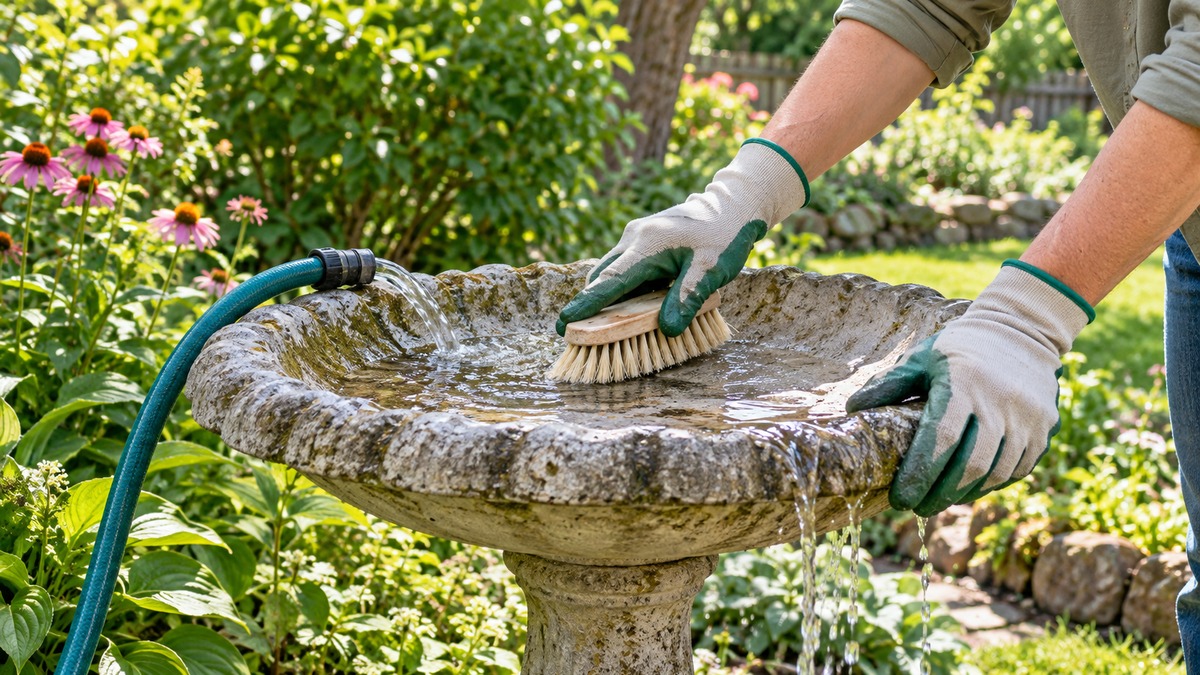
- Scrub the basin with a plastic bristle brush and mild dish detergent. The UC bulletin sets this for twice a week. Penn State Extension uses a brush with mild soap and water, every week, to remove algae.
- Rinse thoroughly before refilling. The UC bulletin gives this step for each scrub.
- Every two weeks, scrub with dish detergent, rinse, and fill the bath with a 10 percent bleach and water solution, as the UC bulletin describes.
- Rinse well after the bleach step, then refill with fresh water.
The CDC wildlife page gives its own disinfection method, written for feeders. It says to clean the feeder with warm, soapy water, rinse, and then soak it in a diluted bleach solution of nine parts water and one part bleach for at least 10 minutes. It says to rinse again to remove any remaining bleach and let the item dry before refilling it. The bleach ratio matches the UC bulletin, because one part bleach in nine parts water is the same 10 percent solution.
The CDC steps are written for feeders, and the pages read here do not give a separate soak time for a basin.
Vinegar, bleach and additives
The sources disagree about vinegar. An Ask Extension answer from a Michigan county expert says you can clean a bird bath with one part distilled white vinegar and nine parts water. The UC bulletin is more cautious: do not use vinegar as a substitute for bleach, because it does not destroy bacteria, mold or yeast.
One reading reconciles the two. Vinegar can serve as a light cleaner between disinfections, while bleach is the step the UC bulletin names for killing germs. That reading is this guide’s own, not a statement from either source, and it is why the routine above uses bleach for the every-two-weeks step.
The Ask Extension answer also warns about additives. It says it is best to be cautious with additives such as lavender or rosemary, especially essential oils or cleaners. It adds that cleaners or oils can harm birds and interfere with the waterproofing oils birds use on their feathers. It also says that cleaning the bath regularly should prevent the need for additives in the first place.
Where to clean and what to avoid
The CDC wildlife page says to clean the feeder or bath outdoors. It also says not to clean bird feeders in the kitchen or in any place where food is prepared or stored. That kitchen rule is written for feeders, so this guide applies it to baths as a cautious default rather than as a sourced rule for baths.
The CDC page also covers indoor cleaning. If cleaning has to happen indoors, it says to use a laundry sink or bathtub and to thoroughly clean and disinfect the area right after. That advice sits in the feeder section, so it is a fallback, not a first choice.
Water, shade and winter
Penn State Extension gives maintenance notes that go beyond cleaning. Its fact sheet says a bird bath requires only a small amount of care, and that a shady location keeps the bath from overheating in summer and keeps algae levels low. It also says that maintaining the bath through winter ensures a constant supply of fresh water.
Choosing the bath is a separate question. The bird bath guide covers that choice, and a water source without a basin is covered in the DIY water dispenser guide.
When birds get sick
The CDC wildlife page says that if you find a sick or dead bird, you should remove your feeder and bird bath for two weeks. It says to clean them outdoors and to call your state wildlife agency or a wildlife rehabilitator. The Emerging Infectious Diseases article adds that bird baths should be reduced or eliminated during an active disease outbreak.
The MSU Extension article quotes an expert who says people who provide water for birds should rotate feeder stations and clean feeders and birdbaths year-round, even when birds appear healthy. That is a routine practice rather than a response to a sick bird.
How we chose
This guide uses six public pages: the current CDC wildlife page, a CDC-supported article in Emerging Infectious Diseases from November 2023, a University of California Cooperative Extension bulletin, a Mississippi State Extension feature that quotes CDC steps, an Ask Extension answer from a county expert, and a Penn State Extension fact sheet on bird baths. Together they cover public health, bath routines, disinfection and everyday maintenance.
Retailer blogs and general cleaning articles were left out. Some pages returned errors and were not used. An archived 2021 CDC outbreak page was read to check dates, but the current wildlife page is the one this guide relies on.
What we could not verify
The sources differ in age and in advice, and this guide does not settle every difference by choosing the newest page. The UC bulletin dates from a 2003 revision, the Ask Extension answer from 2020 and the MSU feature from 2021. The sources also differ on how often to clean. An archived 2021 CDC outbreak page says to clean and disinfect bird feeders and bird baths weekly or when they are visibly dirty. The current wildlife page sets a monthly minimum for cleaning and a weekly refill for baths, and this guide follows the current page.
What the sources do not say
The soak time for a bath is not given separately. The CDC soak of at least 10 minutes is written for feeders, and the pages read here do not give a bath-specific time. The drying step is also written for feeders: the CDC page and the UC bulletin both describe drying a feeder before refilling it, and neither gives the same step for a basin. Cleaning for stone, concrete or other basin materials is not covered. No source here names a cleaning product, and this guide does not recommend one.
Frequently asked questions
How often should a birdbath be cleaned?
The sources give different schedules. The CDC wildlife page sets a monthly cleaning minimum and a weekly refill when the bath is visibly dirty. The UC bulletin is the most frequent, with daily water changes, scrubbing twice a week and a bleach disinfection every two weeks. A routine that follows the UC schedule meets each of the others.
Is vinegar a good birdbath cleaner?
One Ask Extension answer names vinegar, at one part vinegar to nine parts water, as a cleaner. The UC bulletin says vinegar is not a substitute for bleach because it does not destroy bacteria, mold or yeast. For disinfection, the bleach step is the one to follow.
Can bleach be used to clean a birdbath?
The UC bulletin says to scrub the bath with dish detergent, rinse, and then fill it with a 10 percent bleach and water solution once every two weeks. The CDC feeder method uses one part bleach in nine parts water for at least 10 minutes. The two strengths are the same, but the soak time is written for feeders.
Should a birdbath be cleaned in the kitchen sink?
The CDC wildlife page says not to clean bird feeders in the kitchen or in places where food is prepared or stored, and it says to clean the feeder or bath outdoors. The indoor alternative the page gives, written for feeders, is a laundry sink or bathtub, cleaned and disinfected right afterward.
What should be done if a bird near the bath looks sick?
The CDC wildlife page says to remove the feeder and bird bath for two weeks, to clean them outdoors, and to call your state wildlife agency or a wildlife rehabilitator. The Emerging Infectious Diseases article also says to avoid direct contact with wild birds that are visibly sick or dead.
Do bath additives help keep the water clean?
The Ask Extension answer urges caution with additives such as lavender or rosemary, especially essential oils or cleaners. None of the pages read for this guide recommends an additive, and the answer says regular cleaning should make additives unnecessary.
Sources
- https://www.cdc.gov/healthy-pets/about/wildlife.html (opened 2026-10-22)
- https://wwwnc.cdc.gov/eid/article/29/11/23-0332_article (opened 2026-10-22)
- https://ucanr.edu/sites/default/files/2011-10/124157.pdf (opened 2026-10-22)
- https://extension.msstate.edu/news/feature-story/2021/best-practices-can-protect-birds-humans-illness (opened 2026-10-22)
- https://ask.extension.org/kb/faq.php?id=710604 (opened 2026-10-22)
- https://extension.psu.edu/water-for-wildlife-bird-baths-and-backyard-ponds (opened 2026-10-22)