How to Plant Thyme in Pots
As an Amazon Associate we earn from qualifying purchases.
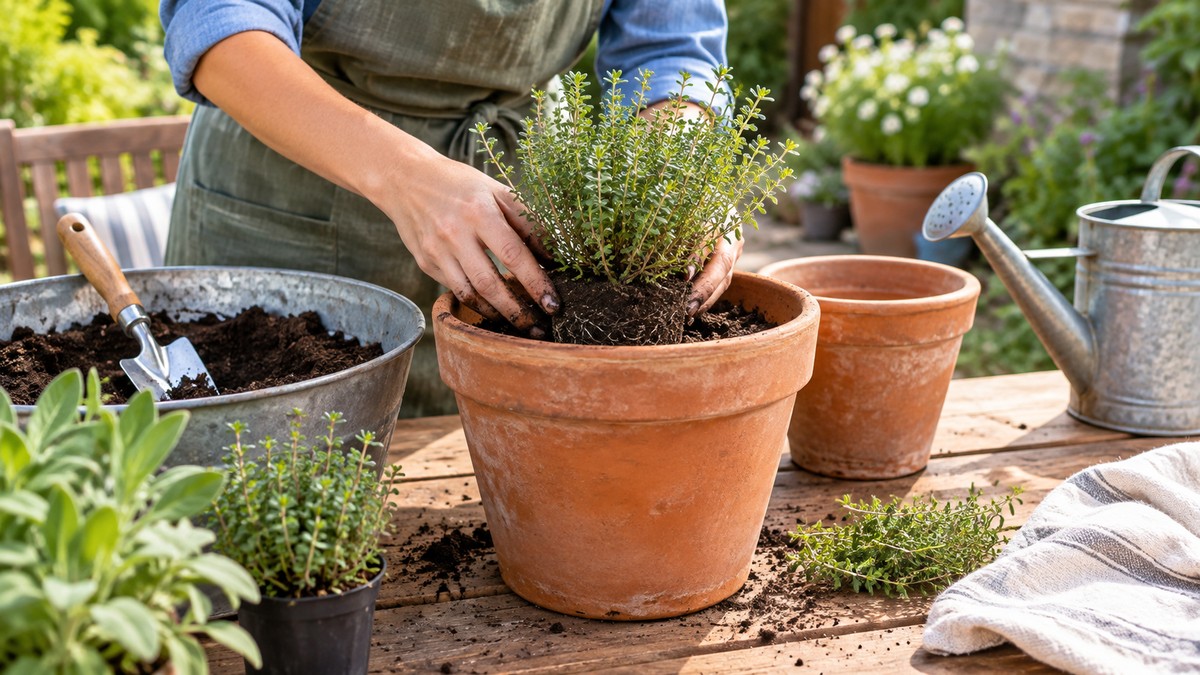
How to plant thyme in pots is mostly a question of drainage and restraint. Thyme is one of several herbs that extension pages say should dry out between waterings, so the common mistake is too much water, not too little. The sources here cover herbs in containers as a group, and where a point applies to thyme alone, we say so. Use this as a planting plan, and adjust it for your own sun, pot and climate.
Quick answer
- Use a pot with drainage holes and a well-draining mix. University of Maryland Extension calls that “the key to success.”
- Let the mix dry between waterings. Thyme is named among the herbs that need to dry out between watering.
- Give the pot full sun, at least 4 to 6 hours of sunlight each day, according to Iowa State Extension.
- Start with a pot of about 4 to 6 inches across, the size the NC State handbook gives for most herbs.
Start with a pot that drains
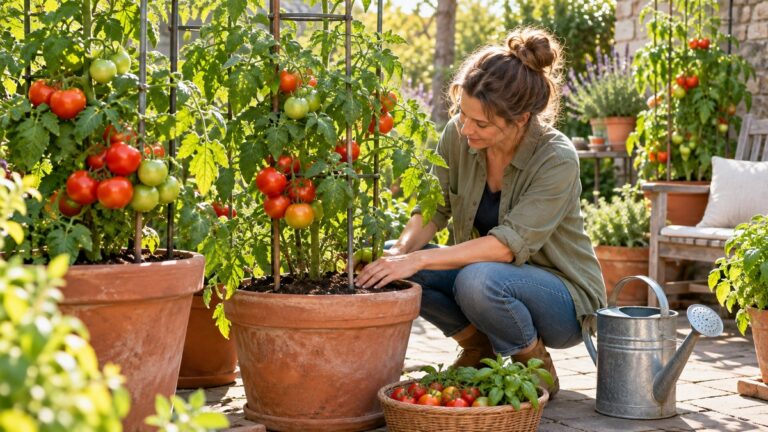
Drainage is the first decision, and every source here agrees on it. Iowa State Extension says “Be sure the container has sufficient drainage holes in the bottom.” Penn State Extension describes the same setup: “Plant and grow herbs in containers with a drainage hole and in a potting mix that will aid water drainage.” A pot without a hole leaves no exit for excess water.
The material of the pot changes how fast it dries. Iowa State notes that “Clay pots work well because they provide a stable anchor and allow air to move through the root zone.” It adds that “Plastic works well too and is lighter and therefore easier to move around.” The practical trade-off is weight against drying speed. The same page warns that “Herbs grown in clay containers may require more frequent watering because they tend to dry out faster.”
A hanging basket or window box is also an option, according to the Iowa State page. The same drainage rule applies to every container you choose, whatever its shape.
Iowa State adds that “Several herbs can be grown in one container or each herb can have its own container.” If you share a pot, match the watering needs, because “When grouping multiple herbs in one container, be sure their water requirements are comparable.” For thyme, that means sharing a pot only with herbs that also dry out between waterings, such as the ones the Maryland page lists.
Mix a potting blend that drains
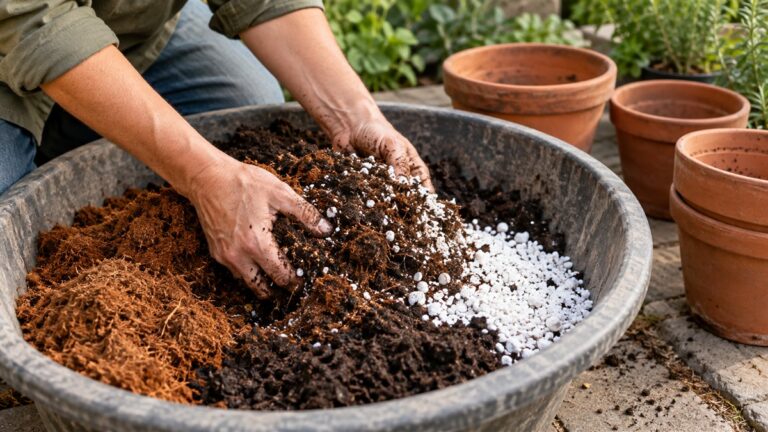
A heavy garden soil is a poor base for thyme. Iowa State Extension says “Herbs grow best in well-drained soil.” Its own mix suggestion is either a commercial potting mix or a blend of “potting mix, peat moss, and perlite in equal parts.” University of Maryland Extension suggests a different ratio for herbs, and says “When planting, mix two-parts soilless potting mixture and one-part perlite.”
Both recipes aim for a loose mix that holds some moisture but lets the extra water run out, and both put perlite at about one third of the blend. The Iowa State blend also adds peat moss. Choose one, and check the pot’s drainage after the first watering.
Choose a size that suits a herb
The NC State container handbook says “Most herbs can be grown in a 4-inch to 6-inch diameter pot.” That is a practical starting point for a thyme you want to keep compact. The same passage makes an exception: “Some herbs with a large taproot, however, need a 12-inch deep container.” Thyme is not described as a taproot herb in the sources opened here, so the smaller range is the one the handbook gives for most herbs.
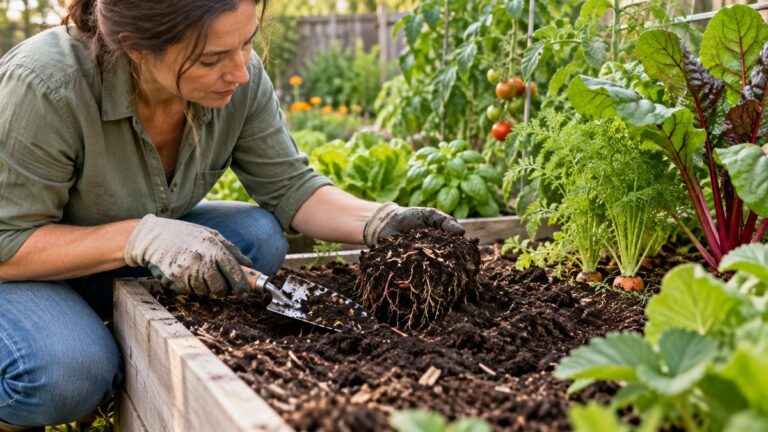
When a thyme outgrows its pot, the handbook’s repotting rule applies. “The container selected for potting-up should be one size larger in diameter than the pot in which the plant is currently growing.” At repotting time, look for a dense root ball, which the handbook treats as the sign that a plant needs a larger pot.
For a balcony or small patio where several herbs share space, see our notes on balcony planters. If you plan to grow thyme alongside other herbs, see our notes on DIY herb planters.
Give it sun and a steady window
Herbs need full sun. Iowa State Extension says “Herbs require full sun whether they are grown indoors or outside.” It adds that “Place the container in a location where it receives at least 4 to 6 hours of sunlight each day.” University of Maryland Extension sets a higher bar for an indoor window: “Select a south or west window where they will get at least five hours of sun a day.”
Light also decides the shape of the plant. Penn State Extension says “If you grow plants on windowsills, rotate pots often so that each side gets enough light for uniform growth.” Turn the pot often, as the page advises, so the plant grows evenly rather than leaning toward the light. The same page warns that herbs that miss their preferred light “will become thin and spindly, produce smaller leaves, and have a reduced aroma.”
In winter, a potted herb indoors may need help with light. The Maryland page says “in winter, ‘grow lights’ or fluorescent lights set to shine 14 to 16 hours a day are necessary to supplement the light the plants receive.” A window may not be enough in the cold months, so plan for supplemental light before the days get short.
Water thyme less than you think
Watering is the decision that most often goes wrong. University of Maryland Extension lists thyme with a short group of herbs: “Bay, marjoram, oregano, sage, and thyme need to dry out between watering.” Penn State Extension groups thyme with several herbs that “should dry out slightly between waterings.” The two pages agree that thyme should not sit in a wet mix.
The Maryland page adds a warning that applies to every container: “But, be careful not to overwater any of the containers.” Iowa State Extension gives the other side of the balance: “Plants should be watered before they begin to wilt severely.” The goal is a mix that dries between waterings, not a mix that dries out completely and stays that way.
Pot material changes the schedule. Because clay pots dry faster, the Iowa State page warns that clay containers may need more frequent watering. Check the mix by feel rather than by a fixed calendar.
Feed lightly, pinch and harvest
Thyme needs less food than many container plants. Iowa State Extension says “Although herbs do not require as much fertilizer as other container plants, they will benefit from periodic light fertilization with a dilute fertilizer solution.” The page does not give a schedule for thyme, so a light, periodic feeding is the most the sources support.
Pinching keeps the plant from becoming leggy. Iowa State Extension says “Rampant or spindly growth can be controlled by pinching.” The same page warns about harvesting too hard on perennial herbs: “Remove only the top third of the plant or the leafy tip growth on perennial herbs.” The sources do not state whether thyme in your pot is a perennial, so if it is, follow that rule.
Winter, moving and indoor thyme
The Maryland page lists tender herbs that “do not always survive our Maryland winters.” That list includes rosemary, bay, lemon verbena, oregano, marjoram and scented geraniums, and it does not include thyme. Read that as the Maryland page’s list of tender herbs, not as a statement about thyme’s hardiness in your area. For perennial herbs in general, the page advises that they “will do better if they are moved outdoors during the summer.”
The Maryland page also says indoor herbs “will need essentially the same conditions as herbs grown outdoors.” That is a useful way to think about a winter thyme: give it the same sun, drainage and drying cycle, and expect the light to be the limiting factor.
Humidity matters indoors as well. Penn State Extension notes that homes with forced-air heating “tend to have the driest winter conditions for indoor plants.” It also says “Herbs also require a balance between a humid environment and adequate air circulation.” The Maryland page suggests misting the plants or grouping them on a tray of moistened pebbles, and it advises keeping them “away from drafts, dry heat vents, and avoid temperature extremes.”
Mistakes to avoid
- Watering on a schedule. The sources say thyme should dry out between waterings, so check the mix before you water.
- Leaving the pot in water. The Maryland page says to be careful not to overwater, and the drainage rule applies to every pot.
- A pot without a hole. Iowa State and Penn State both call for drainage holes in the container.
- Too little light. The Iowa State page sets a minimum of 4 to 6 hours of sun, and a thin, spindly plant is the sign that light is short.
A quick checklist
| Step | What to check | Source |
|---|---|---|
| Pot | Drainage holes; a clay or plastic pot, with clay drying faster. | Iowa State Extension; Penn State Extension |
| Size | About 4 to 6 inches across for most herbs; repot one size larger. | NC State handbook |
| Mix | A commercial potting mix, or a mix with perlite added for drainage. | Iowa State Extension; University of Maryland Extension |
| Sun | At least 4 to 6 hours of sunlight each day; turn pots for even growth. | Iowa State Extension; Penn State Extension |
| Water | Let the mix dry between waterings; never leave the pot wet. | University of Maryland Extension; Penn State Extension |
| Feed | Light, periodic fertilizer rather than heavy feeding. | Iowa State Extension |
| Winter | Supplemental light indoors; move perennial herbs outdoors in summer. | University of Maryland Extension |
How we chose
We opened pages from university and cooperative extension offices and kept a page only when it states the point in plain words. We checked each quoted sentence against the text of the page as fetched on 2026-10-22. Because the herb pages cover herbs as a group, we used the NC State container handbook for the general pot-size and repotting rules and say so in the text.
We did not rank herbs or pots, and this guide does not recommend a product. Pages that returned errors when opened are not cited.
What we could not verify
The sources we opened cover herbs in general. Thyme is named only in the watering rules and in the tender-herb check, so most of what a thyme needs is not stated for thyme in particular.
What the sources do not say
- No source we opened gives a sun requirement, pot size, spacing or planting depth for thyme alone.
- The pages do not say whether the thyme you buy is a perennial or an annual, so the harvest rule for perennial herbs is conditional here.
- The Maryland tender-herb list does not include thyme, but the page does not say whether thyme is hardy in any particular zone.
- No source gives a watering interval in days. The sources give a rule to dry out between waterings, not a schedule.
- The Penn State page is written for indoor herbs. Its feeding interval for indoor herbs is not a schedule for thyme outdoors.
- The sources do not name a fertilizer product or a fertilizer rate for thyme.
Frequently asked questions
Does thyme need a pot with drainage holes?
Yes. Iowa State Extension says to be sure the container has sufficient drainage holes in the bottom, and Penn State Extension calls for a container with a drainage hole.
How often should a potted thyme be watered?
No source gives a number of days. The University of Maryland Extension and Penn State Extension both say thyme should dry out between waterings, so check the mix before you water it.
How much sun does a potted thyme need?
Iowa State Extension says herbs require full sun, with at least 4 to 6 hours of sunlight each day. The sources opened here do not give a thyme-specific figure.
What pot size is right for a thyme?
The NC State handbook says most herbs can be grown in a 4-inch to 6-inch diameter pot. Move the plant to a pot one size larger when its roots fill the current one.
Can a potted thyme stay outside in winter?
The sources do not give a winter answer for thyme. The Maryland page moves perennial herbs outdoors in summer and lists tender herbs that may need overwintering indoors, but it does not list thyme among them.
Sources
- https://extension.umd.edu/resource/growing-herbs-containers-and-indoors (opened 2026-10-22)
- https://yardandgarden.extension.iastate.edu/how-to/growing-herbs-containers (opened 2026-10-22)
- https://extension.psu.edu/growing-herbs-indoors (opened 2026-10-22)
- https://content.ces.ncsu.edu/extension-gardener-handbook/18-plants-grown-in-containers (opened 2026-10-22)