How to Grow Garlic From Cloves
As an Amazon Associate we earn from qualifying purchases.
How to grow garlic from cloves is mostly a fall job. You plant the cloves in autumn, they root and sprout before the ground freezes, and the bulbs size up the following summer. The four university extension guides we opened agree on that rhythm, even though they disagree on depth, spacing and curing. This guide covers the planting window, how to prepare the cloves, spacing and depth, care through the season, harvest and storage, and the points where the sources conflict.
Quick answer
- Plant the largest undamaged cloves in fall, roughly September through November, depending on your location.
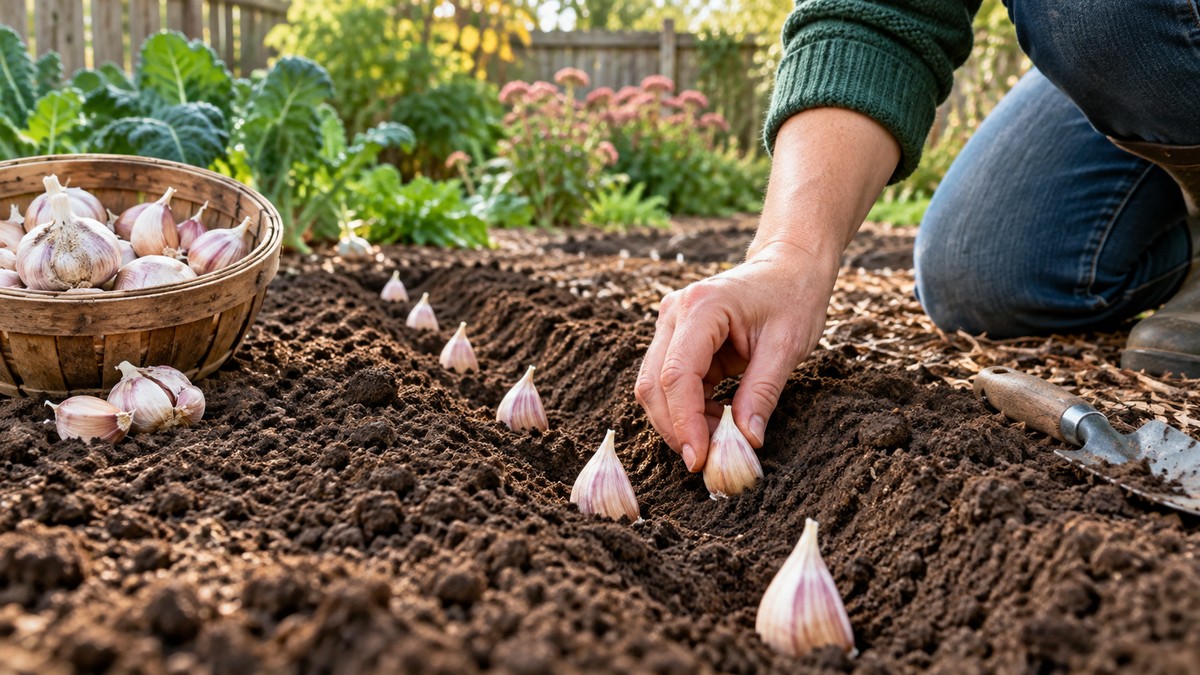
- Set cloves pointed end up about 3 to 5 inches apart. Row spacing ranges from about 6 to 30 inches across the guides.
- Plant 1 to 3 inches deep. The guides disagree here: Arkansas says 1 inch, while Utah State and Nebraska say 2 to 3 inches.
- Harvest when the lower leaves turn yellow but before the plants are fully dry, then cure the bulbs before storing them.
Plant in fall, and know the window
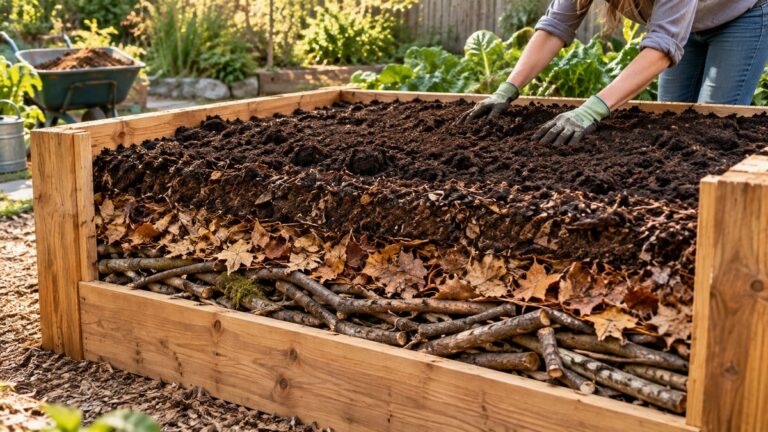
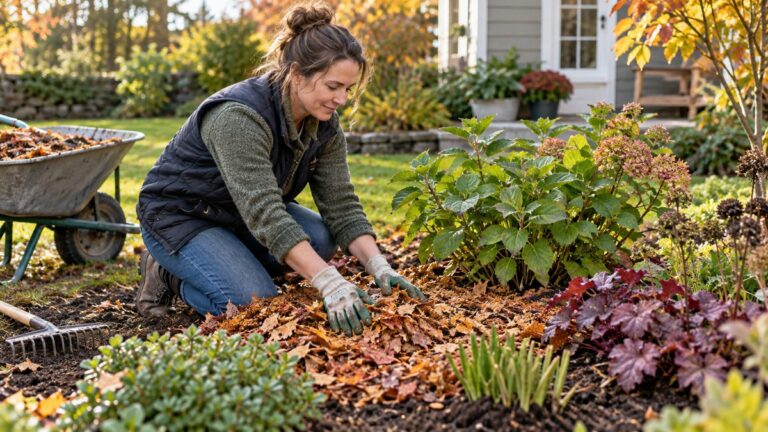
All four guides favor fall planting. If you are preparing a bed for the cold months, our guide to preparing raised beds for winter covers that side of the job. Utah State says to plant garlic from late September to November. Nebraska’s guide is more exact for its own climate. It recommends early to mid-October, four to six weeks before the ground freezes, and it says planting before mid-September or in November is not recommended. Arkansas says to plant in the fall so the plants mature by the next summer, and it gives mid-January as the latest workable date for its state. Ohio State adds a useful sign: the first garlic leaves should emerge above ground before freezing weather arrives. It also warns that planting too early can produce more top growth that the winter will damage.
The reason is cold. Nebraska’s guide explains that the cloves must spend one to two months at 32 to 50 degrees F to form bulbs, which is why fall planting or very early spring planting works. Spring planting is the weaker option. Utah State says bulb growth is poor and yields are low when garlic is planted in spring. Ohio State says spring plantings produce smaller heads than fall plantings, which have more time to mature. If you miss the fall window, Nebraska says the bulbs can go in very early in the spring, in March or April, and that is the fallback the guides name.
Choose and separate the cloves
Start with clean, well-formed bulbs. Utah State says garlic is grown from clean, disease-free, well-developed bulbs, and it advises breaking the bulbs carefully into individual cloves. Ohio State says to use only undamaged, large cloves for planting, and Arkansas notes that the larger the clove, the larger the mature bulb at harvest. Nebraska and Arkansas both warn against separating the bulbs too early. Nebraska says not to divide the clove bulbs more than a few days before planting, because early separation results in decreased yields.
The guides disagree about grocery-store bulbs. Ohio State says not to plant store-bought garlic from the produce aisle, because the bulbs may have been treated to prevent sprouting, which is good for shelf life and bad for planting. Nebraska takes a softer line. It says many people have success with grocery bulbs, even though those bulbs may carry viruses. Ohio State says to select the healthiest bulbs for replanting, which is the practical test whichever source you use.
Variety type also matters. Utah State says hardneck types have a shorter store life and a long stem that grows up through the bulb, while softneck types store very well and are the ones preferred for braiding. Ohio State adds that hardneck garlic produces fewer but larger cloves, and that its cloves peel easily but do not store as long as softneck cloves. Nebraska notes that softneck types are generally better adapted to a wide range of climates. Ohio State also points out that elephant garlic is not a true garlic, but is more closely related to leeks.
Spacing and depth: where the guides differ
The table below puts the planting numbers side by side. Where the sources differ, the table shows each figure instead of picking one.
| Source | Clove spacing in row | Row spacing | Planting depth | Orientation |
|---|---|---|---|---|
| Utah State | 3 to 4 inches | 6 to 10 inches | 2 to 3 inches | Pointed end up |
| Arkansas | 3 to 5 inches | 18 to 30 inches | 1 inch | Upright, to ensure a straight neck |
| Ohio State | 4 to 5 inches | 18 to 24 inches | 2 inches | Basal plate down |
| Nebraska | 3 to 5 inches | 12 to 24 inches | 2 to 3 inches | Pointed end up |
Depth is the biggest disagreement. Arkansas says to cover the cloves about one inch deep. Utah State and Nebraska both say two to three inches, and Ohio State says two inches. Nebraska warns about both extremes. A clove planted too deep may have its expansion hampered by the soil, and one planted too shallow may be washed out by rain. For a home bed, a depth of about two inches sits in the middle of the range the guides name.
Density has a cost too. Utah State warns that high-density plantings will reduce bulb size unless adequate water and nutrients are supplied. Nebraska describes a wide-row option, with cloves spaced five inches apart in all directions in foot-wide rows or raised beds. That uses less space for the same yield, but Nebraska notes that weeding has to be done by hand. Ohio State also warns that planting a clove upside down or sideways will produce small or misshapen cloves.
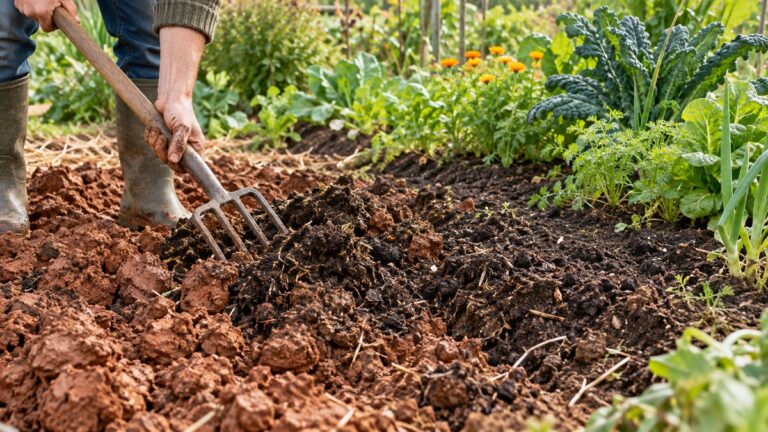
Prepare the bed and feed the crop
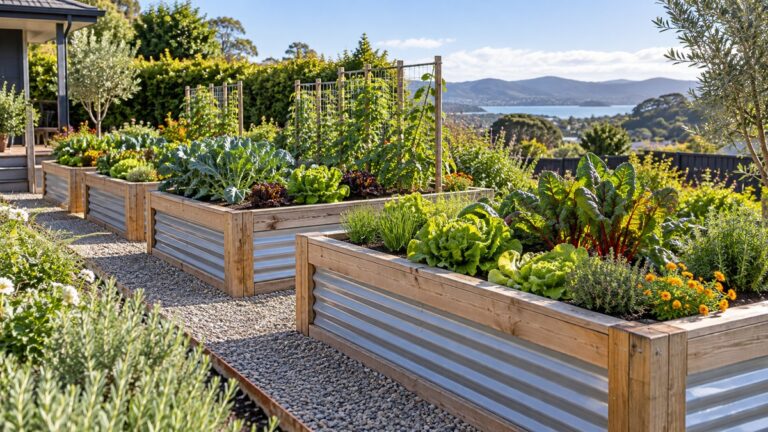
Garlic likes rich, well-drained soil. Arkansas describes friable loam that is fertile and high in organic matter, and Ohio State says garlic tolerates a wide pH range from 6.0 to 8.0, with 6.0 to 6.5 being ideal. Poorly drained, highly compacted soil invites disease in wet years and small or misshapen heads in dry years, according to Ohio State. If you are weighing how much soil a raised bed needs for this crop, our guide to how much soil a raised bed needs covers the depth question.
Feeding is a split job. Ohio State says fertilizer should be split into two, or even three, applications. It recommends applying about half of the recommended fertilizer at planting to aid root development, and making the second application when growth resumes in spring. Arkansas says garlic does well at high fertilizer levels, and it gives a rate per 100 square feet applied three times during the season. Nebraska adds a caution: do not fertilize after the plants have begun bulbing, because too much nitrogen while the bulbs mature can make the garlic store poorly.
Water, mulch and keep the weeds down
Water matters most in the growing season. Utah State advises moistening the soil thoroughly to a depth of 12 inches and using drip irrigation if possible. Nebraska says a weekly application of one inch of water should increase yields if rain is lacking. Ohio State describes a similar target of about an inch of water per week through June. Drought stress reduces both yield and bulb size, so watering on schedule is part of the crop, not an extra.
Mulch serves two jobs. Utah State says organic mulches help conserve water, supply extra nutrients and reduce weeding, and that mulch also protects the garlic over winter. The depth varies by source. Ohio State recommends four inches of clean straw, and says not to use hay because it can carry weed seeds. Nebraska recommends a lighter layer of one to two inches after the ground freezes, to help prevent frost heaving. Ohio State says the straw should be raked off the emerging plants in spring and left between the rows.
Weeds are the main competitor. Utah State advises shallow cultivation to control weeds, and warns against cutting so deep that the roots are damaged. It stresses that weed control matters most in the first two months of growth, when the plants grow slowly. Ohio State says garlic competes poorly with weeds, which is one reason to keep the bed clear from the start.
Hardneck types send up a flower stalk, called a scape. Utah State says a flowering stem can be cut off to redirect energy to the bulb. Nebraska reports that yields increase when the flower stalks are removed before the bulbils form. Ohio State says the scape must be removed to gain better bulb size. Those scapes are edible, and Ohio State notes that they can be harvested early and cooked like green onions.
Harvest at the right time
Stop watering as the leaves begin to turn. Utah State says to stop watering when the leaves start to mature and turn yellow, because excess water as the crop matures delays curing and causes storage problems. Ohio State says to harvest when the lower leaves begin to yellow. Utah State says to harvest when the tops are yellow but before they are dry. Those signs agree, and the difference is in how close to dry the plant should be.
Dig the bulbs rather than pulling them. Ohio State says garlic should be dug, not pulled, to prevent injury to the head or stem. It says to remove the soil without washing the heads, and to allow the heads to dry out of the sun for several days. Nebraska’s fall-planted crop is usually ready from late June to mid-July, and it advises a week or so of reduced watering before harvest so the plants dry down. Arkansas says bulbs are usually harvested when the tops start to dry, around July in that state.
Curing and storage: the guides disagree
Curing is where the guides diverge most. Nebraska says bulbs should be cured for two to four weeks at 75 to 90 degrees F with low humidity, and it recommends screens in the shade or a well-ventilated room. Ohio State says to cure for two to three weeks, then store above freezing and no higher than 40 degrees F, with no more than 75 percent humidity. Arkansas says to store the bulbs as you would dry onions, at 72 degrees F or above, in dry conditions with good air circulation. Nebraska says home refrigerators are usually too warm for long-term storage.
Storage containers agree better. Ohio State says do not store garlic in plastic bags, and Nebraska says to store garlic in mesh bags so air can circulate. Utah State says softneck types are the ones to braid, and Nebraska notes that the tops should be allowed to wilt for two or three days before braiding, then finished curing. Trim the tops and roots only after the bulbs have cured.
How we chose
This guide uses four university extension publications that we opened and read on 2026-10-22: Utah State University Extension’s How to Grow Garlic in Your Garden, the University of Arkansas Division of Agriculture’s Garlic (FSA6085), Ohio State University Extension’s Growing Garlic in the Garden (HYG-1627), and the University of Nebraska-Lincoln Extension’s Garlic Production in the Home Garden (G2221). We chose them because each one covers the full cycle from planting to storage, and each is published by a university extension service. A UMass Extension fact sheet and a state county PDF came up in our search, but they could not be opened, so they are not used. We checked each quoted sentence against the page text. We did not rank any products.
What we could not verify
The planting figures come from four extension guides written for four different climates. None of them tests a garden, and this guide does not add a test.
What the sources do not say
- The guides disagree on planting depth, row spacing, mulch depth and curing temperature. This guide shows each figure rather than choosing one.
- The sources disagree on grocery-store bulbs. Ohio State advises against them, while Nebraska says many people have success with them.
- No page names a garlic variety for your region, beyond the general hardneck and softneck notes and Arkansas’s cultivar list for its own state.
- Spring planting is described as weak by Utah State and Ohio State, but Nebraska says a March or April planting can work. The sources do not say how much smaller a spring crop will be.
- The guides do not give a weight per bulb or a yield per clove, beyond Utah State’s note that each bulb should yield 10 to 15 cloves.
Frequently asked questions
Can you plant garlic in spring?
You can, with a weaker result. Utah State says spring planting gives poor bulb growth and low yields. Ohio State says spring plantings give smaller heads. Nebraska says a planting in March or April can work if you missed the fall window, and Utah State’s FAQ says to plant as soon as the soil can be worked in spring.
Can you plant garlic from the grocery store?
The guides disagree. Ohio State says not to plant store-bought garlic, because it may be treated to prevent sprouting. Nebraska says many people have success with grocery bulbs, even though they may carry viruses. If you want to try, choose large, undamaged cloves and expect uncertain results.
Why are my garlic bulbs small or misshapen?
The sources name several causes. Arkansas says bulbs will be small if the soil is too dry, and irregular in shape if the soil is compacted. Nebraska says dry soil results in irregularly shaped bulbs. Ohio State says poorly drained, compacted soil can cause small or misshapen heads in dry years. Spring planting also produces smaller bulbs, according to Ohio State and Utah State.
Should you cut the flower stalk?
For hardneck types, the sources generally say yes. Ohio State says the scape must be removed for better bulb size, and Nebraska reports that yields increase when the flower stalks come off before the bulbils form. Utah State says the stalk can be cut to redirect energy to the bulb. The scapes are edible, so you can use them.
How can you tell when garlic is ready to harvest?
Start with the leaves. The sources use them as the signal, with the lower leaves turning yellow in the Ohio guide and the tops yellow but not yet dry in the Utah guide. Nebraska adds a check: dig a few plants and see whether the bulbs have separated into cloves. Harvest timing depends on your region, so use your local calendar along with these signs.
Sources
- Utah State University Extension, How to Grow Garlic in Your Garden: https://extension.usu.edu/yardandgarden/research/garlic-in-the-garden.php (opened 2026-10-22)
- University of Arkansas Division of Agriculture, Cooperative Extension Service, Garlic, FSA6085: https://www.uaex.uada.edu/publications/pdf/FSA-6085.pdf (opened 2026-10-22)
- Ohio State University Extension, Growing Garlic in the Garden, HYG-1627: https://ohioline.osu.edu/factsheet/hyg-1627 (opened 2026-10-22)
- University of Nebraska-Lincoln Extension, Garlic Production in the Home Garden, G2221: https://extensionpubs.unl.edu/publication/g2221/2013/pdf/view/g2221-2013.pdf (opened 2026-10-22)