Best Bat Houses
As an Amazon Associate we earn from qualifying purchases. Details
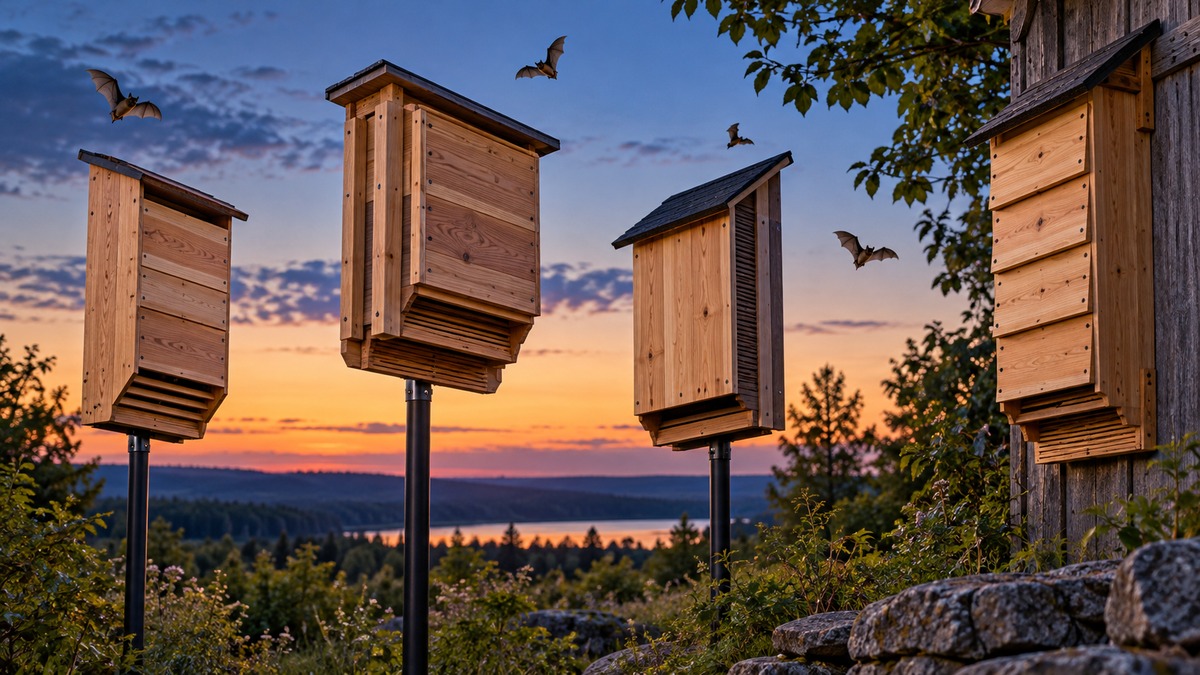
The best bat houses for most yards are the ones with a chamber layout, a weather-tight wooden body, and a mounting method that lets you place the house high on a building or pole in a sunny spot. This guide compares seven outdoor bat houses from six brands. It uses the title and first bullets of each product page, plus the spec rows the page showed. The placement and handling advice below comes from state and wildlife sources, not from the listings, and it matters as much as the product. A bat house that is mounted too low, shaded or on a tree may not be used, and a bat found on the ground should not be handled.
Quick answer
- Mount high. Virginia’s wildlife agency recommends at least 12 feet above the ground and says about 20 feet is preferable, and the National Wildlife Federation says 15 to 20 feet is better.
- Face it toward the sun. The National Wildlife Federation says to face the house south, southeast or east, and Virginia says a southern exposure is best.
- Do not put it in a tree. Virginia says boxes should usually not be attached to trees, because they will likely not receive enough sunlight.
- Do not touch a bat. The Texas Department of State Health Services says that if you find any bat, even a dead one, you should not touch it and should tell an adult right away.
What a bat house has to do
A bat house has to give bats a roost that is warm, dry and sheltered from the weather, and it has to be placed where bats can reach it. The listings describe the roost in their bullets: most use a chamber layout with wood or cedar walls, a roughened or grooved interior and ventilation gaps. Those features are listing statements about the design. They are the features a buyer can check, and they are the features this guide compares.
Placement is the job that decides whether a roost is used at all. Virginia’s wildlife agency says the house should be placed “at least 12 feet above the ground and preferably around ‘second floor’ height (approximately 20 feet).” The National Wildlife Federation says the house should be installed “at least 15 feet off the ground, preferably on the side of a building.” The two sources agree on the floor of the height, and they differ on the target, so use the higher figure when the wall allows it.
Sun is the second job. Virginia’s wildlife agency says the house “should be oriented to maximize sun exposure (preferably 8 hours or more): generally this means a southern exposure is best.” The National Wildlife Federation says to install the house “so that it faces south, southeast, or east,” because those faces give morning sun that helps keep the house at a steady temperature. The two sources agree on the south-facing wall and on the need for direct light.
Mounting is the third job. Virginia’s wildlife agency says boxes “should usually not be attached to trees, as they will likely not receive sufficient sunlight.” Several listings in this group describe a pole, wall or tree mount. The sources in this guide advise against a tree for most sites and point to a building wall or a pole in the open sun. Plan the mount before you buy, because a house on a tree may face shade.
Two numbers from the sources are worth keeping on a card. The first is the height: 12 feet at minimum, about 20 feet as preferred. The second is the sun: eight hours or more, from a southern exposure. Those are the settings the sources give, and the listings should be read against them.
Chambers, wood and capacity
The seven listings split into two-chamber and three-chamber designs. UvasDulces, WildYard, Luvioro, Sobalai and KIBAGA describe two chambers, and the two Capruzad listings describe three chambers and a castle design with two or three chambers. The chamber count matters less than the placement, but the NWF tip sheet says a bat house “at least 24 inches tall by 16 inches wide will be more successful than a smaller one,” and that houses with “multiple narrow chambers are more likely to” get used. Those are the NWF’s own words, and this guide cites them as a source, not as a product claim.
Wood is the second feature. Most listings describe cedar or pine. The WildYard listing says the cedar house is “naturally tough against rot,” and the Luvioro listing describes “thickened 12–15 mm boards.” The KIBAGA listing gives its size as 16.5 by 10.2 by 4 inches, and the Sobalai title describes a 15-inch Big Bat Box. The sizes are the most useful numbers in these bullets, because they show whether the house is close to the NWF’s 24-inch minimum height.
Capacity is the claim buyers look at first. WildYard’s title says the house “Holds 75,” and the Luvioro bullets say the house “can accommodate up to 75 bats.” Neither listing gives a source for the figure. The UvasDulces listing gives dimensions in millimeters: 400 mm high, 242 mm wide and 90 mm deep. Converted to inches, 400 divided by 25.4 is 15.75 and 242 divided by 25.4 is 9.53, which match the inch figures in the bullet. A capacity figure is a listing claim, and the size is a measurement you can check.
Set the sizes against the NWF tip sheet, which says a house “at least 24 inches tall by 16 inches wide will be more successful than a smaller one.” The UvasDulces house is 15.75 inches high, so 24 minus 15.75 is 8.25 inches short on height, and its 9.53 inch width is 16 minus 9.53 is 6.47 inches short on width. The Sobalai title gives a 15-inch house, which is 9 inches short of the 24-inch height the NWF names. A smaller house is not a reason to skip a purchase, but it is a reason to check the other size and chamber features before you buy.
Mounting hardware and what comes in the box
Most listings say the house comes pre-assembled. The UvasDulces bullets describe a “fully assembled package” with screws and a placement guide. The Luvioro bullets describe a “pre-assembled” kit with “mounting hardware plus a clear instruction manual,” and the Sobalai listing includes “screw*3.” The WildYard listing gives “stainless steel hardware” and says it installs on “trees or houses.”
The mounting parts matter because they decide where you can use the house. Luvioro includes a spirit level and gloves in its kit, which helps with a level mount. Capruzad’s castle listing describes “a simple hanging system,” and the Caped Hero listing describes a pole or building mount. Read the mount line before you buy, because a house that comes with a pole bracket is a different project from one that comes with screws for a wall.
The table below sets out the main features of the seven listings. Use it to compare the chamber layout, the wood and the mount side by side.
| Listing | Chambers | Wood as listed | Stated capacity | Mount and parts |
|---|---|---|---|---|
| UvasDulces | Two | Stained pine | Not stated | Screws and screwdriver included |
| WildYard (BIGBATBOX title) | Two | Cedar | Holds 75 | Pole, wall or tree mount kit, stainless hardware |
| Capruzad (Caped Hero) | Three | Wood | Not stated | Pole or building mount |
| Luvioro (BatnBats) | Two | Cedar, 12 to 15 mm boards | Up to 75 | Hardware kit, manual and spirit level |
| Sobalai | Two | Cedar | Not stated | Pre-assembled with screws |
| Capruzad (castle) | Two or three | Wood | Not stated | Simple hanging system |
| KIBAGA | Two | Cedar | Not stated | Pre-assembled with screws |
1. Bat House for Outdoors, 2-Chamber Pine Wood Bat Box, Preassembled, Brown (Two-chamber pine bat house, preassembled)
Pros
- The bullets describe a center-divided two-chamber design with a grooved interior for bats to cling to
- The bullets say the house is fully assembled with screws and a placement guide included
- The bullets give dimensions of 400 by 242 by 90 millimeters, or 15.75 by 9.53 by 3.54 inches
Cons
- The bullets do not state a capacity for the house
- The bullets do not describe a pole or wall mount, so the mounting hardware needs checking
Best for: A buyer who wants a preassembled pine house with a two-chamber layout and a size guide
Skip if: You need a stated capacity or a pole bracket in the box
View on Amazon (affiliate link)
2. BIGBATBOX Bat House for Outdoors – Large 2 Chamber, Brown Cedar, Holds 75 (Large two-chamber cedar bat house that holds 75)
Pros
- The title and bullets describe a cedar house that the listing says holds up to 75 bats
- The bullets describe pole, wall and tree mounting with stainless steel hardware
- The bullets say the setup takes six steps with the hardware included
Cons
- The 75-bat capacity is a listing claim with no source for the figure
- The bullets describe bats as nature's helpers without a source for the ecology claim
Best for: A yard owner who wants a cedar two-chamber house with a choice of mounts
Skip if: You need a source for the capacity figure
View on Amazon (affiliate link)
3. Caped Hero Bat House for Outdoors – Wooden Large Three Chamber Box Perfectly Designed to Attract (Three-chamber wooden bat house with ventilation)
Pros
- The bullets describe three separate chambers and ventilation for airflow and moisture
- The bullets describe a wooden body built to withstand outdoor weather
- The bullets say the house should be mounted 12 to 20 feet up, facing south or southeast
Cons
- The bullets do not state a capacity or a wood species
- The bullets spend much of their text on the Caped Hero theme rather than on the chamber design
Best for: A buyer who wants three chambers and a mounting height that matches the sources
Skip if: You need a stated capacity or a cedar body
View on Amazon (affiliate link)
4. BatnBats Bat House for Outdoors, Bat Box for Outside, 2-Chamber Cedar (Two-chamber cedar bat house with 12 to 15 mm boards)
Pros
- The bullets describe cedar with thickened 12 to 15 mm boards and rust-resistant hardware
- The bullets say the house arrives pre-assembled with mounting hardware, a manual and a spirit level
- The bullets describe unpainted interior roosting surfaces with ventilation for airflow
Cons
- The bullets state a capacity of up to 75 bats with no source for the figure
- The bullets describe the house as chemical-free without naming a finish
Best for: A buyer who wants a cedar house with a level and mounting kit in the box
Skip if: You need a bat house with a stated mount for a pole
View on Amazon (affiliate link)
5. Bat Houses for Outdoors – 15″ Big Bat Box 2 Chamber Cedar Wood Bat Houses for Outside & Tree (15-inch two-chamber cedar bat house)
Pros
- The title and bullets describe a 15-inch cedar house with two chambers and a pre-assembled body
- The bullets say the pre-assembled house comes with screws and is very easy to install
- The bullets say the house has a one-year warranty
Cons
- The bullets claim an occupancy rate above 95 percent after trials, with no source for the figure
- The bullets advise avoiding direct sunlight, which conflicts with the sun advice in the sources
Best for: A buyer who wants a cedar two-chamber house with a one-year warranty
Skip if: You need a sourced occupancy figure before you buy
View on Amazon (affiliate link)
6. Wooden Castle Bat House with Gatehouse/Tower/Curtain Wall Design, Large Ventilated 2/3 Chamber Bat (Wooden castle bat house with a gatehouse and tower)
Pros
- The bullets describe a castle design with a gatehouse, tower and curtain wall in a 2/3 chamber layout
- The bullets say ventilation gaps help air circulate and reduce humidity
- The bullets describe a simple hanging system for trees, poles or walls
Cons
- The bullets describe the design as attractive decor and do not give a capacity figure
- The bullets do not give the wood type or the board thickness
Best for: A buyer who wants a decorative wooden bat house with a multi-chamber layout
Skip if: You want a plain house with a stated capacity or wood type
View on Amazon (affiliate link)
7. The Ultimate Wooden Bat House for Outdoors – Large Double Chamber Box (Large two-chamber dark brown cedar bat house)
Pros
- The bullets give a size of 16.5 by 10.2 by 4 inches for the two-chamber cedar house
- The bullets describe a pre-assembled house with the included screws and an easy mount
- The bullets say the cedar is long-lasting and waterproof for outdoor use
Cons
- The bullets describe the house as an ecosystem aid without a source for the claim
Best for: A buyer who wants a large two-chamber cedar house with its size stated
Skip if: You need a capacity figure before you buy
View on Amazon (affiliate link)
Handling and what to do if you find a bat
The handling advice is the one place where the safety sources are clear and consistent, and it does not depend on the product. The Texas Department of State Health Services pamphlet on bats and rabies says, “If it’s a bat, don’t touch that!” It adds, “Remember, if you find any bat, even if it is dead, do not touch it. Tell an adult right away about the bat and where you found it.”
The same pamphlet explains why. It says that rabies “is a deadly disease caused by a virus,” that “you can get rabies if an animal that has rabies bites you,” and that “bat teeth are so small you might not even know you were bitten!” If you do touch a bat, the pamphlet says to “tell an adult right away,” because “there is medicine that can keep you from getting rabies,” and it must be given soon after contact.
A bat house in your yard does not change that advice. Do not handle a bat that falls from a house or lands on the ground, and tell an adult right away, as the Texas pamphlet advises.
Placement checklist
Before you mount a bat house, check the list below against the sources. Each item comes from the state or wildlife sources in this guide, and each one changes whether the house is likely to be used.
- Height: at least 12 feet above the ground, and closer to 20 feet where the building allows, from Virginia’s wildlife agency and the NWF.
- Sun: a southern exposure with eight hours or more of direct light, from Virginia’s wildlife agency, or a south, southeast or east face, from the NWF.
- Mount: a building wall or a pole, rather than a tree, from Virginia’s wildlife agency.
- Clearance: an open flight path in front of the house, which the NWF describes as the reason the house should be placed on a building side.
- Handling: no touching a bat on the ground or in the house, and telling an adult right away, from the Texas pamphlet.
Matching a house to a yard
A small yard with one sunny building wall has room for one house. The sources ask for a face that gets eight hours or more of sun, so pick the wall first and the listing second. The Luvioro and WildYard listings both include their mounting hardware, which suits a wall with a clear face and no time to find separate brackets. A larger property with a pole can take a house that the bullets describe for a pole mount, such as the Caped Hero listing, which says it should be mounted “on a pole or building.”
Count the mounts before you buy. A house that comes with a pole bracket is a different kit from one that comes with screws only, and the table above shows which listings describe each one. The Capruzad castle listing describes a hanging system for trees, poles or walls, so read that line carefully if you plan to hang it from anything other than a wall.
Mistakes to avoid
- Mounting it low. The sources give a minimum of 12 feet, and a low house is outside the range the sources describe.
- Putting it in a shaded tree. Virginia’s wildlife agency says trees usually do not get enough sunlight, which is the reason to choose a building wall or pole.
- Facing it away from the sun. The NWF names south, southeast and east as the faces that give morning sun, so a north face is outside that guidance.
- Assuming a capacity figure is a fact. WildYard and Luvioro both state 75 bats, and neither gives a source, so treat the figure as a listing claim.
- Handling a bat you find on the ground. The Texas pamphlet says not to touch a bat, even a dead one, and to tell an adult.
How we chose
We searched Amazon.com for “bat houses” in Chrome on 21 October 2026 and read the first results page. Every result was an outdoor bat house, and we read seven of them. This guide does not use the bird house posts on this site, because a bat house answers a different buying question. We read the title and the first five feature bullets of seven bat houses from six brands, along with any spec rows the page showed. Two of the seven come from the same brand, Capruzad, because the two listings are different designs. Chrome gave us titles and bullets only, so this guide does not use prices, ratings, sales ranks or availability.
What we could not verify
- The occupancy and capacity claims. WildYard and Luvioro state 75 bats, and the Sobalai bullets claim an occupancy rate above 95 percent after trials. None of those figures comes with a source, and this guide does not repeat them as fact.
- The ecology claims in the listings. The Sobalai bullets say one bat can eat up to 600 mosquitoes in an hour, and we did not verify that number.
- Whether any of these houses will be used in your area. The sources give placement advice, and none of them says how often a given design is used.
- The wood durability and the rot resistance. The WildYard and Luvioro bullets say the cedar is tough against rot, and this guide does not check that claim.
- Whether the Caped Hero bullets’ 12 to 20 foot range describes the same mount the sources do. The listing says “pole or building” and does not say which one it means.
- The safety of a house in a yard with children or pets, which the sources do not cover for specific products.
FAQ
How high should I mount a bat house?
Virginia’s wildlife agency says at least 12 feet above the ground, with about 20 feet preferred. The National Wildlife Federation says at least 15 feet, preferably on the side of a building, and says 15 to 20 feet is better. Use the higher figure when the building or pole allows it.
Which direction should a bat house face?
The NWF says to face the house south, southeast or east, because those faces give morning sun that helps keep the house at a steady temperature. Virginia’s wildlife agency says a southern exposure is best and that the house should get eight hours or more of sun. Both sources point to a sunny face.
Can I hang a bat house in a tree?
Virginia’s wildlife agency says boxes should usually not be attached to trees, because they will likely not receive enough sunlight. Several listings describe tree mounts, and the sources in this guide say a building wall or a pole in open sun is the better choice.
What should I do if I find a bat on the ground?
Do not touch it. The Texas Department of State Health Services pamphlet says, “If it’s a bat, don’t touch that!” and says that even a dead bat should not be touched.
Will a bat house attract bats on its own?
The listings say their houses are built for roosting bats, and the Sobalai bullets claim an occupancy rate above 95 percent after trials. The sources we opened do not give a rate of use. Virginia’s wildlife agency says that “each location has unique features unto itself,” so the placement advice is a starting point rather than a promise. Mount the house to the height and sun the sources describe, and treat any occupancy figure as a claim to check.
Bottom line
Mount the house at least 12 feet up, preferably higher, on a building wall or pole in full sun, facing south, southeast or east. Pick a design with two or three chambers and a wood that the listing describes as weather-tight. Treat the stated capacity as a listing claim, and do not handle a bat you find, because the Texas pamphlet is clear that a bat should not be touched. For a related guide on what to hang in your yard, see the birdhouse hanging guide and the tall free-standing feeder guide.
Sources
- Virginia Department of Wildlife Resources, “Bat Houses”. https://dwr.virginia.gov/wildlife/bats/bat-houses/
- National Wildlife Federation, “How to Build a Bat House” tip sheet. https://www.nwf.org/bathousetipsheet
- Texas Department of State Health Services, Zoonosis Control, “Bats and Rabies” pamphlet (Stock No. 7-39). https://dshs.texas.gov/sites/default/files/IDCU/disease/rabies/information/pamphlet/bats_rabies.pdf