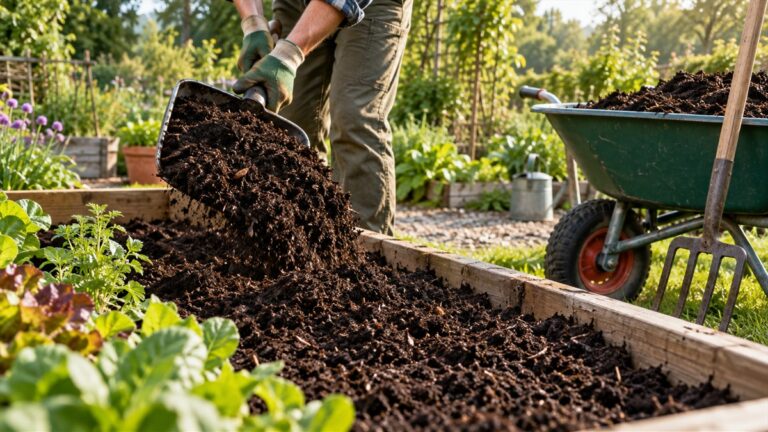
Best Garden Fork: Six Forks Compared by Tines, Handle and Length
As an Amazon Associate we earn from qualifying purchases. Details
The best garden fork for most home gardeners is the one whose tine count, handle material and length match the job in front of you. The person typing best garden fork wants a tool that loosens and turns soil, lifts compost and mulch, and does the heavy part of the work without straining the back. This guide compares six garden forks from six different brands, using the tine counts, handle materials, lengths and assembly details stated on their Amazon listings. We read those listings on 21 October 2026. Where the listings say nothing, we say so.
Quick answer
- For breaking up hard ground and root-filled soil, the five-tine UIABOPZ listing describes the most robust digging head in this group: a welded steel head with five tapered tines, a foot step bar and a tilt bracket.
- For lifting compost, mulch, hay and straw, the four-tine listings from FARMHOLYCOWKING, COSITA, GARDENWORK and Lcokeiy are built for that job according to their bullets. Check the handle material first, because the FARMHOLYCOWKING and GARDENWORK listings give conflicting details.
- COSITA’s listing says its fork is “Not Recommended for Compacted Soil or Clay”, so do not buy it for heavy digging.
- If you want stainless steel with a wood handle, the Spear & Jackson listing gives both in its specification table, along with a 10-year warranty against manufacturing defects. Its bullets do not give a tine count.
What the person typing this phrase wants
The person typing best garden fork wants a fork with a row of tines on one head, used for digging, loosening, aerating and turning soil, and for moving compost, mulch and hay. That is the product type this guide covers. Three details decide how a fork feels in use: the tine count, the handle material and the overall length. A fourth detail, weight, matters when you use the fork for long stretches.
Listings in this category often mix up those details. A title may say steel handle while the bullets say something else, or a page may describe a fork and a broadfork in the same breath. So this guide reads each listing for the four details above and reports the conflicts as they appear, rather than picking the most favourable sentence.
How we chose
We searched Amazon.com for “best garden fork” in Chrome on 21 October 2026 and read the first results page. We kept listings whose title or bullets describe a garden or digging fork with tines on one head. We left out broadforks, which appeared as separate listings on the same page, a garden cultivator, and a multi-piece gardening tool set. We chose one listing per brand, so no maker appears twice in the set. Six listings from six brands met those rules.
For each chosen listing we read the title, the brand line, every bullet and the specification table. We did not extract prices, ratings, sales rank or availability, so this guide does not discuss them. Every spec and claim below comes from a listing or from the sources named at the end of this guide, and where a listing contradicts itself we say so.
Tine count: four tines or five
Tine count is the first detail to check. Five of the six listings give a count somewhere in the title or bullets. Four titles state it: FARMHOLYCOWKING and COSITA say four tines, GARDENWORK says four-tine, and UIABOPZ says five-tine. The Lcokeiy bullets say four tines. The Spear & Jackson listing refers to “stainless steel prongs” in its bullets but does not give a number.
Table 1 sets out what each listing says about tines, handle material, length and assembly. Each cell is copied from the listing, and the source inside the listing is named in brackets.
| Brand | Tines (per listing) | Handle (per listing) | Length (per listing) | Assembly (per listing) |
|---|---|---|---|---|
| FARMHOLYCOWKING | 4 (title) | Steel (title); polypropylene (specification table); the bullets describe steel | 45 inches (title); 45.3 inches item length (specification table) | Not stated |
| UIABOPZ | 5 (title) | Fiberglass (title and bullets) | 43 inches (title) | Three pieces, under 2 minutes, without tools (bullets) |
| COSITA | 4 (title) | Fiberglass (title) | 44 inches (title) | Tool-free (bullets) |
| Spear & Jackson | Not stated | Wood (specification table) | 39.76 inches overall (specification table) | Not stated |
| GARDENWORK | 4 (title) | Steel D-handle (title); carbon steel (bullets); fiberglass (page title) | 45 inches (title) | Four screws and two wrenches (bullets) |
| Lcokeiy | 4 (bullets) | ABS plastic D grip (bullets) | 45-inch long handle (bullets) | About five minutes with the included tools (bullets) |
Table 1 shows where the listings agree and where they do not. Four titles name a handle material. Two say steel (FARMHOLYCOWKING and GARDENWORK) and two say fiberglass (UIABOPZ and COSITA). The Spear & Jackson specification table is the only one that gives a wood handle. The FARMHOLYCOWKING specification table then gives polypropylene, which conflicts with its own title and bullets, and the GARDENWORK page title refers to fiberglass where its product title says steel.
Five tines for hard ground: the UIABOPZ listing
The UIABOPZ listing is the one to read first if your ground is hard. Its bullets describe a robustly welded steel head paired with a high-strength fiberglass handle, and a forged head with five tapered tines. The listing says the tines are thickened and resist bending under heavy impact. It names tasks such as loosening soil, removing roots and rocks, and harvesting potatoes and other root vegetables.
The listing also describes a wide step bar, which lets you push the tines down with your foot rather than with your arms. It says the foot plate has a double-layer support plate that resists deformation under heavy use. Behind the head, a built-in tilt bracket is described as a pivot for prying up heavy soil clumps. These are the features that matter when the tines are going into compacted ground, and they are the reason the UIABOPZ listing belongs in the digging group rather than the lifting group.
The handle is 43 inches according to the title, and the specification table gives an overall product dimension of 8 by 4 by 43 inches. The bullets describe a D-shaped handle with a soft foam grip. The listing also says the three-piece design assembles in under two minutes without tools, and that the D-handle can be set parallel or perpendicular to the shaft for different tasks.
The specification table gives an item weight of 6.2 pounds. That is the highest figure among the six listings, as Table 2 shows. For a tool used over a long digging session, that weight is the first thing to weigh up against the bullets’ claims. Skip this fork if you mainly lift compost or mulch, because the weight is the main drawback on those jobs.
Table 2 gives the item weights that appear in each specification table. These are the listing figures only.
| Brand | Item weight (per specification table) |
|---|---|
| UIABOPZ | 6.2 pounds |
| GARDENWORK | 5 pounds |
| FARMHOLYCOWKING | 4.59 pounds |
| COSITA | 4.49 pounds |
| Spear & Jackson | 4.29 pounds |
| Lcokeiy | 3.99 pounds |
The gap between the heaviest listing, at 6.2 pounds, and the lightest, at 3.99 pounds, is 2.21 pounds. The listings do not say whether each weight includes packaging or the full handle in the same way, so compare the figures as listed and no more.
Four tines for compost, mulch and hay
Four of the six listings describe a four-tine fork for turning compost and lifting mulch, hay and straw. They are FARMHOLYCOWKING, COSITA, GARDENWORK and Lcokeiy. Each is a different product, and each describes its job in different words.
FARMHOLYCOWKING orange pitch fork
This listing is a four-tine spading fork with a 45-inch length. Its bullets say the fork is designed for everyday digging, turning compost, loosening soil and moving mulch. They say the four tines offer balanced spacing for efficient soil penetration and material lifting. The bullets describe a reinforced steel head and a steel handle that resist bending and breaking, and they name an enhanced D-handle. The specification table, however, gives the handle material as polypropylene and the material type as metal, plastic and rubber. A buyer who needs a steel handle should confirm it on the product page before ordering, because the two descriptions do not match.
The bullets also say the 45-inch length provides leverage that reduces back strain. That is a claim from the listing, and the sources we opened do not measure it. The specification table shows an item weight of 4.59 pounds and a finish described as brushed.
COSITA red pitchfork
COSITA is a 44-inch pitchfork with a fiberglass handle and four metal tines, according to its title. Its first bullet describes a heat-treated steel head that the listing says resists bending, rust and corrosion. That bullet then adds, in parentheses, that the fork is “Not Recommended for Compacted Soil or Clay”. This is the clearest restriction in the set, and it places COSITA in the lifting group. The bullets name hay, straw, mulch, leaves and compost as its main jobs.
The second bullet describes a fiberglass shaft with a non-slip cushion grip. The fourth bullet says the fork assembles in seconds without extra tools and that the steel head and fiberglass shaft are bonded with a reinforced joint. The fifth bullet describes a D-grip and balanced weight distribution. The package dimensions in the specification table are 17.95 by 8.82 by 3.5 inches, and the item weight is 4.49 pounds. The specification table does not give a separate handle length, so the 44-inch title figure is the listed length.
GARDENWORK pitch fork with a four-tine head
GARDENWORK’s listing is a four-tine, 45-inch garden fork. The product title says it has a steel D-handle. The bullets describe high-quality hot-rolled steel teeth with a coating that the listing spells PTEE, and an ergonomic Y-shaped grip. One bullet describes its “all carbon steel material”, which supports the steel reading, but the browser page title refers to an ergonomic fiberglass handle. The listing does not reconcile these, so GARDENWORK belongs in the group to check before buying, not in a group of confirmed steel forks.
The listing says the fork installs with four screws and two wrenches in about a minute, and that the 45-inch length is easy to control even for older users. The specification table gives an item weight of 5 pounds and an alloy steel material type. The bullets say the fork suits farmers, ranchers and gardeners, and they name hay, straw, coverings and leaves as the loads it lifts and flips.
Lcokeiy long-handled pitchfork
The Lcokeiy listing has a title that says metal broadfork, but its bullets describe a manure fork with four tines and an ABS plastic D grip. We treat it as a garden fork because the bullets describe that tool and the keyword asks for one. The bullets say the tines are 11 inches deep and sharpened at the tips to reach under shavings and remove wet areas. They describe a 45-inch long handle that gives tall gardeners comfort from bending over, and a wide foot pedal with anti-slip grip.
The bullets say the fork assembles in five minutes by screwing the poles together with the tools provided. The specification table gives a product dimension of 45 by 8 by 1 inches and an item weight of 3.99 pounds, the lightest figure in Table 2. The listing does not say how stiff the handle is at that weight, and the title and bullets disagree about the head type.
Stainless steel and a wood handle: the Spear & Jackson listing
The Spear & Jackson listing is the only fork here with a wood handle named in its specification table, and it also names a stainless steel blade there. The model number is 4550DF, and the item type is listed as digging fork. The bullets describe corrosion-resistant stainless steel, a traditional design for breaking up soil and aerating, and multipurpose use for digging, turning compost and weeding. The bullets also say the stainless steel prongs are designed for long use in all types of soil.
The specification table gives a 10-year warranty against manufacturing defects. That is a figure from the listing, and the full warranty terms are not in the listing data, so treat it as a summary. The item weight is 4.29 pounds and the overall dimension is 39.76 by 7.28 by 4.92 inches. The listing does not state a tine count. If the number of tines matters to you, choose one of the listings in Table 1 that gives a count. Skip this fork if you want a fiberglass handle, since the specification table names wood.
Handle length, height and your back
Handle length is the spec that most affects how a fork feels across a whole bed, and the listings give it in three different ways: as a title figure, as an overall product dimension, or only in the bullets. The lengths in Table 1 run from 39.76 inches overall for Spear & Jackson to 45 inches for several listings. None of the listings gives the height of the user it suits.
Penn State Extension’s guidance on garden lifting is clear about the body mechanics that matter with any long-handled tool. It advises gardeners to “Lift Properly and Within Your Limits,” and it says, “Shoveling can often be considered just a different form of lifting!” The same article says, “When shoveling, keep your hands widely separated for good leverage.” It also says to “Bend at the hips and knees, not at the waist,” and warns, “Avoid prolonged bending over because it fatigues the lower back muscles.”
Those points apply to a garden fork as much as to a shovel. The UIABOPZ, FARMHOLYCOWKING and GARDENWORK bullets claim that their long handles reduce back strain or make upright work possible. The listings do not measure that effect, and no extension source we opened does either, so the claim stays with the listing. The Ohio State Extension factsheet on gardening with a physical limitation gives a general rule that fits the choice of length: “Make sure the tool is the appropriate size for the task, and that it is easy to maneuver.” It also says, “Ergonomic tools feature handles that keep the body in a neutral position.”
What the listings say about assembly
Assembly matters for a fork that you carry to a shed, a compost pile and a raised bed. Three listings describe tool-free or quick assembly. UIABOPZ says its three-piece design assembles in under two minutes and disassembles for storage. COSITA says its fork is tool-free and sets up in seconds. Lcokeiy says five minutes with the tools provided. GARDENWORK says four screws and two wrenches, which the listing says take about a minute to fit.
Spear & Jackson and FARMHOLYCOWKING do not describe assembly in the bullets we read. If you need to take the fork apart for transport, check the product page for a disassembly statement before you buy.
Caring for the head after use
The Kansas State University publication MF3288 gives a clear routine for digging tools. It says, “Clean the blade. Using a stiff brush and/or scouring pad and soapy water, remove any rust, clumped dirt, or other debris.” It then says to dry the tool with a clean rag, and if the metal is heavily rusted, to use steel wool or a wire brush. The same publication says that “Cleaning and lubrication protects metal tools and slows further rusting even when tools are stored in a damp or unheated garden shed.”
That routine applies to every fork in this guide, whatever the head material, because each listing describes a steel or stainless steel head. The Ohio State Extension factsheet makes a broader point about care: “Keep tools sharp and in good condition; this allows the tool to do more of the work, creating less stress on the body.” The same factsheet applies that point to every tool, and it does not single out forks.
Where a garden fork fits in a raised bed
Many readers buy a garden fork for raised beds. If you are working a bed, our raised bed soil guide explains how much soil a bed needs, which tells you how much turning and lifting the job involves. For the filling step, read how to fill raised beds before you choose a fork.
The listings name the jobs each fork suits, and we rely on them for that. The UIABOPZ listing names breaking up and loosening hard soil. The four-tine listings name turning compost, mulch, hay and straw. Match the tine count to the job the listing names, and do not use a fork on compacted soil if its listing says it is not for compacted soil.
What we could not verify
- Durability. The bullets describe steel that resists bending, stainless steel that resists rust, and a fiberglass shaft that does not splinter. The sources we opened do not cover fork durability, so none of those claims is confirmed here.
- The handle material of FARMHOLYCOWKING. The title and bullets describe a steel handle, and the specification table gives polypropylene. We could not resolve that from the listing.
- The handle material of GARDENWORK. The product title says steel D-handle, the bullets describe carbon steel and the browser page title refers to a fiberglass handle.
- The product type of the Lcokeiy listing. Its title says metal broadfork, while its bullets describe a four-tine manure fork with an ABS plastic D grip.
- Whether any fork fits your height. The listings give lengths but no user height range, and the sources we opened do not give one for these tools.
- The warranty behind the Spear & Jackson figure. The specification table gives a 10-year warranty against manufacturing defects, but the full terms are not in the listing data.
- How a five-tine head performs in clay. The UIABOPZ bullets say its tines “easily penetrate and break through hard, compacted clay”. That is a listing claim, and the sources we opened do not confirm it.
- Whether the weights in Table 2 include the handle or the packaging. They are specification table figures only.
- Prices, stock levels and delivery times, which are not in the listing data.
1. Garden Fork, 43 Inch Pitch Fork with Fiberglass Handle & Foot Bracket, Heavy Duty 5-Tine Pitchfork (Five-tine digging fork with a foot step bar and tilt bracket)
Specs from the listing (checked ):
- Item Weight: 6.2 pounds
- Product Dimensions: 8 x 4 x 43 inches
Pros
- The bullets describe a forged head with five tapered tines that break through hard, compacted clay
- The bullets describe a wide step bar and a tilt bracket for prying up heavy soil clumps
Cons
- The specification table gives an item weight of 6.2 pounds, the highest of the six listings
- The bullets describe three-piece assembly without tools but do not say how the joints hold under load
Best for: A gardener who digs compacted beds or root-filled soil and wants a foot step bar
Skip if: You mainly lift compost or mulch, because the listed weight is the highest here
View on Amazon (affiliate link)
2. Pitch Fork for Garden, 4-Tines Garden Fork, 45-Inch Spading Fork, Heavy Duty Compost Digging Fork (Four-tine spading fork in orange, 45 inches long, for compost and mulch)
Specs from the listing (checked ):
- Item Weight: 4.59 pounds
- Color: Orange
Pros
- The bullets describe a four-tine fork for turning compost, loosening soil and moving mulch
- The bullets say the 45-inch length provides leverage that reduces back strain
Cons
- The specification table gives a polypropylene handle while the title and bullets describe steel, so the handle must be checked
- The bullets do not give tine length or head thickness
Best for: A gardener who turns compost and wants a four-tine fork in one long length
Skip if: You need a handle material you can confirm, because the listing gives two different materials
View on Amazon (affiliate link)
3. COSITA Pitch Fork for Garden, 44-Inches Pitchfork with Fiberglass Handle, Gardening Spading Fork (Four-tine fiberglass pitchfork for hay, straw and mulch)
Specs from the listing (checked ):
- Item Weight: 4.49 pounds
- Manufacturer: COSITA
Pros
- The bullets describe a heat-treated steel four-tine head that the listing says resists bending and rust
- The bullets describe tool-free assembly and a D-grip with balanced weight
Cons
- The bullets say the fork is not recommended for compacted soil or clay
- The bullets describe lifting and aerating hay, straw and mulch rather than digging into hard ground
Best for: A barn, greenhouse or compost owner who lifts hay, straw and mulch
Skip if: You want a fork for breaking up clay, which the bullets rule out
View on Amazon (affiliate link)
4. Spear & Jackson Traditional Stainless Steel Digging Fork, Heavy Duty Durable Stainless Steel Garden (Stainless steel digging fork with a wood handle)
Specs from the listing (checked ):
- Item Weight: 4.29 pounds
- Handle Material: Wood
- Manufacturer Warranty Description: 10-Year against manufacturing defects
Pros
- The specification table gives a stainless steel blade and a wood handle
- The specification table gives a 10-year warranty against manufacturing defects
Cons
- The bullets do not state a tine count, so the number of tines cannot be confirmed
- The listing names a wood handle only, with no fiberglass or steel option
Best for: A gardener who wants a stainless steel head and a traditional wood handle
Skip if: You need a stated tine count before buying
View on Amazon (affiliate link)
5. Pitch Fork,4-Tine,45-Inches Garden Fork with Steel D-Handle for Gardening (Four-tine 45-inch garden fork with conflicting handle details)
Specs from the listing (checked ):
- Item Weight: 5 pounds
- Material Type: Alloy Steel
Pros
- The product title gives a four-tine, 45-inch garden fork with a steel D-handle
- The listing says four screws and two wrenches assemble it in about a minute
Cons
- The browser page title refers to a fiberglass handle while the bullets describe carbon steel, so the handle material is unclear
- The bullets name a rubber grip and a Y-shaped handle, which the listing does not reconcile with the steel description
Best for: A buyer who wants four tines and a 45-inch length and will confirm the handle first
Skip if: You need a confirmed handle material before you buy
View on Amazon (affiliate link)
6. Pitch Fork, Metal Broadfork Garden Tool Long Handle, 4 Tine Mulch Hay Manure Digging Bedding Hay (Four-tine manure fork with a 45-inch handle and a plastic D-grip)
Specs from the listing (checked ):
- Item Weight: 3.99 pounds
- Product Dimensions: 45 x 8 x 1 inches
Pros
- The bullets say the tines are 11 inches deep and sharpened at the tips to reach under shavings
- The bullets describe a 45-inch handle and a wide foot pedal with anti-slip grip
Cons
- The title says metal broadfork while the bullets describe a four-tine fork with an ABS plastic D grip
- The bullets do not state the head material
Best for: A gardener who wants a light manure fork with a long handle and quick assembly
Skip if: You need a metal handle or a confirmed head material before you buy
View on Amazon (affiliate link)
FAQ
Is a four-tine or five-tine garden fork better?
Neither is better for every job. The UIABOPZ listing describes five tines for digging into hard, compacted ground and root-filled soil. The FARMHOLYCOWKING, COSITA, GARDENWORK and Lcokeiy listings describe four tines for turning compost and lifting mulch, hay and straw. Match the tine count to the ground you dig, and check the listing before you use a four-tine fork on clay, because COSITA says its fork is not recommended for compacted soil or clay.
Can a garden fork break up compacted clay?
The UIABOPZ bullets say its five tapered tines “easily penetrate and break through hard, compacted clay”. The COSITA bullets say the opposite for that fork, which is “Not Recommended for Compacted Soil or Clay”. The sources we opened do not cover clay digging with forks, so the choice rests on the listing you read. If the listing does not state clay, treat clay performance as unconfirmed.
How long should a garden fork handle be?
The listings in this guide give lengths of 43 inches for UIABOPZ, 44 inches for COSITA, and 45 inches for FARMHOLYCOWKING, GARDENWORK and Lcokeiy. The Spear & Jackson specification table gives an overall length of 39.76 inches. None of the listings gives a user height range. Ohio State Extension advises choosing a tool that is “the appropriate size for the task,” and the handle length should suit both the job and the person using it.
Do I need to clean a garden fork after use?
Yes. The Kansas State publication says to remove rust, clumped dirt and other debris from digging tools with a stiff brush or scouring pad and soapy water, then dry the tool with a clean rag. Heavy rust calls for steel wool or a wire brush, according to the same publication. The routine is the same whichever head material a fork has, because the publication does not separate the materials.
Bottom line
Choose the tine count from the ground you dig. Five tines, as in the UIABOPZ listing, suit hard and root-filled soil according to its bullets, and four tines suit compost, mulch and hay. Confirm the handle material on the product page before you buy, because two listings give conflicting handle details. Skip any fork whose listing says it is not for compacted soil if your ground is compacted.
Sources
- Penn State Extension, “Healthy Tips to Garden with Fewer Aches and Pains”: https://extension.psu.edu/healthy-tips-to-garden-with-fewer-aches-and-pains
- Kansas State University Agricultural Experiment Station and Cooperative Extension Service, MF3288 (March 2018): https://bookstore.ksre.ksu.edu/pubs/mf3288.pdf
- Ohio State University Extension (Ohioline), “Gardening with a Physical Limitation”, AEX-983.3: https://ohioline.osu.edu/factsheet/AEX-983.3