Easiest Way to Make a Raised Garden Bed
As an Amazon Associate we earn from qualifying purchases. Details
The easiest raised bed is the one with the fewest parts to buy, cut and fasten. The extension pages we opened describe three routes: an unframed mound of soil, a four-board wooden box and a ring of concrete blocks. None of them ranks the three for ease, so this guide counts the steps each page lists and compares them. It also shows where the pages disagree about how much upkeep a mounded bed needs, and works out soil volume for a 4 by 8 foot bed. Source details are in the Sources section near the end.
Quick answer
By the number of steps the sources list, an unframed bed is the simplest: clear the grass, mark the corners, rake soil up and flatten the top. Oklahoma State says mounded beds are very adequate for a large garden if you mulch heavily, while Alabama Extension says mounded beds require a lot of maintenance. If you want walls, a four-board wooden box joined with 4 inch decking screws is the shortest framed build in the pages we opened.
The three routes, as the sources describe them
Unframed bed
Utah State says unframed beds are typically 4 or more feet long and 8 to 12 inches above the surrounding soil. Its steps: till the existing soil 6 to 12 inches deep, add 2 to 3 inches of organic matter and till it in. Oklahoma State lists the tools as a shovel, garden spade, spading fork, rake, string, four stakes and a tape measure. Its steps: remove weeds and turf, outline the corners with stakes and string, dig around the edge of the string to define the bed and make a furrow for drainage, pull soil up with a rake and flatten the top with the back of the rake. Maryland Extension says you can skip the expense and hard work of an enclosure by making a raised bed with sloped sides.
Wooden box
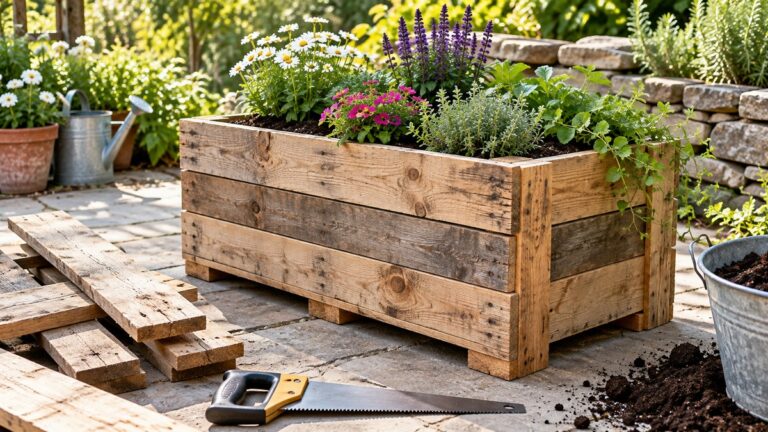
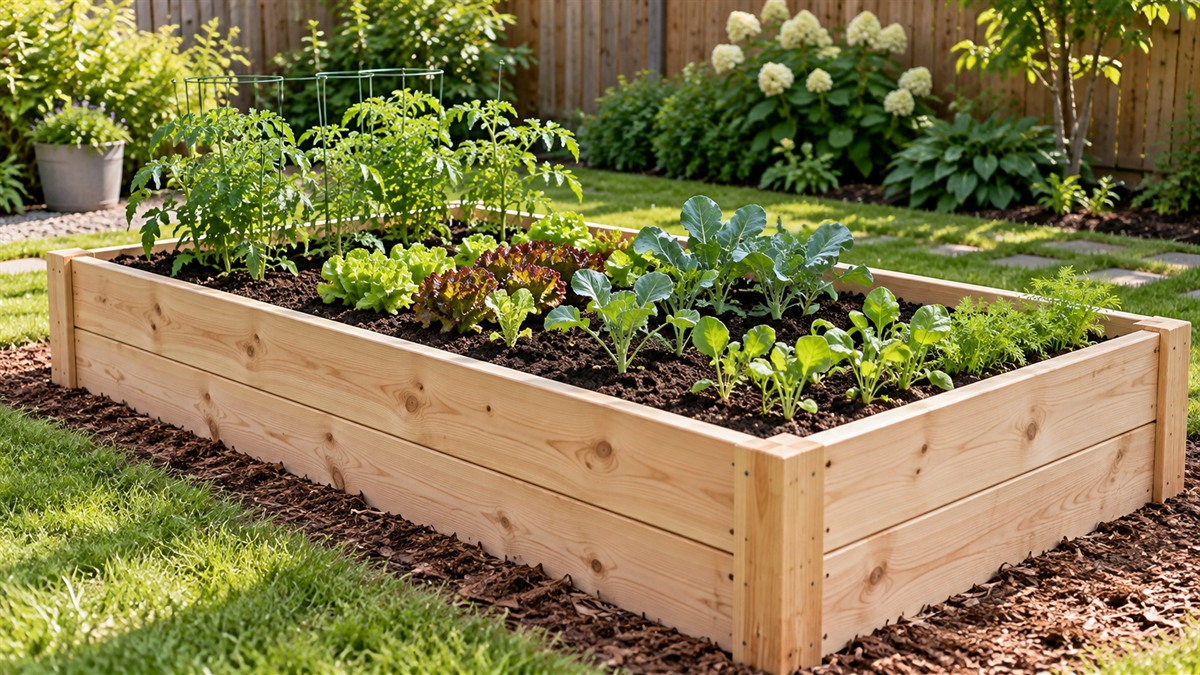
Utah State says to cut two boards the width of the bed and two the length, screw the corners with 4 inch decking screws, reinforce each inside corner with a wood block or metal plate, set the frame on prepared soil and fill it. It says cedar and redwood resist rot, untreated fir breaks down within a few years, and pressure-treated lumber needs a plastic barrier against the soil. Alabama Extension says CCA was phased out for residential use on December 31, 2003, that ACZA and ACQ have replaced it, and that research it cites shows these may be used safely for vegetable beds; it also says some gardeners still line the sides with polyethylene and that plastic should not go on the bottom.
Concrete blocks
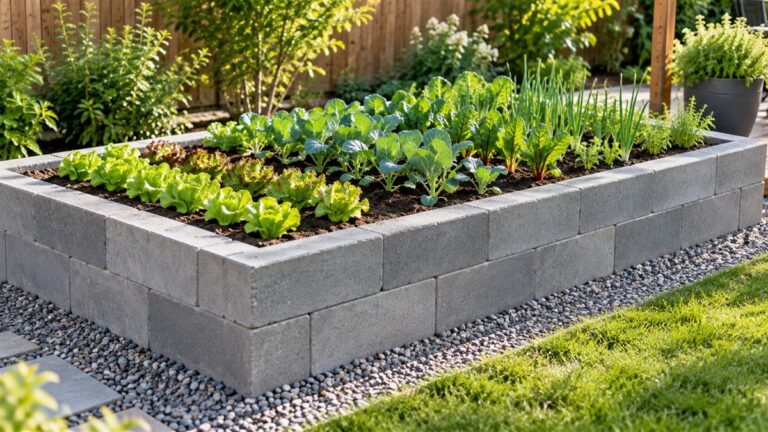
Alabama Extension lists concrete blocks in 8 by 8 by 16 inch and 4 by 8 by 16 inch sizes. UF/IFAS says concrete blocks may result in an alkaline soil pH. Oklahoma State says reinforcing rods help where freezing can crack masonry. The pH and fly ash questions for block walls are covered in a separate guide on this site about building with concrete blocks.
Where the sources disagree
Oklahoma State says several beds of mounded soil are very adequate for a large garden, as long as plenty of mulch holds the soil in place during heavy rain. Alabama Extension says beds made just by mounding the soil require a lot of maintenance and that most gardeners prefer framing materials. Both are extension pages. Our reading: mounding is the quickest to build, and framing trades build time for less upkeep. Neither page gives a number for how much more upkeep.
Step comparison
| Route | Steps listed by the sources | Parts to buy or cut |
|---|---|---|
| Unframed mound | Clear turf, stake and string the corners, dig the edge, rake soil up, flatten top, till and add organic matter | No wall parts; tools and soil or amendments |
| Four-board box | Cut 4 boards, screw corners with 4 inch screws, reinforce inside corners, set frame, fill | Boards, screws, corner blocks or plates |
| Concrete block ring | Pick a level site, lay blocks level, reinforce if frost is a risk, fill, test pH | Blocks, optional rods or plastic |
The step lists are our summary of what each page says, not a ranking by any source.
What you need for the unframed route
- A shovel, garden spade, spading fork, rake, string, four stakes and a tape measure (Oklahoma State).
- Compost or other organic matter, and mulch for the sides.
- A soil test, because Utah State recommends testing before fertilizing.
Steps (unframed bed)
- Pick a sunny spot. Utah State says at least 6 to 8 hours of direct daily sunlight. Oklahoma State suggests a north/south orientation for light exposure.
- Clear the turf. Utah State says to kill the grass first if the bed goes where turf grew.
- Mark the bed. Stake the corners and stretch string between them. Keep the width at 3 to 4 feet if you will reach from both sides (Utah State).
- Dig the edge. Cut along the string with a spade to define the edge and make a drainage furrow (Oklahoma State).
- Build the mound. Pull soil up with a rake and flatten the top with the back of the rake.
- Amend. Till the soil 6 to 12 inches deep and add 2 to 3 inches of organic matter (Utah State).
- Mulch the sides. Oklahoma State says to use plenty of mulch on the soil to hold it in place during heavy rain.
Worked example
This is planning arithmetic for a 4 by 8 foot bed. Your site will differ.
- Footprint: 4 x 8 = 32 square feet.
- Soil raised 8 inches above grade (the low end of Utah State’s 8 to 12 inch range): 32 x (8 / 12) = 21.3 cubic feet. At 12 inches: 32 x 1 = 32 cubic feet. The raised soil can come from the surrounding ground and paths, as Oklahoma State describes for framed beds; the sources do not give a rule for how much to take.
- Organic matter at 2 to 3 inches over the footprint: 32 x (2 / 12) = 5.3 cubic feet, up to 32 x (3 / 12) = 8 cubic feet.
- Four-board box for the same bed: two 8 foot boards and two 4 foot boards, so 24 feet of board for the perimeter.
- Reach: at 4 feet wide, the middle is 2 feet from each side, which is the reach Oklahoma State describes for an average adult.
Who should skip the easiest route
Skip an unframed bed if you want a bed that holds its shape under heavy rain with little mulch, or if you will not keep up the mulch. Skip a wooden box if you cannot confirm what the lumber was treated with; the sources say untreated fir rots within a few years and treated lumber needs a barrier.
Mistakes to avoid
- Building over live turf without killing it first.
- Making the bed wider than 4 feet.
- Putting plastic on the bottom of the bed, which blocks drainage.
- Skipping corner reinforcement on a wooden box.
- Adding fertilizer without a soil test.
Products
This guide does not name any product. No Amazon listing was used.
Sources
Sources opened for this guide (opened 2026-10-18):
- Raised Bed Gardening, Utah State University Extension (February 2012).
- Raised Bed Gardening, Oklahoma State University Extension (no publication date shown).
- Raised Bed Gardening (ANR-1345), Alabama Cooperative Extension System (April 2024).
- Building Raised Beds for Vegetable Gardening, University of Maryland Extension (updated November 2023).
- Building Raised Beds, UF/IFAS Gardening Solutions (no publication date shown).
FAQ
What is the easiest raised bed to build?
No source ranks them. By the number of steps listed, an unframed bed is the simplest, then a four-board wooden box, then a block ring.
Do I need a frame for a raised bed?
No. Utah State describes unframed beds 8 to 12 inches high, and Maryland Extension says you can skip an enclosure by making a raised bed with sloped sides. Alabama Extension says mounded beds require a lot of maintenance.
How wide should a raised bed be?
Utah State says 3 to 4 feet for access from both sides. Alabama Extension prefers 4 feet.
How deep should the soil be?
Alabama Extension says a soil depth of 6 to 12 inches is desirable. Utah State says unframed beds are 8 to 12 inches above the surrounding soil.
Related guides
To fill the bed and choose what to plant, see Best Way to Fill Raised Beds, Best Raised Bed Garden How Much Soil, and Best Easiest Vegetables to Grow in Raised Beds.