Best Wheelbarrow for Heavy Loads: 6 Models Compared by Tray and Tire
As an Amazon Associate we earn from qualifying purchases. Details
The best wheelbarrow for heavy loads is the one whose listed capacity, tray material and tire type match the material you move most often. We compared six wheelbarrows from six brands on Amazon. Three list steel trays, two list plastic trays, and one does not name its tray material in the text we read. The person typing best wheelbarrow for heavy loads wants to move soil, gravel, mulch or concrete without bending the frame or going flat on the way, and wants to know whether the tray will hold up. This guide compares the listed figures and says what the listings leave out.
Quick answer
- For a deep steel tray with a 6 cubic foot listed volume, Bon, True Temper and the Garant listing all state 6 cubic feet with steel construction.
- For a flat-free tire with no air to check, True Temper and Corona Clipper both list flat-free tires, and Corona gives a 15-inch size.
- For a plastic tray with a stated load of up to 500 pounds, A.M. Leonard lists a 6 cubic foot ABS plastic tray.
- For a garden model with a stated 330-pound capacity, Amazon Basics lists 3.7 cubic feet and a plastic bucket.
What heavy loads do to a wheelbarrow
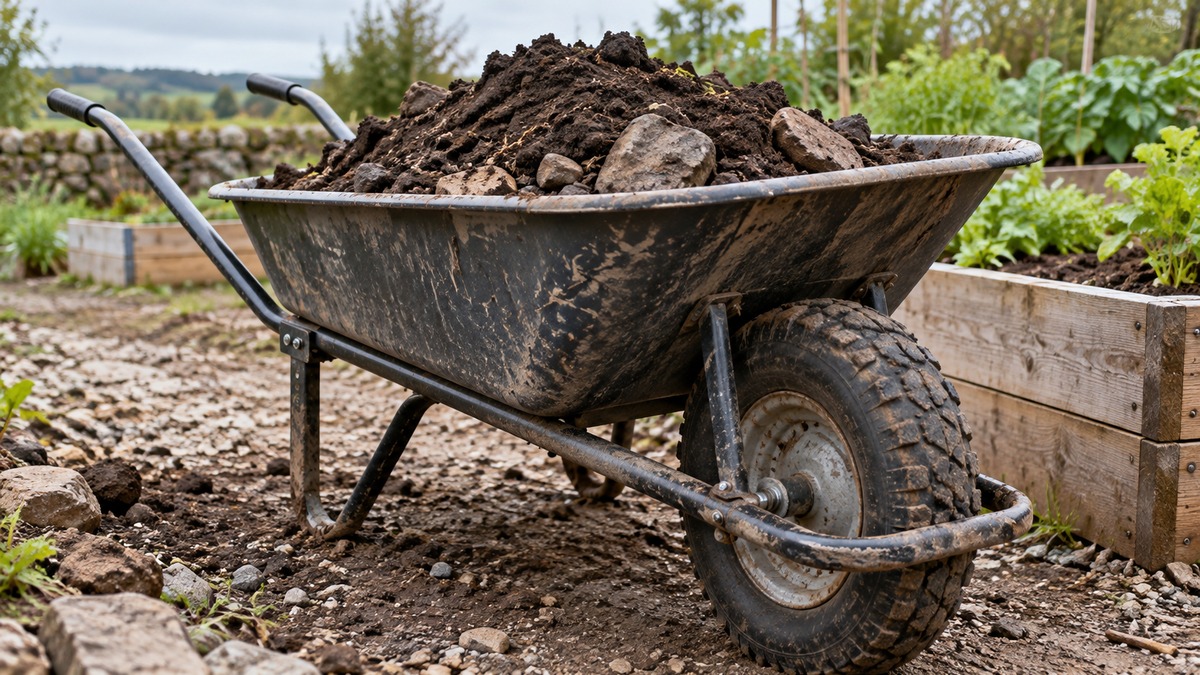
A loaded wheelbarrow puts its weight on three places: the tray, the axle and the handles. The tray carries the load, the axle takes the weight through the wheel, and the handles are where you control the balance. When any one of the three is weak, the wheelbarrow bends, tips or wobbles. The listings in this set name different materials for each part, so it helps to know which part matters most for your work.
Think about the tray material first. Loose soil and gravel are heavy and abrasive, and a steel tray is the material most contractor listings choose for that job. Mulch and compost are lighter per cubic foot but bulkier, and a plastic tray is easier to clean after wet material. Concrete and mortar are heavy and sticky, which points to a deep, narrow tray that is easy to dump. The listings name these uses in their bullets, and the table below gives the details each one states.
Then think about the handles and the stability. A wheelbarrow with a built-in stabilizer leg, such as the Bon listing, is described as reducing tipping while you load it. Wood handles, named in two listings, are lighter but depend on the wood’s condition, and the listings do not say how the wood is finished. Steel handles are named in three listings.
Tray material: steel or plastic
Steel trays are the common choice for contractor work. The True Temper bullets describe a seamless steel tray with a sloped, curved front for dumping and spreading. The Bon bullets describe an 18 gauge steel tray with rolled edges. The Garant listing, which is titled Ames True Temper C6, describes a heavy gauge seamless steel tray with front and back braces. Bare steel can rust where the paint wears off, and none of the steel listings in this set describes its rust protection in the text we read, so check the finish on any steel model before you buy.
Plastic trays are lighter and do not rust. The A.M. Leonard listing describes a 6 cubic foot orange ABS plastic tray and says it supports up to 500 pounds. The Amazon Basics listing describes a plastic bucket on a steel frame, with a 330-pound capacity. A plastic tray can flex under a heavy load of rock, so use the listed capacity as a ceiling and keep the heaviest material near the center of the tray.
The Corona Clipper bullets describe a durable tray without naming its material, so that tray is not in either group above.
Tires: flat-free, pneumatic or diamond tread
The tire decides how the wheelbarrow handles soft ground and how often it needs attention. The True Temper listing describes a flat-free 4 x 8 inch tire and says it never needs air. The Corona Clipper listing describes a 15-inch flat-free tire that the listing says will not puncture or go flat, and says it is for grass, dirt, gravel and uneven ground. The Bon listing describes double flat-free tires with zerk fittings and ball bearings. The A.M. Leonard listing offers a choice of narrow diamond-tread, pneumatic or flat-free tires, but does not say which one comes with the model in the photo. The Amazon Basics listing describes inflatable rubber wheels.
Flat-free tires do not need air, which saves a check each season. Inflatable tires can give a softer ride on uneven ground, but they can go flat, and a flat wheel makes the load harder to move. The listings do not give tread depth or the load rating of each tire, so check the tire size and type on the product page before you buy.
Capacity: cubic feet and pounds
Two numbers describe capacity: the volume of the tray and the weight the wheelbarrow can carry. Cubic feet measure how much material fits. Pounds measure how much the frame and tire can take. A tray can be full of dry mulch, which is light, and still be under its weight limit, or it can be full of wet soil, which is heavy, and be over the limit. Check both numbers.
The listed volumes in this set run from 3.7 cubic feet to 6 cubic feet. The weight ratings are less consistent. The Amazon Basics listing states 330 pounds, the A.M. Leonard listing states up to 500 pounds, and the other four listings do not state a weight rating in the text we read. That gap is the most important thing to know about this group. If the weight rating decides your choice, compare the two listings that state one first.
A planning check on volume
A cubic foot is a box one foot long, one foot wide and one foot high. A cubic yard is 27 cubic feet. To see what a listed tray volume means in cubic yards, divide the listed volume by 27. This is a planning estimate from the listed number, not a measurement:
- Six cubic feet: 6 / 27 = 0.22 cubic yards
- Three point seven cubic feet: 3.7 / 27 = 0.14 cubic yards
The gap between the smallest and largest trays is about a tenth of a cubic yard. That is a small difference in volume, so the tray material and the weight rating usually decide the choice more than the cubic foot figure does.
The numbers side by side
The table gives each listing’s stated figures from its title and first bullets. A dash means the text we read did not state that figure.
| Brand (listing) | Listed capacity | Tray | Tire | Handles and other notes |
|---|---|---|---|---|
| Amazon Basics | 330 pounds, 3.7 cubic feet | plastic bucket on steel frame | inflatable rubber | tips up for storage |
| Garant (listing titled Ames True Temper C6) | 6 cubic feet (title) | heavy gauge seamless steel | – | hardwood handles, ships in three boxes |
| True Temper | 6 cubic feet | seamless steel, sloped front | flat-free 4 x 8 inch | steel handles with comfort grips, ships in one box |
| Corona Clipper | 5 cubic feet (title) | – | 15-inch flat-free | steel frame, wheelbarrow-in-a-box |
| Bon | 6 cubic feet (title) | 18 gauge steel, rolled edges | double flat-free with zerk fittings | steel handles, built-in leg stabilizer, ships unassembled |
| A.M. Leonard | 6 cubic feet, up to 500 pounds | orange ABS plastic | diamond-tread, pneumatic or flat-free | wood or steel handles, 5/8-inch steel axle |
Three listings combine a 6 cubic foot volume with a steel tray: Garant, True Temper and Bon. The A.M. Leonard tray is plastic and carries a stated load of up to 500 pounds. The Corona Clipper title gives both its 5 cubic foot tray and its 15-inch tire size, which makes it the only listing in the table whose title covers both.
Lifting and loading
A loaded wheelbarrow is still a load you have to lift at the start and the end of each trip. Penn State Extension says to “Lift the handles of a wheelbarrow to elbow height.” The same guidance applies to moving bags into the tray: keep the shovel close to your body and use your legs to lift, as the Penn State page advises. Ohio State’s lifting factsheet says “Lifting, pulling, or pushing heavy objects can cause serious injuries, most often to the back.” It also says that “It is nearly impossible to achieve a good back position when lifting heavy objects from the ground.”
Put the heaviest material near the wheel, not at the front of the tray, so the balance stays over the axle. Lower the load in steps rather than dumping the whole tray at once. If a bag is too heavy to lift into the tray, move it from the ground in smaller pieces, or ask for help.
Shipping and assembly
Four listings name a shipping or assembly format. True Temper ships in one box with all hardware included. Corona Clipper describes a wheelbarrow-in-a-box design with simple assembly. Bon ships unassembled. The Garant listing ships in three boxes. A one-box shipment is easier to carry into a garage, but the assembly is still your job, so read the hardware list before the box arrives.
Assembly matters for heavy use. Bolts that are not tight can loosen under a heavy load, and the tray can work loose at the frame. Check the bolts after the first few loads, and tighten them if they have moved.
Mistakes to avoid
Do not buy by the cubic foot alone. A 6 cubic foot tray of wet soil can be far heavier than the same tray of mulch. Check the weight rating when the listing states one, and use a smaller load when the material is heavy.
Do not overload the front of the tray. A wheelbarrow that is heavy at the front pulls down on the handles and makes the tire do the work of a lever. Center the load over the axle.
Do not roll a wheelbarrow down a slope with a full tray. The listings do not describe slope use, so keep the load lower and go slowly on any incline.
Do not ignore the handles. The Garant listing names hardwood handles, and the Bon and True Temper listings name steel handles. Wood can split if it is left in the weather, and steel handles can be cold in winter. Check the handle for cracks or loose fittings before each season.
Do not store a wheelbarrow with a wet tray. Steel rusts where water sits, and plastic trays can stain. Tip the tray up, let it dry, and store it under cover.
Do not use a sharp tool from the wheelbarrow without gloves. A wheelbarrow often carries a shovel or a fork. The University of Florida hand tool guide says that “When working with knives, CS #23205 blades, or other tools with sharp edges consider wearing cut or puncture resistant gloves.”
Picks
1. Amazon Basics Garden Wheelbarrow, Heavy Duty, 330 Pounds Capacity, 3.7 Cubic Feet, 26.8W x 53.9D x (Garden wheelbarrow with a stated 330 pound capacity)
Pros
- The listing states a 330 pound weight capacity and 3.7 cubic feet of material
- The bullets describe inflatable rubber wheels and a steel frame with a plastic bucket
Cons
- The bullets do not give the tire size or the bucket's gauge
- The listing calls the build lightweight, which may be less than a contractor tray
Best for: A garden owner who wants a stated weight rating and a plastic bucket
Skip if: You move concrete or wet gravel every week
View on Amazon (affiliate link)
2. Ames True Temper C6 6-Cubic-Foot Steel Tray Contractor Wheelbarrow (Contractor wheelbarrow with a heavy gauge steel tray)
Pros
- The bullets describe a heavy gauge seamless steel tray with front and back braces
- The title gives a 6 cubic foot tray and the bullets name hardwood handles
Cons
- The text we read does not state a weight rating or tire type
- The bullets do not say how the hardwood handles are finished
Best for: Contractor work with soil, gravel or stone and a steel tray
Skip if: You need a stated weight rating before you buy
View on Amazon (affiliate link)
3. True Temper Steel Wheelbarrow with Never Flat Tire & Steel Handles, 6 Cu. Ft (Steel wheelbarrow with a flat-free tire and one-box shipping)
Pros
- The bullets describe a seamless steel tray with a sloped, curved front for dumping
- The listing states a 6 cubic foot capacity and a flat-free 4 x 8 inch tire
Cons
- The bullets do not state a weight rating
- The bullets say the box includes all hardware, so you assemble the unit yourself
Best for: Owners who want a steel tray with a flat-free tire and no air to check
Skip if: You need a stated weight rating for concrete work
View on Amazon (affiliate link)
4. Corona Tools Wheelbarrow in a Box – 5 Cubic Foot Heavy Duty Garden Cart with 15” Flat-Free Tire (Wheelbarrow-in-a-box with a 15-inch flat-free tire)
Pros
- The listing states a 5 cubic foot capacity and a 15-inch flat-free tire
- The bullets describe a steel frame and a box shipment with simple assembly
Cons
- The bullets do not give a weight rating
- The tray is smaller at 5 cubic feet than the 6 cubic foot models in this set
Best for: Yard work with mulch, soil and plants and a flat-free tire
Skip if: You need the largest tray in this set
View on Amazon (affiliate link)
5. Bon Steel Tray Wheelbarrow 6 cu ft with Double Flat Free Tire and Steel Handles – 18 Gauge Deep (Deep narrow steel tray with double flat-free tires and a stabilizer leg)
Pros
- The bullets describe an 18 gauge steel tray with rolled edges and a deep, narrow shape
- The built-in leg stabilizer is described as reducing tipping while loading
Cons
- The bullets describe the tires as flat-free but give no tire size
- The listing ships unassembled, so set-up takes more of your time
Best for: Concrete, mortar and gravel work in tight spaces
Skip if: You need a lighter model for garden mulch and soil
View on Amazon (affiliate link)
6. 6 cu. ft. Poly Tray Wheelbarrow Steel Handles Flat-Free Tire (Plastic-tray wheelbarrow rated up to 500 pounds)
Pros
- The bullets state a load of up to 500 pounds and a 6 cubic foot orange ABS plastic tray
- The listing offers wood or steel handles and a choice of tire types
Cons
- The listing does not say which tire type comes with the model in the photo
- The bullets describe a plastic tray, which can flex under heavy rock
Best for: Gardeners who want a plastic tray that does not rust and a stated 500 pound rating
Skip if: You will carry heavy rock or concrete in the tray
View on Amazon (affiliate link)
How we chose
We searched Amazon.com for heavy duty wheelbarrows on 2026-10-21 and read the first results page. The search also returned dump carts and wagons, which we dropped because they are a different product type. We kept listings for a wheelbarrow with one wheel, a tray and handles. We chose one listing per brand, so the six picks come from six different brands.
This guide uses the title and first bullets of each listing. The figures above are the listing’s own numbers. It does not use customer reviews or seller ratings, and it leaves out purchase details. Each pick’s pros and cons come from the text the listing states, and the skip-if line names the buyer for whom the model is the wrong choice.
What we could not verify
- How any wheelbarrow carries a real load on a real job. The sources we opened describe lifting and handle height, not wheelbarrow performance.
- The weight rating for four of the six listings. The Amazon Basics and A.M. Leonard listings state one, and the other four do not.
- Tire size for four of the six listings. True Temper and Corona Clipper state a size; the Amazon Basics, Garant, Bon and A.M. Leonard listings do not give one in the text we read.
- The durability and rust protection of the steel and plastic trays. The bullets use words such as durable and heavy duty, which are the maker’s claims.
- Which tire comes with the A.M. Leonard model, because the listing offers three.
- Anything below the first bullets of each listing, including warranty and return terms.
The Garant brand line appears under a listing titled Ames True Temper C6. The table uses the brand line, and the title is quoted as written.
FAQ
Is a wheelbarrow better than a garden cart for heavy loads?
It depends on the load. A wheelbarrow with a tray that tips is a practical tool for soil, gravel and mulch, because you can dump the load in one place. Dump carts are a different product type and are outside this comparison.
Which tire is best for a wheelbarrow?
A flat-free tire needs no air and cannot go flat, which suits a shed that you visit once a month. An inflatable tire can ride more softly on rough ground, but it needs an air check. The listings give tire types, and the best choice depends on how often you use the wheelbarrow and what ground you cross.
How heavy a load should I put in the tray?
Start with the weight rating if the listing states one, and load below it. For listings that do not state a rating, fill the tray only part way with heavy material such as wet soil or gravel, and add more once you know how the tray and tire handle the first loads.
Does a steel tray or a plastic tray last longer?
The listings do not give a lifespan. Steel is a common choice for heavy material and can rust where paint wears away. Plastic does not rust but can flex under weight. Look at the tray material against the material you move most often.
Why do some listings state a weight and others do not?
The listings were written by different makers, and not every maker states a weight rating in the title or first bullets. Where the rating is missing, the text we read does not give one, so do not assume a figure. Check the full product page or the manual before you rely on a weight for a heavy job.
Bottom line
Choose the model whose tray and tire match your heaviest material. For concrete and gravel, a deep steel tray with a stated rating is the safer choice. For soil and mulch in a garden, a 6 cubic foot tray with a flat-free tire keeps the job simple. For a light garden model with a stated weight, compare the Amazon Basics listing first.
For related heavy garden work, see our best way to fill raised beds guide and our raised bed soil volume guide.
Sources
- Penn State Extension, Healthy Tips to Garden with Fewer Aches and Pains: wheelbarrow handle height and shovel lifting technique.
- Ohio State University Extension, AEX-790, Preventing Lifting Injuries: injuries from lifting, pulling and pushing heavy objects.
- University of Florida Facilities Services, hand tool safety guide (PDF): gloves for sharp-edged tools.