Homemade Bird Food With Peanut Butter
As an Amazon Associate we earn from qualifying purchases. Details
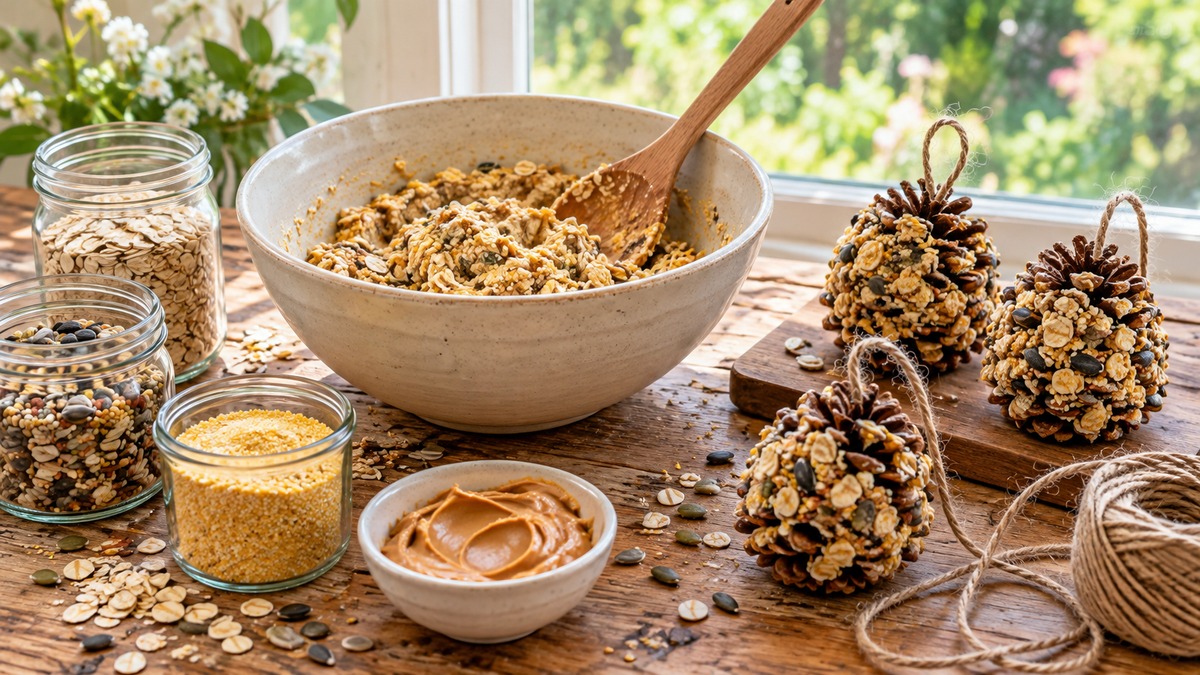
Homemade bird food with peanut butter is a simple project, and the Missouri Department of Conservation publishes a mix for it: one part peanut butter to five parts corn meal, packed into holes drilled in a hanging log or into the crevices of a large pinecone. This guide turns that published method into a usable plan.
It covers how to scale the mix, where to put it, and the three problems the same source raises: squirrels, predators at feeders, and feeder cleaning. This post makes no bird-health claims, because the source opened for it does not make any. Where a tip is our own practical suggestion rather than the source’s, the text says so.
Quick answer
Mix one part peanut butter with five parts corn meal, pack it into a hanging log or a large pinecone, and hang it where birds can watch for predators. The Missouri Department of Conservation says this mix attracts woodpeckers, chickadees, titmice and, occasionally, warblers. It also says squirrels are fond of peanuts, so placement matters. If you want a ready-made peanut butter feeder rather than a DIY log, see our peanut butter bird feeder picks.
The mix and how to scale it
The Missouri page gives the ratio as one part peanut butter with five parts corn meal. It does not give weights or volumes, so the table below only applies that ratio. Use the same unit for both ingredients, and mix until the corn meal is evenly coated.
Worked example (arithmetic from the 1 to 5 ratio, by weight):
| Batch | Peanut butter | Corn meal | Total mix |
|---|---|---|---|
| Small | 2 oz | 10 oz | 12 oz |
| Medium | 4 oz | 20 oz | 24 oz |
| Large | 6 oz | 30 oz | 36 oz |
The sources do not say whether the ratio is by weight or by volume. The table uses weight only to show the arithmetic. If you measure by volume, the same 1 to 5 proportion still holds.
Where to hang or place it
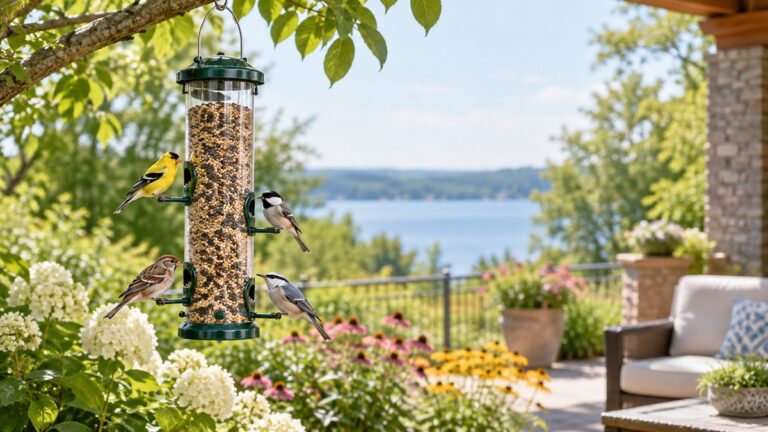
The Missouri method is to stuff the mixture into holes drilled in a hanging log or into the crevices of a large pinecone. The same page calls peanut butter a good substitute for suet in the summer, and says this mixture attracts woodpeckers, chickadees, titmice and, occasionally, warblers.
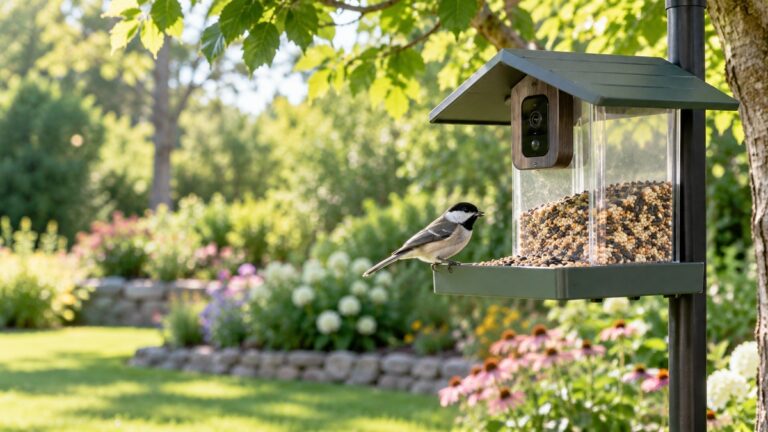
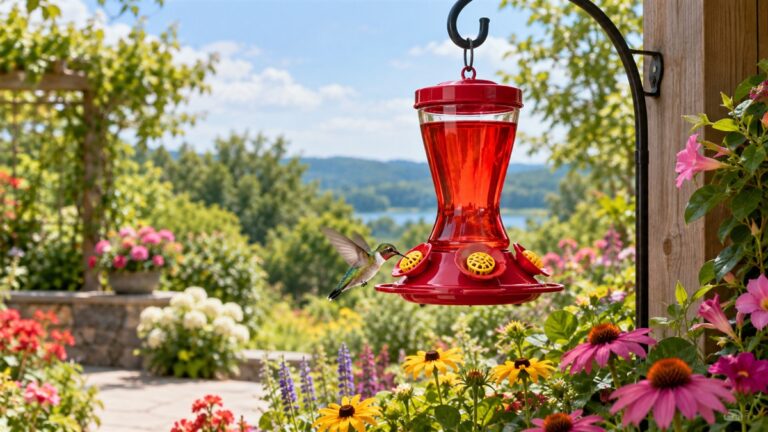
The page advises hanging feeders where birds can see approaching predators and fly to safety. It also warns about windows: place feeders away from glass that reflects vegetation or sky.
Squirrels, predators and window reflections
Squirrels are the most direct problem the source raises. The page says: “Squirrels are also fond of peanuts, so keep that in mind when choosing where to place peanuts.” It also describes a feeder that is accessible only to birds of certain weights as a way to keep squirrels away. For squirrel-focused ideas, see how to keep squirrels from eating bird seed.
The page also notes that hawks and house cats are both known to hunt at backyard feeders. Hang the log where birds can spot those predators, and keep it away from reflective windows.
Cleaning and checking the feeder
The Missouri page says to “Wash feeders regularly to prevent the spread of diseases between birds.” It gives a shorter interval only for hummingbird feeders, so it sets no fixed schedule for a peanut butter log. Our own suggestion, not the source’s: check the log each time you refill it, and remove any old mix that looks soiled. For a cleaning method, see cleaning bird feeders with vinegar.
Mistakes to avoid
- Leaving the mix where squirrels can reach it. The source says squirrels are fond of peanuts.
- Hanging it next to a window. The source warns about reflections of vegetation or sky.
- Assuming the suet warning applies to peanut butter. The page’s rancidity warning is about suet in warm weather. It gives no spoilage rule for peanut butter mixes, so check the mix often rather than assuming it lasts.
- Skipping feeder cleaning. The source says to wash feeders regularly.
- Scaling without one unit. Use the same unit for both ingredients, as the worked example does.
For a whole-peanut alternative, see whole peanut bird feeders.
FAQ
What is the basic peanut butter bird food mix?
The Missouri Department of Conservation gives one part peanut butter to five parts corn meal. You pack it into holes in a hanging log or into the crevices of a large pinecone.
Which birds does this mix attract?
The same page says the mixture attracts woodpeckers, chickadees, titmice and, occasionally, warblers.
Will squirrels eat it?
The page says squirrels are fond of peanuts, so keep that in mind when choosing where to place the mix. It does not describe a way to keep squirrels off a peanut butter log.
Where should I hang it?
Hang it where birds can see approaching predators and fly to safety, and keep it away from windows that reflect vegetation or sky.
How often should I clean the feeder?
The page says to wash feeders regularly to prevent the spread of diseases between birds. It does not give a fixed number of days for this type of feeder.
Bottom line
The simplest homemade peanut butter bird food is the one-to-five mix from the Missouri Department of Conservation. Place it where squirrels and predators are considered, keep it away from reflective windows, and clean the feeder regularly. Use the worked example to scale it, and check the mix often, since the source gives no shelf life for it.
Sources
- Missouri Department of Conservation, Bird Feeding (the page footer shows copyright 2026; no last-updated date is shown).