How to Grow Beets
As an Amazon Associate we earn from qualifying purchases.
Learning how to grow beets comes down to three things: a sunny bed with loose soil, sowing in the cool part of the season, and thinning the seedlings far enough apart that each root has room. The extension guides we opened agree on the basics and differ on a few numbers, so this article shows where they match and where they do not. Beets also give two harvests from one row, because the young tops can be picked as greens while the roots keep growing.
Quick answer
- Sow beet seed directly in a sunny bed with loose, well-drained soil.
- Thin in two stages, cutting the extra seedlings rather than pulling them, until the plants stand about 3 to 4 inches apart.
- Keep the soil evenly moist, and mulch once the plants are established.
- Expect harvest about 45 to 65 days after sowing, and pick the thinnings as greens.
Start with a sunny bed and loose soil
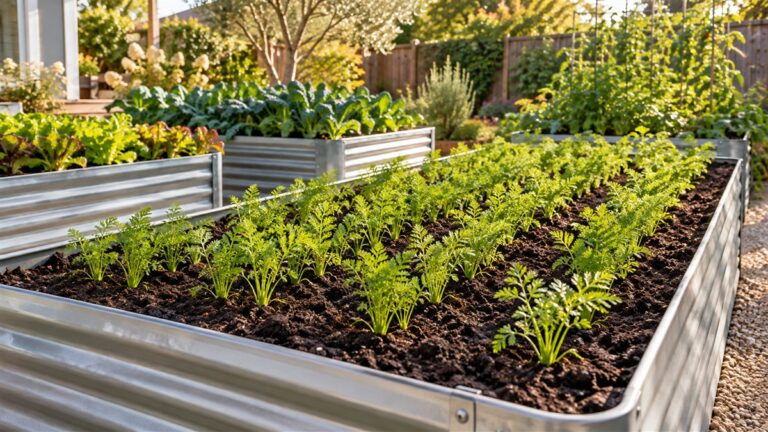
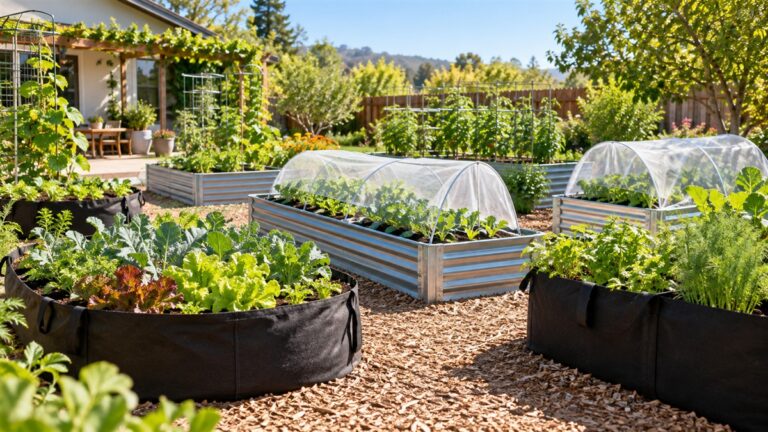
Beets want full sun and soil that drains well. The UC guide says, “Beets grow best in a sunny position in light, well-drained soils.” The Iowa State guide says beets “perform best in loose, well-drained soils in sunny locations.” The Texas A&M guide adds that beets are “well suited to and grow best in deep, well drained soils”, and that they “do not grow well in tight clay”. If your garden soil is heavy, a raised bed filled with a looser mix is the simplest way to get the texture right. Our guide to vegetables to plant in raised beds covers that setup.
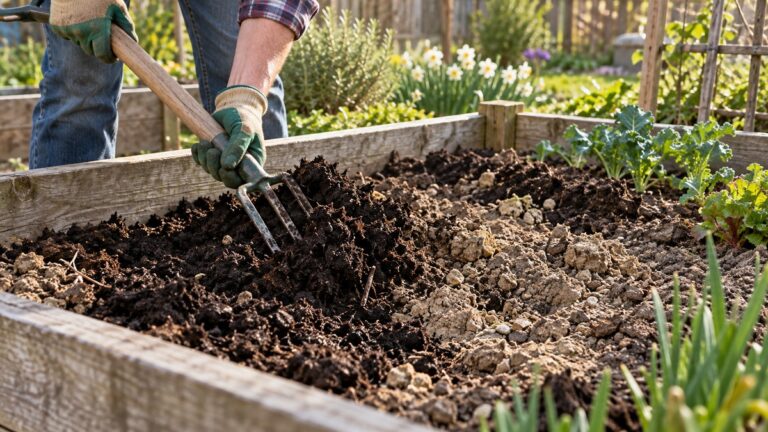
Soil chemistry matters too. The UC guide sets a target range: “Beets prefer soil with pH between 6.5 and 7, and their growth is stunted in very acid (low pH) soil.” It also recommends testing: “It is a good idea to have the soil tested every few years to determine the soil pH and if any nutrients are deficient.” A test shows whether lime or fertilizer is needed before you sow. The UC guide adds that fertilizer should be worked in at the start: “Work the fertilizer into the soil as the seedbed is being prepared.”
Choose the sowing window
Beets are a cool-season crop. The UC guide explains that they “grow best in the cool temperatures of spring and fall”, and its dates are written for Sacramento, California, in two windows: “They may be planted late February to early April for harvest in the late spring, or mid-August to early October for harvest in fall to early winter.” Those months will not match every region, so treat them as a pattern and check your own last spring frost date.
Soil temperature controls how fast seed sprouts. The UC guide gives the range: “Optimal soil temperatures for beet germination are 50 to 86F, and the maximum soil temperature for germination is 95F.” Heat during the maturing stage also affects the roots. The UC guide notes that “If temperatures are high when the crop is maturing, some color loss and zoning (internal development of white circles) occur.”
For a steady supply, plan repeat sowings, and expect the guides to differ on the interval. The UC guide says: “Successive plantings every 7 to 10 days during planting season will provide a continuous harvest over a longer period.” The Iowa State guide gives a longer gap: “Successive sowings every 2-3 weeks ensure a continued harvest into fall.”
Sow thinly and keep the seedbed moist
Beets are normally sown straight into the bed. The Iowa State guide gives the planting depth: “Plant seeds 1/2 inch deep.” It gives the row spacing too: “Rows should be spaced 1 to 1 1/2 feet apart.” The UC guide gives a reason for wide rows, saying rows should be spaced “in rows at least 12 inches apart to facilitate walking, weeding, and harvesting between the rows”. Another root crop that shares the same kind of bed is covered in our guide to planting carrots in raised beds.
Plan on several seedlings from each sowing. The UC guide describes the cluster this way: “This forms a multi-germ cluster which usually contains 2 to 5 seeds”, so one sowing can produce a crowded group. It also suggests rinsing the seed first to speed germination: “place the seeds in a sieve and rinse them thoroughly under cold running water before sowing.” After sowing, “Cover the seeds lightly with sand, compost, or soil; sprinkle lightly with water.” For golden varieties, the UC guide advises extra seed: “Plant extra seeds of the golden beets as they germinate poorly.”
Thin in two stages
Thinning is the step that most often goes wrong. The UC guide says, “Because several plants can germinate from one seed, thinning the seedlings in a timely manner is important.” The Iowa State guide names the same problem: “Overcrowded seedlings are another common problem when growing beets.”
The UC guide describes two passes. In the first, “When the seedlings are 1 to 2 inches tall, start removing the smaller, weaker seedlings and leave the stronger, more vigorous plants.” In the second, “By the time the plants are 3 to 4 inches tall, thin again so that the plants should be at their final spacing of approximately 4 inches.” The Iowa State guide gives a slightly tighter final range: “Seedlings should be thinned to 3 to 4 inches apart to ensure good root development.” Both numbers are close, so a final spacing of about 3 to 4 inches fits either guide.
The spacing choice changes how many plants a row holds, and the arithmetic is simple. This is our own calculation, using the spacings quoted above. A 10-foot row (120 inches) thinned to 4 inches apart holds about 30 plants, since 120 divided by 4 is 30. The same row thinned to 3 inches holds about 40 plants, since 120 divided by 3 is 40. Choose the spacing that matches how big you want the roots to get before you start thinning.
Technique matters. The UC guide says, “Cut, rather than pull, plants when thinning to avoid disturbing roots of other plants.” It also notes that “The thinned plants can be used as greens”, which means the work does not go to waste.
Water evenly and mulch once plants are established
Uneven watering is the most common cause of trouble after thinning. The UC guide sets the rule: “Beets require consistent moisture, so water deeply and thoroughly and do not let the soil become dry.” It describes both extremes: “Underwatering will cause the outer leaves to turn yellow and the roots to become woody; however, overwatering can cause beet leaves to turn red and the plants to stop growing for a time.” Yellow leaves with woody roots point to too little water, and red leaves with a pause in growth point to too much.
The Iowa State guide keeps the routine simple: “Weeding and weekly watering during dry weather are the only necessary maintenance chores after thinning the beets.” The UC guide adds that supplemental water may be needed during dry spells, so check the soil rather than trusting a fixed calendar.
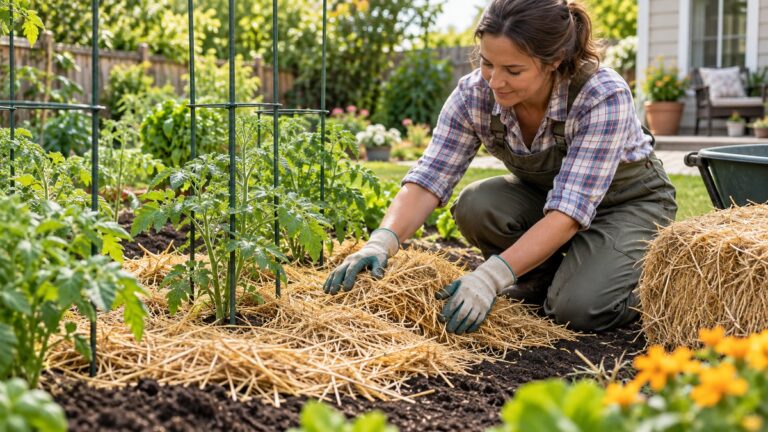
The two extension guides differ on mulch. The UC guide advises: “To conserve moisture and keep the soil from crusting, apply a 1 to 2 inch layer of mulch (such as straw, leaves, compost, or pesticide-free grass clippings) after the plants are well established.” The Iowa State guide suggests a lighter layer applied earlier: “A light layer of mulch, applied after sowing, will prevent washing during rainy periods and prevent crusting of the soil during dry periods.”
Harvest greens and roots
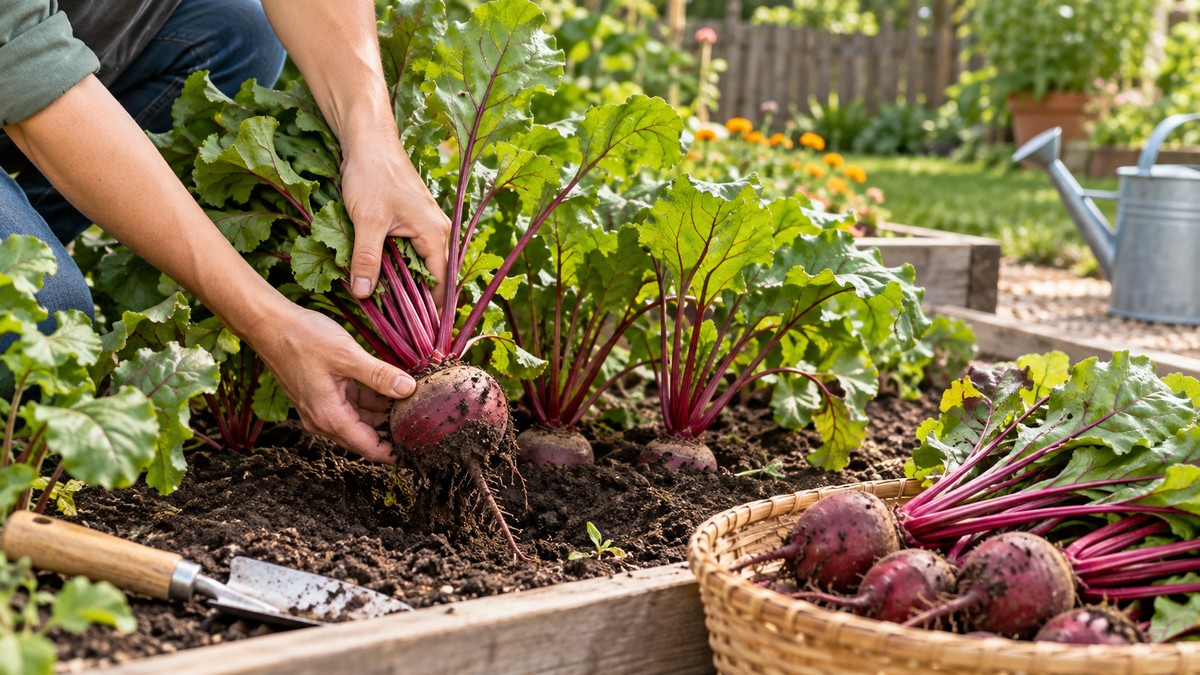
Beet tops are worth picking. The UC guide says, “The beet tops, when young, may also be harvested for greens which are excellent in salads, and older foliage can be cooked.” The Iowa State guide limits how much to take from a plant that is still growing for its root: “Up to 1/3 of the beet foliage can be harvested for greens without harming the root.” It also gives a size marker for the first leaf picks: “Leaves can be snipped from the plant once the root is 1 inch in diameter.”
Roots are ready by size as well as by date. The UC guide gives a general window: “Harvest begins about 45 to 65 days from seed sowing.” It then describes how to pick so the rest of the row keeps growing: “Begin harvesting when the roots are at least 1 inch wide, harvesting alternate plants to allow remaining plants to grow up to 3 inches wide.”
Store beets or leave them in the ground
The UC guide describes winter storage in the bed. It says that “Beets are fairly frost tolerant, and fall plantings can be stored in the ground over winter if well mulched, but they should be harvested before the soil starts to warm up, usually around mid-February.” That date is specific to Sacramento, so a colder region will need an earlier harvest. The sources we opened do not give a refrigerator storage time, so this article does not give one either.
Common problems the sources describe
Most of the problems in the sources come from how the bed is sown, thinned and watered. Overcrowding produces crowded, small roots. Uneven water produces woody roots or red leaves, and heat during maturity produces color loss and zoning. The UC guide also warns that low temperatures early in growth can make flower stalks form before the roots mature, and that many newer varieties are less sensitive to this. Poor germination is the fourth problem, and the rinsing and extra-seed steps above address it.
How we chose
We chose the steps that the pages we opened state in plain words, and we kept the points that more than one guide covers. Where the guides give different numbers, both figures appear with their source. The three pages are an Iowa State University Extension page dated 2004, a Texas A&M AgriLife Extension fact sheet, and a University of California Cooperative Extension publication written for Sacramento County. Each one is a university extension publication.
We left out pest and disease control. The pages we opened discuss those problems with product names and label rules, and this guide does not recommend any product.
What we could not verify
What the sources do not say
The guides do not agree on every figure. Row spacing runs from at least 12 inches in the UC guide to 1 to 1 1/2 feet in the Iowa State guide, and the repeat-sowing interval runs from 7 to 10 days to 2 to 3 weeks. The mulch advice differs in timing and depth. The UC planting dates are for Sacramento, and the Iowa State page is dated 2004, so its figures should be checked against current local advice.
The pages we opened do not give a refrigerator storage time, do not name a best variety for any climate, and do not give a yield per row. They do not cover beets grown in containers, and they do not give a soil depth beyond general advice to loosen the soil.
Frequently asked questions
When should beets be planted?
The timing depends on your region. The UC guide gives two Sacramento windows, late February to early April and mid-August to early October, and it describes beets as a cool-season crop. Use those windows as a pattern and count back from your local last spring frost date.
How far apart should beet seedlings be?
The Iowa State guide gives a final spacing of 3 to 4 inches, and the UC guide thins to about 4 inches in a second pass. Thin in two stages and cut the extras at soil level.
Why do beet seedlings need thinning?
Several seedlings often come up from one sowing, because the UC guide describes each cluster as containing 2 to 5 seeds. Thinning on time keeps the roots from crowding, which the Iowa State guide names as a common problem.
How long does it take for beets to be ready?
The UC guide says harvest begins about 45 to 65 days after sowing. Start with roots at least 1 inch wide, and pick alternate plants so the rest of the row can grow.
Can beet greens be eaten?
Yes. The UC guide says young tops “may also be harvested for greens which are excellent in salads,” and older foliage can be cooked. The Iowa State guide advises taking no more than a third of the foliage from a plant that is still growing for its root.
Bottom line
Sow beets in a sunny bed with loose soil, thin in two stages to about 3 to 4 inches apart, keep the soil evenly moist, and pick the roots when they reach a usable size. Where the guides differ, follow the one written for your region.
Sources
- https://hortnews.extension.iastate.edu/2004/3-12-2004/beets.html (opened 2026-10-22)
- https://agrilifeextension.tamu.edu/wp-content/uploads/2023/08/how-to-grow-beets.pdf (opened 2026-10-22)
- https://oc4h.ucanr.edu/sites/default/files/2013-07/163137.pdf (opened 2026-10-22)
As an Amazon Associate we earn from qualifying purchases.