How to Attract Goldfinches, Orioles and Robins
As an Amazon Associate we earn from qualifying purchases.
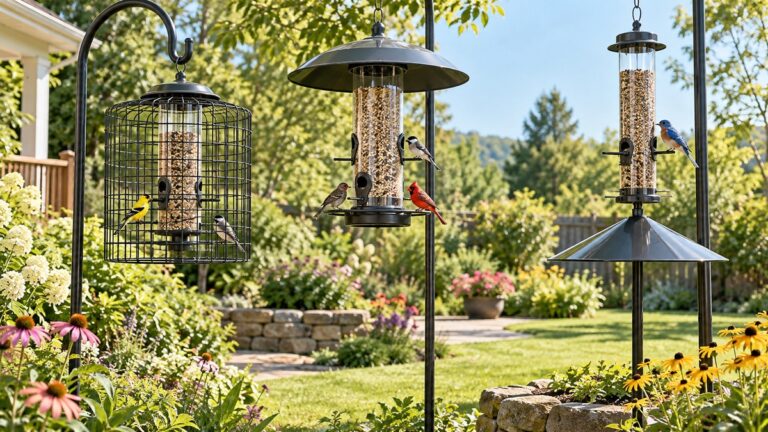
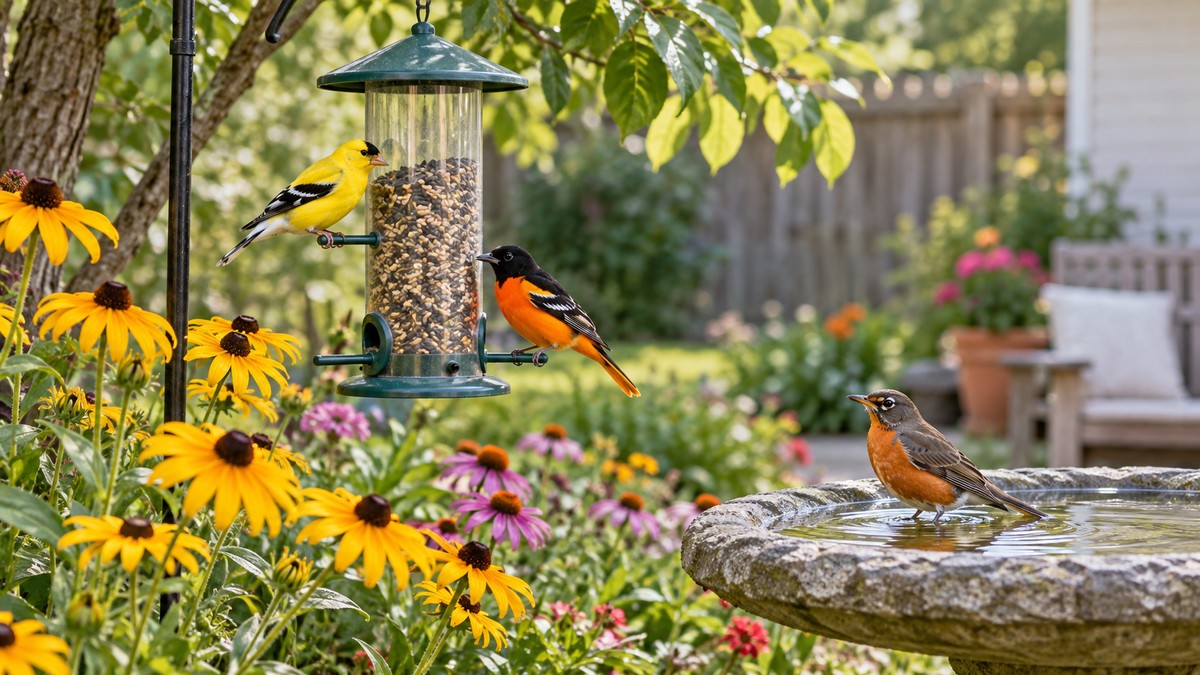
How to attract goldfinches starts with small seeds in a feeder with small openings, fresh water nearby, and spent flowers left to set seed. This guide covers goldfinches first, then orioles and robins, since a yard set up for one often draws the others.
The three birds eat different things and nest in different places, so each section names its bird. The sources are university and cooperative extension pages, federal wildlife publications and a few conservation pages. Where they are silent, the guide says so.
Quick answer
- Goldfinches: put out thistle, also called niger or Nyjer, in a feeder with small openings, add black oil sunflower, and leave spent native flowers to set seed.
- Orioles: offer grape jelly and orange halves, change the oranges every day or two, and plant dark-fruited trees and shrubs.
- Robins: plant fruiting shrubs and trees, keep some short-grass areas, and set out chopped fruit or mealworms beside shallow water.
- All three: keep water fresh and clean feeders on the schedule the sources give.
Goldfinches: seed, feeders and native flowers
The U.S. Fish and Wildlife Service says goldfinches are a common sight at backyard feeders, especially where thistle and sunflower seed are offered. Penn State Extension says niger, or thistle seed, is popular because goldfinches, house finches and purple finches are drawn to it. Its feeder table lists a niger feeder, a hanging tube feeder and the ground as places goldfinches feed.
Nyjer needs its own feeder. Illinois Extension says Nyjer is attractive to the American goldfinch, and because the seed is so small, it needs a feeder with smaller openings. The same page advises against mixing Nyjer into other seed to avoid waste. A Maryland Extension expert answering a reader added that Nyjer isn’t actually even a thistle. For a finch-sized feeder option, see our guide to bird feeder cages for small birds.
Black oil sunflower is the broader option. Illinois Extension says it appeals to the greatest variety of birds that overwinter in the state. Its hulled version cuts shell debris under the feeder, though the same page warns that hulled seed costs more and can spoil faster.
Flowers feed goldfinches too. A Maryland Extension answer says that if plants are not deadheaded, seeds that develop on asters, black-eyed Susans, coneflowers, blazing-star, vervain, tickseed, goldenrod, sunflowers, cup plant and Joe-Pye weed should interest goldfinches and other finches. It adds that native seed sources are ideal because they also help other wildlife. Illinois Extension says most coneflowers feed goldfinches after the blooms have faded, and NC State Extension reports that goldfinches eat orange coneflower seed in the fall and winter.
Goldfinches will also pick at annual flowers. A Minnesota Extension expert says the birds have developed a taste for many annual flower seeds, including zinnias. The same answer says bird netting can be used but is messy to work with and can trap birds.
Orioles: grape jelly, oranges and nectar
Orioles are the most fruit-driven of the three. Nebraska Extension notes that Baltimore orioles love grape jelly and oranges, and that a small, flat-bottomed hanging birdbath works well for both. Specially designed oriole feeders exist too. The Fish and Wildlife Service’s 1999 bird feeding sheet lists apple and grape jelly, white-seedless grapes, orange and apple quarters and raisins, and says fruit can go on a platform or in a dish set off the ground.
Freshness is the main job. Nebraska Extension says to change orange halves every day or two so they do not rot. It also says to clean the jelly feeder every two to three days and provide new jelly. Its timing advice is direct: timing and patience are key, because if food is not out when birds first arrive in spring, you may not be able to attract them all summer.
Orioles also take nectar and fruit from plants. Nebraska Extension lists dark-colored fruits as favorites, including mulberries, raspberries, grapes, serviceberry and dark red cherries. It adds that tart or sweet cherries, along with wild cherries such as pin cherry or chokecherry, attract them. Audubon notes that orioles visit flowers for nectar and come to sugar-water feeders and to pieces of fruit put out at feeders.
Insects matter too. Celebrate Urban Birds says insects make up much of the orioles’ diet in summer, when they are raising young, and that nectar and ripe fruit rise in spring and fall, when those sugary foods build fat for migration. The same source warns that orioles can damage cultivated fruit, including raspberries, mulberries, cherries and oranges, and that some growers consider them pests.
A Minnesota Extension expert answering a reader whose oriole feeder drew bees said the feeder can come down once plenty of nectar plants are available.
Robins: berries, lawns, water and platforms
Robins are ground foragers first. The National Park Service says American robins eat berries and insects, including earthworms, and that they often forage on open lawns where insects are easy to see. The Fish and Wildlife Service migratory songbird sheet adds fruit such as juneberries, grapes, mistletoe berries, chinaberries and pokeberries to a diet of worms, grubs, beetles, grasshoppers, ants and termites.
Oregon State University Extension, in a leaflet published in 2004, says robins like to feed in lawns and open areas, so some short-grass areas help. It also says robins eat a lot of fruit in the fall and winter. The leaflet says the best way to attract robins is to plant some of their favorite food sources.
Robins are not seed birds, Oregon State notes. Its robin feeder suggestions are chopped apples, berries and mealworms.
Oregon State’s plant examples are Pacific Northwest natives: Indian plum, thimbleberry, bitter cherry, huckleberry and Oregon grape. The Fish and Wildlife Service booklet says fruiting plants draw robins in summer, along with orioles, catbirds, waxwings and several other species. Readers in other regions should pick fruiting natives from their own state or extension lists.
Water for all three
All three birds need fresh water for drinking and bathing. The Fish and Wildlife Service booklet says birds appreciate drinking water from a bird bath or trough, and that providing water may double the number of bird species in a yard. Its older bird feeding sheet notes that baths serve both bathing and drinking, and that dripping water seems particularly attractive to birds.
Oregon State’s robin leaflet says robins need generous amounts of fresh water. It notes that a shallow pond with a muddy area suits them, because they use mud for nest building. It lists birdbaths with misters and drippers as attractive features, and says those devices help prevent mosquitoes and keep the water fresher.
Goldfinch-specific water evidence is thin. Conserving Carolina, a conservation nonprofit, lists a bird bath or water feature among its goldfinch suggestions. None of the opened pages shows that water draws goldfinches more than it draws other birds. For a water station in a small yard, see our guide to water dispensers for birds.
Plants that feed all three
The table gathers plant groups named in the sources. Each row names the bird it supports and the source behind it.
| Plant group | Bird it feeds | What the source says |
|---|---|---|
| Coneflowers, asters, black-eyed Susans, goldenrod, sunflowers | Goldfinches | Seed develops when spent flowers are left (Maryland Extension; Illinois Extension) |
| Orange coneflower | Goldfinches | Seed eaten in fall and winter (NC State Extension) |
| Mulberries, raspberries, grapes, serviceberry, dark red and tart cherries | Orioles | Favored fruits (Nebraska Extension) |
| Flowering trees and vines | Orioles | Nectar and fruit sources (Celebrate Urban Birds) |
| Indian plum, thimbleberry, bitter cherry, huckleberry, Oregon grape | Robins | Fruiting shrubs in the Pacific Northwest (Oregon State) |
| Juneberries, grapes, pokeberries | Robins | Fruit in the diet (Fish and Wildlife Service) |
Plants matter most for goldfinches, whose nesting and winter food depend on seed heads, according to the sources in the table.
Nesting: where each bird builds
Goldfinches
Goldfinches nest late. The Fish and Wildlife Service says they usually wait until July or August, when thistle and other wildflower seeds are ready to feed their young. Conserving Carolina says they may wait well into June or July. The nest is made of plant fibers and is thick enough to hold water. It can sit anywhere from within a foot of the ground in brushy areas to 60 feet up. A Minnesota Extension answer says parents feed their young seed that is partly digested.
Orioles
Orioles build hanging pouches. Celebrate Urban Birds says the female weaves a sock-like nest with a small opening on top and a bulging bottom chamber, then anchors it high in a tree. Audubon puts the nest usually 20 to 30 feet up, though it can be as low as 6 feet or higher than 60 feet. Nebraska Extension says orioles prefer tall, leafy deciduous trees on the edge of woodlands, river banks or small groves rather than deep forests, and it names elms, maples, sycamores and willows. Audubon notes that Dutch elm disease killed many American elms that had been favored nest trees. The Fish and Wildlife Service booklet says orioles do not nest in boxes.
Robins
Robins prefer the crotch of a tree, according to the Fish and Wildlife Service booklet. If there is no suitable tree, it suggests a nesting platform six feet or higher on a shaded trunk or under the overhang of a shed or porch. Oregon State says nests are usually 10 to 20 feet high in a tree, occasionally in bushes or on the ground, and that robins may use a window ledge or platform. Its habitat list also includes dense evergreen trees and shrubs, dead trees or snags, and nesting boxes. The National Park Service notes that in urban areas robins may nest on building ledges. The Fish and Wildlife Service booklet adds that a nearby mud puddle helps, because robins use mud to hold their nests together.
Timing through the year
Each bird keeps its own calendar. Orioles arrive in spring, so food needs to be ready when they do. Robins breed from April through July, according to Oregon State, and eat a lot of fruit in fall and winter. Goldfinches nest in July or August and feed their young on wildflower seed, so late-summer seed heads matter.
Clean feeders, protect windows and keep cats in mind
Feeder care matters for all three. The Fish and Wildlife Service booklet says a thistle feeder for goldfinches should be cleaned about once a month, depending on how often it rains. It warns that bowl-type feeders and trays with drainage holes clog with seed and droppings that mix with rainwater, which can be unhealthy for any animal.
Illinois Extension advises placing feeders either close to a home, within 3 feet, or farther away, at 10 feet or more, to reduce window strikes. For squirrel trouble at feeders, see our guide to keeping squirrels off bird feeders. For cleaning routines, see our post on cleaning bird feeders.
Oregon State says domestic and feral cats kill many robins each year. For disease questions beyond cleaning, the opened sources give no rules, so follow your local wildlife agency’s guidance.
Mistakes to avoid
- Mixing Nyjer into other seed. Illinois Extension advises against it to limit waste.
- Leaving orange halves out for more than a day or two. Nebraska Extension says they rot.
- Cutting spent flowers back too soon. A Maryland Extension expert says seeds on uncut plants draw goldfinches.
- Offering robins seed. Oregon State says robins do not eat bird seed.
- Leaving bowl-type feeders and trays uncleaned. The Fish and Wildlife Service booklet says they clog with seed and droppings.
- Expecting one jelly feeder to need no attention. Nebraska Extension calls for clean jelly feeders every two to three days.
How we chose
We kept pages that a curl request opened with HTTP 200 on 2026-10-22 and that came from a university or cooperative extension, a federal agency, or a conservation or community science group. We left out retail and bird-store blogs and pages that returned HTTP 403, including the Maryland DNR robin page and the All About Birds species pages. Each claim traces to a sentence in a fetched page. The two oldest sources, the 1999 federal bird feeding sheet and the 2004 Oregon robin leaflet, are named with their dates so readers can weigh them.
What we could not verify
Several practical questions have no answer in the pages we opened. The sources give no sugar-water or nectar ratio for orioles, no feeder height for them, and no species-specific water guidance for goldfinches. Oregon State’s plant list covers the Pacific Northwest, and two key sources are old.
What the sources do not say
- Whether a bird bath or moving water draws goldfinches more than other birds. The pages say water matters for birds in general.
- How much sugar or nectar to offer orioles, or how high to hang an oriole feeder.
- How goldfinches use nest boxes. No opened page covers goldfinch boxes.
- Any feeder disease rule beyond the cleaning intervals above.
- State-specific guidance. No state wildlife agency page on orioles or robins opened in this check.
Frequently asked questions
What seed draws goldfinches the most?
Thistle, also called niger, is the seed several of the opened sources name for goldfinches. Black oil sunflower also draws them. Hulled sunflower cuts shell debris, though it costs more and can spoil faster.
Do orioles need a special feeder?
Not necessarily. Nebraska Extension says specially designed oriole feeders are available, but a small, flat-bottomed hanging birdbath also works for oranges and jelly.
Can I feed robins seed?
Robins skip seed, according to Oregon State, which lists chopped apples, berries and mealworms instead.
When can I take down an oriole feeder?
Late in the season, once plenty of nectar plants are available, a Minnesota Extension expert says the feeder can come down. Early spring feeding, the same answer says, is very helpful.
Do these birds use nest boxes?
Orioles do not, according to the Fish and Wildlife Service booklet. Robins may use a platform placed six feet or higher, and Oregon State lists nesting boxes among the places robins use. No opened source covers goldfinch nest boxes.
Bottom line
Set out thistle or Nyjer in a small-port feeder for goldfinches, grape jelly and fresh orange halves for orioles, and chopped fruit or mealworms beside shallow water for robins, then keep the feeders and water clean.
Sources
- U.S. Fish and Wildlife Service, Familiar Migratory Songbirds: https://www.fws.gov/sites/default/files/documents/2024-04/1111.pdf (opened 2026-10-22)
- U.S. Fish and Wildlife Service, For the Birds booklet: https://www.fws.gov/sites/default/files/documents/FW-2002-For-The-Birds-Booklet.pdf (opened 2026-10-22)
- U.S. Fish and Wildlife Service, Bird Feeding (1999): https://www.fws.gov/sites/default/files/documents/BirdFeed.pdf (opened 2026-10-22)
- National Park Service, Big Thicket National Preserve, American Robin: https://www.nps.gov/bith/learn/nature/american-robin.htm (opened 2026-10-22)
- Nebraska Extension in Lancaster County, Attracting Baltimore Orioles to Your Landscape: https://lancaster.unl.edu/attracting-baltimore-orioles-your-landscape (opened 2026-10-22)
- Ask Extension, Bees in Oriole feeder: https://ask.extension.org/kb/faq.php?id=803356 (opened 2026-10-22)
- Oregon State University Extension, EC 1568, American Robin (2004): https://extension.oregonstate.edu/sites/default/files/documents/ec1568.pdf (opened 2026-10-22)
- Illinois Extension, What’s the best thing to feed the birds?: https://extension.illinois.edu/blogs/good-growing/2021-01-28-whats-best-thing-feed-birds (opened 2026-10-22)
- Illinois Extension, Captivating coneflowers: https://extension.illinois.edu/blogs/welcome-my-jungle/2023-06-01-captivating-coneflowers (opened 2026-10-22)
- Penn State Extension, Winter Bird Feeding: The Basics: https://extension.psu.edu/winter-bird-feeding-the-basics (opened 2026-10-22)
- NC State Extension, Landscaping for Wildlife with Native Plants: https://content.ces.ncsu.edu/landscaping-for-wildlife-with-native-plants (opened 2026-10-22)
- Ask Extension, Nyger thistle: https://ask.extension.org/kb/faq.php?id=665328 (opened 2026-10-22)
- Ask Extension, Goldfinch plucking zinnia petals: https://ask.extension.org/kb/faq.php?id=346199 (opened 2026-10-22)
- Audubon Field Guide, Baltimore Oriole: https://www.audubon.org/field-guide/bird/baltimore-oriole (opened 2026-10-22)
- Celebrate Urban Birds, Baltimore Oriole (east): https://celebrateurbanbirds.org/?p=1175 (opened 2026-10-22)
- Conserving Carolina, How to Attract Goldfinches to Your Yard: https://conservingcarolina.org/how-to-attract-goldfinches-to-your-yard/ (opened 2026-10-22)