How to Save Seeds From Vegetables
As an Amazon Associate we earn from qualifying purchases.
Learning how to save seeds from vegetables comes down to a few steps that extension guides describe in much the same way. Start with open-pollinated varieties, let the fruit or pod ripen fully, clean and dry the seed completely, and store it in a cool, dry place with a label. Oregon State, Penn State and the University of Vermont all publish guides along these lines, and their basic steps agree.
The guides differ on a few details, such as how long tomato seed should ferment. This article gives each figure with its source and names the questions the pages leave open. Where a step depends on the crop, the crop is named.
Quick answer
- Save seed only from open-pollinated varieties. Seed from F1 hybrids usually gives a mix of plant types, most of them weaker than the parent.
- Let fruit and pods reach full maturity, and never harvest wet seed.
- Clean the seed, then dry it until it snaps or resists a fingernail.
- Store dry seed in labeled, sealed containers in a cool, dry, dark place, and check germination before you plant.
Choose open-pollinated varieties first
The most important choice happens before harvest. Oregon State’s step-by-step guide explains the difference this way: “Open-pollinated varieties set seeds whose plants resemble the parent plants.” F1 hybrid seed behaves differently. The same guide says that “Seeds collected from F1 hybrids will produce a mixture of plant types, most of which will be inferior to the parent plants.” Penn State’s seed saving page gives the same advice and adds a reason: “The result of these crosses usually only lasts one generation, so the seeds harvested from hybrids may produce disappointing results.”
Labels can be missing. Oregon State’s collecting page says not to save seed from vegetables or flowers labeled as hybrids, and it adds that “Many varieties could be hybrids but may not be designated as such.” The pages we opened do not describe a way to check an unlabeled packet, so treat that seed as uncertain.
Penn State also warns about choosing fruit. It says to “do not save seeds from fruits that are pale, elongated, or undersized”, for example when a tomato variety should be round and dark red.
Pick crops that cross-pollinate least
Pollination decides how much care a seed crop needs. Oregon State sorts crops into self-pollinated, wind-pollinated and insect-pollinated groups. Its exact wording is “Plants that self-pollinate – such as tomatoes, peppers, beans, lettuce, peas and broccoli – are the easiest to save seed from because they rarely cross-pollinate.” Crops that are wind or insect pollinated, including cucumbers, melons, corn, pumpkins, gourds and squash, cross readily. For those, the guide says “you can only grow one variety during any given season.”
Penn State adds a rule about species. “Many people assume that vegetables in their garden will crossbreed with almost anything, but only plants of the same species can crossbreed.” Its example is that cucumbers do not cross with melons, even though their flowers look alike. Penn State also notes that “broccoli, Brussels sprouts, collards, European kale, and mustard greens may all crossbreed,” because they share one species name.
Penn State’s method for keeping crosses out is to “tie a small fabric bag around the flower before it opens, and leave it in place until the fruit has formed.” For planning which crops share a bed, see our guide to companion planting and garden layout for raised beds.
Collect seed at full maturity
Timing depends on the crop. Oregon State says “Mature seeds usually have a hard seed coat or a darkened color.” For fruiting crops, its guide says: “Tomatoes, pepper, tomatillo, melon, winter squash should be fully ripe, but don’t let these crops get too overripe or they will mold.” Eggplant should be left until the fruit turns yellow or brown. Cucumbers and summer squash should be overripe, well past eating quality. Winter squash is harvested around the first light frost.
Pods and husks need a different approach. Oregon State advises that “Seeds contained in a pod or husk should be left to dry on the plant.” When weather threatens, the guide says to pick as many as you can, and it notes that the whole plant can be removed and hung indoors to finish maturing. For beans and peas, the University of Vermont advises: “Leave bean and pea pods on the vine until they are dry, begin to turn brown and the seeds rattle inside.” Penn State adds that beans and peas should be picked before the pod splits and drops the seed.
Peppers need full color. Penn State says “Allow peppers to fully ripen before harvesting seeds.” It adds that “Remember that green is not the color of a ripe pepper.” Lettuce is a special case. Penn State says to “harvest lettuce seeds before they are dispersed by the wind.” Oregon State’s collecting page warns that “some varieties split and scatter the seeds when they are dry.”
Penn State gives one rule that applies to every crop: “Never harvest wet seeds. Wait for a clear day and harvest after the dew has dried on the plants.”
Clean wet seed from tomatoes, cucumbers and melons
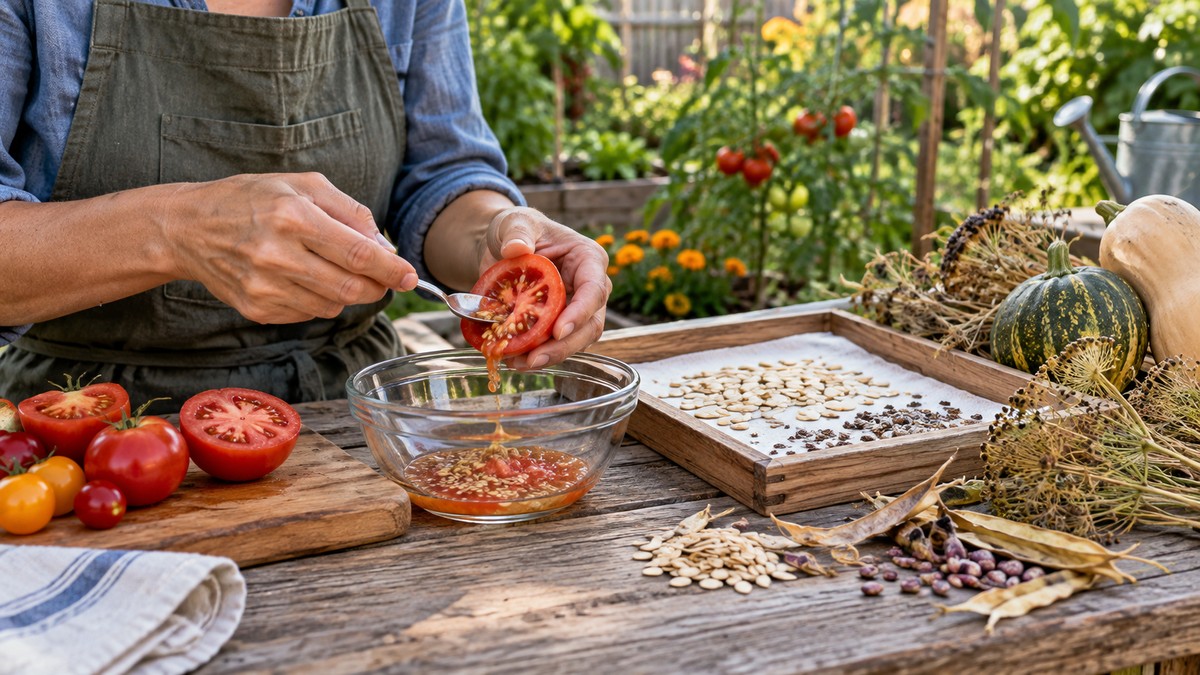
Wet-processed seed sits inside fruit. Oregon State describes it this way: “Wet processed seeds are embedded in the damp flesh of fruits or berries, such as tomatoes, cucumbers, and melons.” The seed, pulp and juice may need fermentation. The guide says “Tomatoes, cucumbers and squash should ideally be fermented for 72 hours at approximately 72-80 °F.” Melon is listed at 24 hours at the same temperature, and eggplant, pepper and tomatillo are said not to need fermenting.
The other two pages give different times for tomatoes. Penn State says to let the jar sit at room temperature “for two to three days, agitating it occasionally.” The University of Vermont describes a longer process: “Agitate the mixture twice a day for five days, at which point it will ferment, and the seeds will sink to the bottom.” So the figures are 72 hours, two to three days, and five days, and each page describes a different method.
Watch the jar. Penn State says that mold may form on the surface of the water, and that “The viable seeds will sink to the bottom of the jar.” Oregon State adds that viable seeds “tend to be denser and will sink to the bottom, while poor-quality seeds are more likely to float.” Pour off the floating seed and the liquid, add fresh water, and repeat. Oregon State says to repeat “until only clean seeds remain.”
Spread the washed seed as thinly as possible on a flat, dry surface, such as a window screen, and stir it several times a day. Oregon State warns that “damage begins to occur whenever the temperature of seeds rises above 95°F.”
Clean dry seed from pods, heads and husks
Dry seed needs different handling. Oregon State says “To clean dry-processed seeds, begin by separating seeds from husk, flower head or pod.” Seeds in tough pods may need to be smashed first. The guide calls hand-screens “easy to build” and says they need a wire gauge that lets the seed pass through. Lighter chaff can be removed by winnowing.
Penn State gives similar advice for lettuce: “A screen or sieve is helpful to separate the chaff from the seeds.” For flowers, it lists “by shaking, rubbing between your hands or over a screen, or beating.”
Dry seed completely before storage
The University of Vermont says seed is dry enough when “you cannot dent them with a fingernail,” which it estimates takes “about one to three weeks.” Penn State adds that drying is complete when seed can be snapped by hand, and it lists the surfaces gardeners use, including “newspapers, coffee filters, paper plates, and screens.”
Airflow helps. Oregon State says “Fans hasten the drying process; ceiling fans are ideal, and placing seeds on window screens is best of all as they allow for excellent air circulation.”
Store seed so it stays viable
Oregon State’s method uses silica gel. Its instruction is to “place equal amounts of silica gel (available at craft shops) and seed into paper envelopes.” Each envelope goes into a clean glass jar. After one to two weeks, the guide says to remove the silica gel from the seed, return the envelope to the jar, and store the jars in a cool, dry place until planting.
Penn State says seed can go in many containers. “As long as seeds are kept in a cool, dry, dark place, they can be stored in plastic or glassine bags, plastic containers, paper envelopes, or glass jars.” The refrigerator is where the pages disagree. Penn State reports that “Some seed savers have good luck with storing seeds in the refrigerator; others feel that this environment could contain too much moisture, causing the seeds to mold.” Oregon State’s collecting page describes a sealed jar in a refrigerator or freezer as an ideal way to store seed for the long term.
Label every container. Penn State says that “No matter how they are stored, seed containers should be labeled with details about the plant variety and date.” The University of Vermont advises storing seed in a cool, dry, dark place once it is completely dry.
Check germination before you plant
Oregon State’s collecting page describes a towel method. “Place 25 to 50 seeds on the towels and roll the towels loosely. Place them in a plastic bag.” The towels stay in a warm place, such as a kitchen counter or on top of a water heater. Radish seed may germinate in two to three days, while peppers can take 10 to 14 days. The guide says to “Observe the seed at two-day intervals to determine the degree of germination.”
Flowers you can save too
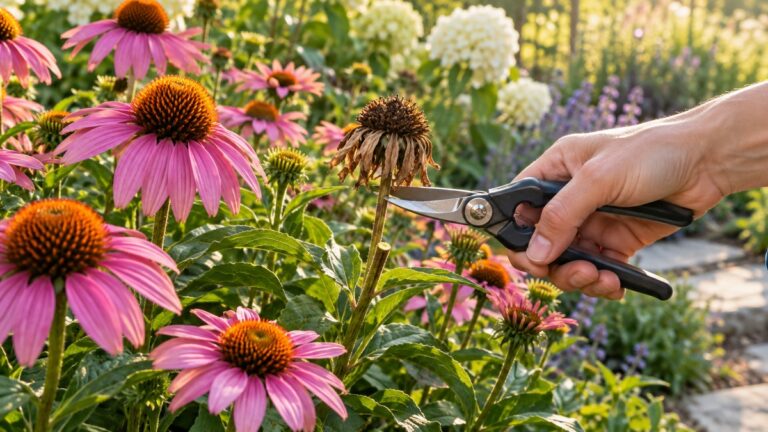
Penn State’s guide covers flowers too. It lists flowers that suit seed saving: “calendula, columbine, cosmos, foxglove, globe amaranth, marigolds, morning glories, nasturtiums, nigella, and zinnias.” It advises checking for seed two to three weeks after bloom and monitoring until the seed is fully mature. Some pods “pop open and drop or even violently fling seeds about”, so watch them closely.
Mistakes to avoid
- Saving seed from hybrids or unlabeled packets. Oregon State and Penn State both describe mixed, weaker plants from hybrid seed.
- Growing two varieties of a wind- or insect-pollinated crop in one season. Oregon State says to grow only one variety of such crops in a season.
- Harvesting wet seed or overripe fruit. Penn State says never to harvest wet seed, and Oregon State warns that overripe crops will mold.
- Storing seed before it is fully dry. The University of Vermont says to store seed when it is completely dry.
- Skipping labels. Penn State says containers should carry the variety and the date.
How we chose
We drew on four extension pages that we opened with curl on 2026-10-22. They are Oregon State’s step-by-step guide (EM 9663), Penn State’s seed saving basics, Oregon State’s page on collecting and storing seed, and a University of Vermont Extension news page. We kept each step that at least one of these pages states in plain words, and we show both figures wherever the pages differ. We did not add crop timings, storage periods or products that none of the pages gives. For the crops that suit a raised bed, see our guide to vegetables to plant in raised beds.
What we could not verify
The pages are useful, but they do not cover every crop, and they do not agree on every detail. The pages do not give a seed yield per plant, a spacing table for seed crops, or a storage life for every vegetable.
What the sources do not say
- Which tomato fermentation time is best. The pages give 72 hours, two to three days, and five days.
- Whether refrigerated storage is the right choice. Oregon State describes a sealed jar in a refrigerator or freezer, while Penn State warns that moisture may cause mold.
- How to spot a hybrid when the packet has no label. Oregon State says many varieties could be hybrids without being labeled, and none of the pages describes a field check.
- Whether broccoli crosses with other brassicas. Oregon State lists broccoli among self-pollinators, while Penn State lists it among plants that may crossbreed.
- How long each seed lasts in your own conditions. Oregon State gives periods by crop, and Penn State says only that many seeds stay viable for a few years.
Frequently asked questions
Is it worth saving seed from hybrid vegetables?
The pages advise against it. Oregon State says seeds from F1 hybrids “will produce a mixture of plant types, most of which will be inferior to the parent plants.” Penn State recommends saving seed “only from open-pollinated plants, not hybrids.”
Which vegetables are easiest for a beginner?
Penn State names beans, peas, tomatoes, peppers and lettuce as the self-pollinating vegetables recommended for beginning seed savers. Oregon State lists tomatoes, peppers, beans, lettuce, peas and broccoli as the easiest to save. Broccoli is the one to watch, because Penn State lists it among plants that may crossbreed.
How long should tomato seed ferment?
Oregon State gives 72 hours at about 72 to 80 °F for tomatoes, cucumbers and squash. Penn State says two to three days at room temperature, and the University of Vermont describes five days with stirring twice a day.
How long does saved seed stay good?
Penn State says that “Many seeds are viable for only a few years”, so the harvest date matters. Oregon State’s collecting page sorts crops into periods. Intermediate seeds, such as beans, peas, carrots and broccoli, are listed at three to four years. Long-lived seeds, such as tomatoes, lettuce and cucumbers, are listed at four to five years. Write the harvest date on every envelope.
How dry should seed be before storage?
The University of Vermont says seed is adequately dry “when you cannot dent them with a fingernail,” which it estimates takes about one to three weeks. Penn State gives a second check: seed should dry until it can be broken by hand or shattered with a hammer.
Sources
- https://extension.oregonstate.edu/catalog/em-9663-step-step-guide-saving-seeds (opened 2026-10-22)
- https://extension.psu.edu/seed-saving-basics (opened 2026-10-22)
- https://extension.oregonstate.edu/gardening/techniques/collecting-storing-seeds-your-garden (opened 2026-10-22)
- https://www.uvm.edu/extension/news/saving-seeds-vegetable-crops (opened 2026-10-22)