How to Drain a Planter Box
As an Amazon Associate we earn from qualifying purchases.
How to drain a planter box comes down to the holes in its bottom and what sits above them. The extension sources here agree that drainage comes from holes that let water leave, not from a layer of gravel. Most of them write about raised beds and containers rather than planter boxes, so this guide applies their drainage principles to a box with a bottom and says where the sources stop.
Quick answer
- Drill a few small holes in the bottom. A Purdue bulletin, quoted in an extension answer, suggests three or four holes about 1/4 inch wide.
- Skip the gravel layer. UC Master Gardeners say a coarse layer stops drainage where the water meets it.
- Test the holes by watering the box and watching how the excess water leaves.
- For a tall box, check the depth. Oregon State’s raised bed guide says taller beds may need extra drainage in the bottom.
Why a gravel layer does not drain a planter box
The idea of a gravel layer seems intuitive. The UC Master Gardeners page says so, and then calls it a myth: “It’s a common myth that we should put gravel or other coarse-textured material in the bottom of a container to improve drainage.” The reason is in how the soil behaves. “A well-watered container of potting mix always has a saturated layer at the bottom.” Adding gravel does not remove that layer. “When you put a layer of gravel at the bottom of the pot, the saturated layer simply moves up.”
The same page explains the cost: “The layer of gravel actually reduces the usable depth and brings the saturated soil layer closer to the plant’s roots.” In plain terms, the gravel takes up room the roots could use, and the wet zone sits closer to them. The page also says that “If a layer of such material is in the bottom of a pot, the downward movement of water (i.e., drainage) will stop when the water encounters the coarse layer.” So a gravel layer can hold water above it instead of letting it out.
Drill a few small holes
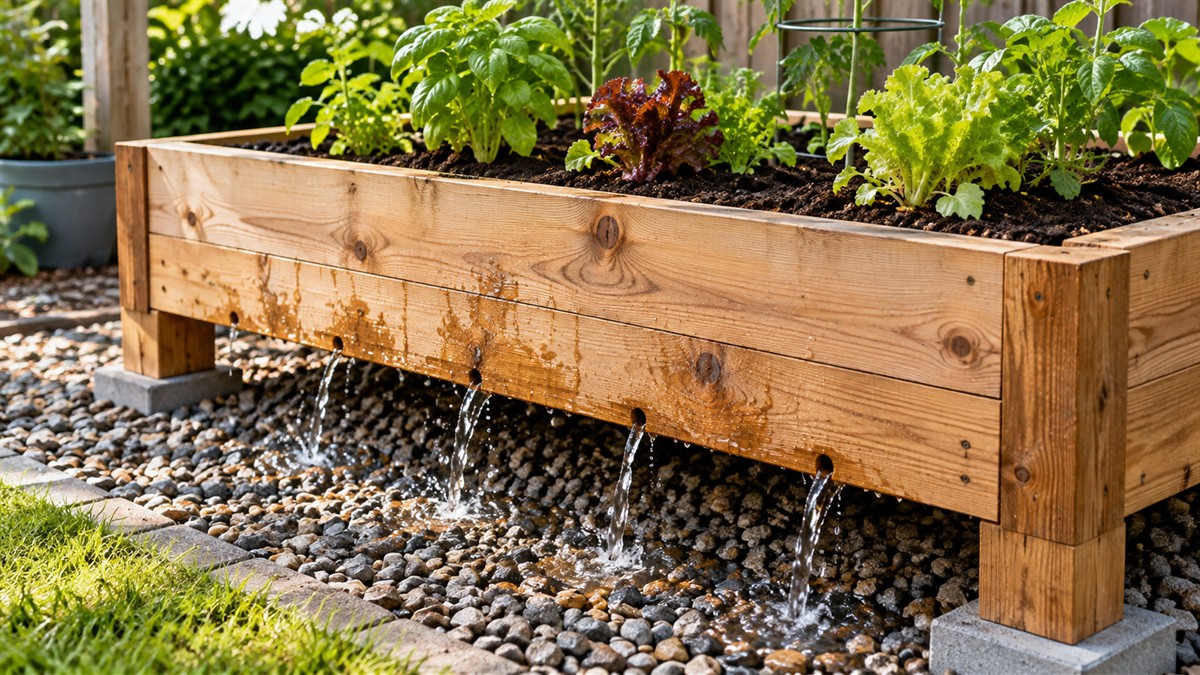
The holes are the drainage. An Ask Extension answer about DIY planters quotes Purdue University’s container bulletin: “To provide drainage, drill three or four small (1/4 inch) holes in the bottom of the container.” The same answer adds that “Holes larger than 1/4 inch in diameter will allow too much soil to escape.” That gives a planter box two limits: enough holes to let water out, and not so large that the potting mix runs out with it.
The 1/4-inch size has a practical problem, which the answer names directly: it is “easy for a piece of perlite or bark to block a tiny 1/4 inch hole”, so the holes can clog. A hole that clogs does no drainage, so a planter box with a few tiny holes may behave like one with none. The answer then says that online sources often use larger bits, between 3/8 and 5/8 inch, and that the expert might lean toward that size for the same reason. The sources disagree on the exact size, so pick a size that keeps the mix in the box and does not clog easily.
Drill the holes before the box is filled. The Ask Extension answer notes that “having to empty the container to drill more holes would be a pain”, so planning the holes at the start saves a second round of emptying the box.
Test how the water leaves
The same answer suggests a practical check: “drill a few small holes, fill the container with soil, water it, and examine how well the excess water penetrates.” Watch where the water goes. If it runs out of the holes freely, the box is draining. If it pools on top, the box needs more holes or a change to the mix, and any new holes should stay within the size limits above.
The answer is also candid that most university bulletins give little detail on the size and number of holes. The bulletins the expert has seen mostly say to provide “adequate drainage” without a count. That is why the water test is worth doing, since a number of holes that works for one box may not work for a larger one.
Tall boxes need bottom drainage
The depth of the box changes the drainage problem. Oregon State University’s raised bed guide says that beds taller than 18 inches may need extra drainage in the bottom. It also says that “deeper beds need a frame to stay intact.” A deep box needs a frame as well as holes, so the frame and the drainage plan belong together.
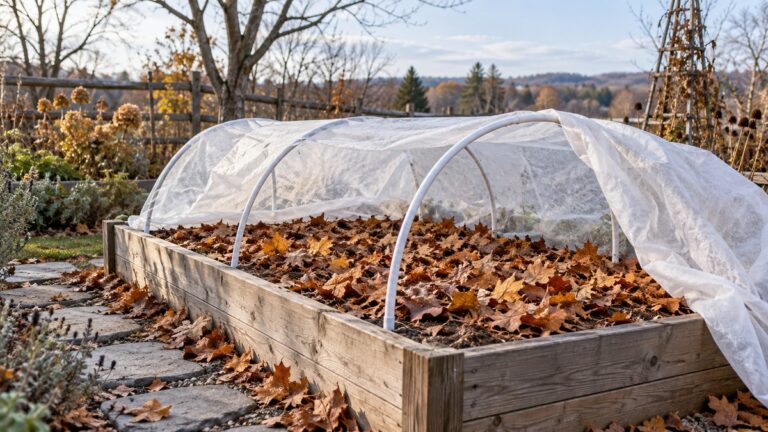
The guide also explains why the two go together. “If your soil is heavy and remains wet long after rain has stopped, consider using raised beds or installing drainage.” The raised bed approach is a drainage answer as much as a gardening one: “Raised beds will not only be better drained, they also will warm earlier.” The University of Missouri Extension article on raised beds makes the same point: “A primary advantage of raised-bed gardening is improved drainage.” It adds that “Raised beds permit plant roots to develop in soil located above water-logged or compacted areas.”
None of these sources gives a hole count or spacing for a tall planter box. For a deep box, the practical step is to add holes in the bottom, run the water test above, and then decide whether the box needs more.
Match the mix and the depth to the box
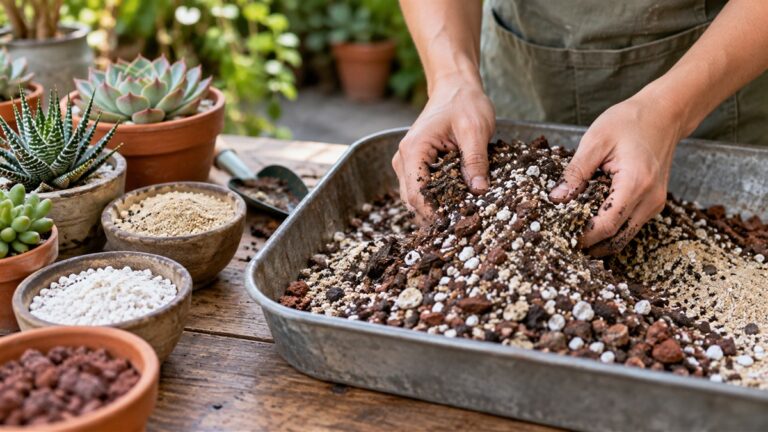
The potting mix matters as much as the holes. The UC page advises: “Amend the potting mix by adding coarse materials such as perlite, crushed lava, or pumice”, which is one of its two options. It gives a second route too: “Choose a deeper container, so the roots will have more soil depth that remains well drained and unsaturated”. Both fixes address the wet zone at the bottom, and they work with the holes rather than replacing them. For the soil volume question, our guide on how much soil a raised bed needs covers that side of the job.
Colorado State University’s container basics put the priority first: “In selecting a container, proper drainage is the most important consideration, and watering needs will be based partly on whether the container is porous, as in a terracotta pot, or the pot is glazed, allowing less water evaporation through the container itself.” A wooden planter box is not a pot, but the same order of priorities applies: drainage first, then the mix and the depth.
Oregon State’s container guidance also asks for enough room for the plants. It says: “Start by finding a container large enough to support fully grown plants and with adequate soil-holding capacity to accommodate the plants’ root systems.” Its depth guide, which is written for vegetables, says: “For most plants, containers should be at least 6 inches deep.” A box shallower than that falls short of the guide’s depth for most plants, so check the depth against the plants before you fill the box. If you are building the box itself, our DIY planter box for a deck railing guide covers the build.
Holes that are too large
Holes can be too big as well as too small. The UC page covers the case where soil leaves the box: “If drainage holes in a container are too large and the potting soil comes out of the holes, you can place a few shards of material over the holes, but no more than that.” The Purdue text quoted by Ask Extension says that “Placing a layer of gravel or broken pottery pieces on the bottom of the container, below the soil, can help stop the flow of soil through larger holes.”
Read together, the two sources use a layer only to hold soil in large holes. Neither describes it as a way to move water out of the box. So if a box has large holes, the fix is a few shards or a layer to keep the mix in, and the holes should still be sized to drain.
Mistakes to avoid
- Putting gravel in the bottom and expecting it to drain. UC says the saturated layer moves up and the usable root depth shrinks.
- Drilling holes that are too few or too small. The Purdue text quoted by Ask Extension recommends three or four holes about 1/4 inch wide, and the expert notes that small holes can clog.
- Skipping the water test. The Ask Extension answer suggests watering the box to see how the excess water leaves.
- Assuming a tall box drains without help. Oregon State says beds taller than 18 inches may need extra drainage in the bottom.
- Keeping the mix as it is. UC suggests adding coarse materials such as perlite, crushed lava or pumice.
What we could not verify
The sources above cover drainage in general, but the planter box itself is a gap. The points below stay open, and this guide does not guess at them.
What the sources do not say
- How many holes a planter box of a given size needs. The Purdue figure of three or four holes is for containers, and the Ask Extension answer is from 2014.
- How to drill a finished wood box, or how to add holes to a box that already has a liner. The sources do not cover finished boxes or liners.
- How far apart the holes should be across the bottom. The sources give no spacing.
- Whether a planter box needs extra protection from wet wood. The sources do not address that here.
- How many extra holes a tall box needs. Oregon State says extra bottom drainage may be needed, but gives no count.
- Whether bottom holes alone are enough for a deep box. The sources do not say when a side drain is needed.
How we chose
This guide uses six sources, all opened with curl on 2026-10-22: UC Master Gardeners of Santa Clara County (drainage in containers), an Ask Extension answer from 2014 that quotes Purdue’s container bulletin, Oregon State University Extension’s raised bed guide, Oregon State’s EM 9027 gardening guide, Colorado State University Extension’s container basics, and a University of Missouri Extension article on raised beds from July 2015. Each quoted sentence was checked against the text that curl returned from the page.
A step is kept when an extension source states it, or when the same drainage principle appears in a raised bed or container source. Raised bed sources are used for a box with a frame only on that principle. No product is recommended, and no retail listing or hole-spacing figure from a blog was used.
Frequently asked questions
Will a gravel layer help a planter box drain?
The UC Master Gardeners page says no. It calls the gravel idea a common myth, because the saturated layer moves up and the usable root depth shrinks. The same page recommends amending the mix or choosing a deeper box instead.
How many drainage holes does a planter box need?
The Purdue bulletin, quoted by Ask Extension, recommends three or four small holes for a container. The same answer says most bulletins give no count, so the sources do not give a number for a large planter box. A water test is the practical way to check.
Should the drainage holes be bigger than 1/4 inch?
The sources disagree on the exact size. The Purdue text says holes larger than 1/4 inch let too much soil escape, while the Ask Extension answer notes that small holes clog and that online sources often use bits from 3/8 to 5/8 inch. Choose a size that keeps the mix in and does not clog easily.
Does a tall planter box need extra drainage?
Oregon State’s raised bed guide says beds taller than 18 inches may need extra drainage in the bottom. It also says that deeper beds need a frame to stay intact. The guide gives no hole count, so test the box after drilling.
How can you tell if a planter box is draining?
Fill it with soil, water it, and watch how the excess water penetrates and leaves. The Ask Extension answer suggests this check. If water pools on top, add holes within the size limits above or change the mix.
Sources
- https://ucanr.edu/site/uc-master-gardeners-santa-clara-county/drainage-containers (opened 2026-10-22)
- https://ask.extension.org/kb/faq.php?id=220577 (opened 2026-10-22)
- https://extension.oregonstate.edu/sites/default/files/documents/12281/raisedbed.pdf (opened 2026-10-22)
- https://extension.oregonstate.edu/catalog/pub/em-9027-growing-your-own (opened 2026-10-22)
- https://planttalk.colostate.edu/topics/annuals-perennials/1001-container-gardening-basics/ (opened 2026-10-22)
- https://ipm.missouri.edu/MEG/archive/2015/v21n7.pdf (opened 2026-10-22)