How to Prepare a Raised Bed for Spring
As an Amazon Associate we earn from qualifying purchases.
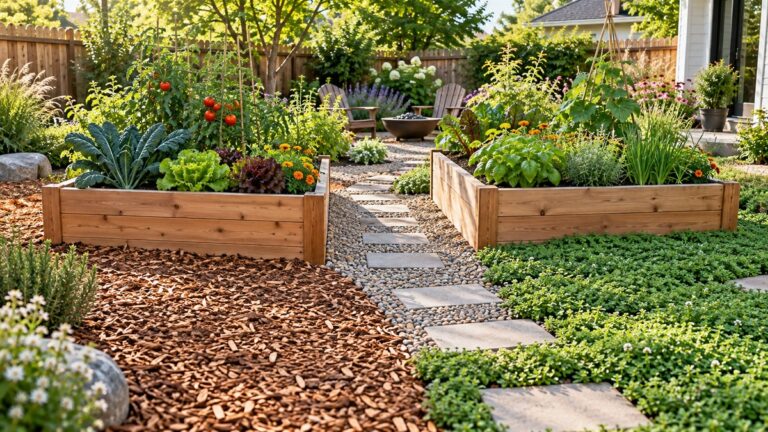
Learning how to prepare a raised bed for spring planting comes down to four checks: whether the soil is dry enough to work, whether it has been compacted, whether it needs organic matter, and whether water still drains through it. Raised beds usually dry out and warm up sooner than ground beds, so spring work can often begin earlier. The calendar alone does not tell you when, though, so the steps below follow the soil rather than a date. The sources we opened do not give one planting day for every region, so pair these checks with your own local timing.
Quick answer
- Wait until the soil is dry enough to crumble easily before you dig or till.
- If the soil is compacted, loosen it first. Oregon State says an initial rototilling helps, even at 2 or 3 inches deep.
- Work in organic matter such as finished compost, especially where the native soil drains slowly.
- Check that water drains through the bed, and plant once the bed is workable.
Start with the soil, not the calendar
Wait until the soil crumbles
Oregon State University’s raised bed fact sheet makes soil condition the first rule. Spring soil dries slowly, and working it too early causes problems that last through the season. The guide says: “wait until the soil is dry enough to crumble easily and not turn up in large chunks.” That wording gives a simple test. If a handful of soil breaks apart when you open your hand, it is in the range the guide describes. If it stays in wet clumps or smears, leave it for a few more days. This test is our reading of the guide’s wording, not a method the guide spells out. The same fact sheet links a hard-to-prepare seedbed to crusting, clods and collapsed plants during the summer, which is the reason the wait is worth it.
Use the early warm-up, but keep the timing honest
Iowa State University Extension says raised beds dry out and warm up earlier in the spring, allowing earlier planting. That head start is real, but it only helps when the soil is also workable. A bed that is warm on the surface and still wet underneath is not ready for digging. Penn State Extension’s York County Master Gardener article adds that a raised bed “allows a gardener to control soil conditions, regulate watering, and control weeds”. Those three controls are the reason the spring checks are worth doing before you plant rather than after. NC State Extension’s Clay County article makes a related point, listing “improved soil drainage, easier weed control, and reduced soil compaction” among the benefits of raised beds, so drainage and compaction belong on the same checklist.
Loosen compacted soil before you plant
When an initial tilling helps
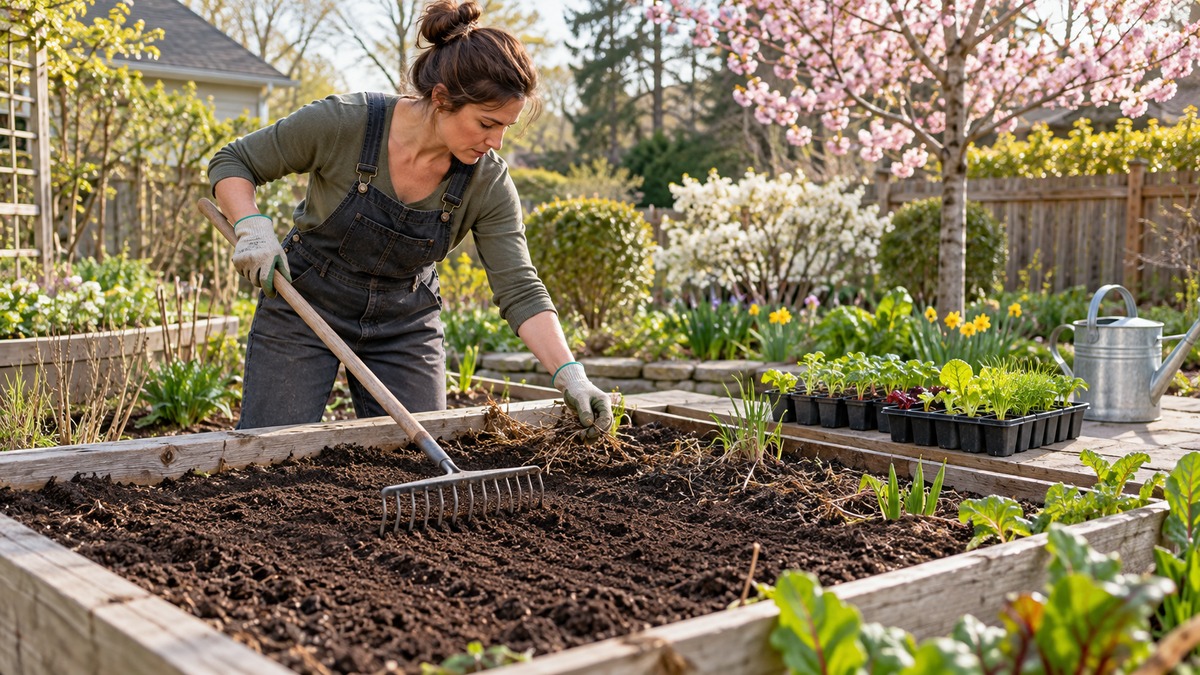
Compaction is the case Oregon State has in mind when it recommends tilling. The guide says: “If the soil is compacted, an initial rototilling is helpful, even if only 2 or 3 inches deep.” That depth is the figure the guide gives, and it is a starting point for compacted soil rather than a rule for every bed. Tilling is also a choice you can skip if the soil already crumbles and drains well. The guide pairs the tilling with the same rule as before: “Do not rush this step” and wait for the soil to crumble. If you did not build the bed yourself, check how the existing soil feels before you decide how much work it needs.
Check the bed once the soil is loose
After loosening, walk the edges and look at the surface. A loose bed should hold its shape when you press a handful together and then let it crumble. If the soil slumps into a flat, packed layer after a light rain, that points back to compaction. The sources we opened do not give a fixed number of passes or a time limit for this check, so use the crumble test and your own eyes rather than a schedule.
Add organic matter where the soil needs it
Heavy native soil
Oregon State’s guide says that when native soil is heavy and slow-draining, you should incorporate organic matter, such as finished home compost, purchased compost, or composted leaves. The guide applies that advice to native soil under a garden. In a raised bed, use it as a check on the fill mix rather than a fixed recipe, and ask whether the fill drains as well as the native soil would have. The guide also lists composted leaves, which means leaf mold can count as organic matter when it is well broken down.
How much to add in spring
The sources we opened do not give a set amount of compost for a bed in spring. NC State Extension’s Clay County Master Gardeners, in their winter guide, say “All soils need replenishing,” and that is the reason to add organic matter each year rather than assume last season’s mix still works. The amount depends on the size of the bed, the condition of the soil already in it, and how much the bed has settled. For soil volumes when you are topping up or refilling, see how much soil a raised bed needs.
Choose the fill with care
Bagged soils are sold under several names, and the name does not always tell you how the mix will drain or feed plants. If you are deciding what to top up with, bagged soil types for filling a raised bed covers that choice in more detail. Whatever you choose, the mix should crumble when dry and drain when wet, which is the same test the rest of this guide uses.
Set the bed up for planting
Check the drainage
NC State Extension’s winter guide says that “standing water for more than 24 hours indicates drainage issues”. The same check suits spring. After the first heavy rain, look at the bed. If water stands on the surface or sits in the bed for a day or more, fix the drainage before you plant rather than watering around the problem. Standing water is the sign to watch for, whatever the bed’s construction.
Clear the area before the soil goes in
Illinois Extension’s raised bed checklist says grass and weeds can grow up through a new bed, so existing growth should be cleared before the soil goes in. The checklist also says “This can be done in the fall so that the area is ready for spring planting.” That timing is useful if you are building or rebuilding a bed and want it ready early. For a bed that is already filled, the checklist’s advice does not apply in the same way, and the sources we opened do not give a separate method.
Keep the bed narrow enough to work from the edges
Oregon State’s no-till guide gives a practical limit for beds that you want to keep open and loose: “Keep beds only as wide as you can reach from the sides, and make paths (mulched with straw) to prevent compaction.” Working from the paths means you do not step on the soil you just loosened, which is the same compaction problem the tilling step is meant to fix. Mulched paths are the guide’s suggestion for keeping that from happening again.
Mistakes to avoid
- Working soil that is still wet. Oregon State’s wording makes dryness the test, not the date on the calendar.
- Leaving plastic under a rebuilt bed. The Illinois checklist says plastic should be removed before soil goes in, so that it does not impede drainage.
- Skipping organic matter in heavy native soil. Oregon State’s guide recommends it where the soil drains slowly.
- Assuming a bed is ready because the surface looks warm. Iowa State’s point is about earlier drying and warming, not about readiness.
A spring order of work
Put the checks in the order the sources suggest: wait for soil that crumbles, loosen it if it is compacted, work in organic matter, check the drainage, clear anything that grew over the bed, and then plant. Each step above names the source for that check, so you can see where the advice comes from. The order matters because a loose, drained bed takes new soil and roots far better than a packed one, and the checks build on each other. Once the bed passes these checks, the next question is what to plant, and vegetables that suit raised beds covers that choice.
How we chose
We chose the spring checks that appear across the pages we opened on 2026-10-21: soil dryness, compaction, organic matter, drainage and weed control. Each check had to be supported by at least one page that returned a readable text when we opened it with curl. All five pages come from university extension programs: Oregon State University, Iowa State University, Penn State Extension, NC State Extension in Clay County, and University of Illinois Extension. Three NC State pages are included: one general raised bed article and two winter guides, because the drainage and compaction advice in the winter guides applies to the same beds. We matched every quoted sentence against the fetched text of its page. We left out advice that did not appear in these pages. Product listings were not used at all, because this guide describes a method and recommends no product.
What we could not verify
We could not verify a planting date for any region, a soil mix ratio for raised beds, or a set time between tilling and planting. The pages we opened do not give those figures in the passages quoted here, and where a page is silent we say so rather than fill the gap with a guess.
What the sources do not say
The sources do not give a spring planting date, a fixed compost amount, or one depth that suits every bed. Oregon State’s page is a general fact sheet, and the Illinois checklist is written for schools and communities starting a new bed, so some steps may apply only to a new build. Iowa State’s warm-up point is general and does not say how many days early a bed will be ready. Nothing in this guide is a product claim, and no product is recommended.
Frequently asked questions
Can I plant as soon as the soil feels warm?
Warmth is not the test the sources use. Oregon State advises waiting until the soil is dry enough to crumble easily. Iowa State says raised beds warm up earlier in spring, which can allow earlier planting, but the pages we opened do not give a date for your area. Use the crumble test first, then plant when the soil is workable.
Do I need to till a raised bed every spring?
The sources we opened tie tilling to compaction. Oregon State says an initial rototilling is helpful if the soil is compacted, at 2 or 3 inches deep. They do not say that a bed that is not compacted needs tilling every year, so loosen the soil when the soil tells you to, not on a schedule.
How much compost should I add each spring?
The sources do not give an amount. NC State’s Clay County guide says all soils need replenishing, which is a reason to add organic matter each year, but the right amount depends on the bed and the soil already in it. Add what the bed needs to drain and crumble, then check again the next spring.
What if grass or weeds are already growing in the bed?
Illinois Extension says existing grass and weeds should be cleared before the soil goes in when a bed is new. For a bed that is already filled, the sources we opened do not give a removal method, so this guide does not give one either. If you are unsure, ask your local extension office what suits your bed.
Does a raised bed keep weeds out on its own?
No single page says that. NC State’s Clay County article lists easier weed control among the benefits of raised beds, and Penn State’s York County article says a raised bed lets a gardener control weeds, along with soil and watering. Those are benefits of the design, not guarantees, and you still need to watch the bed through the season.
Sources
- https://extension.oregonstate.edu/catalog/fs-270-raised-bed-gardening (opened 2026-10-21)
- https://yardandgarden.extension.iastate.edu/how-to/creating-raised-bed-planters (opened 2026-10-21)
- https://extension.psu.edu/programs/master-gardener/counties/york/york-master-gardener-articles/garden-design-techniques/raised-bed-gardening (opened 2026-10-21)
- https://clay.ces.ncsu.edu/news/getting-started-with-raised-bed-gardening/ (opened 2026-10-21)
- https://wilkes.ces.ncsu.edu/news/winterizing-your-raised-garden-beds/ (opened 2026-10-21)
- https://extension.oregonstate.edu/news/layer-compost-lasagna-style-no-till-gardening (opened 2026-10-21)
- https://extension.illinois.edu/sites/default/files/raised_bed_checklist.pdf (opened 2026-10-21)
- https://clay.ces.ncsu.edu/news/preparing-the-garden-for-winter-clay-county-master-gardeners/ (opened 2026-10-21)