How to Attract Hummingbirds to Your Yard
As an Amazon Associate we earn from qualifying purchases.
How to attract hummingbirds to your yard comes down to three things the extension sources point to: flowers and insects that give them food through the season, trees and perches for nesting and resting, and, if you want one, a feeder that stays clean and holds a plain sugar solution. Purdue’s wildlife specialists stress that hummingbirds are not strictly nectar feeders. The steps below follow the order the sources use, starting with the plants and moving to the feeder.
Quick answer
- Plant red or orange tubular flowers, and choose plants that bloom at different times so nectar is available from spring to fall.
- Leave some insect habitat in place. Purdue says an adult female “can consume up to 2,000 insects per day,” so flowers alone are not the whole diet.
- Add trees and shrubs for nesting and perching. The North Carolina State Extension page says native trees “provide nesting areas” as well as blooms.
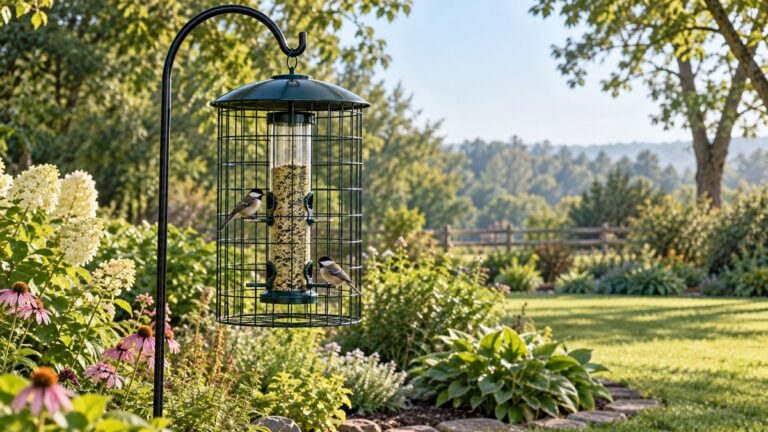
- If you add a feeder, keep it red, easy to clean and shaded, use the sugar ratio from Cornell, and put several small feeders around the yard instead of one large one.
Start with what hummingbirds actually eat
Many people picture hummingbirds as nectar-only visitors, and the sources correct that picture. Purdue’s fact sheet, FNR 249-W, says that “Despite common belief, hummingbirds are not strictly nectar feeders.” Insects are the protein source. Purdue says that “Insects and other invertebrates are the primary source of protein for adult hummingbirds and their young,” and lists mosquitoes, gnats, small bees, fruit flies, spiders, caterpillars, aphids and insect eggs among the small prey.
The Cornell Lab’s BirdNote on attracting hummingbirds makes a similar point. It says that hummingbirds “get quick energy from sugar-water feeders, energy that fuels their search for the insects and flowers which provide most of their nourishment.” In other words, a feeder helps with energy, but the rest of the diet comes from flowers and the insects that live around them. A yard with only a feeder is missing the protein part of that diet.
Leave some insect habitat in place
Purdue describes where insects gather. In natural settings, it says, insects are drawn to what it calls weedy patches, which have “a mixture of taller grasses and forbs (non-woody, broadleaf plants).” Its fact sheet also says that naturalized areas with native forbs and grasses are excellent insect habitats. A corner of the yard left to grow rather than mowed can do that job, and so can a border of wildflowers.
Purdue gives low-cost ways to do this. It suggests that “Leaving borders or selected areas of lawn unmowed is another cost effective way to provide insect habitat for hummingbirds.” It also says that a border can be made clearer and tidier with “Mow definite borders around them, pave a path through them, place a small segment of fence in front of them, or plant a few brightly colored flowers around their borders.” Those steps keep the insect area from looking neglected, which matters if the yard is seen by neighbors.
Plant flowers that hummingbirds use
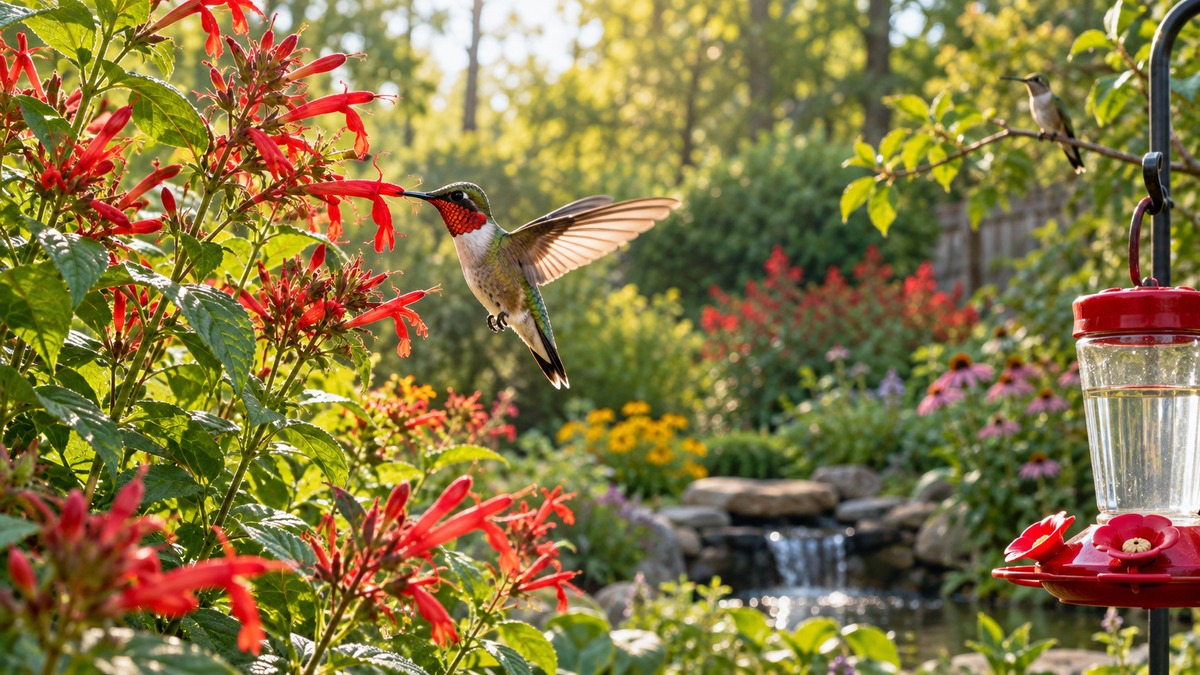
Flowers provide the nectar, and the sources agree on the kind of flower. The North Carolina State Extension page says that hummingbirds “are attracted to red or orange tubular flowers, but do not feed on them exclusively.” Purdue explains why. About 150 species are pollinated by hummingbirds rather than bees, and “Red is one color that bees do not see as well; therefore, many of the flowers that are pollinated by hummingbirds tend to be red.” Those flowers also “usually don’t offer perching platforms like many other flowers,” and they “often point downward and have long corolla tubes that exclude most insects.”
That shape matters for your choices. NC State notes that “Their long bills allow them to reach nectar deep inside the bloom,” which is why the tubular shape works well for them. Flowers with wide open faces that bees use may give hummingbirds a poorer meal in comparison, so choose the tubular ones for the sunny spots.
Choose plants that bloom in sequence
Timing keeps the supply going. Purdue advises that “By selecting a mixture of flower and shrub species that have overlapping blooming seasons you will provide an available nectar source to hummingbirds visiting your yard throughout the growing season.” NC State puts the same idea another way: a landscape with “varieties of trees, shrubs, vines and perennials that have a succession of blooms throughout the spring and summer will help ensure a continuous supply of nectar.”
The sources name plants you can use. NC State lists bee balm, jewelweed and cardinal flower as perennials that “can be grown in mixed borders along with annuals like petunias and salvias.” It also names native vines with tubular flowers, “like coral honeysuckle and trumpet vine.” Purdue lists native perennials including cardinal flower, columbine, bee balm, and red morning glory, along with copper or red iris, and suggests native vines such as trumpet creeper and crossvine on trellises around garden edges. Those lists come from two different states, so check which ones grow in your region before you buy.
Plant natives where you can
NC State gives a clear reason to favor natives: “Native plants are emphasized as they produce a greater amount of nectar than hybrids or exotic species.” Purdue’s fact sheet makes a similar point about flowers in general, saying that “Flowers planted in your gardens and around your yard provide a valuable source of nectar for hummingbirds.” If space is short, NC State notes that “There are many plants that can be grown in containers for smaller spaces.”
Trees, perches and nesting
Hummingbirds need more than flowers. Purdue says that “Trees are required for nesting, resting, and escape cover.” That means a yard with flowers but no trees may draw visitors who then leave to nest. NC State names native trees such as red buckeye, hawthorn and yellow poplar, which “not only produce blooms, but also provide nesting areas.” Purdue also lists other nectar trees, including horsechestnut and tulip poplar, as sources of nectar.
Perches matter as well. Purdue points out that “Locate your feeders near trees or perching areas so they don’t have to move long distances between feeding and resting locations.” That line is written about feeders, but the principle applies to the whole yard: a hummingbird that can rest near food spends less energy moving between them. Keep a few twigs or a small shrub nearby, and the birds have a place to wait their turn at a feeder or flower bed.
Set up a feeder, if you want one
A feeder is optional, and the sources treat it as a supplement to plants and insects rather than a replacement. Purdue says that “Feeders provide a steady and valuable food source in early spring when most flowers are not yet in bloom.” It also notes that feeders can “supplement natural sources of nectar throughout the summer and fall when plants in flower gardens are between flowering stages.” If you want one, these are the points the sources agree on.
Choose a feeder that is easy to clean
Cornell’s BirdNote puts cleaning first: “The most important feature of a good hummingbird feeder is that it be easy to open and to clean.” It adds that “If you can’t easily reach every bit of inside surface with a bottle brush, the feeder will soon foster bacteria, fungi, and other harmful organisms.” Purdue gives the same advice: “When selecting a nectar feeder for your yard, look for feeders that are easy to disassemble and clean.” A feeder that opens fully is the one you can clean properly. Our guide to cleaning bird feeders with vinegar covers one cleaning method.
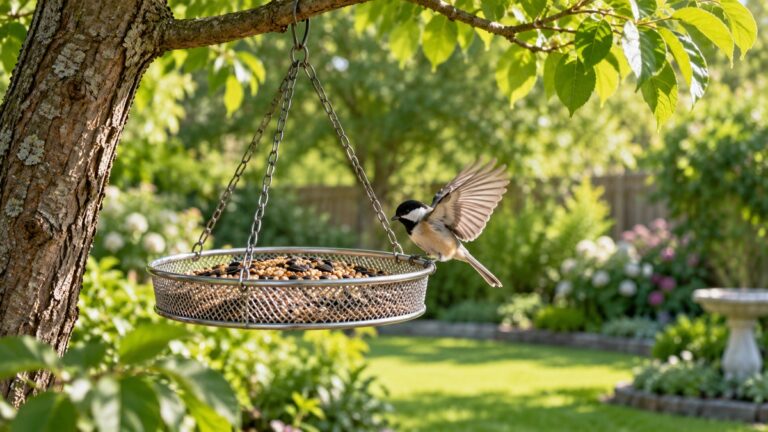
Color and insect guards matter too. Cornell says that “Feeders should have red parts,” and Purdue notes that “Red feeders will more effectively attract hummingbirds, but are less attractive to insects.” Yellow guards are a problem. Cornell warns that “When these are yellow, they may actually attract yellow jacket wasps.” Choose red guards, and consider a basin-style feeder, since Cornell says that “In basin feeders, the sugar water is often too far within for wasps to reach, though hummingbird tongues have no trouble, so these feeders are often the best choice for discouraging flying insect pests.”
Make the sugar solution the right strength
Cornell gives the recipe in plain terms. It says to “Use granulated cane sugar and unsoftened, non-distilled hot drinking water.” The ratio is set out clearly: “The ideal ratio is usually 1/4 cup of sugar per cup of water; your mixture should never be stronger than that during hot, dry weather.” In cold, rainy weather, Cornell says, “you can make it stronger, using up to 1/3 cup of sugar per cup of water.” Those figures come from Cornell and no other source in this post, so use them as Cornell gives them.
Keep the solution fresh. Cornell notes that “Hummingbird sugar solutions should be changed fairly often, so unless you have a great many hummingbirds, smaller feeders are also less wasteful.” Purdue adds that “The shade cools the nectar and delays spoiling on hot summer days.” For a homemade version of the solution, see our guide to making hummingbird nectar at home.
Place feeders in shade, with room to fly
Purdue advises that you “Look for a shady area that is open enough to allow hummingbirds to freely fly around the feeder.” The shade slows spoiling, and an open area lets the birds approach without a tangle of branches. Perches nearby help too, as described above. For hanging height and setup, see our guide to how to hang a hummingbird feeder.
Use more than one feeder
One feeder can become a fight. Purdue explains that one dominant male can keep other males away from a single feeder. It recommends that “Feeders should be spaced 10-15 feet apart,” and that you add another feeder “When you see more than four birds using a single feeder, or when you see a male chasing off other males.” Cornell agrees that “You will attract more hummingbirds that can feed with fewer disruptions if you place several small feeders around your yard rather than just one large feeder.”
Common mistakes to avoid
- Relying on a feeder alone. Purdue and Cornell both say that feeders supplement, rather than replace, the flowers and insects that give hummingbirds their protein and most of their diet.
- Using yellow guards. Cornell warns that yellow bee guards may attract yellow jacket wasps.
- Making the sugar solution too strong in hot weather. Cornell’s ideal of 1/4 cup per cup of water should not be exceeded in hot, dry weather.
- Letting the feeder go unwashed. A feeder you cannot reach inside will foster bacteria and fungi, according to Cornell.
- Placing every feeder in one spot. Purdue says a dominant male can keep others away from a single feeder, so spread the feeders out.
How we chose
This guide draws on three extension and research pages: Purdue’s wildlife fact sheet FNR 249-W, North Carolina State Extension’s plant list, and the Cornell Lab of Ornithology’s BirdNote on attracting hummingbirds. We kept advice that more than one source states, or that one source states with a clear reason. We left out retail feeder listings, and we did not use advice from pages without a named institution. The plant names come from the Indiana, North Carolina and Cornell material, and where the lists differ we say so.
What we could not verify
The sources we opened cover different regions, so the plant lists may not match your climate or the flowers sold near you. The Purdue fact sheet is written for Indiana, the NC State page for North Carolina, and the BirdNote for a general audience. Check a regional list from your own extension office before you plant. The guide names no feeder, sugar product or plant nursery.
What the sources do not say
The sources do not give a timetable for when hummingbirds arrive in your area, beyond Purdue’s note that observers can see migrating hummingbirds at feeders from late July through October. They do not give a planting density, a bed size, or the number of plants needed for a yard. They do not say how long a feeder stays full in a given temperature beyond the shade advice, and they do not name a safe cleaning product for a particular feeder material.
Frequently asked questions
Do hummingbirds only drink nectar?
No. Purdue says that “Despite common belief, hummingbirds are not strictly nectar feeders,” and that insects are the primary source of protein for adults and their young. A yard with insect habitat as well as flowers serves the whole diet.
What color flowers attract hummingbirds best?
NC State says hummingbirds are “attracted to red or orange tubular flowers.” Purdue adds that many flowers pollinated by hummingbirds are red, partly because bees see red less well. Tubular, downward-facing flowers suit their long bills.
Do you need a feeder to attract hummingbirds?
The sources treat a feeder as optional. Purdue says feeders are valuable in early spring, when many flowers have not yet bloomed, and that they supplement natural nectar. A garden with a long bloom season can attract hummingbirds without one.
What should be in a hummingbird feeder?
Cornell says to “Use granulated cane sugar and unsoftened, non-distilled hot drinking water,” at a ratio of 1/4 cup of sugar per cup of water, or up to 1/3 cup in cold, rainy weather. Do not exceed the lower ratio in hot, dry weather.
Where should you hang a hummingbird feeder?
Purdue advises a shady area that is open enough for the birds to fly around the feeder, and says to place feeders near trees or perches. It also recommends spacing feeders 10 to 15 feet apart and adding another feeder when more than four birds use one at a time.
Sources
- https://www.extension.purdue.edu/extmedia/FNR/FNR-249-W.pdf (opened 2026-10-21)
- https://lee.ces.ncsu.edu/news/plants-to-attract-hummingbirds/ (opened 2026-10-21)
- https://dl.allaboutbirds.org/hs-fs/hub/95627/file-1364842976-pdf/docs/CornellLab-BirdNote-AttractingHummingbirds.pdf (opened 2026-10-21)