Best Compost for Raised Garden Beds: Mixes and Ratios That Work
As an Amazon Associate we earn from qualifying purchases. Details
Updated 19 October 2026 | Author: Editorial team, homelycapers.com
The best compost for raised garden beds is mature, finished compost blended into topsoil or coarse sand, not fresh compost piled on top as a thick layer. University extension guidance gives a few workable mixes, with compost making up roughly one-third to one-half of the bed volume, and it warns that heavy, repeated applications of compost can build up phosphorus and soluble salts. This guide explains those mixes, how to judge compost quality, and how to work out how much to order.
Quick answer
- Use finished, mature compost. Iowa State University Extension says the compost should be well done and mature, and that it should not carry too much salt.
- Blend it with topsoil or sand. Iowa State gives an equal-parts mix of topsoil, organic matter and coarse sand, and an alternative of about 70 percent topsoil and 30 percent compost.
- Do not make compost the whole bed. Ask Extension answer #926507 warns that heavy, regular applications of compost can build up phosphorus and soluble salts in the soil.
- Heavy native soil needs organic matter. Oregon State University Extension recommends mixing finished compost, leaf mold or well-composted manure into heavy, slow-draining soil.
Why the bed mix matters more than any single bag
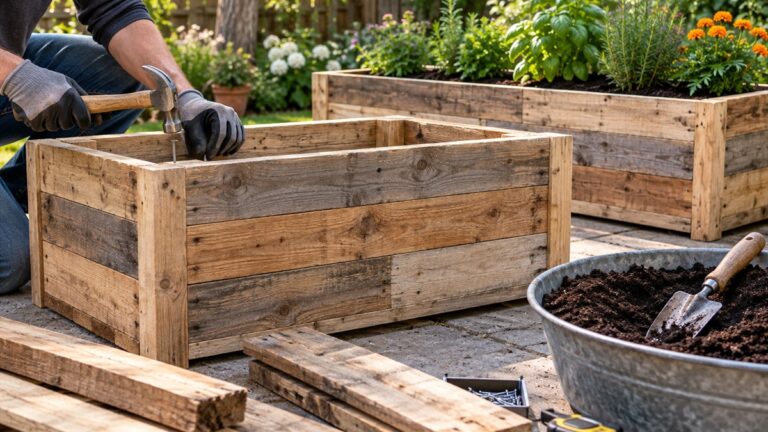
A raised bed is a designed soil. The University of Maryland Extension notes that the soil in a raised bed warms up more quickly in spring than ground-level soil, and that its looser texture and raised grade let it drain well and reduce the risk of waterlogging. Those benefits come from the mix as much as from the frame, so the compost you choose is one part of a larger decision about what goes into the bed.
Compost contributes organic matter to that mix. The extension recipes we opened all treat topsoil as the body of the bed and organic matter as the share that adds structure and fertility. Sand appears in several of the recipes as well, and the Ohio Ask Extension answer uses it as one of three equal parts. The pages describe the bed soil as a blend of these parts, not as a single material, and that is the framing this guide follows.
The Iowa State guidance says raised bed soils should be light and well-drained. Because compost is the ingredient that most often gets over-applied, the sources all push for a measured share of compost rather than a deep layer of it. That is the main theme of the rest of this guide.
Three mixes the extension sources describe
Extension pages do not agree on one exact recipe, so the table lists each one as written. Pick the mix that suits the soil you already have, not the one that sounds richest.
| Source | Topsoil | Compost or organic matter | Other material |
|---|---|---|---|
| Iowa State, equal-parts mix | 1 part | 1 part (compost, well-rotted manure or peat) | 1 part coarse sand |
| Iowa State, alternative | about 70% | about 30% (compost) | none listed |
| Ask Extension #892957, Ohio recipe | 1/3 | 1/3 compost | 1/3 sand |
| Ask Extension #926507, range | 2/3 to 1/2 | 1/2 to 1/3 plant-based compost | none listed |
Two things stand out. First, every mix gives topsoil a large share, so none of these sources describes a bed built entirely from compost. Second, the Ask Extension answer #926507 gives a range rather than one figure, so the ratio you choose can sit anywhere in that band.
The Illinois Extension blog on raised beds adds a limit on topsoil. It says no more than 35 percent topsoil should be used, because topsoil at that level holds too much water. That figure is a ceiling rather than a recipe, and it shows that the right mix depends on what your topsoil is like. If your topsoil is heavy clay, the direction these sources point is toward a lower topsoil share, with compost and sand making up more of the bed.
How much to order
The math is simple, and it helps to do it before you call a supplier. Volume in cubic feet is length times width times height, with every measurement in feet.
For a bed 4 feet wide, 8 feet long and 1 foot deep, the calculation is 4 x 8 x 1 is 32 cubic feet. Soil is sold in bulk by the cubic yard, according to the Illinois Extension blog, and one cubic yard equals 27 cubic feet. So 32 divided by 27 is 1.19 cubic yards of finished bed mix.
If you use the Ohio one-third recipe, each component is one-third of that total. Dividing 1.19 by 3 gives about 0.40 cubic yards each of topsoil, compost and sand. If you use the Iowa 70 and 30 split, the bed needs about 0.83 cubic yards of topsoil and about 0.36 cubic yards of compost. These are rounded figures, so add a small margin for settling and for the soil that stays on the path when you level the bed.
Measure the inside of your frame rather than the lumber. The Iowa State guidance on bed size, the University of Maryland Extension figures on bed dimensions and the Illinois height recommendation all feed into the cubic-foot total, and a difference of a few inches in the frame changes the order noticeably. Because the bed is usually 2 to 12 inches tall in the University of Maryland description, the depth you pick is the number that moves the order most.
Judging compost quality
The sources do not name brands, and they do not give a checklist for every bag on the shelf. What they do give is a set of tests that apply to any compost, bagged or homemade.
It should be mature. The Iowa State guidance says the compost should be well done and mature before it goes into a bed. Material that has not finished breaking down is a compost-pile material, and the sources do not describe it as a bed amendment.
It should not be too salty. The same Iowa State page warns about salt. The Ask Extension answer #926507 adds that heavy, repeated applications build up phosphorus and soluble salts. The practical rule from these two pages is to use a measured share of compost and to avoid topping up the same bed with a thick layer every season.
It should be organic matter from a known source. The Oregon State guidance recommends finished home compost, purchased compost, composted leaves or leaf mold, or well-composted animal manure mixed with bedding material. Note the word well-composted. The guidance does not describe fresh manure as a bed amendment.
It should be available in bulk. Oregon State says substantial quantities are needed, so the material should be readily available and relatively inexpensive. In most of the mixes above, the bulk of the volume is topsoil and sand, so the compost share is usually the smaller part of the order, and bulk delivery tends to matter more than the bag label.
If you make your own compost
Home compost can work well in a raised bed if it is finished. The University of Florida IFAS Extension composting basics page gives a few rules that apply to any backyard pile. It says the ideal carbon to nitrogen ratio is approximately 30:1, and it notes that, because that ratio is hard to measure at home, a rule of thumb is to use equal parts greens and browns. The same page says the ideal moisture content is 50 to 60 percent.
Those figures are for the pile, not the bed, but they explain why a pile that is too wet or unbalanced will not finish on time. Homemade compost that is still unfinished should wait in the pile, and the mix checks above apply to homemade material as much as to bagged compost.
Common mistakes the sources warn about
Using compost as a yearly top dressing. The Ask Extension answer #926507 is the clearest warning on this point. Heavy, regular applications are the problem, not compost in general. A bed that gets a thick layer every season can build up nutrients and salts that the source says to watch for.
Letting the bed compact. The same Ask Extension answer warns that compacted soil does not give roots the air they need. The University of Maryland Extension also notes that using pathways to stand and kneel avoids soil compaction around the plants, so keep feet off the bed itself.
Using too much heavy topsoil. The Illinois guidance limits topsoil because it holds water. A mix that is mostly topsoil is not the light, well-drained soil the Iowa State guidance describes.
Skipping the native soil check. Oregon State says that if your native soil is heavy and slow-draining, you should add organic matter. That is the case where compost matters most. The sources we opened do not cover sandy, fast-draining native soil as a separate case, so do not assume a ratio for that situation without a second source.
How we chose
We started from the question a gardener actually types: which compost works in a raised bed. We looked for university extension pages, because they explain mixes and the reasons behind them, and we set aside commercial pages that only list products. We kept only pages we could open and read in full, and we checked each quoted sentence against the saved page text before we used it.
We picked the mix guidance that appears in more than one extension source, and we used the cubic-foot math to turn those ratios into an order size. We did not rank bagged products and we do not name a brand, because the sources do not compare brands.
What we could not verify
- The sources do not name compost brands or describe the nutrient content of any bag. We cannot say which product is best.
- The sources do not give a number for the phosphorus or salt level at which a bed becomes a problem. They say to watch for buildup and to avoid heavy, regular applications.
- The pages we opened do not give a yearly application rate for compost in a raised bed.
- The sources give different ratios for the same job, and they do not say which one is best in every climate or soil type.
- We did not find a source that compares homemade compost with bagged compost for raised beds.
- The pages we opened do not cover local rules about compost sales, contaminants or delivery.
Related reading
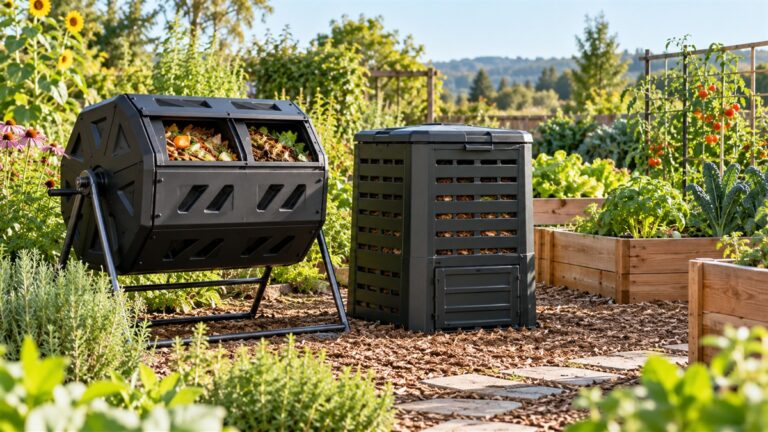
For the bed volume and how much soil to plan for, see our guide to how much soil a raised bed needs. For filling a new bed in layers, see how to fill raised beds. If you plan to make your own compost, see how to start a compost bin.
FAQ
Can I fill a raised garden bed with only compost?
The pages we opened describe blends of topsoil, compost and sand, and none of them gives a compost-only recipe. The Ask Extension answer #926507 warns that heavy applications of compost can build up phosphorus and soluble salts, so a compost-only bed is not what these sources support.
Is well-composted manure a good choice for a raised bed?
The Oregon State guidance lists well-composted animal manure, mixed with bedding material, as one option for organic matter in heavy soil. The key word is well-composted. Use manure that has finished breaking down, and check it the same way you would check any compost.
How much compost should I add to a raised bed each year?
The pages we opened do not give a yearly rate. They do warn against heavy, repeated applications. A practical approach is to keep compost as a measured share of the mix and avoid a thick layer on top every season.
Is homemade compost as good as bagged compost for raised beds?
The sources do not compare the two directly. Both need to be mature and not too salty. The Oregon State guidance says the organic matter should be readily available and relatively inexpensive, which makes homemade compost a sensible choice when you have enough finished material.
What should I do if my native soil is heavy clay?
Oregon State recommends incorporating organic matter such as finished compost, leaf mold or well-composted manure. The Illinois guidance also says to limit topsoil in the mix, since topsoil at high shares holds too much water. A mix that leans toward compost and sand is the direction these sources point.
Bottom line
For a raised bed, blend mature compost into topsoil or sand at a measured share, roughly one-third to one-half of the mix by volume, and avoid thick, repeated top dressings that build up salts and phosphorus over time.
Sources
- University of Maryland Extension, “Growing Vegetables in Raised Beds”: raised beds warm earlier and drain well, and the looser soil helps deep-rooted crops.
- Oregon State University Extension, “Raised bed gardening” (FS 270): finished compost, leaf mold and well-composted manure for heavy soil, and the need for readily available organic matter.
- Iowa State University Extension, “What would be a good soil mix for a raised bed?”: equal-parts and 70/30 mixes, and the need for mature compost with low salt.
- Ask Extension, “Raised garden bed soil” (#926507): the recommended topsoil and compost range, and the warning about phosphorus and salt buildup.
- Ask Extension, “New raised bed soil recipe” (#892957): the one-third topsoil, one-third compost and one-third sand recipe.
- University of Illinois Extension, “Raised Beds: Benefits and Considerations”: the 35 percent topsoil limit and the way soil is sold in bulk.
- University of Florida IFAS Extension, “Composting Basics”: the 30:1 carbon to nitrogen target, equal parts greens and browns, and 50 to 60 percent moisture for home compost.