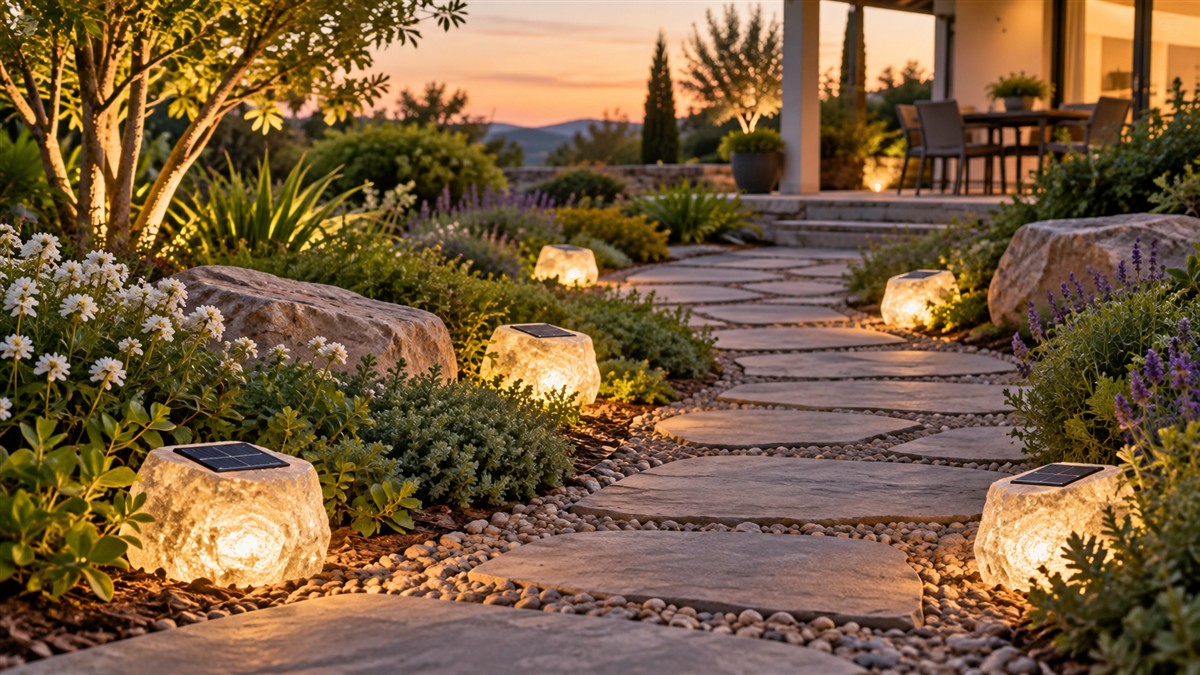
Blibly Solar Garden Lights Outdoor Glow Cobblestone Shape Lamp Garden Decor Review
As an Amazon Associate, this site earns from qualifying purchases.
A solar path light has one job: glow along a walkway after dark without wiring, a battery swap, or a trip to the outlet. The Blibly Solar Garden Lights are sold as stake-in-the-ground decor lights with a retro shade and a water-ripple effect on the ground. This review sorts what the product details support from what they leave unclear, so you can decide whether this light fits your garden.
Who This Light Suits
This light suits people who want low-effort decor for a garden bed, a lawn edge, or a patio path. The product is a solar pathway light that needs no tools and no wiring, which is the main reason to consider it. If you want a light you can place in an afternoon and leave alone until dusk, the setup is simple. For other solar lighting, see solar powered LED outdoor lights.
It is a weaker fit for buyers who need strong task lighting, for anyone who expects the light to run all night through a cloudy week, or for anyone who plans to use it indoors.
Specifications and What They Mean
| Specification | Listed value | What it means in the garden | For motion-sensing models, see solar security lights with a motion sensor.
|—|—|—|
| Dimensions | 5.5 in deep, 10 in wide, 5.5 in high | A low stake light that sits out of the way in a bed |
| Item weight | 2 pounds | Heavy enough to feel solid in the hand, light enough to move between spots |
| Shade material | Polycarbonate | A tough plastic shade that suits outdoor weather |
| Base material | Plastic | Keeps the body light and easy to push into soil |
| Light source | One LED | A single point of light, not a wide floodlight |
| Power source | Solar | No wiring, no electricity, and no outdoor outlet needed |
| Voltage | 1.2 volts | Small battery supply for a stake light |
| Water resistance | Waterproof (listed in two fields) | Suited to rain and sprinkler water |
| Charging | Four to six hours of direct sun | Plan for a full sunny day before the first use |
| Runtime | Six to eight hours, up to eight hours | Depends on how much sun the panel gets |
| Warranty | One year | Contact the seller by email for any problem |
The table shows the strengths clearly: a plastic body, a polycarbonate shade, a single LED, and a waterproof rating. It also shows the gaps. The product details give one runtime range for a full charge, but they do not give a brightness figure in lumens, so you cannot compare this light’s output against another solar light using the numbers alone.
Setup and Placement
Setup takes a few minutes. Remove the tab under the light cap, turn on the switch, pull the bottom spike out of its tube, and push the spike into soft earth. The product details describe the process as needing no tools or wiring. In practice, loose garden soil or mulch works best, because a compact stake can wobble in hard ground.
Placement matters more than the setup steps. The panel needs direct sun for most of the day, so avoid spots under trees, under eaves, or beside a wall that blocks the afternoon light. If you want the ripple effect on a path, aim the shade so the light falls on the ground where people walk, and check the spot at dusk before you push the stake all the way in.
Keep the panel clean. Dust, pollen, and fallen leaves reduce how much sunlight reaches the cells, which shortens the time the light stays on. A quick wipe every few weeks during the growing season is enough.
Plan for the seasons. Solar lights do best in spring and summer, when the days are long and the sun is strong. In winter, shorter days and lower sun will shorten the time the light stays on, so expect less runtime during those months. If a storm is forecast, lift the stake and bring the light in until the weather clears. A fallen light can be damaged even when it is rated as waterproof, so a few minutes of attention can extend its life.
Details That Need Confirming
The control fields do not agree. One field lists a touch switch, another lists a push-button controller, and the pack includes a remote. The three descriptions may all refer to the same controls, but the details do not say which one turns the light on and off in normal use. Read the instruction manual before you buy if a particular control style matters to you, and test the switch and remote right after you place the light.
The bulb base field lists GU10, which is a standard base for a small bulb. If you ever need to replace a part, check the manual rather than relying on that field.
The product is clearly an outdoor light. The indoor-outdoor usage field lists outdoor only, and the room-type field also lists outdoor. The recommended-uses field mentions outdoor garden, pathway, yard, and indoor use, while the specific-uses field lists outdoor and indoor. For a light meant to sit outside, treat outdoor use as the supported use.
The shape field lists an oval, while the listed title describes a cobblestone shape. If the shape matters for your garden style, compare the product photos with the look you want before you buy, and check the shape in the manual when the light arrives.
Strengths the Details Support
The main strengths are simple. The light is solar powered, needs no wiring, and is listed as waterproof, which suits a garden bed that gets rain or sprinkler water. The stake design lets you place it where a wired fixture cannot go. The polycarbonate shade is a durable plastic, and the details describe the light as energy efficient.
The decor value is also real. The retro shade and the ripple effect are the reasons many buyers look at this style of light. The ripple depends on the light’s position and the surface beneath it, so treat it as a decor feature rather than a guaranteed look.
Typical Garden Uses
A front walk. A row of stake lights along a path marks the edge without much effort. Space them so each one has a sunny spot, and check the glow at dusk before you commit to the layout.
A flower bed. Place one light near the front of the bed, where the shade can catch the eye without blocking the plants. Keep it out of the shadow of taller shrubs so the panel stays charged.
A patio corner. A light near a patio edge can add soft ambient glow, but the patio should get direct sun for part of the day, or the panel will charge slowly.
Grouping helps. Two or three lights set in a loose pattern look more deliberate than a single light by itself, and a grouping can guide the eye along a path. Keep the spacing even so each glow overlaps only a little with its neighbors, and avoid placing a light where a shadow from a planter or a bench will fall across its panel during the day.
Limitations and Who Should Skip It
The limitations come from the design. A stake light gives modest brightness, and the details do not list a lumen figure, so do not expect it to light a work area or a dark yard. Charging depends on sun. A light in shade will run for less time, and the runtime figure assumes a full charge.
Skip this light if you need a fixed, wired fixture, if you want it for a deck or patio where a stake will not work, or if you need it to run through several cloudy days in a row. The one-year warranty is listed, and the details direct problems to the seller by email, so plan your support route before you buy.
How to Compare Solar Garden Lights
Start with the spot. A stake light suits beds and lawn edges, a wall or post light suits a fence or a porch, and a fixed fixture suits a deck or patio. Next, check the charging description. Look for a clear charge time and an illumination time, and be cautious about any runtime that does not say how much sun it assumes.
Then compare the controls. A simple switch is easier to use in rain than a remote, though a remote is handy for changing modes. Finally, compare the warranty and the support route, because solar lights live outdoors and may need a replacement part after a season or two.
Frequently Asked Questions
Does the light need electricity? No. It is a solar-powered light with a battery that charges from sunlight, and no wiring is needed.
How long does it stay on? The details say four to six hours of direct sun gives six to eight hours of illumination, and the light can glow for up to eight hours. Actual time depends on how much sun the panel gets.
Is it safe for a wet garden? The details list the light as waterproof, which suits rain and sprinkler water. Keep the panel clear of debris so it charges well.
Does it come with a remote? Yes. The pack includes a remote, a ground rod or plug, a solar pathway light, and an instruction manual.
Final Verdict
The Blibly solar garden light is a simple, wire-free option for garden beds, lawn edges, and patio paths, with a decor shade and a ripple effect on the ground. It suits buyers who want low-effort outdoor accent lighting, not a task light.