How to Water Plants While You Are Away
As an Amazon Associate we earn from qualifying purchases.
How to water plants when you are away depends mostly on how long you will be gone. A weekend usually needs only some extra water the day before you leave. Trips of one to four weeks call for a low-tech method such as a pebble saucer, a self-watering pot or a cotton wick. Trips longer than four weeks are better handled by a plant sitter. The University of Florida guide sorts its advice by trip length, and the Washington State University guide separates a weekend from a 10-day trip.
Quick answer
- For a weekend, soak each pot thoroughly and add extra water the day before you leave.
- For one to four weeks, a pebble-and-water saucer or a cotton wick can extend the time before plants need water again.
- For longer than four weeks, send indoor plants to a plant sitter, and have a sitter visit at least weekly when plants are too big to move.
- For a drip or microirrigation setup, use a timer, check its batteries, and install the setup a week before you go.
Start with the length of the trip
The first decision is how long you will be away, because a method that works for a long weekend will not carry a month. The WSU guide draws its first line at a weekend. For a weekend, it says, “things should be fine with some extra water the day before you leave.” For a 10-day vacation or longer, the same guide says you “need a more comprehensive strategy.”
The UF/IFAS guide uses finer steps: one to two weeks, three to four weeks, and longer than four weeks. Its firmest advice applies to the longest trips: “For periods away from your plants longer than 4 weeks, we recommend sending your plants to your plant-sitter’s home.” The methods in the next sections are built for shorter absences, so arrange a sitter early if your trip runs longer.
Materials and setup
Most of the methods in these sources need household items and a little planning. The list below follows the steps the guides describe.
- A deep saucer or shallow bowl, plus pebbles, for a pebble saucer.
- A large bowl, pot or bucket to hold water as a wick reservoir.
- Cotton cords or wicks. The WSU handout describes the material as “strips of a cotton or t-shirt.”
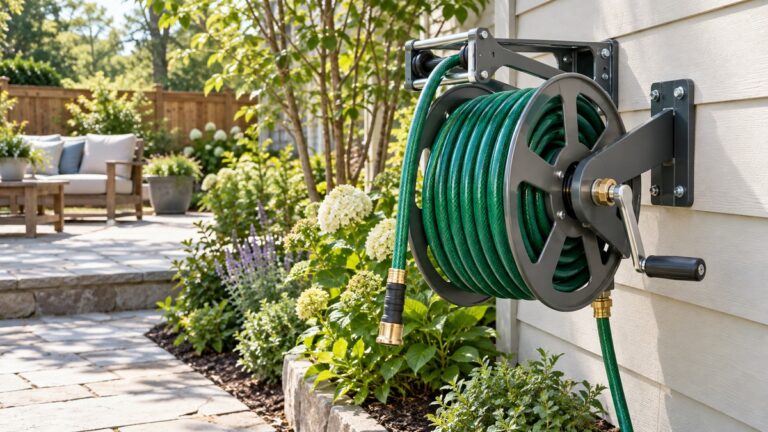
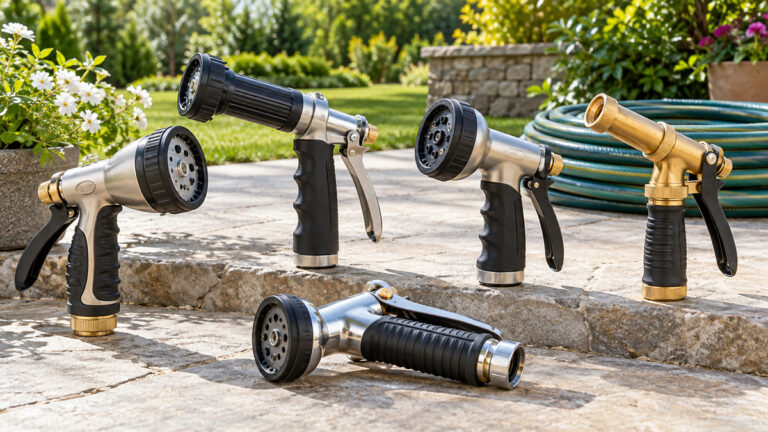
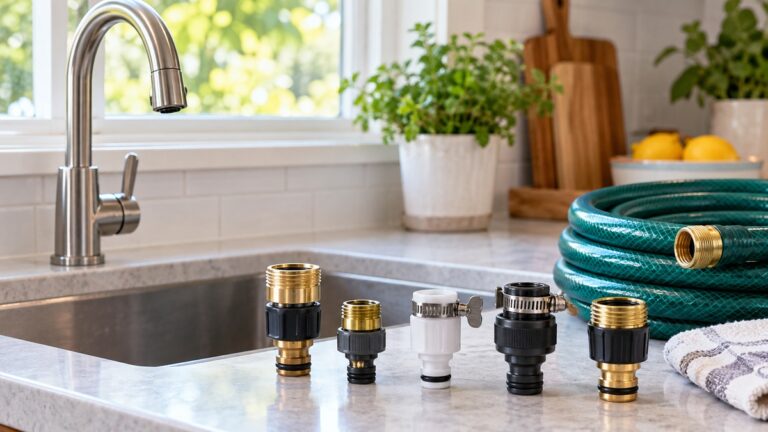
- A soaker hose or several drip emitters, joined to a traditional, non-permeable hose. For a watering attachment on the hose end, see hose attachments for watering plants.
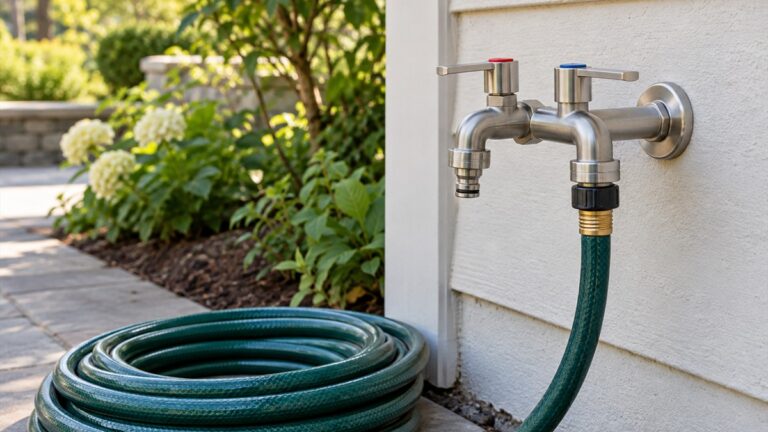
- A timer for the outdoor faucet, or a battery-operated timer on an outside hose bib.
- Mulch. UF/IFAS gives three inches for landscape beds and says the same idea works for potted plants.
Steps before you leave
Start with a soak. The WSU guide says to “Water plants thoroughly before you leave by soaking pots and hanging baskets in a bucket of water to ensure that moisture penetrates to the center of the pot.” The goal is water that reaches the middle of the root ball, not only the top layer of soil.
For planted beds and landscape plants, the UF/IFAS guide wants a deep watering first: “Make sure that you apply enough water to wet the top 12 inches of soil.” The same guide explains why depth matters: “This is where most of a plant’s roots reside, no matter how large or small it is.” Mulch helps hold that moisture in place, since “A three-inch layer of mulch helps the soil retain moisture and insulate roots from high summer temperatures.”
Group the containers. “If you’re leaving for more than a couple of days, group container plants together.” The UF/IFAS guide explains that “Groups of plants will conserve water better than containers spread out across your porch or landscape.” Grouping also helps a visitor, because “It also saves time for anyone stopping by to water your plants.”
Move plants out of the harshest light. For indoor plants, the guide says “Move houseplants away from warm windows and direct sunlight to a place where they receive only indirect sunlight.” Outdoor pots can go into shade, since “Containers can also be moved to a shady place.” The WSU guide suggests a similar move, to “an afternoon shady spot and group by water needs.”
One to four weeks: saucers, self-watering pots and wicks
Pebble saucers and self-watering pots
For the shortest absences, the UF/IFAS guide names two low-tech choices. The first is a self-watering pot, because “Self-watering containers allow plants to take up water as needed from a reservoir.” The second is a pebble saucer, and its steps are simple: “Fill a deep saucer or a shallow bowl with pebbles and then with water.” The guide’s sequence is to “Set the plant you’d like to keep moist on top and water thoroughly before you leave.” It says this method “can buy you an extra week of time before you’d need to water again.”
For a larger group, the same guide describes a bathtub as the saucer: “For plants that need more water, or for large groups of plants, you can use your bathtub as the saucer.” Indoor plants can also cope with less light for a while. “For a couple of weeks they can survive on lower light and they will take up less water in the meantime.” That is a reason to move them away from a warm window before you go, not a reason to skip the move.
Cotton wicks for three to four weeks
For longer indoor absences, UF/IFAS says “For extended periods away, a wicking method can help.” The setup starts with a reservoir: “Fill a large bowl, pot, or bucket with water to act as a reservoir.” Next, “Run cotton cords or wicks from the bottom of the water reservoir, over the side, and down to the soil of each potted plant.” The guide places the reservoir “on a table or chair above a group of houseplants, but not between the plants and their light source.” The payoff is described as “Water will run down the wick and into the soil, keeping it moist for an extra couple of weeks, but don’t forget to water your plants before you go.”
The WSU handout describes a similar wick for container plants that works indoors or out. It asks you to “Place one end of the wick into the water and secure the other end about three inches deep into the plant’s moist soil.” It also gives the timing rule: “Ensure that your wicking setup works correctly several weeks in advance so that you can make adjustments accordingly.” A wick only helps if it is already running when you leave, so set the date for the setup with that in mind.
Longer trips: a plant sitter, a timer or both
When plants are too large to move, the UF/IFAS guide suggests a visit: “If your plants are too big to move, have the plant sitter visit your home at least once a week to check on them.” The WSU handout makes the same point more briefly: “A no cost option would be to find someone to water while you are gone.” Check-ins matter for any automatic setup too. The UF/IFAS guide says “If you can, have someone check in at least once a week to be sure everything is running smoothly.”
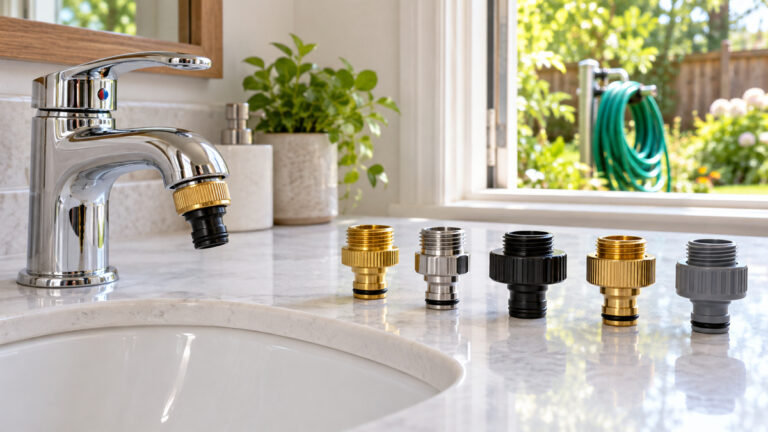
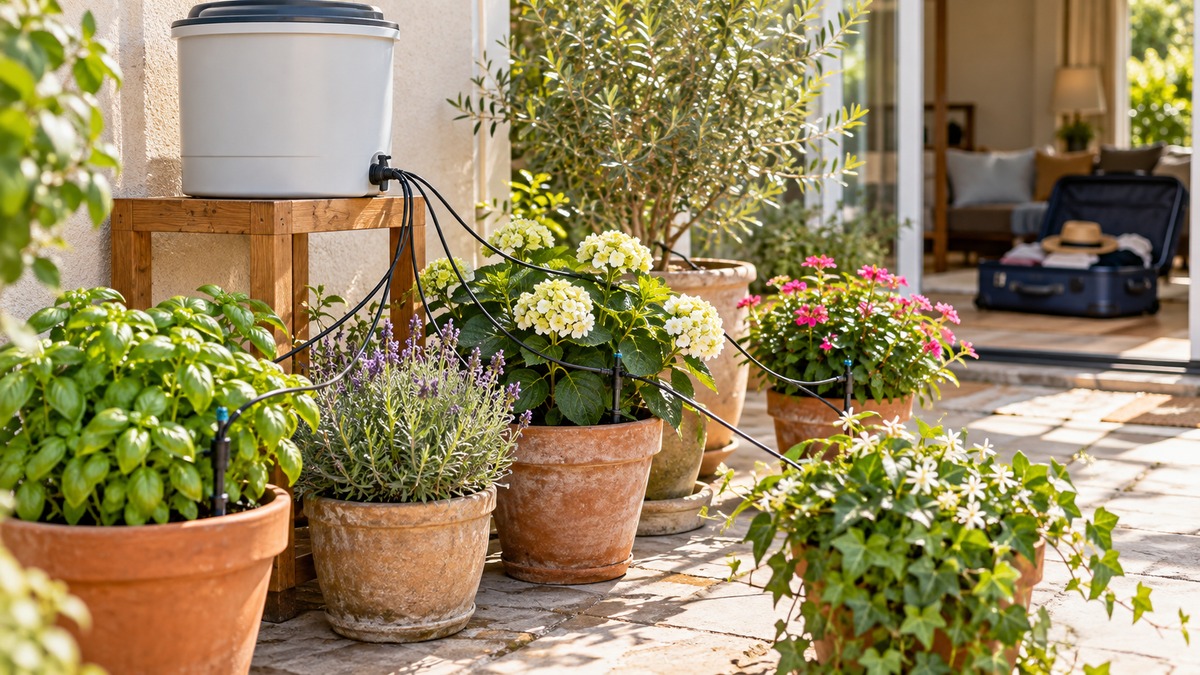
Outdoor containers need the most planning. The UF/IFAS guide says “Outdoor container plants are probably the hardest to plan for.” The reason is that “They are exposed to the elements and have very little soil to hold moisture.” For a group of containers, the guide suggests a microirrigation line: “Snake the soaker hose or emitters along the tops of the grouped containers, making sure they receive water evenly.” The AE524 publication says drip emitters suit pots and hanging baskets: “Drip emitters are used for plants that are spaced far apart, such as containerized plants or hanging baskets.” For the connection at the faucet, see garden hose to drip irrigation adapters.
A timer turns that line on at set times, so you do not need a visit to the yard. The UF/IFAS guide says “Add a timer to your outdoor faucet to automatically turn on the microirrigation system every couple of days.” AE524 notes that a timer can run on batteries, as in “Microirrigation can be installed with a battery-operated timer on an outside hose bib or attached to an existing inground automated irrigation system.” The guide also sets the lead time: “If you decide to try this setup, it’s best to install it a week in advance to perfect the timings before you leave.” For a shut-off at the connector, see garden hose connectors with a shut-off valve.
Outdoor beds and local rules
For garden beds, the UF/IFAS guide gives a rule that applies anywhere: “Whichever option you choose, make sure you only schedule waterings for the times and days allowed by local ordinances.” The same guide says that Florida law calls for an automatic system to have a rain sensor: “Per Florida law, the system should have a rain sensor so that your plants don’t receive unnecessary irrigation.” Local rules differ from one place to the next, so check your own city or county before you set a schedule.
Timing your watering
The WSU handout gives a clear order for the time of day: “Watering early in the morning is best.” It adds “The evening is 2nd best, with midday being the worst time.” For depth, it recommends “Water deeper and infrequently rather than a small amount more frequently.” Instead of a fixed day, it suggests looking at the soil before each watering, and it warns against a set calendar for that reason.
Checks when you return
The AE524 publication gives checks that still apply when you get home. “Frequent inspection is key for any microirrigation system.” Its advice is to “Turn on the system frequently and inspect it while it is operating.” It also says what to look for: “Look for wet/dry soil and decline in plant health.” Walk the containers, feel the soil, and look over the leaves before you assume the setup worked.
Common mistakes
- Leaving houseplants by a warm window in direct sun, which UF/IFAS advises against.
- Soaking only the surface of a pot. The WSU handout aims the soak at the center of the pot.
- Installing a timer on the day you leave. UF/IFAS suggests a week of lead time so the timings can be set before you go.
- Forgetting to check timer batteries and run times, which AE524 flags as routine maintenance.
- Assuming pests will wait while you are away. UF/IFAS warns that they can take hold quickly when plants are stressed.
- Scheduling water on days or hours your local rules do not allow, which UF/IFAS warns about.
How we chose
We chose advice that university extension pages state in plain words: the UF/IFAS vacation plant care guide, the WSU extension handout on watering containers during a vacation, and the UF/IFAS microirrigation publication. We kept steps a reader can carry out with household items and a timer. We left out retail listings and product rankings, because the question is how to water, not which product to buy. The three sources were opened on 2026-10-21, and each quoted sentence was matched against the text of its page before use.
What we could not verify
The sources cover methods and timing well, but several practical questions remain open.
What the sources do not say
- How many days a saucer, a self-watering pot or a wick keeps a given plant moist in your climate. The UF/IFAS guide gives only rough extra time, such as “an extra week” for a saucer and “an extra couple of weeks” for a wick.
- How much water each pot holds, how large a wick reservoir should be, or how many wicks a pot needs.
- How to find, schedule or pay a plant sitter.
- Water-retaining products, which the three pages we opened do not discuss.
- The watering days and hours that apply to your address. The UF/IFAS guide was written for Florida and the WSU handout for Washington State, so your own local rules set the schedule.
Frequently asked questions
How far ahead should a timer or wick be set up?
UF/IFAS says a timer setup is best installed a week in advance, so the timings can be adjusted before you leave. WSU says a wicking setup should work correctly several weeks in advance.
Is a weekend trip different from a longer trip?
Yes, according to the WSU handout. A weekend may need only extra water the day before you leave, while a 10-day or longer trip needs a more complete plan.
Should container plants stay in full sun while you are gone?
The sources point the other way. UF/IFAS says containers can be moved to a shady place, and WSU suggests an afternoon shady spot for grouped pots.
Can a plant sitter cover a trip of more than four weeks?
UF/IFAS recommends moving plants to the plant sitter’s home for absences longer than four weeks. For plants too big to move, the guide asks for a sitter visit at least once a week.
Does grouping plants really save water?
The UF/IFAS guide says groups of plants conserve water better than containers spread across a porch or yard. It also says a group makes watering quicker for a visitor.
Sources
- https://gardeningsolutions.ifas.ufl.edu/design/outdoor-living/vacation-plant-care/ (opened 2026-10-21)
- https://wpcdn.web.wsu.edu/extension/uploads/sites/57/2019/09/Vacation-Time-Watering-Containers.pdf (opened 2026-10-21)
- https://edis.ifas.ufl.edu/publication/AE524/pdf (opened 2026-10-21)