How to Water Plants Deeply
As an Amazon Associate we earn from qualifying purchases.
How to deep water plants means one thorough soaking that wets the root zone, followed by a wait until the soil dries partway before the next watering. The sources agree on the core idea: deep, infrequent watering builds roots that reach further into the soil and tolerate dry spells better. They differ on the numbers, and the University of Maryland page covers trees and shrubs only. This guide sets out the steps, the amounts, and the checks, with each figure tied to its source.
Quick answer
- Wet the soil at least 6 inches deep, the Maryland figure for trees and shrubs. Oregon State gives 12 to 15 inches for most flowers and vegetables.
- Water slowly, deeply, and infrequently, aimed at the root zone. Oregon State puts it this way: “Wise watering involves applying water slowly, deeply, infrequently, and directly to the root system.”
- Before watering again, dig down about 6 inches and check. Water only if the soil there feels dry.
- Water in the morning, and water the roots rather than the leaves.
Where deep water needs to go
Roots do most of the drinking, so the target is the root zone. Oregon State says most feeder roots, the ones that take up water and nutrients, sit in the top 12 inches of soil and spread as far as one and a half times the canopy diameter of trees and shrubs. Its advice is to apply water across that area. For raised beds and berms, K-State’s bulletin sets the goal at moist soil 6 to 8 inches deep.
The Maryland page makes the same point for trees and shrubs. Its root zone reaches out from the trunk at least as far as the plant is tall, and it says to focus water near the outer edge of the canopy, where feeder roots are.
Soil changes the rate. Oregon State says soil type affects how quickly water moves through, and that watering large trees and shrubs can take several hours. For clay, the Oregon State watering tips say you may need several on-off cycles to moisten the soil thoroughly, after which you can water less often. The Iowa State page gives the garden version of the rule: when watering gardens, water slowly and deeply.
How much water one soaking needs
The sources state amounts in different forms, so compare them with care. The Maryland page says wetting the soil at least 6 inches deep requires 1 to 2 inches of surface water, which is 65 to 130 gallons per 100 square feet. That figure is for one soaking, not a weekly total.
For a weekly total, Oregon State says most newly transplanted trees, shrubs, and groundcovers need at least 1 inch of water per week during the growing season, June through September, and during other dry periods in winter. The Illinois blog says to water gardens one inch a week, and two inches a week when temperatures are above 90 degrees. K-State’s raised-bed guide gives 1 to 2 inches of water, applied once or twice a week in a typical summer, and says heat, full sun, or high wind can call for more frequent watering.
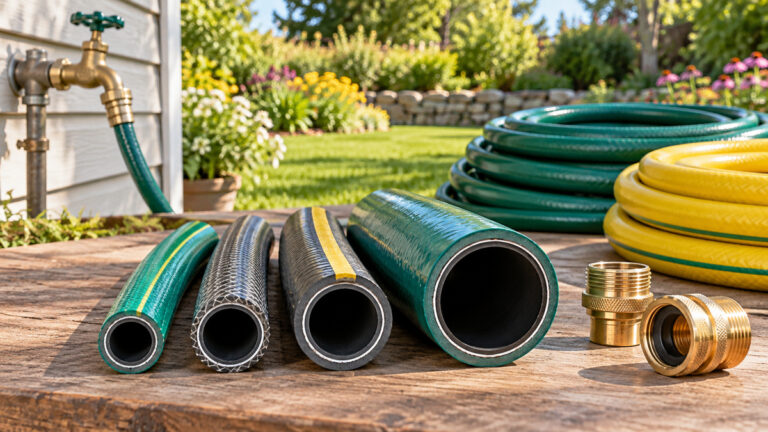
The Iowa State page says a deep watering once a week in dry weather should be adequate for most fruit, vegetable, and flower gardens. The sources do not turn these figures into one number for every plant. The Illinois blog gives hose flow for longer hoses, which matters when you plan a session. On its figures, a 50-foot hose releases 25 to 30 gallons per minute at full stream, and a 100-foot hose releases 12 to 15. The sources do not say how hose diameter changes that flow.
Watering methods that reach the roots
Each method changes how much water reaches the roots and how much is lost.
Hose at a slow trickle
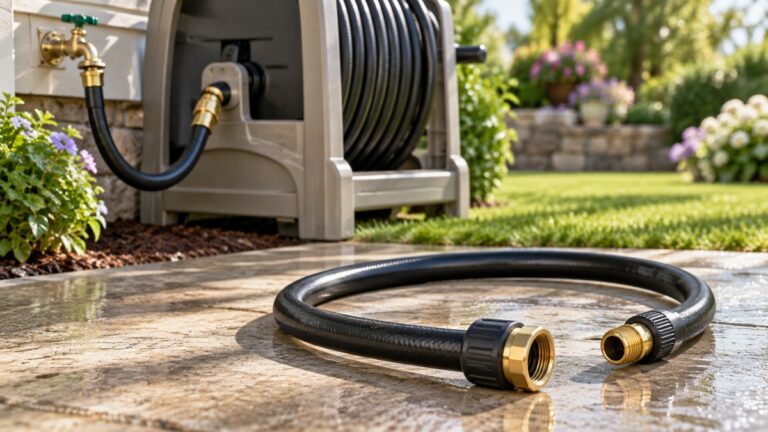
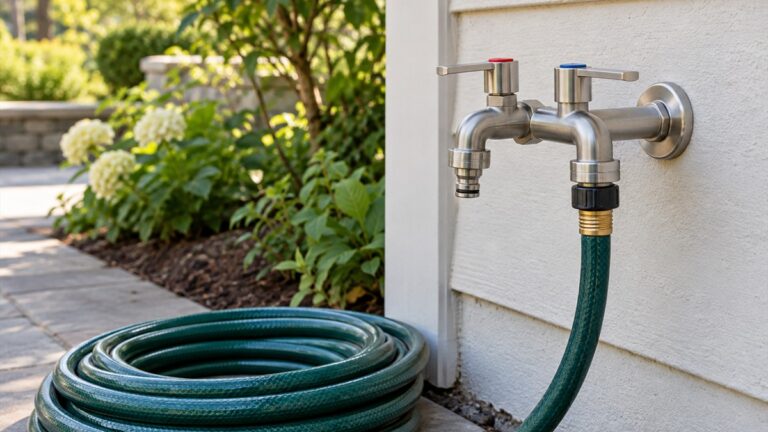
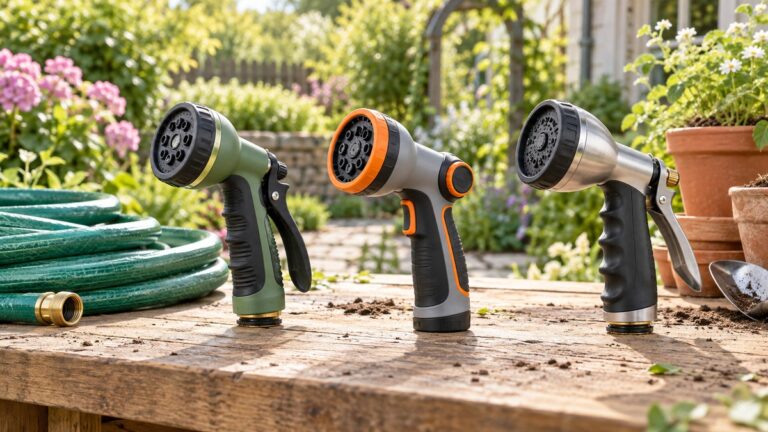
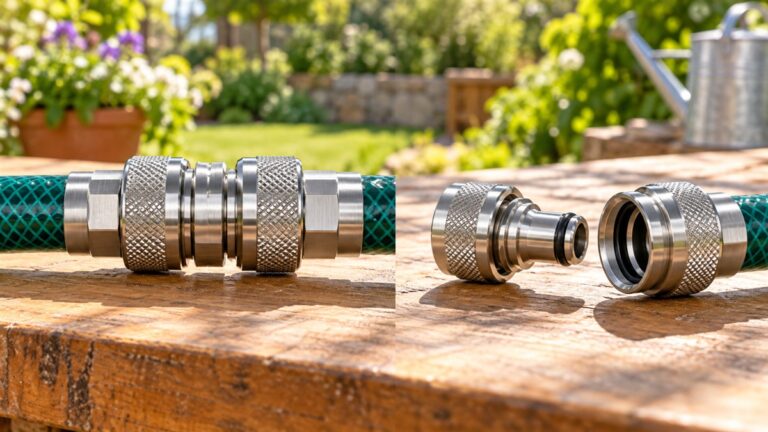
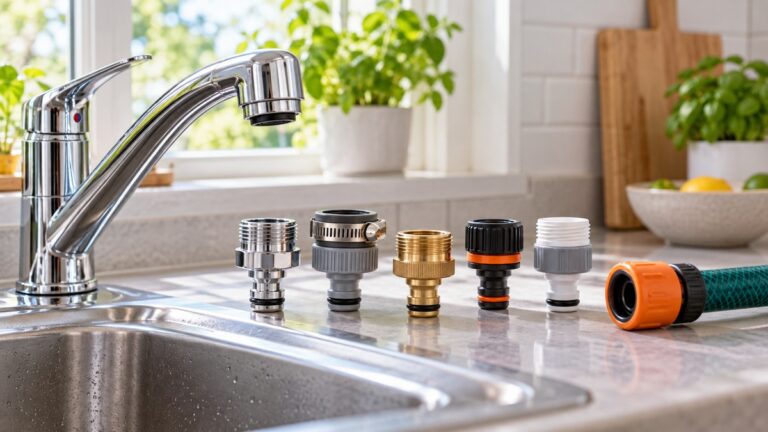
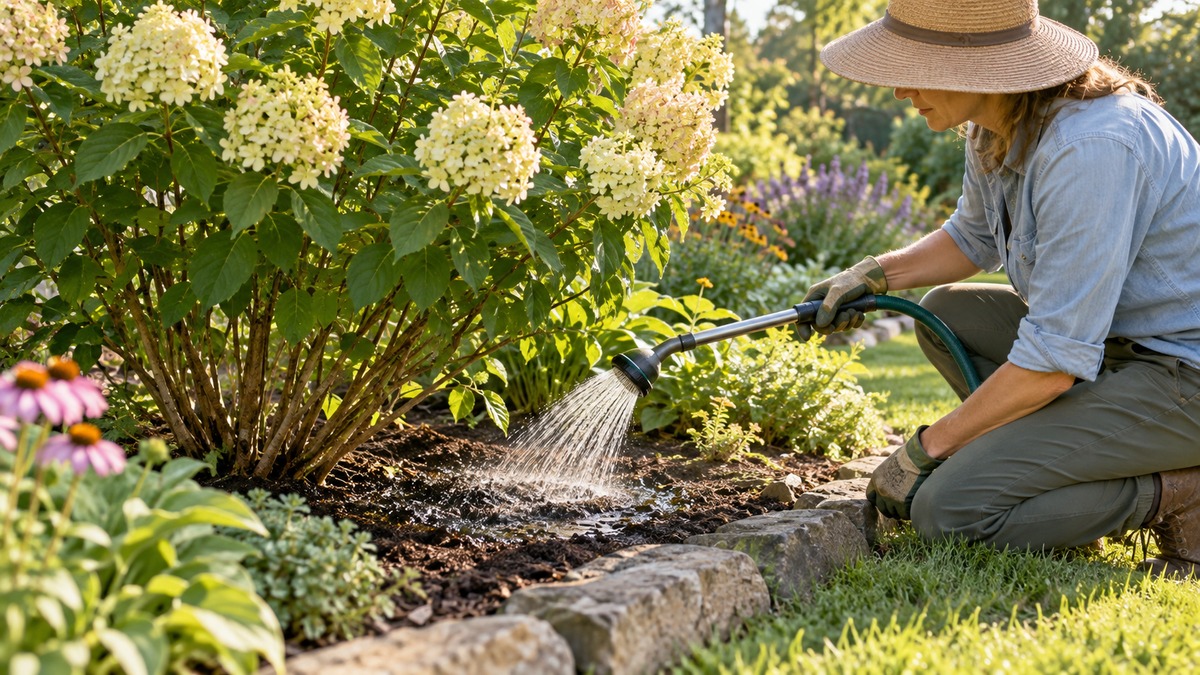
The Maryland page calls the most efficient method running a hose at a slow trickle around the roots. For larger trees and shrubs, Oregon State says you will need to move the hose to get good coverage, and that this can take several hours for large trees. A garden hose with a slow stream of water is one of its options. For the nozzle side of this method, see garden hose nozzles for watering plants.
Soaker hoses and drip
The Maryland page calls drip or trickle irrigation one of the most effective and water-efficient methods. It discharges small amounts on a regular basis to the root zone, and very little is lost to the air. Oregon State says tree, shrub, and flower beds, as well as vegetable gardens grown in soils with more organic matter, are most effectively irrigated with drip or trickle systems. Soaker hoses release water along their whole length, while some drip systems use individual emitters spaced along a hose.
Buckets, bags, and buried cans
For newly planted trees and shrubs, the Maryland page describes tree watering bags, which deliver water slowly to the roots and are sold to home gardeners as well as used by commercial landscapers. A five-gallon bucket with a few small holes in the bottom works similarly, the page says. Oregon State describes a buried option: punch holes in the bottoms of juice or coffee cans, push the cans 6 to 12 inches into the soil, and fill them with water. The water seeps out next to the roots, which can greatly reduce evaporation.
Sprinklers
Oregon State says hose-end sprinklers lose water to evaporation and may apply water where it is not needed. It adds that people with automated underground systems can use up to twice as much water as people watering by hand. The Maryland page says sprinkler uniformity depends on the type, the water pressure, and the wind, and it warns to keep water off sidewalks and driveways. To check a sprinkler, place a tin can in its range. When 1 inch collects in the can, the page says, 1 inch has reached the soil, equivalent to an inch of rain.
Steps for one deep watering
Use these steps for each session: check, soak, wait, then mulch.
Step 1: Check the soil
Dig into the soil with a trowel, a hand shovel, or a screwdriver, and check at a depth of about 6 inches. Soil that is moist or damp to the touch is fine, the Maryland page says. If it feels dry, water thoroughly. Oregon State’s lawn advice for clay soils uses the same screwdriver method: if it goes in easily, the soil is moist, and if it takes effort, the soil is getting dry.
Step 2: Soak to depth, slowly
Water until the soil is wet at least 6 inches down, and deeper for most flowers and vegetables. Oregon State gives a goal of 8 to 10 inches for trees and shrubs, and says that infrequent, deep soaking before and during drought encourages roots to develop deep in the soil. Aim the water at the root area, not only the trunk, and water slowly so it does not run off.
Step 3: Wait, then probe
Wait at least four hours for the water to percolate, the Maryland page says. Then check the moisture at 6 inches deep in several locations, using a hand trowel, screwdriver, or spade. A wet surface alone does not show that water reached that depth, so the probe is the check that matters.
Step 4: Mulch to keep moisture in
The Maryland page says mulch reduces the need for watering during dry spells, and recommends keeping a mulch layer 2 to 3 inches thick. Oregon State says a 3- to 5-inch layer can reduce soil water evaporation by 70 percent compared to bare soil. It allows 3 to 5 inches for large-particle mulches such as shredded bark, and 2 to 3 inches for small-particle mulches like sawdust, decomposed compost, or grass clippings. Leave a few inches bare around the stem or trunk so air can circulate.
How often to repeat the soak
The sources do not give one interval for every plant, but they describe the pattern. The Maryland page says to check soil moisture at least weekly during the hottest, driest part of summer and fall. Oregon State says to lengthen the time between waterings as your plants develop deep roots. Frequent light watering works against that, because it encourages shallow roots and less tolerance for dry conditions. The Oregon State tips add that letting the soil dry partway between waterings lets oxygen back in.
New plantings need closer checks. The Maryland page says that for the first 2 weeks after planting, you check soil moisture daily and water deeply if the top 6 inches feel dry. During the first two years, it says to check at least once a week. Oregon State says newly established plants need more water than established plantings because their root systems are shallow.
Which plants get water first
When water is short, the sources set priorities. The Maryland page says to prioritize young trees, then shrubs, then herbaceous plants, meaning those with non-woody stems. Large, mature shade trees and shrubs can be left alone unless the drought is severe, the trees wilt, or their roots were recently disturbed.
Trees and shrubs
Oregon State says mature trees usually get supplemental water when shrubs or lawns are watered. If you cut back on shrub watering, it suggests you might water trees deeply about every 2 weeks.
Perennials, annuals, and containers
Oregon State says perennials need less water than trees and shrubs, and that annual bedding plants have a relatively high water need compared to perennials. Plants in containers dry out more quickly than plants in the ground. In a severe drought, it suggests skipping annual plantings and applying a 3- to 5-inch mulch layer to annual beds instead. The sources do not give a depth for perennials or annuals.
When to water in the day
Early morning is the common advice. Oregon State says less water is lost early and late in the day, when temperatures are lower, humidity is higher, and the air is calmer. The Maryland page says watering during the heat of the day increases evaporation by as much as 40 percent, and that late-day overhead watering that wets the leaves raises the chance of disease. The Illinois Extension blog recommends morning watering and keeping water off the leaves to prevent disease.
Oregon State also notes a trade-off with pre-dawn or evening watering. If you water before daylight, you cannot see the system run, so check plants, soil, and output regularly to avoid overwatering or underwatering.
Mistakes that undo deep watering
Overwatering is the first mistake. The Maryland page says many people have drowned newly planted trees by watering them too often, and that plants should never sit in a puddle for long. Oregon State says that when water is applied too rapidly, it runs off the soil surface rather than soaking in.
Frequent light watering is the second. The Maryland page says it encourages shallow root growth and less tolerance for dry conditions. Oregon State says frequent, shallow watering leaves plants open to even moderate water shortages.
Watering only the trunk base is the third. The Maryland page says that does little good and can lead to decay, except for very young trees whose roots have not spread yet.
Overhead watering that wets the foliage is the fourth. The Maryland page says late-day overhead watering that gets the leaves wet increases the chance of some plants being infected by disease, and gives black spot on roses and shot hole infections on cherry laurels as examples.
Waiting too long is the fifth. Oregon State says premature leaf shedding is a sign of drought stress, so watering should increase when trees start dropping leaves.
Checks after you water
Two checks show whether the soak worked. The first is depth, using the probe from Step 3. The second is output: Oregon State says to check your system weekly and adjust days and run times to avoid overwatering. It also suggests checking sprinkler output at several spots with a rain gauge.
Watch the surface too. The Maryland page suggests noticing how quickly the soil dries after rain or watering.
How we chose
We picked six university and county extension pages that cover watering plants: the Oregon State yard and garden guide and its watering tips, the University of Maryland page (trees and shrubs only), the Iowa State gardens FAQ, the 2017 Illinois Extension blog, and the K-State bulletin on raised beds, which is dated January 2008. Each page was opened with curl on 2026-10-22, returned HTTP 200, and was read for watering passages before any claim here was written.
What we could not verify
The sources give useful ranges, but they do not cover every plant, climate, or soil.
What the sources do not say
- One depth for every vegetable. The Oregon State tips give 12 to 15 inches for most flowers and vegetables, K-State gives 6 to 8 inches for raised beds and berms, and neither explains the difference.
- One interval for every plant. The Maryland schedule is written for trees and shrubs, and Oregon State gives priorities rather than days.
- How long a given hose needs to deliver a soak. The Illinois blog gives flow for two hose lengths, not for your hose.
- How hose diameter changes flow. For that question, see the inside diameter of a garden hose.
Frequently asked questions
What does it mean to water plants deeply?
It means wetting the soil at least 6 inches down, according to the Maryland page for trees and shrubs. For vegetables and flowers, the Oregon State tips give 12 to 15 inches, while K-State’s raised-bed guide gives 6 to 8 inches. The sources do not agree on one depth.
How often should plants be watered deeply?
For most fruit, vegetable, and flower gardens, the Iowa State page names one deep watering a week in dry weather as adequate. Newly planted material needs more frequent checks, with daily checks for the first two weeks, according to the Maryland page.
Does deep watering work the same for all plants?
No single rule covers every plant in these sources. The Maryland page applies its advice to trees and shrubs, and Oregon State groups plants by priority.
Is it better to water in the morning or at night?
Both Oregon State and the Maryland page favor early in the day, and Oregon State lists night as a lower-loss time too.
How can a gardener tell whether the water went deep enough?
Wait at least four hours after watering, then probe the soil at about 6 inches in several places with a trowel, screwdriver, or spade, as the Maryland page describes. Oregon State’s lawn guidance uses a screwdriver for clay soil in the same way. The sources do not give a moisture reading that marks the right depth for every plant.
Sources
- https://extension.oregonstate.edu/catalog/em-9125-conserving-water-your-yard-garden (opened 2026-10-22)
- https://extension.umd.edu/resource/watering-trees-and-shrubs (opened 2026-10-22)
- https://yardandgarden.extension.iastate.edu/faq/how-often-should-i-water-my-garden (opened 2026-10-22)
- https://extension.illinois.edu/blogs/flowers-fruits-and-frass/2017-06-15-warm-days-and-thirsty-plants-art-watering (opened 2026-10-22)
- https://bookstore.ksre.ksu.edu/download/watering-raised-beds-berms-containers-and-houseplants_MF2805 (opened 2026-10-22)
- https://extension.oregonstate.edu/sites/extd8/files/documents/12281/wateringtips.pdf (opened 2026-10-22)