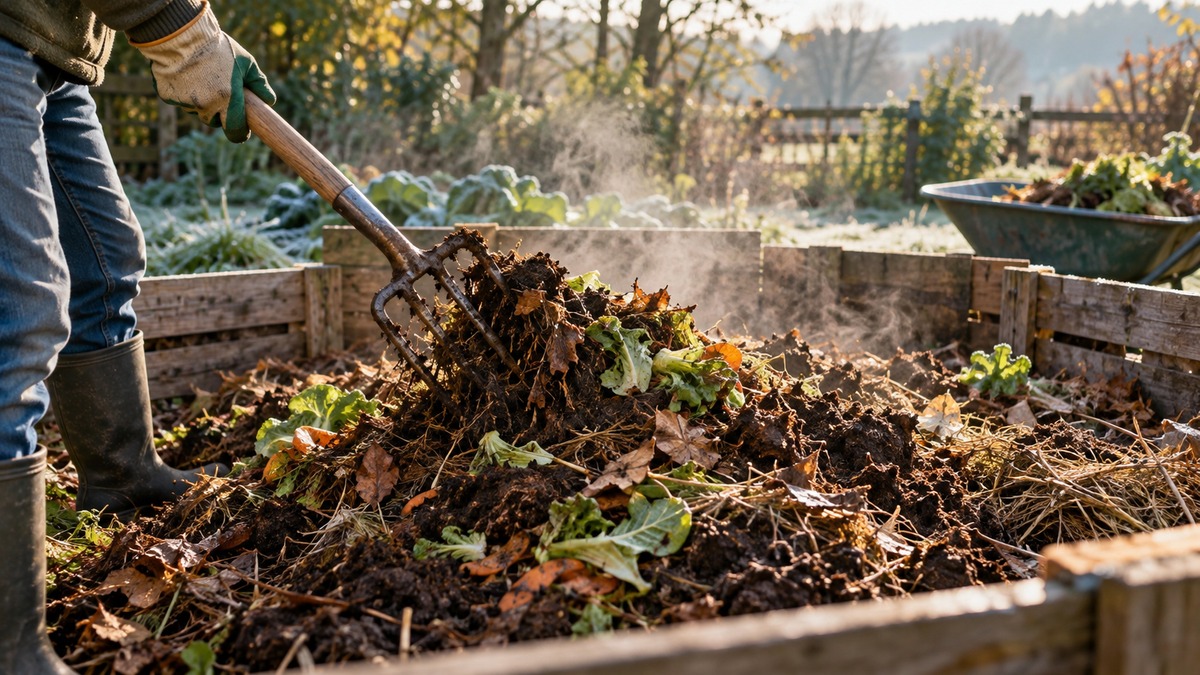
How to Speed Up Composting at Home
As an Amazon Associate we earn from qualifying purchases.
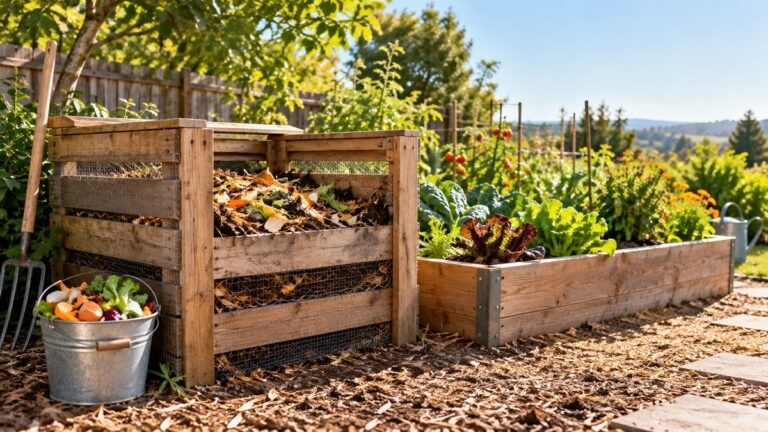
How to speed up composting at home comes down to managing the pile rather than adding extras. The sources we opened point to a short list of conditions: air, moisture, a balance of carbon and nitrogen materials, and small particle size. Several of them also tie frequent turning, shredding and an adequate pile size to a faster finish. The sources do not agree on timing, so the timing table below shows each figure next to its schedule.
Quick answer
- Turn the pile on a schedule. Arizona gives 1-2 months for weekly turning and 4-6 months for monthly turning.
- Keep the material about as moist as a wrung-out sponge, and add water when the pile dries out.
- Chop or shred materials, and keep the brown material equal to, or up to three times, the green material by volume.
- Virginia Cooperative Extension says commercial starters are not needed, because the microorganisms are already on plant material.
The conditions that set the pace
Air and turning
ALA describes composting as an aerobic process, one that needs oxygen. A pile gets that oxygen in two ways, by turning the compost and by building the pile so that surface air can reach the center. Virginia Cooperative Extension states the link to speed directly: “Turning the pile adds oxygen, so the more you turn it, the faster it breaks down.” ALA says turning the pile when its temperature reaches a set point prevents overheating and speeds up the whole process. When a pile gets too little oxygen, ALA warns, it becomes anaerobic and offensive odors can result.
Moisture
Microorganisms need water, and the moisture level sets how quickly they work. ALA gives a target range: “Ideally, the moisture content of the compost pile should be between 40 and 60 percent.” Its squeeze check is that the compost “should be moist when squeezed but not dripping wet.” Virginia Cooperative Extension uses the wrung-out sponge image and says to keep the pile “moist but not soaking wet.” Oregon State University Extension says too much water stops the microbes from working, and too little makes the process stall.
Carbon and nitrogen balance
The microbes also need food, and the mix of materials decides how well they feed. Virginia Cooperative Extension says “The volume of the brown plant material should equal or be up to three times as much as the green plant material in the pile”. Arizona gives a raw-material target of “C:N ideally 25:1 to 40:1.” ALA names an optimum of about 30:1 and warns that sawdust “will decompose very slowly unless nitrogen is added.” Virginia Cooperative Extension states its ratio by volume. The ALA and Arizona pages do not say which basis they use, so their figures cannot be compared directly with it.
Particle size and pile size
Smaller pieces break down faster because they give microbes more surface to work on. Virginia Cooperative Extension says “The finer the particle size, the more surface there is for microorganisms to work”, and advises you to “chop or shred leaves and larger materials before adding them.” ALA says the carbon in dead leaves is much more available than the carbon in large wood chips, and that “Small chips give the microorganisms more surface area on which to feed.”
Pile size matters as well. Virginia Cooperative Extension says a pile smaller than 27 cubic feet does not hold enough heat to work well, and it usually advises against piles larger than 125 cubic feet because they are hard to manage. Arizona gives an ideal size of one cubic yard but does not explain why. Oregon State University Extension asks you to keep the total pile height under 3 feet. The sources do not explain how to reconcile a height limit with a minimum volume.
Build the pile for speed
Materials to gather
Grass clippings and fall leaves are the core inputs. Virginia Cooperative Extension calls them “abundant compost materials for most homeowners,” and it adds weeds free of seedheads and crop residues. ALA says vegetable and fruit scraps, egg shells and coffee grounds can go in the pile, as long as they are buried to avoid odor. Oregon State University Extension lists meat or dairy, fats or oils, pet waste, and diseased or poisonous plants as items to avoid.
High-carbon material such as sawdust needs a nitrogen source alongside it. ALA says to add some nitrogen fertilizer, grass clippings or manure at the same time. For more on tools and setups for a compost pile, see tools and setups for a compost pile.
Layering order
Build the pile in layers, and note that three of the sources give different depths. ALA starts with a 6-inch layer of coarse material such as small twigs, adds 6 to 8 inches of finer material such as leaves or grass clippings, and finishes with 1 to 2 inches of soil or finished compost. Virginia Cooperative Extension starts with a 3-inch layer of coarse material, adds about 9 inches of dry leaves, and then adds 3 to 9 inches of fresh plant material, kitchen waste or fresh manure. Oregon State University Extension alternates 2-inch layers of brown, green and soil materials. The Arizona handout lists brown, green, manure and native soil as layers, repeated three times. Whichever plan you use, Virginia Cooperative Extension also advises chopping or shredding all plant materials before they go in, and moistening the pile as you add dry material.
Turning and timing
The timing figures in these sources are mostly given per turning schedule. Arizona states the pattern in one line: “Weekly will finish in 1-2 months; Monthly 4-6 months.” The table sets each stated schedule beside the time its source gives. Each row is one source’s claim, and the sources do not give the same figure for the same schedule.
| Source | Turning and preparation the source describes | Time to finished compost the source gives |
|---|---|---|
| Arizona handout | Turned weekly | 1-2 months |
| Oregon State University Extension | Turned weekly, with good balance and regular attention | 2-3 months |
| Virginia Cooperative Extension | Materials shredded, kept moist and turned several times | 1-2 months |
| Arizona handout | Turned monthly | 4-6 months |
| Virginia Cooperative Extension | Standard method with a monthly turn, in warm weather | 4-5 months, longer in cool or dry conditions |
| Alabama Cooperative Extension System | Depends on the materials and how the pile is managed | As soon as a month, or as long as a year |
The two weekly figures disagree. Arizona says weekly turning finishes in 1-2 months, while Oregon State University Extension says two to three months with good balance and regular attention. This post shows both rather than picking one. The sources do not say which factor explains the gap.
Virginia Cooperative Extension describes two routes. Its standard pile, turned once a month, takes four or five months in warm weather and longer in cool or dry conditions. It also says a pile can finish in one to two months if the materials are shredded, kept moist and turned several times. ALA gives the widest range, from as soon as a month to as long as a year, and says the materials and management decide where a pile lands.
Arizona adds a separate curing step. Once the pile is finished, let it sit undisturbed for one month. The handout does not say whether its finish times include that month. For a bin you turn by rotating it, see using a rotating compost bin.
Checks while the pile works
A working pile gives you signals. Virginia Cooperative Extension says a foul smell can mean the pile is too tightly packed for oxygen to circulate, has too much nitrogen-containing material, or is too wet. Arizona says an ammonia smell calls for more carbon, and a slimy or waterlogged pile calls for turning and a look at drainage. Oregon State University Extension advises checking moisture regularly, especially during rainy winter months.
When the pile is done, ALA says the compost should look like a uniform potting soil, with little evidence left of the original materials. Oregon State University Extension describes finished compost as dark, crumbly, earthy-smelling and mostly unrecognizable from the original ingredients. Those two descriptions make a practical finish check.
Common mistakes that slow a pile
- Letting it dry out. Oregon State University Extension says too little water makes the process stall, and Virginia Cooperative Extension says to add water as needed.
- Skipping the turn. Arizona’s problem-solving list starts with turning the pile before anything else.
- Using dry, carbon-heavy material without nitrogen. ALA says sawdust decomposes very slowly unless nitrogen is added.
- Leaving materials whole. Virginia Cooperative Extension says to chop or shred all plant materials for faster composting.
- Building a pile smaller than 27 cubic feet. Virginia Cooperative Extension says such a pile does not hold enough heat.
- Building a pile larger than 125 cubic feet. Virginia Cooperative Extension says these are usually better avoided for backyard composting.
- Adding meat, bones or fats. ALA says these attract unwanted animal and insect pests.
Heat and fire safety
Hot piles need care. The Arizona handout puts hot composting above 105F and includes the warning “Beware of spontaneous combustion” in that step. The handout does not say how to prevent spontaneous combustion. Follow your local rules for compost piles and fire, and check with your local extension office before you build a large pile that runs hot.
How we chose
This post covers how to make a backyard compost pile break down faster, using the conditions and habits the sources name: air and turning, moisture, the balance of materials, particle size, pile size and the turning schedule. We opened four extension pages on 2026-10-21: an Alabama Cooperative Extension publication (ANR-0638), a Virginia Cooperative Extension guide (SPES-393), a University of Arizona Yavapai County Extension handout, and an Oregon State University Extension page. We picked them because they are university or county extension pages that explain home composting in plain terms. A claim made it into the post only when one of these pages states it. The post recommends no products and does not describe any product or brand.
What we could not verify
The sources do not rank methods against each other, and the timing figures come from pages that describe different materials, climates and pile sizes. This post shows them side by side rather than merging them into one number.
What the sources do not say
The sources do not say whether commercial starters or activators speed a pile up. Virginia Cooperative Extension says they do not need to be added, which is a different claim from saying they have no effect. The sources also do not say how much faster a shredded pile finishes than an unshredded one, only that shredding is recommended. The Arizona handout gives an ideal size of one cubic yard without explaining why, and Oregon State University Extension gives only a height limit. None of the four sources gives a finish time for a specific region.
Frequently asked questions
Does a compost starter speed things up?
Virginia Cooperative Extension says you do not need to add compost inoculants, starters or activators, because the microorganisms are already present in sufficient numbers on plant material. None of the four sources compares the two approaches, so these pages cannot tell you whether a starter would change the timing.
How often should you turn the pile?
The sources do not agree on one schedule. Arizona links weekly turning with 1-2 months and monthly turning with 4-6 months. Oregon State University Extension recommends turning weekly and gives two to three months with good balance and regular attention. Virginia Cooperative Extension describes a monthly turn as its standard method, and it says several turns, with shredded and moist material, can finish a pile in one to two months. More frequent turning goes with a faster finish across these pages, but the figures are not the same. For more on setups, see tools and setups for a compost pile.
Why won’t a pile heat up?
Virginia Cooperative Extension says a pile should heat up within a few days, and if it does not, it may lack nitrogen or moisture, or it may be too small. Oregon State University Extension advises adding more green material and aerating. Arizona says a damp pile that will not heat needs nitrogen, and its order for fixes is to turn the pile first, then check whether it is too dry or too wet.
Can you add meat or dairy to make a pile break down faster?
None of the four sources suggests this. ALA says meat scraps, bones and fats attract unwanted animal and insect pests, and it names butter, cheese and milk among the items not to compost.
Does composting slow down in cold weather?
It slows, but it does not stop. Oregon State University Extension says the process “will slow in winter but will continue,” especially when the pile is well maintained, and it suggests covering the pile with a tarp, plywood or burlap to retain heat and prevent water saturation. Virginia Cooperative Extension says decomposition takes longer under cool or dry conditions.
Sources
- Alabama Cooperative Extension System, Backyard Composting, ANR-0638: https://www.aces.edu/wp-content/uploads/2018/11/ANR-0638.REV_.pdf (opened 2026-10-21)
- Virginia Cooperative Extension, Making Compost From Yard Waste, SPES-393: https://www.pubs.ext.vt.edu/content/dam/pubs_ext_vt_edu/426/426-703/SPES-393.pdf (opened 2026-10-21)
- University of Arizona Yavapai County Cooperative Extension, Backyard Composting handout: https://www.extension.arizona.edu/sites/default/files/attachment/BackyardCompostingHandout2021.pdf (opened 2026-10-21)
- Oregon State University Extension, Turn fall yard debris into compost for a healthier garden: https://extension.oregonstate.edu/es/node/80766/printable/print (opened 2026-10-21)