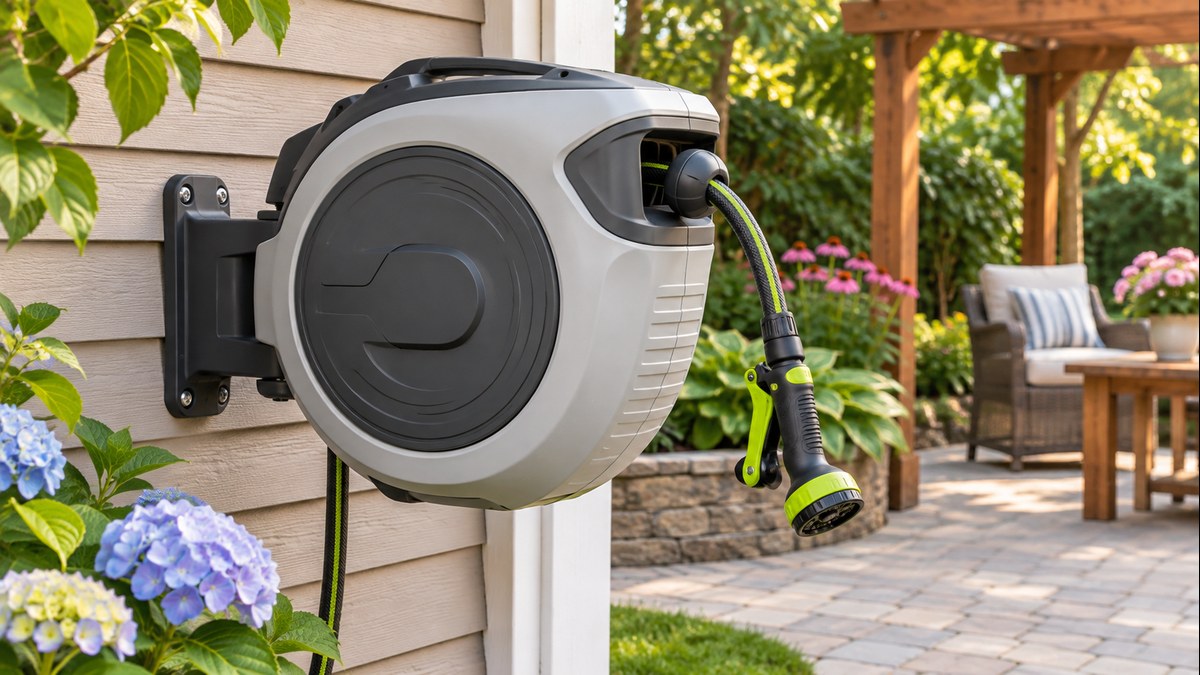
JOFULBOND Garden Hose Nozzle Review: 10 Spray Patterns and Thumb Control
As an Amazon Associate we earn from qualifying purchases.
The JOFULBOND Garden Hose Nozzle is a hose-end sprayer that the listing describes with ten adjustable spray patterns, a thumb control for on/off and flow, and threaded 0.75 inch connections at the inlet and outlet. The spec table lists the material as silicone, which is unusual for a hose nozzle body and is worth checking on the product. This JOFULBOND garden hose nozzle review uses the product listing and three non-retail sources on outdoor watering, garden hose irrigation and nozzle selection. It reports no product testing, because none was done for this review. The listing’s claims are shown as listing claims, and where the sources do not cover them, the article says so.
Quick answer
- The listing describes ten spray patterns, a thumb control for on/off and flow, a rubber non-slip grip, and threaded 0.75 inch connections that fit standard 3/4 inch garden hoses.
- The spec table lists the material as silicone, while the bullets describe the nozzle as sturdier than standard plastic nozzles without naming a material. That is a point to confirm on the product.
- The listing includes two extra rubber washers and describes a leak-proof threaded connection. Leak performance is not confirmed by any source used here.
- The non-retail sources support general points about hose irrigation and nozzle choice. They do not evaluate this model or its materials.
What the listing says
The listing names the brand as JOFULBOND and gives the material as silicone in the spec table. The item dimensions are listed as 1 x 1 x 1 inches, which does not describe the size of a hose nozzle in any useful way. The spec table gives the inlet connection size as 0.75 inches, with the inlet and outlet connection types both listed as threaded. It lists two ports, one pack, and a unit count of one. The two-port entry is unusual for a single hose-end nozzle, so the listing should be read with that in mind.
The first bullet is titled Heavy Duty Structure. It says the nozzle is made of high-quality material for durability, rust resistance and a long service life, and that it is sturdier than standard plastic nozzles. The bullet does not name the material, so the listing’s own statements about the body are not consistent with the silicone entry in the spec table. A buyer who wants a specific material should check the product or the manufacturer’s material statement before buying.
The second bullet describes ten spray modes, from a high-pressure jet for cleaning to a gentle shower for delicate plants. The listing names gardening, lawn care, car washing and patio cleaning as uses. The third bullet describes a thumb control that turns water on and off and adjusts pressure without squeezing, which the listing says reduces hand fatigue. The fourth bullet says the nozzle has a precision threaded connection and rubber gaskets, and includes extra rubber washers. The fifth bullet describes a soft non-slip rubber grip and says the nozzle fits standard 3/4 inch garden hoses.
All product facts in this article come from the listing record. The product page is at View on Amazon. The listing’s comparison with plastic nozzles and its claim about hand fatigue are not checked here.
How a thumb control and ten-pattern head work
A thumb control on a hose nozzle is a lever or slide that opens and closes the water path. The listing says this design lets the user adjust the flow and keep the water running without holding a trigger. For a user who waters for a long time, that can make the session easier on the hand. The listing does not describe the valve mechanism, the seal used, or how the control behaves after repeated use.
A ten-pattern head changes the spray by rotating a ring or dial. The listing names a range that runs from a jet to a shower and includes a gentle setting. The exact spread angle and flow of each pattern are not given. A buyer who wants a specific effect, such as a wide fan for a lawn or a fine mist for seedlings, should expect to try the settings on their own hose before deciding the nozzle is right.
The EPA WaterSense outdoor page states that residential outdoor water use across the United States accounts for nearly 8 billion gallons of water each day, mainly for landscape irrigation. The figure covers outdoor use in general, not this nozzle. It does show why nozzle choice has an effect: the same spigot can move very different amounts of water depending on how the nozzle shapes and limits the flow. A nozzle that lets the user stop the flow quickly can help avoid running water longer than a bed needs, but it does not decide how much water a plant needs.
The same EPA page says to learn when and how much to water to avoid wasteful runoff. That advice applies whatever nozzle is used. A thumb control can make it easier to stop the water at the right point, but the watering schedule and the amount of water still depend on the plants, the soil and the weather.
Watering context from the sources
The University of Alaska Fairbanks Cooperative Extension publication on small-scale irrigation describes a garden hose as a simple way to water. It says that for most situations a series of garden hoses requires the least amount of capital investment, but a significant amount of labor goes into watering by hand. A hose nozzle is one part of that setup. The publication also says there are many irrigation systems available, ranging from a garden hose with the right attachment to dedicated irrigation equipment.
The same publication gives general water needs. It says that in general, vegetable crops need about 1 inch per week, and turf thrives with about 3/4 inch per week, from rainfall or supplemental watering. Those figures come from Alaska studies and are general guidance. They do not tell a user how long to run this nozzle on a given bed. The publication describes measuring applied water with a rain gauge or with straight-sided cans placed in a grid, which is a practical way to check how much a hose and nozzle deliver.
The University of Vermont Extension page on hoses and spray nozzles is written for produce wash-pack areas, which are commercial and different from a home garden. It still states a useful principle. It says that using the wrong nozzle can significantly increase the time a task requires, and that inferior quality equipment may need frequent replacement, costing time and money. The page also says nozzles can be matched to tasks, with different pressures and volumes for rinsing, filling and spraying. A home user can apply the same idea by choosing the pattern for the job rather than leaving the nozzle on one setting.
None of the three sources names JOFULBOND, a silicone hose nozzle, or a thumb control model. They support general reasoning about matching the nozzle to the task and about the cost of replacing poor equipment. They do not show how long a silicone nozzle lasts, or how it compares with metal or plastic nozzles.
Connections, fit and seals
The threaded 0.75 inch connections are the main fit detail in the listing. Garden hoses commonly use a threaded end, and the listing says this nozzle fits standard 3/4 inch garden hoses. A user with a quick connector, a 5/8 inch hose or a non-standard fitting should check the thread before buying. A guide to the thread size used on garden hoses is available at standard water hose thread size.
The listing says the nozzle includes extra rubber washers and describes a precision threaded connection. Rubber washers are the usual seal at a hose thread. The listing does not say how many washers are included beyond the statement that extra washers are included, and it does not say whether replacement washers are sold separately. A buyer who sees a drip at the connection should first check that the washer is seated and the thread is clean. The sources do not describe a repair method for hose nozzles, so that advice is general.
The listing describes the connection as leak-proof. That is a manufacturer claim. No independent source in this review reports leak performance for this nozzle, and the listing does not describe how the valve performs at the highest flow setting. A user should check for leaks at the valve and at the hose end after the first few uses.
The silicone entry in the spec table is the most important material detail to confirm. Silicone is a flexible polymer, and a silicone body would behave differently from a metal or ABS body under impact, heat and sun. The listing’s own bullets do not name a material for the body, so the article cannot say which material is correct. A buyer should check the product page or packaging.
Who this nozzle may suit
From the listing alone, this nozzle fits a user who wants several spray patterns, a thumb control, and a standard 3/4 inch thread without adapters. The rubber grip is described as soft, non-slip and insulated, which may matter for users who work in cold or hot conditions. The thumb control may suit a user who finds trigger nozzles tiring, although the listing’s statement about hand fatigue is not checked here.
It may be less suitable for a user who needs a metal body, a documented flow rate, a pressure rating or a clear warranty term. The listing gives none of those in the bullets. A user who plans to use a nozzle for high-pressure tasks, such as cleaning equipment, should check for a pressure rating before assuming the nozzle is suitable.
For watering plants, the gentlest pattern is usually the best choice for seedlings and containers. The listing names a gentle shower setting, which suggests the nozzle can cover delicate watering. A guide to nozzles for plant watering is available at best garden hose nozzle for watering plants.
A user who has had a nozzle that drips or does not shut off completely may want to compare leak control across designs. The article at best hose nozzle that does not leak covers that topic. The listing for this nozzle makes a leak-proof claim, but the claim has not been checked.
Reading the material and durability claims
The listing makes three durability-related claims: that the nozzle is durable, that it resists rust, and that it lasts a long time. The first two are general statements in the bullets. The third is a general statement with no test given. None of these are backed by a test result on the listing, and no source in this review covers this model. Durability depends on the material, the seal, the sun exposure, the water temperature and the way the nozzle is stored, and the listing does not cover those factors.
A simple way to check durability is to note the first season’s condition: look for cracks in the body, wear on the thumb control, and any change in the seal at the hose end. The sources do not describe this method, so it is a general suggestion rather than a sourced one.
What we could not verify
Several claims in the listing could not be checked against an independent source. They are listed here so a buyer can confirm them before buying.
- The spec table lists the material as silicone, while the bullets describe a sturdier nozzle without naming a material. The actual body material is not confirmed.
- The listing says the nozzle is leak-proof and includes extra washers. No leak test is given.
- The listing says the nozzle is sturdier than standard plastic nozzles. No comparison data is given.
- The listing says the thumb control reduces hand fatigue. No independent measure is given.
- The listing lists two ports on a single hose-end nozzle. The meaning of the entry is not explained.
- The listing does not give a weight, a warranty length, a pressure rating or a flow figure.
What the sources do not say
The EPA page covers outdoor water use, landscape irrigation and watering timing. It does not discuss nozzles, silicone parts or thumb controls. The Alaska extension publication covers irrigation options and crop water needs in Alaska, and mentions garden hoses only as a basic option. It does not compare nozzle materials. The University of Vermont page covers produce wash-pack hoses and nozzles in a commercial setting, and it does not address home nozzles or silicone bodies.
No source in this review gives a service life for a silicone hose nozzle, a flow rate, a pressure rating, or a comparison with metal or plastic nozzles. The sources also do not describe how to replace a hose washer on a nozzle or how a thumb control behaves over time. Any point in this article that is not from the listing is either general or marked as unverified.
The sources support general ideas: garden hoses are a basic watering tool, outdoor watering uses a large share of household water, the right nozzle can reduce task time, and poor equipment costs time and money to replace.
How we chose
This product was chosen from a list of garden hose nozzles with thumb control and a 3/4 inch connection. The selection check confirmed that the item is a hose-end sprayer, that the listing includes a title, a brand, a specifications table and a bullet list, and that it is sold for garden watering and cleaning. The full listing was read, and each product fact in this article comes from that listing. Three non-retail sources were chosen because they cover outdoor watering, garden hose irrigation and nozzle choice. Star ratings, review counts and prices were not used, and this article does not rank the product against others.
FAQ
Is the JOFULBOND nozzle made of silicone?
The spec table lists the material as silicone. The bullets describe the nozzle as sturdier than plastic but do not name a material, so the material should be confirmed on the product before buying.
What size connection does it use?
The listing gives a 0.75 inch inlet and outlet with threaded connections, and says it fits standard 3/4 inch garden hoses.
How many spray patterns does it have?
The listing says ten, from a high-pressure jet to a gentle shower. The spread and flow of each pattern are not described.
Does it come with extra washers?
The listing says extra rubber washers are included. The number is not stated in the bullets.
Is it suitable for washing a car?
The listing names car washing among its uses. It does not give a pressure rating, so suitability for car washing is not verified here.
Sources
- US EPA WaterSense, Outdoors, https://www.epa.gov/watersense/outdoors (HTTP 200, opened 2026-10-27). Supports the statement that residential outdoor water use is mainly for landscape irrigation and that watering timing matters to avoid runoff.
- University of Alaska Fairbanks Cooperative Extension, Small-Scale Irrigation Options, https://www.uaf.edu/ces/publications/database/gardening/small-scale-irrigation.php (HTTP 200, opened 2026-10-27). Supports the statements about garden hoses as a low-capital irrigation option and about general crop and turf water needs.
- University of Vermont Extension, Safe, Easy, Low-Cost Produce Handling: Hoses and Spray Nozzles, https://www.uvm.edu/extension/safe-easy-low-cost-produce-handling-hoses-and-spray-nozzles (HTTP 200, opened 2026-10-27). Supports the general point that nozzle choice affects task time and that equipment quality affects replacement cost, in a commercial produce setting.